
Your child has a shelf full of books—but somehow doesn’t want to read any of them.
There is a question adults should ask children more often: “What do you want to read?” Not what should you read. Not what book is on the recommended list. Not what did your brother or sister love when they were your age. What do you want to read?
If we want children to become readers, we need to give them reasons to want to read. Children are more open to learning when they are engaged, entertained, and curious. There is no single kind of book that will reach every child, which is exactly why choice matters. Sometimes that starts by handing over a little control.
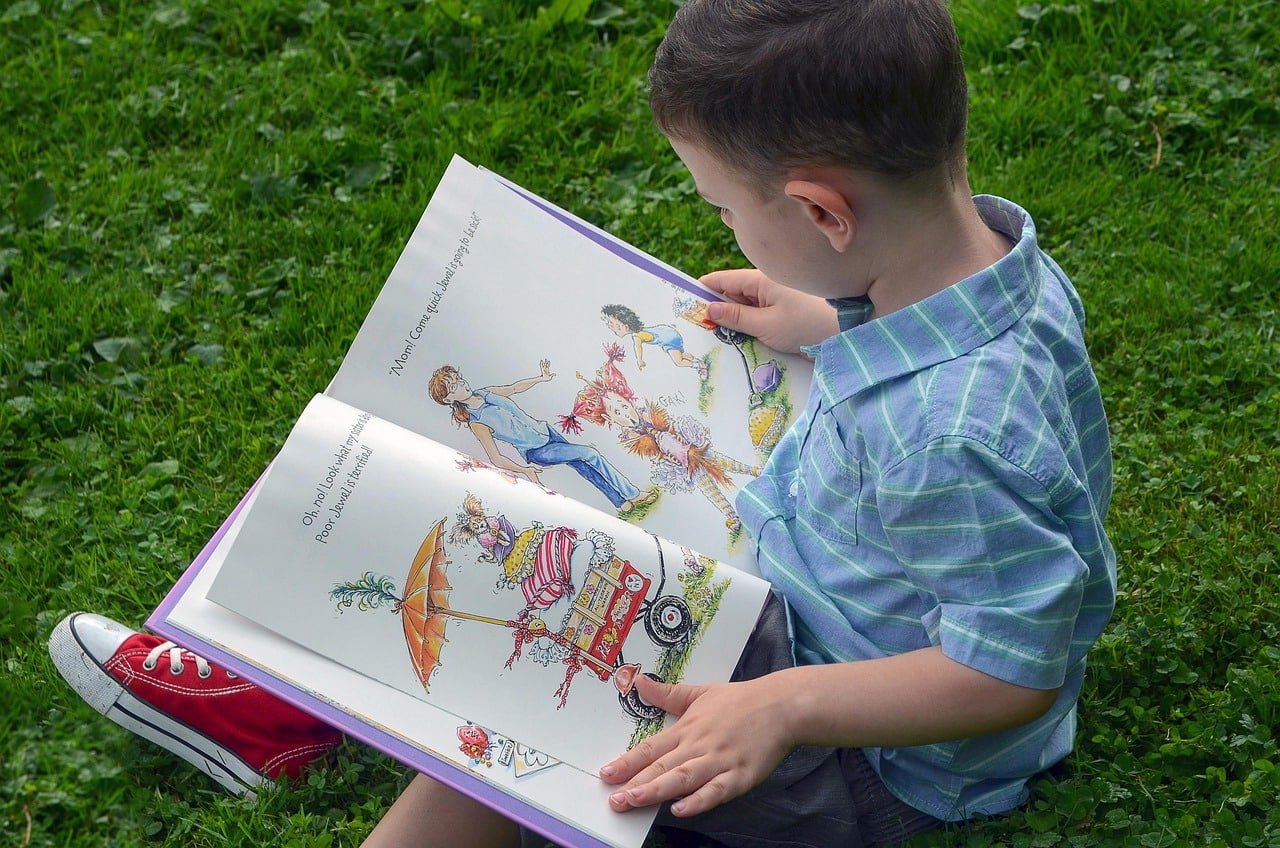
A child who reluctantly opens a book chosen by an adult may approach those pages as an assignment. But let that same child wander through a library or bookstore and pull a book from a shelf because there is a dog on the cover, discover a graphic novel about something delightfully ridiculous, or become fascinated by a book about dinosaurs, space, sports, fairies, science experiments, sharks, bugs, or something we adults never would have chosen, and something changes. The book becomes theirs. And that small sense of ownership can matter.
Research suggests that choice and enjoyment are closely associated with children’s recreational reading habits. Scholastic’s Kids & Family Reading Report found that 89% of children ages 6–17 said their favorite books were ones they had chosen themselves, while 88% said they were more likely to finish a book they picked out themselves. The report also identifies enjoyment as one of the strongest predictors of how frequently children read for fun.
That doesn’t mean adults should stop guiding children toward good books. Quite the opposite. Children need access, encouragement, recommendations, and sometimes help finding a book that won’t leave them frustrated. But there is an important difference between guiding a child’s choice and making every choice for the child.
Reading Shouldn’t Always Feel Like an Assignment
Think about your own reading habits. If someone handed you a 300-page book on a subject that held absolutely no interest for you and announced, “This is good for you. Finish it,” how excited would you be to curl up with it tonight? Yet we sometimes expect children to develop a love of reading under remarkably similar circumstances.
Children certainly need assigned reading as part of their education. They will encounter books and subjects they would never have chosen themselves, and that exposure has tremendous value. Teachers also use assigned literature to develop comprehension, vocabulary, critical thinking, and a shared body of knowledge.
But recreational reading serves a different purpose. This is where children can discover that reading isn’t merely something they have to do. It can also be something they want to do.
When children have opportunities to select books that connect with their interests, personalities, questions, and imaginations, reading can begin to feel less like an obligation and more like discovery. Giving children choices doesn’t mean adults disappear from the process. We become their guides instead of always being their decision-makers.
Follow the Child’s Curiosity
One of the easiest ways to help a child find an appealing book is also one of the most obvious: Pay attention to what fascinates that child. A child who doesn’t seem interested in novels may happily spend an hour reading a book about reptiles. A sports-loving child may devour biographies of athletes. Another child may want joke books, comics, mysteries, fairy tales, animal stories, how-to books, science books, graphic novels, biographies, or books filled with strange-but-true facts. And that’s reading.
Adults sometimes become so focused on finding the book we believe a child ought to read that we overlook the book that might turn that child into someone who wants to read. If a child is fascinated by dinosaurs, let dinosaurs open the door. If it’s dogs, find the dog books; if it’s outer space, head for the stars. The first objective doesn’t always need to be expanding the child’s literary horizons. Sometimes the first objective is simply getting that child excited about opening a book. Once the door is open, there’s plenty of time to explore what else is waiting on the shelves. Curiosity has a wonderful way of expanding.
A child who begins with dinosaurs may eventually become interested in fossils, geology, museums, prehistoric environments, extinction, or the scientists who made important discoveries. The child who loves animals may wander from a book about dogs to wildlife, veterinary medicine, endangered species, habitats, or nature photography. One book can become a bridge to another subject. But we may never discover where that bridge leads if we insist on choosing the starting point ourselves. And sometimes that bridge leads somewhere even more unexpected.
A child who loves reading about animals may one day begin imagining a future as a veterinarian. A child fascinated by space may start thinking about astronomy, engineering, or science. And a young reader who falls in love with stories may eventually begin writing stories of their own. One book can lead to another, and another, and another, until reading becomes creating.
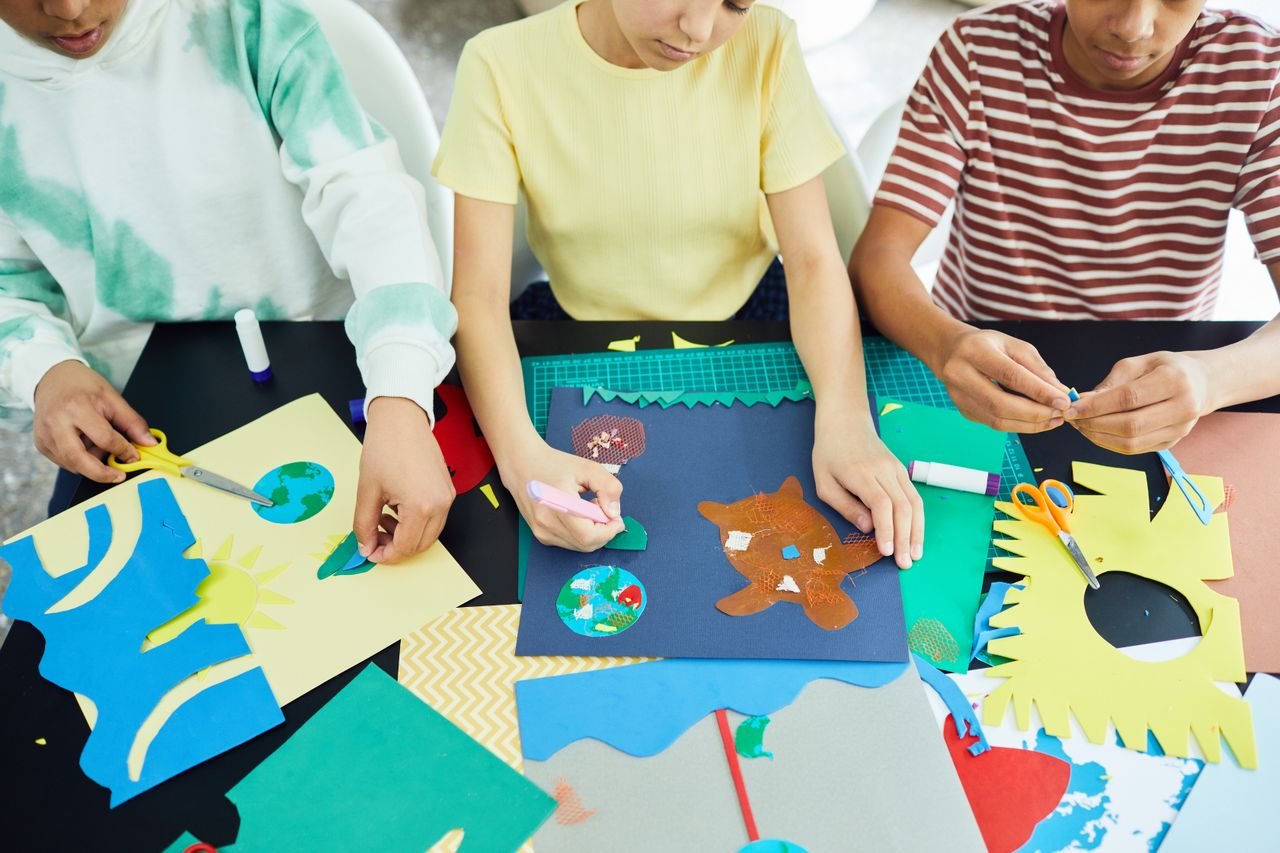
Sometimes that journey can lead all the way to publishing. A teacher might turn a classroom assignment into a collaborative book, with every student contributing something meaningful: a chapter, a poem, an illustration, a photograph, a personal story, or a piece of research. Suddenly, children are no longer only readers. They are becoming writers, artists, photographers, editors, and creators.
There Is More Than One Way to Be a Reader
Sometimes adults have an image in their minds of what “real reading” is supposed to look like. Perhaps we picture a child sitting quietly with a traditional chapter book or reading one of the classics we remember from childhood. Those books absolutely have value, but reading does not come in only one package. A child absorbed in a graphic novel is reading. A child studying a book of world records is reading. A child following the instructions for a science experiment is reading. A child laughing over a joke book is reading. A child who knows every fact in a book about sharks, trains, horses, weather, or planets is reading. Children’s interests can lead them to magazines, biographies, poetry, comics, reference books, historical stories, fantasy, nonfiction, mysteries, picture books, chapter books, and countless other forms.
What matters most, especially when we are trying to encourage a reluctant reader, is that words and ideas are capturing the child’s attention. Sometimes adults worry that a particular book seems too easy. There are times, of course, when children need appropriately challenging material. But there is also something to be said for reading purely for pleasure. Adults reread favorite books. We read magazines. We read lighthearted stories on vacation. We choose something funny when we need a break. We do not insist that every page we read must challenge us academically.
Children should sometimes be allowed that same pleasure. A familiar book can build confidence. An easy book can provide enjoyment. A silly book can create the experience of laughing while reading. And a child who associates reading with pleasure may eventually reach voluntarily for something more challenging.
Give Children Time to Browse
There is also value in allowing children to simply wander among books. Adults often enter a bookstore or library with a purpose. We know the title we want or the subject we need. Children may discover books differently. A cover catches their eye. A funny title makes them laugh. They recognize an animal they love. They pull out a book because it is enormous, or because it is tiny. They open to the middle and study a picture. They read three sentences, put the book back, and try another. To an adult who is in a hurry, this can look inefficient. To a child, it can be discovery.
Browsing teaches children something about their own tastes. They begin to learn that they like mysteries, books with facts, funny stories, books with a lot of pictures, stories about kids their age, or fantasy books. That self-knowledge helps children become independent readers because eventually they begin to understand how to find another book they may enjoy.
A trip to the library or bookstore doesn’t always have to end with an adult saying, “Here is the book I picked for you.” Sometimes the more valuable experience is asking, “Did you find anything that looks interesting?”
Give Children a Menu, Not a Mandate
Choice doesn’t have to mean turning a young reader loose among thousands of books and saying, “Good luck!” For some children, too many options can be overwhelming, and allowing children to choose doesn’t mean parents and caregivers can’t help shaping the choices available to them.
Instead of saying, “You have to read this book,” put several books in front of a child that are appropriate for their age and reading ability and ask which one they would like to read. You might offer three, four, or five possibilities: something funny or exciting, animals or outer space, a true story or make-believe, a mystery or an adventure. The adult has provided thoughtful guidance, but the child still has ownership of the final decision.
That distinction matters. We don’t have to choose between providing guidance and giving children freedom. We can create a good menu and allow them to decide what looks appealing. Sometimes a child pointing to a book and saying, “I want that one,” is exactly the beginning we’re looking for.
A Book Fund Children Can Build
Another way to give children a say in their reading is to help them build a small book fund of their own. Many families give children an allowance for chores. What if finishing a book also earned a modest amount, with one simple understanding: the money in this fund is for buying another book?
A child could keep track of each book read and watch the fund grow. Then comes the especially enjoyable part: a trip to the bookstore, where the child gets to choose what that reading has made possible. The amount need not be large. The point is to connect one reading experience to the next while giving the child some ownership over the choice. Along the way, the child can also practice saving and making decisions about a purchase.
I would keep the arrangement playful and flexible. A young child might count a picture book shared with a parent, while another child might choose a graphic novel or nonfiction. Reading should never become a race to finish the most books simply to collect money. The real reward is another invitation to read—and the pleasure of choosing where to go next.
Choice Can Be Especially Important for Reluctant Readers
For a child who already loves books, finding something to read may not be difficult. The greater challenge is often the child who has already decided, “I don’t like reading.” But that statement can mean many things. The child may not have enjoyed the books they have been asked to read, may find reading difficult, or simply may not have discovered material that interests them.
A child who struggles with reading may already associate books with correction, grades, frustration, or comparison with classmates. Rather than beginning with what the child cannot do, begin with what the child enjoys. Ask what makes them laugh, what they are curious about, or what they would like to know more about. Whether the answer is skateboarding, cooking, robots, fashion, horses, weather, video games, magic tricks, cars, art, football, oceans, ghosts, or how things work, there is likely reading material connected to that interest.
The first book does not have to transform a reluctant reader overnight. It only has to create a better reading experience than the one before it. From there, we can build.
It’s Okay to Put a Book Down, and Pick One Up Again
Sometimes a child chooses a book, reads a few chapters, and discovers they don’t like it. Must they finish? Perseverance is important, particularly with assigned schoolwork, but recreational reading shouldn’t become a punishment for making an unfortunate selection. Adults abandon books all the time because a story isn’t what we expected, we aren’t in the mood for it, or something else sounds more interesting. Children can experience the same thing.
Instead of treating an abandoned book as a failure, use it to learn more about the child’s preferences. Was it too difficult? Did the story move too slowly? Were they hoping it would be funnier or have more action? Understanding why a book didn’t work can make it easier to find one that does. A book that is wrong for a child today may even become the right book a few years from now.
The opposite is true, too: sometimes children want to read the same book again and again. Familiarity can be comforting, anticipation can be fun, and knowing a story well can build confidence. Adults return to favorite books and authors, so there is little reason to insist that every childhood reading experience involve something new. If a child has found a book that creates joy, let them enjoy it.
Let Children See Adults Choosing Books, Too
Children learn a great deal from what the adults around them do. If we tell children reading is wonderful, but they never see us reading voluntarily, the message can lose some of its power.
That doesn’t mean sitting down with a great work of literature every evening. Let children see us choose a novel, cookbook, newspaper, magazine, biography, travel guide, or book about a hobby. Talk occasionally about why you chose it: “I’ve always wanted to learn more about that,” or “This author makes me laugh.” Even saying, “I started another book, but I couldn’t get into it, so I chose this one instead,” shows children that adults make reading choices based on their interests, moods, needs, and curiosity, too.
Keep Books Within Reach
Of course, choice only works when children actually have choices available. Libraries are invaluable for this reason. A library card can open an astonishing world to a child without requiring a family to purchase book after book. School and classroom libraries, neighborhood book exchanges, used bookstores, book fairs, and family collections can also provide opportunities for exploration.
At home, even a small basket or shelf of books placed where children can easily reach them can make reading feel more inviting. Mix fiction and nonfiction, include humor and subjects connected to current interests, and occasionally add something unexpected. Whenever possible, let children participate in deciding what goes onto the shelf. Books shouldn’t feel like decorative objects that belong only to adults; they should feel like invitations.
The Goal Is Bigger Than Finishing a Book
When we think about children and reading, it is easy to focus on measurable outcomes: How many pages did they read? What reading level have they reached? How many minutes did they spend reading? Did they finish the book? Those measures certainly have a place in education, but there is another question worth asking: Did the child enjoy reading enough to want to do it again?
Ultimately, we are not trying only to produce children who can complete reading assignments. We hope to raise adults who understand that books will remain available to them throughout their lives—to learn something new, find an answer, satisfy their curiosity, understand another person, escape for an hour, find comfort, or simply laugh.
That lifelong relationship with reading does not begin by forcing every child to love the same book. It begins by helping children discover that somewhere, there may be something that feels as though it was written especially for them.
So, the next time a child says, “I don’t like reading,” perhaps we shouldn’t immediately respond with a book recommendation. Instead, we can begin with the same simple question we should have been asking all along: “What do you want to read?”
Then listen to the answer. It may tell us exactly where to begin. Linda F. Radke is a former K–12 special education teacher and former Arizona State University instructor with more than 40 years of experience in publishing and book marketing. She is president of Story Monsters LLC and publisher of Story Monsters Press® and Story Monsters Ink®, a publication dedicated to children’s literacy, books, and the people who help young readers discover them.