

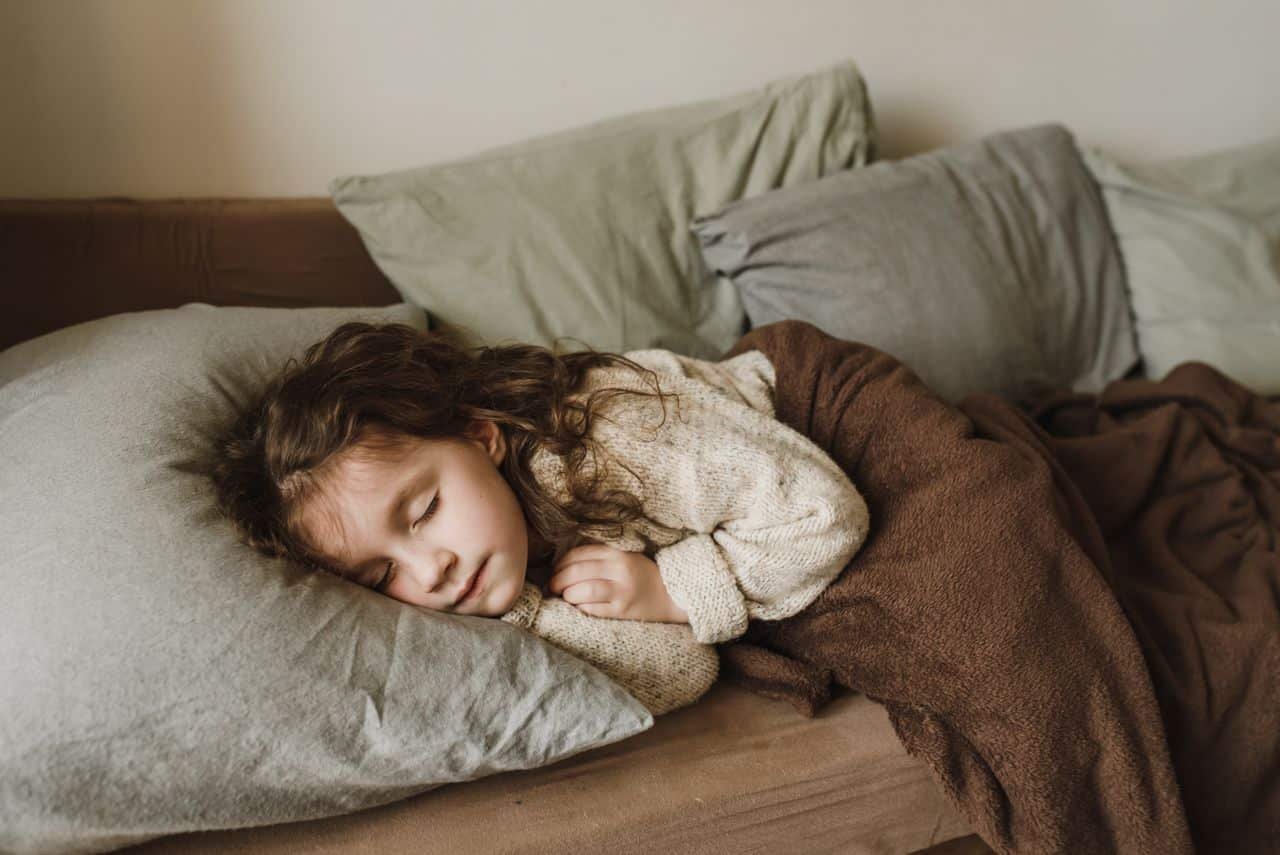
A 3-year-old can seem to have endless energy during the day but suddenly become tired, cranky, or resistant when bedtime arrives. At this age, sleep patterns are changing, especially as some children begin dropping their afternoon nap.
So, what does a good 3-year-old sleep schedule actually look like?
There isn’t one perfect schedule that works for every child. Some 3-year-olds still need a daily nap, while others sleep better at night without one. The goal is to create a predictable routine that provides enough total sleep while fitting your child’s individual needs.
According to recommendations from the American Academy of Sleep Medicine and the American Academy of Pediatrics, children ages 3–5 generally need 10–13 hours of sleep in a 24-hour period, including naps.
A consistent wake-up time, appropriate nap or quiet time, active daytime routine, and calming bedtime routine can make the transition to sleep much easier.
How Much Sleep Does a 3-Year-Old Need?
A 3-year-old needs about 10–13 hours of total sleep in 24 hours, including daytime naps. This is the recommended sleep range for preschool-aged children from 3 to 5 years old.
That total might look different from one child to another.
For example:
- A child may sleep 11 hours at night and take a 1-hour nap.
- Another child may sleep 12 hours overnight and not nap.
- A child transitioning away from naps may sleep 10–11 hours at night with a quiet rest period during the afternoon.
The important thing is to look at the total amount of sleep, your child’s daytime behavior, and whether they appear rested and functional throughout the day.
How Much Nighttime Sleep Does a 3-Year-Old Need?
Many 3-year-olds get most of their sleep at night, with some still taking an afternoon nap.
For example, a child who wakes at 7:00 AM and goes to bed at 8:00 PM has a 12-hour nighttime sleep opportunity. If that child also naps for one hour, their total sleep opportunity could be around 13 hours.
However, the actual amount of sleep may be lower because children don’t necessarily fall asleep immediately after getting into bed.
Rather than focusing on an exact number of nighttime hours, consider the entire 3-year-old sleep schedule, including naps and quiet time.
Does a 3-Year-Old Still Need a Nap?
Not necessarily.
Some 3-year-olds still benefit from a daily nap, while others are naturally ready to stop napping. The transition usually doesn’t happen overnight.
You may notice your child:
- Refusing their afternoon nap
- Taking longer to fall asleep at bedtime after napping
- Sleeping well overnight without a nap
- Becoming tired or irritable late in the afternoon
- Falling asleep easily during car rides
- Needing occasional naps rather than one every day
If your child no longer sleeps during nap time but still needs a break, replacing the nap with quiet time can be a useful transition.
What Is an Ideal 3-Year-Old Sleep Schedule?
An ideal 3 year old sleep schedule should be predictable but flexible.
The following schedules are examples rather than strict rules. You can adjust them based on your child’s wake-up time, nap needs, childcare schedule, and natural sleep pattern.
Sample 3-Year-Old Sleep Schedule With a Nap
| Time | Activity |
|---|---|
| 7:00 AM | Wake up |
| 7:00–8:00 AM | Breakfast and getting ready |
| 8:00 AM–12:00 PM | Play, learning and outdoor activity |
| 12:00 PM | Lunch |
| 12:30–2:00 PM | Nap |
| 2:00–5:30 PM | Play and activities |
| 5:30–6:30 PM | Dinner and family time |
| 7:00 PM | Start bedtime routine |
| 7:30–8:00 PM | Bedtime |
This is a useful starting point for a 3-year-old sleep schedule with a nap.
If your child takes a longer nap and struggles to fall asleep at night, you may need to adjust the timing or duration of daytime sleep.
Sample Schedule for a 3-Year-Old Who No Longer Naps
If your child has stopped napping, try:
| Time | Activity |
|---|---|
| 7:00 AM | Wake up |
| 7:00–8:00 AM | Breakfast and morning routine |
| 8:00 AM–12:00 PM | Active play and outdoor time |
| 12:00 PM | Lunch |
| 1:00–2:00 PM | Quiet time |
| 2:00–5:30 PM | Play and activities |
| 6:00 PM | Dinner |
| 6:45 PM | Begin bedtime routine |
| 7:30–8:00 PM | Bedtime |
A child who no longer naps may need an earlier bedtime to prevent becoming overtired.
Sample 3-Year-Old Schedule With a Short Nap
Some children fall somewhere between “needs a nap” and “doesn’t need a nap.”
A short midday nap may work well for these children.
For example:
- 7:00 AM — Wake up
- 12:30 PM — Lunch
- 1:00–1:45 PM — Short nap
- 1:45–6:30 PM — Play and family activities
- 7:00 PM — Bedtime routine
- 7:30–8:00 PM — Bedtime
If bedtime becomes consistently difficult, look at whether the nap is too late or too long.
What Time Should a 3-Year-Old Go to Bed?
There is no single best bedtime for a 3-year-old.
A reasonable bedtime depends on:
- Morning wake-up time
- Whether the child naps
- Nap duration
- Activity level during the day
- School or preschool schedule
- Individual sleep needs
For many families, a bedtime somewhere around 7:00–8:00 PM can fit well with a 6:30–7:30 AM wake-up, but this is only an example—not a medical requirement.
A child who no longer naps may need an earlier bedtime than a child who sleeps for a substantial afternoon nap.
The AAP recommends regular daily routines, including consistent wake times, nap times, play times, and bedtimes.
Signs Bedtime May Be Too Early
Your child may:
- Take a very long time to fall asleep
- Play in bed for an extended period
- Seem energetic at bedtime
- Consistently not appear tired
Signs Bedtime May Be Too Late
Your child may:
- Become extremely cranky
- Have frequent tantrums
- Become unusually hyperactive
- Resist bedtime intensely
- Fall asleep unexpectedly during the day
- Struggle to wake up in the morning
Remember that overtired children don’t always look sleepy. Sometimes they become more active or emotional instead.
The Ideal 3-Year-Old Bedtime Routine
A predictable 3-year-old bedtime routine helps your child understand that the day is coming to an end.
The AAP’s “Brush, Book, Bed” approach is a simple example: brush teeth, read a book, and go to bed at a regular time.
Try creating a 20–30 minute bedtime routine such as:
1. Finish Active Play
Start slowing things down before bedtime.
Instead of running, jumping, or highly stimulating games, move toward quieter activities.
2. Bath or Wash-Up
A bath can become a predictable signal that bedtime is approaching.
It doesn’t have to happen every night. A simple wash-up routine can work just as well.
3. Brush Teeth
Make toothbrushing a non-negotiable part of the nighttime routine.
For young children, adults may still need to help with brushing.
4. Put on Pajamas
Let your child choose between two pajama options if they enjoy having some independence.
Small choices can reduce bedtime battles while keeping the routine predictable.
5. Read a Story
Reading one or two short books can help your child transition from active daytime behavior to quiet bedtime behavior.
6. Cuddles and Goodnight
Keep this part warm but predictable.
You might use the same phrase every night:
“Good night, I love you. It’s time to sleep.”
7. Lights Out
Once the routine is complete, keep the environment calm and dark enough for sleep.
The goal isn’t to make bedtime elaborate. Consistency is more important than complexity.
How Long Should a 3-Year-Old Nap?
There isn’t one required nap length for every 3-year-old.
Some children may sleep for an hour or more, while others gradually reduce their nap as they approach preschool age.
Instead of asking only, “How long should a 3-year-old nap?” also ask:
“Does this nap help my child function well during the day without interfering with nighttime sleep?”
If your child sleeps well at night and wakes rested, their daytime sleep pattern may be working.
If a long or late nap regularly causes bedtime battles, consider discussing changes with your child’s pediatrician or gradually adjusting the routine.
Signs Your 3-Year-Old Still Needs a Nap
Your child may still benefit from a nap if they:
- Become very tired in the afternoon
- Have frequent late-afternoon meltdowns
- Fall asleep quickly during car rides
- Become noticeably irritable without daytime sleep
- Struggle to make it comfortably to bedtime
- Sleep easily during a midday nap
Signs Your 3-Year-Old May Be Ready to Drop the Nap
Your child may be approaching the end of the nap stage if they:
- Regularly refuse to nap
- Stay cheerful and energetic throughout the afternoon
- Take a long time to fall asleep at bedtime after napping
- Sleep well overnight without a nap
- Can manage the afternoon without becoming excessively tired
Readiness can vary significantly from one child to another.
When Should a 3-Year-Old Stop Napping?
There is no universal age when every child should stop napping.
Some children continue napping after age 3, while others gradually stop before or around this age.
The better approach is to watch your child’s sleep pattern rather than forcing a particular milestone.
If your child consistently refuses naps but becomes tired during the afternoon, try replacing the nap with quiet time.
How to Transition From a Nap to Quiet Time
Instead of suddenly removing daytime rest, try:
- Keeping the same midday rest period.
- Offering books, puzzles, drawing, or quiet toys.
- Allowing your child to sleep if they genuinely become tired.
- Gradually reducing nap duration if nighttime sleep is being affected.
- Moving bedtime earlier when necessary.
Quiet time can give children a chance to recharge even when they no longer sleep.
3-Year-Old Sleep Schedule Without a Nap
A 3-year-old sleep schedule without a nap needs to provide enough nighttime sleep and plenty of opportunities for calm recovery during the day.
A typical routine could look like:
7:00 AM: Wake up
8:00 AM: Breakfast
9:00 AM: Active play
12:00 PM: Lunch
1:00 PM: Quiet time
2:00 PM: Outdoor play or activities
5:30 PM: Dinner
6:45 PM: Bedtime routine
7:30 PM: Bedtime
If your child becomes exhausted at 5:00 PM, that may be a sign that dropping the nap completely isn’t working yet.
An earlier bedtime can also be more helpful than trying to reintroduce a late afternoon nap.
3-Year-Old Sleep Schedule With a Nap
A 3-year-old sleep schedule with a nap can work well when the child still needs daytime sleep.
A midday nap is generally easier to incorporate than a late-afternoon nap because a very late nap may push bedtime later.
For example:
7:00 AM: Wake up
12:00 PM: Lunch
12:30–2:00 PM: Nap
2:00–6:00 PM: Play and activities
6:00 PM: Dinner
7:00 PM: Bedtime routine
7:30–8:00 PM: Bedtime
If your child isn’t falling asleep at bedtime, consider whether the nap timing or length is contributing.
Signs Your 3-Year-Old Is Not Getting Enough Sleep
Sleep needs can vary, but insufficient sleep may show up as changes in daytime behavior.
Possible signs include:
- Irritability
- Frequent tantrums
- Difficulty concentrating
- Unusual hyperactivity
- Mood changes
- Falling asleep during daytime activities
- Difficulty waking in the morning
- Increased bedtime resistance
Adequate sleep is associated with better attention, behavior, learning, memory, emotional regulation, and overall health in children.
However, these behaviors can have many causes. Don’t assume that every tantrum or behavior change means your child isn’t getting enough sleep.
Common 3-Year-Old Sleep Problems and How to Handle Them
My 3-Year-Old Refuses to Go to Bed
Start by looking at the schedule rather than assuming your child simply doesn’t want to sleep.
Ask yourself:
- Is bedtime too early?
- Is the afternoon nap too long?
- Is the nap too late?
- Is there too much stimulation before bed?
- Is the bedtime routine inconsistent?
Keep the routine predictable and give your child limited choices, such as:
“Do you want the blue pajamas or the yellow pajamas?”
This provides independence without allowing bedtime to become an open-ended negotiation.
My 3-Year-Old Takes Forever to Fall Asleep
If your 3-year-old regularly takes a long time to fall asleep, review their entire day.
Check:
- Wake-up time
- Nap timing
- Nap duration
- Physical activity
- Evening stimulation
- Screen use
- Bedtime
A consistent daily rhythm can make it easier for children to recognize when it is time to sleep.
My 3-Year-Old Keeps Getting Out of Bed
This is a common preschool sleep challenge.
Keep your response calm and boring.
Avoid turning every trip out of bed into a long conversation, game, snack session, or negotiation.
Use a short, consistent response and return your child to bed.
My 3-Year-Old Wakes Up at Night
Occasional nighttime waking can happen.
Consider:
- Is your child uncomfortable?
- Is the bedroom too bright or noisy?
- Is bedtime consistent?
- Is your child relying on a specific sleep association?
- Is there an illness or another concern?
If nighttime waking is frequent or persistent, discuss it with your child’s healthcare provider.
My 3-Year-Old Wakes Up Too Early
Early waking can have several causes.
Look at:
- Bedtime
- Nap schedule
- Bedroom environment
- Morning routine
- Total 24-hour sleep
Don’t automatically assume that putting your child to bed later will make them sleep later. For some children, becoming overtired can actually make sleep more difficult.
My 3-Year-Old Sleeps Late in the Morning
If your child sleeps late, look at the entire toddler sleep schedule rather than changing only the morning.
Consider gradually adjusting:
- Bedtime
- Wake-up time
- Nap timing
- Morning light exposure
- Daytime activity
Keeping wake-up and bedtime relatively consistent can help establish a predictable sleep-wake rhythm.
How to Fix a 3-Year-Old Sleep Schedule
If your child’s sleep routine has become unpredictable, don’t feel that you need to fix everything in one night.
Try making gradual, consistent changes.
Step 1: Set a Consistent Wake-Up Time
Choose a realistic morning wake-up time and keep it reasonably consistent throughout the week.
Step 2: Establish a Predictable Nap or Quiet Time
If your child still naps, offer it around the same time each day.
If they have stopped napping, maintain a quiet-time period.
Step 3: Get Plenty of Daytime Activity
Active play and outdoor time can help create a healthy day-night rhythm.
The AAP recommends keeping children active during the day and maintaining regular daily routines.
Step 4: Avoid an Overly Late Nap
A late afternoon nap may make it harder for some children to fall asleep at their normal bedtime.
Step 5: Start the Wind-Down Routine Before Bed
Don’t wait until your child is already overtired.
Start the bedtime routine early enough that your child has time to brush, read, cuddle, and settle down before lights out.
Step 6: Keep Screens Away From the Bedtime Routine
The AAP recommends avoiding screens for at least one hour before bedtime and keeping devices out of children’s bedrooms at night.
Replace screen time with:
- Books
- Drawing
- Puzzles
- Calm conversation
- Simple pretend play
- Quiet music
Step 7: Keep the Schedule Consistent
A sleep schedule works best when the same basic rhythm continues from day to day.
You don’t need to follow the clock perfectly. Instead, aim for consistency.
Screen Time and Sleep for 3-Year-Olds
Screens can make the transition to sleep more difficult, particularly when they are used close to bedtime.
For preschoolers, the AAP recommends limiting media and avoiding screens around bedtime. Its guidance recommends keeping bedrooms screen-free and turning off screens at least one hour before bed.
A simple rule can be:
Screen off → lights dim → pajamas → brush teeth → book → bed.
If your 3-year-old currently watches television or uses a tablet before bed, you don’t necessarily need to change everything overnight. Gradually creating a predictable screen-free bedtime period may be easier for some families.
Tips for Creating Healthy Sleep Habits for a 3-Year-Old
Use this checklist to create a healthier 3-year-old sleep routine:
- Keep wake-up time consistent.
- Keep bedtime reasonably consistent.
- Offer a nap if your child still needs one.
- Use quiet time when your child no longer naps.
- Encourage active daytime play.
- Include outdoor time when possible.
- Create a calming bedtime routine.
- Brush teeth before bed.
- Read a bedtime story.
- Keep the bedroom comfortable and sleep-friendly.
- Avoid stimulating activities close to bedtime.
- Turn screens off at least one hour before bedtime.
- Keep screens out of the bedroom.
- Respond consistently to bedtime resistance.
- Look at total 24-hour sleep rather than nighttime sleep alone.
The AAP emphasizes regular routines, adequate sleep, daytime activity, and a predictable bedtime routine as important healthy sleep habits.
When to Talk to Your Pediatrician About Your 3-Year-Old’s Sleep
Most occasional sleep difficulties can be managed with routine and consistency, but persistent or concerning problems deserve professional attention.
Talk with your child’s pediatrician if your 3-year-old has:
- Persistent difficulty falling asleep
- Frequent nighttime waking
- Significant daytime sleepiness
- Persistent early-morning waking
- Loud or habitual snoring
- Pauses in breathing during sleep
- Gasping or choking sounds during sleep
- Major changes in daytime behavior associated with sleep
- Ongoing concerns that your child is sleeping too little or too much
The American Academy of Sleep Medicine recommends discussing concerns about a child’s sleep amount with a healthcare provider. The AAP also notes that pediatricians can help evaluate concerns such as snoring, difficulty falling asleep, staying asleep, excessive daytime sleepiness, and irregular sleep schedules.
Important: This article provides general educational information and is not a substitute for individualized medical advice. Your child’s sleep needs can vary, and your pediatrician can help if you have concerns about your child’s sleep or development.
Frequently Asked Questions About a 3-Year-Old Sleep Schedule
How many hours should a 3-year-old sleep?
A 3-year-old generally falls within the recommended 10–13 hours of total sleep per 24 hours, including naps. This is the recommended range for children ages 3–5.
What is a good bedtime for a 3-year-old?
There isn’t one universally correct bedtime. For many children with a morning wake-up around 6:30–7:30 AM, a bedtime around 7:00–8:00 PM may work well. The ideal bedtime depends on your child’s nap, wake time, and individual sleep needs.
Does a 3-year-old need a nap every day?
No. Some 3-year-olds still need a daily nap, while others are ready to stop napping. If your child doesn’t nap, consider maintaining a quiet-time period instead.
How long should a 3-year-old nap?
There isn’t one required nap length. Watch how the nap affects your child’s nighttime sleep, afternoon behavior, and overall 24-hour sleep.
What time should a 3-year-old wake up?
A consistent morning wake-up time is generally more useful than choosing one “perfect” time. Choose a time that works with your child’s bedtime, family routine, and preschool schedule.
What time should a 3-year-old go to bed?
Many families find a bedtime around 7:00–8:00 PM practical, but the best bedtime depends on the child’s wake-up time and whether they still nap.
Should a 3-year-old have quiet time instead of a nap?
Yes, quiet time can be a helpful alternative when a child has stopped sleeping during the day but still benefits from a break.
How do I get my 3-year-old to sleep earlier?
Start by reviewing the entire schedule. Keep the morning wake-up time consistent, avoid a late nap, increase daytime activity, reduce evening stimulation, turn screens off at least an hour before bedtime, and establish a predictable bedtime routine.
Why is my 3-year-old fighting bedtime?
Bedtime resistance can happen for many reasons, including developmental independence, an inappropriate bedtime, an overly long or late nap, inconsistent routines, or too much stimulation before bed.
Why does my 3-year-old keep waking up at night?
Occasional nighttime waking can happen, but frequent waking may be related to sleep habits, environmental factors, illness, anxiety, or another sleep issue. Persistent problems should be discussed with a pediatrician.
How do I fix my 3-year-old’s sleep schedule?
Start with a consistent wake-up time, regular nap or quiet time, active daytime routine, predictable bedtime routine, limited evening stimulation, and a consistent bedtime.
When should a 3-year-old stop napping?
There is no fixed age when every child should stop napping. Some children continue to nap at age 3, while others transition to quiet time. Follow your child’s sleep needs rather than forcing a specific age-based milestone.
Key Takeaways
A healthy 3-year-old sleep schedule doesn’t have to look exactly like another child’s schedule.
The most important points are:
- 3–5-year-olds generally need 10–13 hours of sleep in 24 hours, including naps.
- Some 3-year-olds still need a nap, while others are ready to transition to quiet time.
- A consistent wake-up time can help establish a predictable daily rhythm.
- A calming 3-year-old bedtime routine can make bedtime easier.
- The AAP’s simple “Brush, Book, Bed” approach can be a useful starting point.
- Avoiding screens during the hour before bedtime can support a healthier sleep routine.
- If a nap consistently interferes with nighttime sleep, review its timing and duration.
- An earlier bedtime can sometimes work better when a child has stopped napping.
- Persistent snoring, breathing problems, significant daytime sleepiness, or ongoing sleep difficulties should be discussed with a pediatrician.
The goal isn’t to create a perfect schedule down to the minute. It’s to create a predictable, age-appropriate sleep routine that gives your 3-year-old enough rest to wake refreshed, play, learn, and enjoy the day.
For most families, consistency matters more than perfection.