


Becoming a mom is one of life’s most beautiful experiences—but let’s be honest, it can also feel overwhelming. One moment your baby is peacefully sleeping, and the next they’re crying for milk, refusing a nap, or wanting to be held all day. Many new parents wonder, “Am I doing this right?”
The good news is that you don’t need a perfect schedule—you need a predictable routine.
A flexible baby routine helps your little one feel secure while making everyday life more manageable for you. Instead of constantly guessing when your baby is hungry or sleepy, you’ll start recognizing patterns that reduce stress for the whole family.
Whether you’re a first-time mom, a working parent, or a caregiver, this guide will walk you through age-wise routines from birth to 12 months, including sleep, feeding, playtime, tummy time, naps, and bedtime habits.
Quick Answer: A baby routine is a flexible pattern of feeding, sleeping, playing, and bonding that changes as your child grows. During the first year, routines should adapt to your baby’s age, developmental milestones, and individual needs rather than following a strict timetable.
Why Every 0–12-Month-Old Baby Needs a Routine
Babies aren’t born knowing the difference between day and night. During the first few months, they rely on parents for everything—including establishing healthy habits.
A consistent routine doesn’t mean watching the clock every minute. Instead, it creates a rhythm that helps babies know what to expect next.
Benefits of a Baby Routine
1. Better Sleep
Babies who follow a consistent bedtime routine often find it easier to fall asleep. Predictable sleep cues—such as dim lights, a warm bath, or a bedtime lullaby—signal that it’s time to rest.
2. Easier Feeding
Following your baby’s hunger cues within a general feeding routine helps ensure they receive enough nutrition without becoming overly hungry or fussy.
3. Happier Baby
Babies thrive on predictability. Knowing what comes next reduces overstimulation and helps them feel safe.
4. Less Stress for Moms
One of the biggest advantages of a baby routine is that it gives parents a sense of control. Instead of reacting to every cry, you’ll begin anticipating your baby’s needs.
5. Supports Healthy Development
Regular tummy time, play sessions, and age-appropriate activities contribute to motor, cognitive, and social development.
Routine vs. Schedule: What’s the Difference?
Many parents confuse a routine with a strict schedule.
A schedule follows exact times:
- Feed at 8:00 AM
- Nap at 10:00 AM
- Bath at 7:00 PM
A routine follows an order:
- Wake up
- Feed
- Play
- Sleep
This flexible approach is much easier to maintain, especially during growth spurts, travel, vaccinations, or teething.
ParentingFinds Tip: Aim for consistency, not perfection. Babies don’t read clocks—but they do respond to familiar patterns.
Understanding Baby Routines by Age

No two babies are exactly alike. While sample routines can provide guidance, your baby’s needs may vary based on factors such as:
- Breastfeeding or formula feeding
- Birth weight
- Prematurity
- Growth spurts
- Teething
- Illness
- Temperament
- Developmental milestones
Instead of forcing a rigid timetable, observe your baby’s cues and adjust the routine accordingly.
Baby Sleep Requirements During the First Year
| Age | Total Sleep | Daytime Naps | Wake Window |
|---|---|---|---|
| 0–2 Months | 14–17 hours | 4–6 naps | 30–60 minutes |
| 2–4 Months | 14–16 hours | 4 naps | 60–90 minutes |
| 4–6 Months | 13–15 hours | 3 naps | 1.5–2.5 hours |
| 6–9 Months | 12–15 hours | 2–3 naps | 2–3 hours |
| 9–12 Months | 12–14 hours | 2 naps | 3–4 hours |
Remember: These are averages. Every baby is unique.
Signs Your Baby Is Ready for a Routine
You don’t need to wait until your baby is several months old. Even newborns benefit from simple daily rhythms.
Your baby may be ready for a routine if they:
- Start feeding at similar intervals.
- Stay awake for predictable periods.
- Sleep longer stretches at night.
- Become fussy before naps.
- Show consistent hunger and sleep cues.
0–2 Months Baby Routine (Newborn Stage)
The newborn phase is all about survival—for both baby and parents! During these early weeks, your baby’s stomach is tiny, sleep is unpredictable, and every day feels different.
Instead of focusing on exact times, establish a simple cycle:
Feed → Burp → Play/Bond → Sleep
This pattern forms the foundation of a healthy newborn routine.
Feeding Schedule (0–2 Months)
Newborns typically feed every 2–3 hours, whether breastfed or formula-fed.
Breastfed Babies
- 8–12 feeds per day.
- Feed on demand.
- Watch for hunger cues like rooting, sucking on hands, or lip smacking.
Formula-Fed Babies
- Usually every 3–4 hours.
- Follow your pediatrician’s recommendations for quantity.
Tip: Don’t wake a healthy, thriving baby during the night unless advised by your healthcare provider.
Sleep Schedule
Newborns sleep between 14–17 hours a day but in short stretches.
It’s completely normal for them to wake frequently to feed.
Sleep Tips
- Put baby down drowsy but awake when possible.
- Keep daytime bright and nighttime calm.
- Swaddle safely (if appropriate).
- Always place your baby on their back to sleep.
Wake Windows
Newborns can comfortably stay awake for only 30–60 minutes.
Keeping them awake longer often leads to overtiredness, making it harder for them to settle.
Activities for 0–2 Months
Although newborns spend most of their day sleeping and feeding, short periods of interaction are incredibly valuable.
Try:
- Skin-to-skin cuddles
- Gentle tummy time (2–5 minutes, several times daily)
- Singing nursery rhymes
- Talking face-to-face
- Black-and-white visual cards
- Soft baby massage
- Outdoor walks in a stroller (weather permitting)
These activities support sensory development while strengthening your bond.
Sample Newborn Daily Routine
| Time | Activity |
|---|---|
| 7:00 AM | Wake and feed |
| 7:30 AM | Burp and cuddles |
| 8:00 AM | Nap |
| 10:00 AM | Feed |
| 10:30 AM | Tummy time |
| 11:00 AM | Nap |
| Afternoon | Repeat feed-play-sleep cycle |
| Evening | Calm play, bath (optional), feed |
| Night | Feed on demand and sleep |
Remember, this is only a sample. Your baby’s timing may differ—and that’s perfectly okay.
Common Challenges During the Newborn Stage

Baby Sleeps All Day, Awake All Night
Help your baby distinguish day from night by exposing them to natural daylight during the day and keeping nighttime interactions quiet and dimly lit.
Frequent Cluster Feeding
Many babies cluster feed in the evenings. This is normal and often temporary.
Contact Naps Only
Newborns love being close to you. Gradually introduce crib naps while continuing to enjoy those precious cuddles.
Parents Feeling Overwhelmed
Accept help from family or friends, rest when your baby sleeps, and remember that routines take time to develop.
2–4 Months Baby Routine: Building Predictable Days
Between 2 and 4 months, you’ll notice some exciting changes. Your baby starts smiling, making eye contact, cooing, and staying awake for longer periods. While every baby develops at their own pace, this is often the stage when parents begin noticing a more predictable pattern of sleeping, feeding, and play.
Don’t worry if your baby’s routine isn’t perfect yet. At this age, consistency matters more than timing.
Quick Answer: A typical 2–4 month baby routine includes feeding every 3–4 hours, 3–4 naps during the day, 14–16 hours of total sleep, wake windows of 60–90 minutes, tummy time, sensory play, and a calming bedtime routine.
Developmental Milestones (2–4 Months)
During this stage, your baby may:
- Smile socially
- Follow objects with their eyes
- Recognize familiar faces
- Hold their head up during tummy time
- Begin rolling (some babies)
- Enjoy talking and singing
- Respond to sounds
- Sleep for longer stretches at night
These milestones also mean your baby needs more opportunities for play and interaction.
Feeding Schedule (2–4 Months)
Your baby is becoming more efficient at feeding, which means sessions may become shorter but more effective.
Breastfed Babies
- Feed every 2.5–3.5 hours
- Usually 7–8 feeds per day
- Continue feeding on demand
Formula-fed Babies
- Approximately every 3–4 hours
- Follow your pediatrician’s guidance for the amount per feed
Feeding Tips
✔ Burp after every feed
✔ Keep baby upright for 15–20 minutes if they experience reflux
✔ Avoid comparing feeding amounts with other babies
Sleep Schedule
Most babies need around 14–16 hours of sleep in 24 hours.
Typical sleep includes:
- Night sleep: 9–11 hours (with feeds)
- Daytime naps: 3–4 naps
Some babies may start sleeping a 5–6 hour stretch at night.
Bedtime Routine
Around 3 months, babies begin recognizing bedtime cues.
A simple bedtime routine could be:
- Warm bath (optional)
- Baby massage
- Fresh diaper
- Dim lights
- Feed
- Quiet cuddles
- White noise
- Sleep
Repeating these steps every evening helps babies understand that nighttime has arrived.
Wake Windows
Recommended wake window:
60–90 minutes
This includes:
- Feeding
- Playtime
- Diaper change
- Tummy time
- Wind-down before sleep
Watch for sleepy cues instead of the clock.
Signs include:
- Yawning
- Looking away
- Red eyebrows
- Fussiness
- Rubbing eyes
Best Activities for 2–4 Months
This is one of the best stages to encourage brain development through simple interactions.
Daily Activities
- Tummy time (20–30 minutes total throughout the day)
- Mirror play
- Singing nursery rhymes
- Soft rattles
- High-contrast books
- Gentle bicycle leg exercises
- Talking throughout the day
- Outdoor walks
Avoid overstimulating your baby. Short, engaging play sessions are enough.
Sample 2–4 Month Baby Daily Schedule
| Time | Activity |
|---|---|
| 7:00 AM | Wake & Feed |
| 7:30 AM | Play & Tummy Time |
| 8:15 AM | Nap |
| 10:00 AM | Feed |
| 10:30 AM | Reading & Talking |
| 11:15 AM | Nap |
| 1:00 PM | Feed |
| 1:30 PM | Floor Play |
| 2:15 PM | Nap |
| 4:00 PM | Feed |
| 4:30 PM | Walk Outdoors |
| 5:15 PM | Catnap |
| 7:00 PM | Bath & Massage |
| 7:30 PM | Feed |
| 8:00 PM | Bedtime |
Remember, use this as a guide—not a strict timetable.
Common Challenges (2–4 Months)
Baby Wants to Be Held All the Time
Completely normal.
Your baby is learning trust and attachment.
Babywearing can help while keeping your hands free.
Short Naps
Many babies nap only 30–45 minutes.
Don’t stress.
Short naps are developmentally appropriate.
Focus on total sleep across the day.
Gas and Colic
Try:
- Burping often
- Bicycle legs
- Gentle tummy massage
- Keeping baby upright after feeding
Consult your pediatrician if symptoms are severe.
4–6 Months Baby Routine: Creating a More Structured Schedule
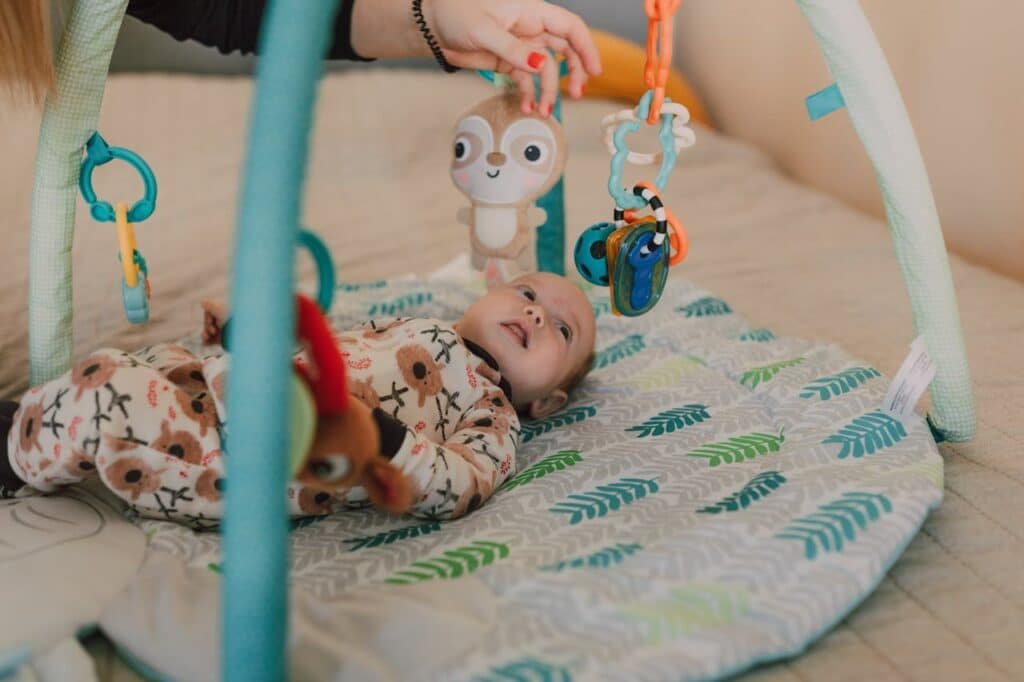
By 4–6 months, many babies settle into a more predictable rhythm. They stay awake longer, interact more with their surroundings, and may even begin sleeping for longer stretches at night.
This is also an exciting stage because your baby is preparing for major milestones like rolling over, sitting with support, and—around 6 months—starting solid foods.
Quick Answer: A 4–6 month baby routine typically includes 3–4 milk feeds, 3 naps, 13–15 hours of sleep, wake windows of 1.5–2.5 hours, tummy time, sensory play, and an early bedtime.
Developmental Milestones (4–6 Months)
Your baby may:
- Roll over
- Laugh loudly
- Reach for toys
- Recognize family members
- Explore objects with their hands
- Sit with support
- Respond to their name
- Babble
These milestones mean your baby needs more active play during wake windows.
Feeding Schedule
Milk continues to be your baby’s primary source of nutrition.
Breastfeeding
Usually every 3–4 hours.
Formula Feeding
Every 3–4 hours.
Starting Solids
Around six months (or as advised by your pediatrician), your baby may be ready for complementary foods.
Signs of readiness include:
- Sitting with support
- Good head control
- Showing interest in food
- Loss of tongue-thrust reflex
Start with simple, single-ingredient foods like mashed fruits, vegetable purées, or iron-rich cereals.
Sleep Schedule
Average total sleep:
13–15 hours
Typically includes:
- Night sleep: 10–12 hours
- Daytime naps: 3 naps
Some babies may experience the well-known 4-month sleep regression, where sleep temporarily becomes more disrupted. This phase is common and usually improves with consistency.
Best Activities (4–6 Months)
This stage is ideal for encouraging movement and exploration.
Try:
- Rolling practice
- Supported sitting
- Soft blocks
- Textured toys
- Peek-a-boo
- Baby-safe mirrors
- Reading colorful books
- Singing action songs
- Sensory baskets (with safe objects)
Aim for at least 30–60 minutes of tummy time spread across the day.
Sample 4–6 Month Daily Routine
| Time | Activity |
|---|---|
| 7:00 AM | Wake & Feed |
| 7:45 AM | Floor Play |
| 8:45 AM | Nap |
| 10:30 AM | Feed |
| 11:00 AM | Sensory Activities |
| 12:15 PM | Nap |
| 2:00 PM | Feed |
| 2:30 PM | Outdoor Walk |
| 3:45 PM | Nap |
| 5:00 PM | Feed |
| 6:30 PM | Bath & Story |
| 7:00 PM | Bedtime Feed |
| 7:30 PM | Sleep |
Common Challenges (4–6 Months)
The 4-Month Sleep Regression
Your baby may suddenly:
- Wake more often
- Take shorter naps
- Resist bedtime
This is linked to changes in sleep cycles and is a normal developmental phase.
Stick to your bedtime routine and avoid introducing new sleep habits that you’ll find difficult to maintain.
Rolling During Sleep
Once your baby can roll independently, continue placing them on their back to sleep. If they roll over on their own, you generally don’t need to reposition them, but always ensure the sleep space is firm and free of pillows, blankets, and toys.
Increased Curiosity
Your baby may become distracted during feeds because the world is suddenly much more interesting. Feeding in a quiet environment can help.
6–9 Months Baby Routine: Finding Your Family’s Rhythm

By the time your baby reaches 6 months, life often starts to feel more predictable. Many babies settle into a two- or three-nap schedule, enjoy longer periods of play, and begin exploring the exciting world of solid foods. They may be sitting independently, rolling confidently, crawling, or even attempting to pull themselves up.
This stage is all about creating a balanced routine that includes milk feeds, nutritious meals, active play, and restful sleep.
Quick Answer: A typical 6–9 month baby routine includes 3–5 milk feeds, 2–3 solid meals, 2–3 naps, 12–15 hours of total sleep, wake windows of 2–3 hours, outdoor play, sensory activities, and a consistent bedtime routine.
Developmental Milestones (6–9 Months)
Every baby develops differently, but during this stage many babies begin to:
- Sit without support
- Crawl or scoot
- Transfer toys between hands
- Respond to their name
- Understand simple words
- Show stranger anxiety
- Babble repetitive sounds like “mama” or “dada”
- Explore everything by putting objects in their mouth
As your baby’s curiosity grows, your home should become a safe place for exploration. Childproofing becomes increasingly important.
Feeding Schedule (6–9 Months)
Milk is still your baby’s primary source of nutrition during this stage, but complementary foods now play an important role in meeting increasing nutritional needs.
A typical day may include:
- Breast milk or formula: 3–5 feeds
- Breakfast
- Lunch
- Optional evening meal (depending on your baby’s readiness)
Introduce one new food at a time and wait a few days before offering another to monitor for possible allergies.
Sample Meal Ideas
Breakfast
- Mashed banana
- Oatmeal porridge
- Ragi cereal
- Apple puree
Lunch
- Moong dal khichdi
- Vegetable puree
- Rice with lentils
- Sweet potato mash
Dinner (if appropriate)
- Soft vegetable mash
- Rice cereal
- Mashed pumpkin
Continue offering breast milk or formula before or after meals as recommended by your pediatrician.
Establishing Healthy Eating Habits
Rather than focusing on how much your baby eats, focus on creating positive mealtime experiences.
Tips include:
- Let your baby explore food with their hands.
- Eat together as a family when possible.
- Avoid forcing bites.
- Introduce a variety of flavors and textures.
- Offer iron-rich foods regularly.
Messy meals are part of the learning process!
Sleep Schedule
Most babies between 6 and 9 months need:
- 12–15 hours of total sleep
- 10–12 hours at night (with or without one night feed)
- 2–3 daytime naps
Some babies naturally transition from three naps to two naps during this stage.
Wake Windows
Typical wake windows range from 2 to 3 hours.
A simple pattern often looks like:
Wake → Feed → Play → Solids → Nap
Watching your baby’s cues is still more important than following the clock.
Best Activities for 6–9 Months
This is an exciting stage for learning through movement and exploration.
Try:
- Crawling games
- Peek-a-boo
- Stacking soft cups
- Reading board books
- Sensory bins (with safe, age-appropriate materials)
- Music and dancing
- Rolling balls back and forth
- Playing with textured toys
Aim for plenty of supervised floor time, as this supports gross motor development better than extended time in swings or walkers.
Sample 6–9 Month Baby Routine
| Time | Activity |
|---|---|
| 7:00 AM | Wake & Milk Feed |
| 7:45 AM | Breakfast |
| 8:15 AM | Floor Play |
| 9:30 AM | Morning Nap |
| 11:00 AM | Milk Feed |
| 12:00 PM | Lunch |
| 1:30 PM | Afternoon Nap |
| 3:00 PM | Milk Feed |
| 3:30 PM | Outdoor Walk / Sensory Play |
| 5:30 PM | Optional Small Meal |
| 6:30 PM | Bath & Massage |
| 7:00 PM | Milk Feed |
| 7:30 PM | Bedtime |
Remember, this is a flexible routine. Some babies will wake earlier or later, and nap lengths can vary.
Common Challenges (6–9 Months)

Refusing Solids
It’s common for babies to reject new foods initially. Continue offering them without pressure—acceptance often takes multiple exposures.
Separation Anxiety
Your baby may become upset when you leave the room. This is a normal developmental stage that reflects growing attachment.
Increased Night Wakings
Developmental milestones, teething, or changes in sleep patterns can temporarily disrupt sleep. Keeping a consistent bedtime routine helps your baby settle more easily.
9–12 Months Baby Routine: Preparing for Toddlerhood
The final months of the first year are full of exciting milestones. Your baby may be crawling at top speed, pulling up to stand, cruising along furniture, saying their first words, and becoming much more independent.
This is also the stage where routines become more structured and family mealtimes become increasingly important.
Quick Answer: A typical 9–12 month baby routine includes 3 milk feeds, 3 balanced meals, 2 healthy snacks (if needed), 2 daytime naps, 12–14 hours of sleep, active play, outdoor time, reading, and an early bedtime.
Developmental Milestones (9–12 Months)
Many babies begin to:
- Crawl confidently
- Pull up to stand
- Cruise along furniture
- Wave goodbye
- Clap hands
- Point at objects
- Respond to simple instructions
- Say simple words like “Mama” or “Dada”
- Develop a pincer grasp for picking up small pieces of food
These milestones encourage greater independence and curiosity.
Feeding Schedule (9–12 Months)
By now, your baby’s routine often includes:
- 3 milk feeds
- Breakfast
- Lunch
- Dinner
- 1–2 healthy snacks (if needed)
Continue offering a variety of nutritious foods, including fruits, vegetables, grains, proteins, and healthy fats.
Sample Menu
Breakfast
- Vegetable upma
- Scrambled egg (if introduced)
- Fruit with yogurt
Lunch
- Dal rice with vegetables
- Soft chapati pieces with curry
- Khichdi
Snack
- Banana
- Steamed apple slices
- Homemade pancakes
Dinner
- Vegetable pasta
- Rice with lentils
- Soft cooked vegetables
Encourage self-feeding using soft finger foods while supervising closely.
Sleep Schedule
Most babies between 9 and 12 months require:
- 12–14 hours of total sleep
- 10–12 hours at night
- 2 daytime naps
Many babies maintain two naps until around 15–18 months.
Wake Windows
Typical wake windows increase to 3–4 hours, allowing for longer periods of active play and exploration.
Best Activities for 9–12 Months
Support your baby’s growing independence with activities such as:
- Shape sorters
- Stacking blocks
- Push toys (without wheels on stairs)
- Reading picture books
- Singing action songs
- Water play (with supervision)
- Pretend play with cups and spoons
- Walking practice while holding hands
Avoid screen time and prioritize real-world interaction, which supports language and social development.
Sample 9–12 Month Baby Routine
| Time | Activity |
|---|---|
| 7:00 AM | Wake & Milk Feed |
| 7:30 AM | Breakfast |
| 8:00 AM | Independent Play |
| 9:30 AM | Morning Nap |
| 11:00 AM | Lunch |
| 12:00 PM | Outdoor Walk |
| 1:30 PM | Afternoon Nap |
| 3:00 PM | Snack & Milk Feed |
| 4:00 PM | Reading & Play |
| 6:00 PM | Dinner |
| 6:45 PM | Bath |
| 7:15 PM | Story Time |
| 7:30 PM | Bedtime |
Encouraging Independence
This is the perfect age to let your baby participate in everyday routines.
For example:
- Let them hold their spoon.
- Allow safe self-feeding.
- Encourage drinking from a cup.
- Give simple choices, like between two toys.
- Celebrate effort rather than perfection.
These small opportunities build confidence and fine motor skills.
Common Challenges (9–12 Months)
Picky Eating
Appetite may vary from day to day. Continue offering a wide variety of foods without pressure.
Standing in the Crib
Many babies practice standing when they should be sleeping. Stay calm, gently help them lie down if needed, and keep the bedtime routine consistent.
Increased Mobility
Once babies begin crawling and cruising, close supervision is essential. Secure furniture, cover electrical outlets, and keep choking hazards out of reach.
Baby Sleep Schedule by Age (Quick Reference)
One of the most common questions new parents ask is, “How much sleep does my baby need?” While every baby is unique, the table below provides a helpful guideline for healthy sleep during the first year.
| Baby’s Age | Total Sleep | Night Sleep | Day Naps | Wake Window |
|---|---|---|---|---|
| 0–2 Months | 14–17 hours | 8–9 hours (with frequent feeds) | 4–6 naps | 30–60 mins |
| 2–4 Months | 14–16 hours | 9–10 hours | 4 naps | 60–90 mins |
| 4–6 Months | 13–15 hours | 10–11 hours | 3 naps | 1.5–2.5 hrs |
| 6–9 Months | 12–15 hours | 10–12 hours | 2–3 naps | 2–3 hrs |
| 9–12 Months | 12–14 hours | 10–12 hours | 2 naps | 3–4 hrs |
Remember: These are general recommendations. Growth spurts, teething, illnesses, and developmental milestones can temporarily affect your baby’s sleep.
Baby Feeding Schedule by Age
Nutrition needs evolve rapidly during the first year. The table below offers a general overview of feeding patterns.
| Age | Milk Feeds | Solid Meals | Water |
|---|---|---|---|
| 0–6 Months | 8–12 feeds/day (or as needed) | None | Not required (unless advised by your pediatrician) |
| 6–8 Months | 4–6 milk feeds | 2 meals | Small sips with meals |
| 8–10 Months | 3–5 milk feeds | 3 meals | Yes |
| 10–12 Months | 3 milk feeds | 3 meals + healthy snacks | Yes |
Important: Breast milk or formula remains the primary source of nutrition until around 12 months. Solid foods are complementary during the first year.
Sample Daily Routine for Stay-at-Home Moms
One of the advantages of staying at home is having flexibility while still maintaining a predictable rhythm.
Morning
- Wake up and morning feed
- Diaper change
- Sunlight exposure
- Breakfast (for babies 6+ months)
- Playtime
- Morning nap
Afternoon
- Milk feed
- Lunch
- Reading or sensory activities
- Outdoor walk
- Afternoon nap
Evening
- Quiet play
- Family interaction
- Dinner (if age-appropriate)
- Bath
- Baby massage
- Bedtime routine
Sample Daily Routine for Working Moms
Balancing work and parenting isn’t easy, but consistency helps babies adjust.
Before Work
- Morning cuddles
- Milk feed
- Diaper change
- Short play session
During the Day
Caregiver follows:
- Feeding schedule
- Nap routine
- Outdoor play
- Storytime
Evening
- Dedicated bonding time
- Family dinner
- Bath
- Bedtime story
- Night feed
- Sleep
Quality time often matters more than quantity.
Common Baby Routine Challenges (and How to Handle Them)

1. Baby Won’t Follow a Schedule
Every baby has a unique temperament. Instead of forcing exact timings, build routines around feeding, sleeping, and play.
2. Frequent Night Wakings
Possible reasons include:
- Hunger
- Teething
- Sleep regression
- Developmental leaps
- Illness
Stick to a calming bedtime routine and consult your pediatrician if sleep disruptions are prolonged or accompanied by other concerning symptoms.
3. Short Naps
Many babies naturally take 30–45 minute naps during the first year.
Focus on:
- Appropriate wake windows
- Dark room
- White noise (if it works for your family)
- Consistent nap routine
4. Teething
Teething can temporarily disrupt feeding and sleep.
Offer age-appropriate teething relief and extra comfort while maintaining the routine as much as possible.
5. Travel or Festivals
Routines don’t have to disappear during vacations or family events.
Maintain:
- Bedtime
- Milk feeds
- Sleep cues
Even if timings shift slightly.
Mistakes Parents Often Make
Avoid these common routine mistakes:
Expecting Perfection
No baby follows the same schedule every day.
Ignoring Sleep Cues
Yawning, rubbing eyes, staring into space, and fussiness usually mean it’s time for sleep.
Overstimulating Before Bed
Avoid exciting games, loud music, or screens before bedtime.
Comparing Babies
Your neighbor’s baby sleeping through the night doesn’t mean yours should.
Every child develops differently.
Changing the Routine Every Few Days
Babies thrive on consistency.
Give new routines several days before deciding whether they’re working.
Mom-Friendly Time-Saving Hacks
Small changes can make a big difference.
Prepare the Night Before
Keep:
- Clean clothes
- Diapers
- Wipes
- Burp cloths
- Bottles (if applicable)
ready for the morning.
Create Baby Stations
Have diaper-changing essentials available in the rooms where you spend the most time.
Meal Prep (6+ Months)
Prepare and freeze baby-friendly purées or soft meals in small portions to save time on busy days.
Use a Bedtime Checklist
A consistent order—bath, pajamas, feed, story, cuddles, sleep—helps both you and your baby know what comes next.
Accept Help
If trusted family or friends offer assistance, it’s okay to say yes. Taking care of yourself helps you take better care of your baby.
Expert Tips for a Stress-Free First Year
- Follow your baby’s cues more than the clock.
- Prioritize consistent sleep routines.
- Spend time outdoors when possible.
- Talk, sing, and read to your baby every day.
- Encourage independent play for short periods.
- Celebrate progress rather than aiming for perfection.
- Remember that routines evolve as your baby grows.
Frequently Asked Questions
What is the best routine for a newborn?
A newborn routine should focus on a simple cycle of feed, burp, play, and sleep rather than fixed times.
At what age should babies have a routine?
You can begin introducing gentle routines from birth. More predictable patterns often emerge between 2 and 4 months.
How many naps does a 6-month-old need?
Most 6-month-olds take 2–3 naps during the day, depending on their sleep needs.
What is a good bedtime for babies?
Many babies sleep well with a bedtime between 7:00 PM and 8:00 PM, but the ideal time varies depending on your baby’s natural rhythm and daytime naps.
Should I wake my baby to feed?
During the newborn stage, some babies may need to be woken for feeds based on medical advice. Once your baby is gaining weight well, your pediatrician can guide you on whether waking is still necessary.
Can routines help babies sleep better?
Yes. Consistent bedtime routines help babies recognize sleep cues and often improve sleep quality over time.
What if my baby refuses naps?
Check wake windows, create a calming sleep environment, and watch for sleepy cues. Some babies simply need more time to settle into a routine.
Is it okay if my baby’s routine changes?
Absolutely. Growth spurts, illness, travel, and developmental milestones can temporarily affect routines. Flexibility is part of healthy parenting.
Quick Summary on 0–12 Months Baby Routine
If you’re looking for the simplest way to remember 0-12 months baby routine, think of this pattern:
Feed → Play → Sleep → Repeat
As your baby grows, the duration of each activity changes, but the rhythm remains similar.
The goal isn’t to create a rigid timetable—it’s to build a predictable routine that supports healthy sleep, balanced nutrition, learning through play, and strong parent-child bonding.
Final Thoughts
0-12 months baby routine of your baby’s life is filled with incredible milestones, unforgettable memories, and plenty of learning—for both you and your little one. While every baby develops at their own pace, establishing a flexible routine can bring calm to even the busiest days.
Remember, routines aren’t about following the clock perfectly. They’re about understanding your baby’s needs, responding with consistency, and creating a nurturing environment where they can thrive.
There will be days when naps are skipped, bedtime is delayed, or meals become messy—and that’s completely normal. What matters most is the love, patience, and care you provide every single day.
As your baby grows from a sleepy newborn into an active one-year-old, your routine will naturally evolve too. Embrace the changes, celebrate the small wins, and trust that you’re doing an amazing job.
Here’s to a happier baby, a more confident parent, and a first year filled with joyful moments.