
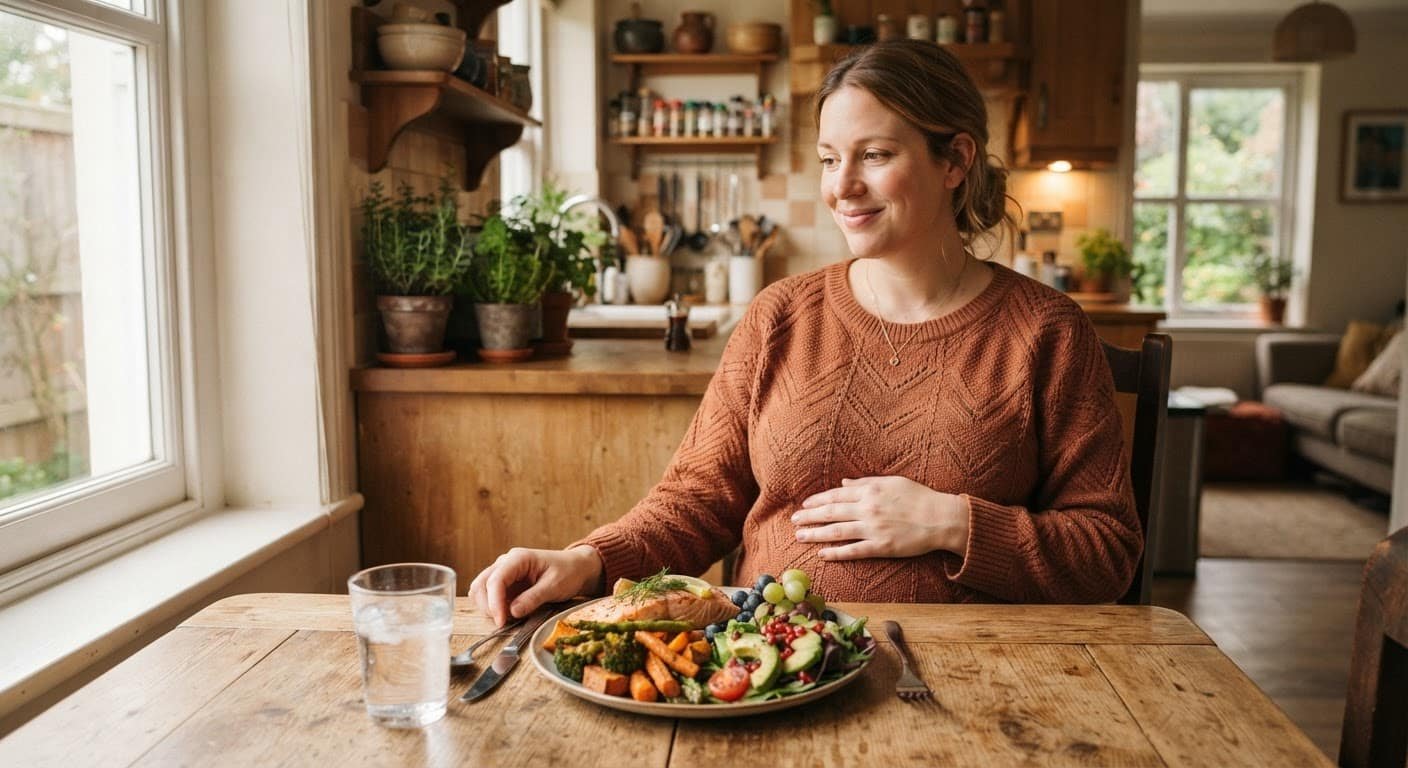
Pregnancy is one of the most beautiful chapters of your life – but it also comes with a whole new set of questions about what’s safe to eat. The good news? You don’t have to give up delicious food. You just need to know what to swap. Here’s your honest, practical guide on foods to avoid during pregnancy – no fear-mongering, just real advice.
Why Does Pregnancy Diet Matter So Much?
During pregnancy, your immune system naturally dials down to protect your baby from being rejected – which also means you’re more vulnerable to foodborne bacteria and infections. What might cause mild discomfort in a non-pregnant person can cause serious complications for you and your baby.
The foods on this list aren’t about being overly cautious. They’re about avoiding specific, documented risks – Listeria, Salmonella, mercury, Toxoplasma – that can lead to miscarriage, premature birth, or developmental delays.
The silver lining? For almost every food to avoid, there’s a safe, satisfying alternative that tastes just as good (sometimes better).
1. High-Mercury Fish
Why it’s risky
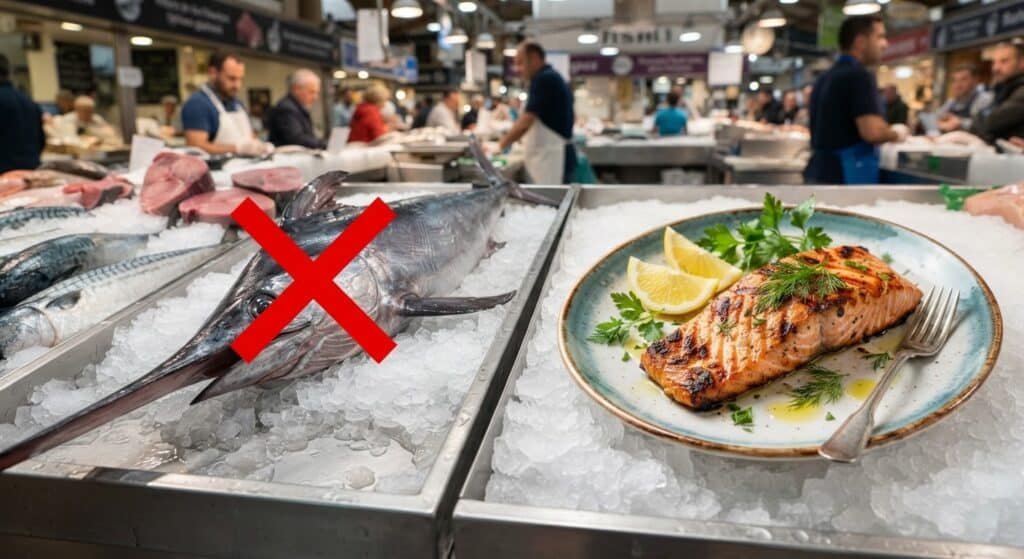
Mercury is a heavy metal that builds up in large, long-living predatory fish. When consumed during pregnancy, it can damage your baby’s developing brain and nervous system – affecting memory, language, and fine motor skills.
Foods to avoid
- ❌ Shark
- ❌ Swordfish
- ❌ King Mackerel
- ❌ Bigeye Tuna
- ❌ Tilefish
- ❌ Orange Roughy
Safe alternatives ✅
- ✅ Salmon – packed with omega-3s that actively support fetal brain development
- ✅ Sardines – affordable, low-mercury, and calcium-rich
- ✅ Shrimp – low mercury and high in protein
- ✅ Catfish – mild flavor, safe in moderation
- ✅ Light canned tuna – safe up to 2–3 servings per week
💡 Mom Tip: Aim for 2–3 servings of low-mercury fish per week. The omega-3s in salmon and sardines are genuinely beneficial for your baby’s brain – so don’t avoid all fish, just the high-mercury ones.
2. Raw or Undercooked Eggs
Why it’s risky
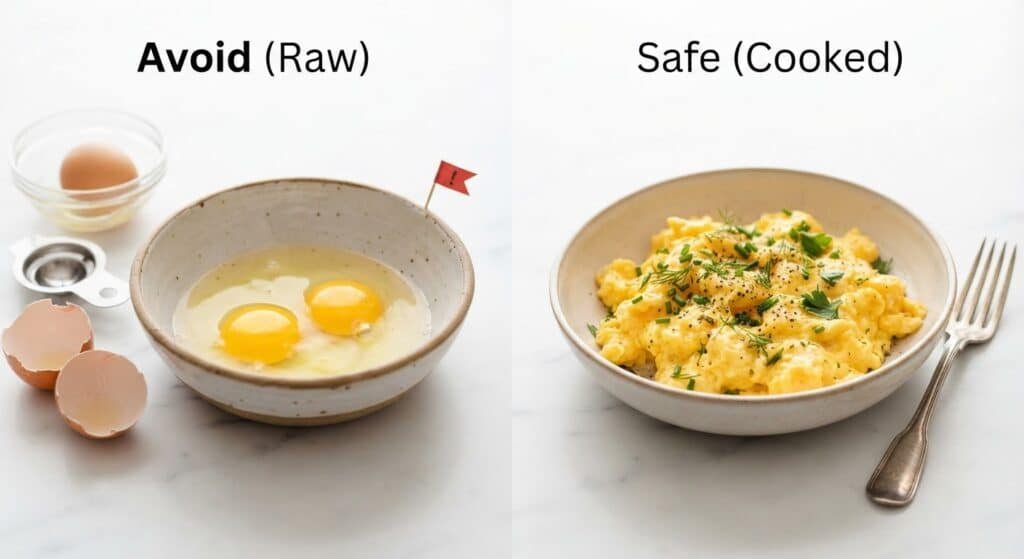
Raw eggs can carry Salmonella – a bacterial infection that causes fever, vomiting, diarrhea, and stomach cramps. During pregnancy, Salmonella can be severe and in rare cases may trigger premature labor.
Foods to avoid
- ❌ Runny fried eggs / sunny-side-up
- ❌ Homemade Caesar salad dressing
- ❌ Raw cookie dough or cake batter
- ❌ Hollandaise sauce
- ❌ Homemade mayonnaise
- ❌ Tiramisu (traditional recipe)
Safe alternatives ✅
- ✅ Hard-boiled or fully scrambled eggs – cooked until both white and yolk are firm
- ✅ Pasteurized eggs – safe for recipes that call for raw (check supermarket labels)
- ✅ Store-bought mayo and Caesar dressing – commercially made with pasteurized eggs
💡 Mom Tip: Eggs are actually a fantastic pregnancy superfood – loaded with choline, protein, and B vitamins. Just cook them fully. A well-done omelette with veggies is one of the best breakfasts you can have during pregnancy.
3. Undercooked or Raw Meat
Why it’s risky
Raw and undercooked meat can carry Toxoplasma gondii, E. coli, Listeria, and Salmonella – all of which can cross the placenta and cause serious harm including miscarriage, stillbirth, or neurological damage to the baby.
Foods to avoid
- ❌ Rare or medium-rare steaks and burgers
- ❌ Raw sushi rolls with meat
- ❌ Deli meats and cold cuts (straight from the package)
- ❌ Dry-cured meats like salami, prosciutto, pepperoni
- ❌ Pâté or meat spreads
Safe alternatives ✅
- ✅ Well-cooked meat – internal temp of 74°C (165°F) for poultry; 71°C (160°F) for beef and pork
- ✅ Heated deli meats – heat until steaming hot before eating
- ✅ Home-cooked chicken and fish – thoroughly cooked
💡 Mom Tip: A meat thermometer is one of the best pregnancy kitchen tools you can buy. Takes the guesswork out completely.
4. Raw Seafood & Sushi
Why it’s risky
Raw shellfish and raw fish can carry Vibrio bacteria, Listeria, and parasites. These are especially dangerous during pregnancy because your immune system can’t fight them as effectively.
Foods to avoid
- ❌ Oysters on the half shell
- ❌ Raw clams and mussels
- ❌ Sashimi and traditional nigiri
- ❌ Raw fish sushi rolls
- ❌ Smoked seafood (unless cooked in a dish)
Safe alternatives ✅
- ✅ Fully cooked sushi rolls – shrimp tempura, California rolls, veggie rolls
- ✅ Cooked shellfish – steamed mussels, cooked prawns
- ✅ Avocado or cucumber rolls – delicious, safe, and satisfying that sushi craving
💡 Mom Tip: Most sushi restaurants can make you an entirely cooked or vegetarian menu – don’t be shy to ask! A shrimp tempura roll hits the spot and is completely pregnancy-safe.
5. Unpasteurized Soft Cheeses
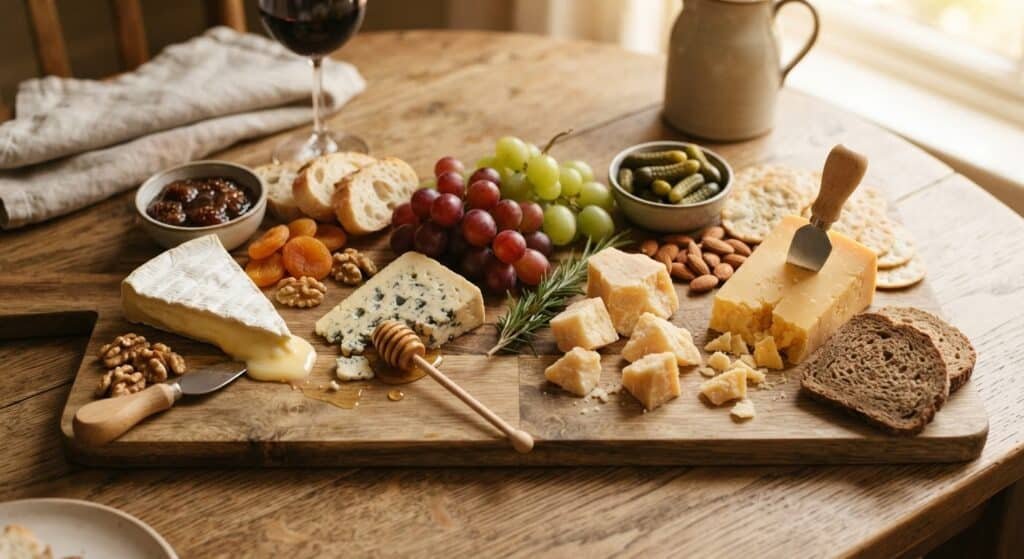
Why it’s risky
Soft cheeses made from unpasteurized (raw) milk can harbor Listeria monocytogenes – a bacteria that crosses the placenta and can cause miscarriage, premature birth, or severe illness in the newborn.
Foods to avoid
- ❌ Brie and Camembert
- ❌ Roquefort and Gorgonzola
- ❌ Queso fresco and queso blanco (unless pasteurized – check labels)
- ❌ Feta (if made from unpasteurized milk)
- ❌ Any cheese labeled “raw milk”
Safe alternatives ✅
- ✅ Hard cheeses – cheddar, Parmesan, Gruyère, Gouda (safe regardless of pasteurization)
- ✅ Pasteurized soft cheeses – always check the label; pasteurized brie and feta are available and safe
- ✅ Paneer (Indian moms – rejoice!) – fully cooked paneer is safe and a great protein source
💡 Mom Tip: In India, most packaged paneer and processed cheese (like Amul slices) is pasteurized and completely safe. When in doubt, heat the cheese until it’s bubbling.
6. Excess Caffeine

Why it’s risky
Caffeine crosses the placenta easily – and your baby can’t metabolize it the way you can. High caffeine intake is linked to restricted fetal growth, low birth weight, and increased risk of miscarriage.
What’s the limit?
Most health authorities (WHO, NHS, ACOG) recommend staying under 200mg of caffeine per day during pregnancy. That’s roughly:
- 1 regular cup (240ml) of brewed coffee
- 2 cups of tea
- 1–2 cans of cola
Foods and drinks to watch
- ⚠️ Coffee (regular and espresso)
- ⚠️ Black and green tea
- ⚠️ Energy drinks – avoid completely
- ⚠️ Cola and some fizzy drinks
- ⚠️ Dark chocolate (in large amounts)
Safe alternatives ✅
- ✅ Decaf coffee – same ritual, almost no caffeine
- ✅ Herbal teas – ginger (great for nausea!), peppermint, rooibos
- ✅ Warm turmeric milk (haldi doodh) – a comforting Indian classic that’s pregnancy-safe
- ✅ Sparkling water with lemon – refreshing and hydrating
💡 Mom Tip: Ginger tea is a double win – it’s caffeine-free AND helps with morning sickness. Keep a thermos of it nearby for those rough first-trimester mornings.
7. Alcohol – Zero is the Safe Amount
Why it’s risky
There is no known safe amount of alcohol during pregnancy. Alcohol crosses the placenta directly and interferes with fetal development. It’s linked to Fetal Alcohol Spectrum Disorders (FASDs), miscarriage, premature birth, low birth weight, and developmental delays.
This is one area where the guidance is unambiguous: avoid completely.
Safe alternatives ✅
- ✅ Non-alcoholic sparkling wine or grape juice – festive and completely safe
- ✅ Mocktails – fruit-based, herb-infused, and genuinely delicious
- ✅ Nimbu pani with mint and chaat masala – a crowd-pleasing Indian alternative for celebrations
- ✅ Coconut water – hydrating, naturally sweet, and great for pregnancy
💡 Mom Tip: At social events, hold a fancy glass of sparkling water with a lime wedge – you’ll feel included and nobody needs to know it’s non-alcoholic unless you want them to.
8. Raw Sprouts
Why it’s risky
Sprouts need warm, humid conditions to grow – the exact same conditions that allow Salmonella, E. coli, and Listeria to thrive. Even washing thoroughly doesn’t fully eliminate the risk because bacteria can be present inside the sprout itself.
Foods to avoid
- ❌ Raw alfalfa sprouts
- ❌ Raw clover sprouts
- ❌ Raw mung bean sprouts (moong dal sprouts eaten uncooked)
- ❌ Raw radish sprouts
Safe alternatives ✅
- ✅ Cooked sprouts – stir-fry or steam them fully; heat eliminates the bacteria
- ✅ Shredded carrots or cucumber – similar crunch in salads and sandwiches
- ✅ Romaine or iceberg lettuce – washed well and safe for salads
- ✅ Cooked moong dal – all the nutrition of sprouts, zero risk
💡 Mom Tip: A lot of Indian chaat recipes use raw sprouts – just swap them for a lightly stir-fried version. The flavors stay the same!
9. Unwashed Produce
Why it’s risky
Fresh fruits and vegetable can carry Toxoplasma (from soil), pesticide residue, and even Listeria – which has been traced to pre-bagged salads, cantaloupe, and strawberries in past outbreaks. “Ready to eat” labels don’t make produce bacteria-free.
What to do
- ⚠️ Never skip washing – including pre-bagged greens
- ⚠️ Scrub firm produce (apples, cucumbers, carrots) with a clean brush
- ⚠️ Peel produce when possible (especially if buying non-organic)
Safe practices ✅
- ✅ Rinse under running water for at least 20 seconds
- ✅ Use a dedicated produce brush for firm fruits and vegetables
- ✅ Dry with a clean towel or paper towel (removes more surface bacteria)
- ✅ Store cut produce covered and refrigerated – don’t leave it out
💡 Mom Tip: A quick soak in a solution of water + a teaspoon of baking soda (followed by a rinse) is one of the most effective ways to reduce pesticide residue on produce.
10. High-Sodium Processed Foods
Why it’s risky
Excessive sodium during pregnancy contributes to water retention (edema), high blood pressure, and increases the risk of preeclampsia – a serious pregnancy complication involving dangerously high BP and potential organ damage.
Foods to watch (or avoid)
- ❌ Instant noodles (Maggi, ramen) – often 800–1200mg sodium per serving
- ❌ Packaged chips and namkeen
- ❌ High-sodium canned soups
- ❌ Processed deli meats
- ❌ Fast food regularly
Safe alternatives ✅
- ✅ Homemade soups and dals – full control over salt
- ✅ Roasted makhana (fox nuts) – lightly salted and a pregnancy superfood
- ✅ Fresh fruit chaat – sweet, tangy, satisfying, and naturally low-sodium
- ✅ Hummus with vegetable sticks – protein-rich, filling, and gentle on blood pressure
💡 Mom Tip: Season food with lemon juice, amchur (dry mango powder), or fresh herbs instead of extra salt. Your taste buds adapt quickly – and your blood pressure will thank you.
The Bottom Line
Pregnancy nutrition doesn’t have to be about restriction – it’s about informed swaps. Most of what you love can be enjoyed safely with small adjustments. Cook your eggs fully. Choose the right fish. Warm up your deli meat. Rinse your produce. Those simple shifts eliminate the vast majority of risk.
Remember: every pregnancy is different. Your doctor or gynecologist knows your specific health history – always loop them in on any dietary concerns, especially if you have conditions like gestational diabetes, anemia, or hypertension.
You’re growing a whole human. That’s extraordinary. Nourish yourself well – and enjoy every (safe) bite. 💛
Quick Reference: Foods to Avoid During Pregnancy & Safe Swaps
| ❌ Avoid | ✅ Safe Swap |
|---|---|
| High-mercury fish (shark, swordfish) | Salmon, sardines, shrimp |
| Raw or runny eggs | Fully cooked eggs, pasteurized eggs |
| Rare/raw meat & deli meats | Well-cooked meat, heated deli meats |
| Raw sushi & shellfish | Cooked rolls, cooked shellfish |
| Unpasteurized soft cheeses | Hard cheeses, pasteurized soft cheeses |
| More than 200mg caffeine/day | Decaf, herbal teas, ginger tea |
| Any alcohol | Mocktails, coconut water, sparkling water |
| Raw sprouts | Cooked sprouts, shredded veggies |
| Unwashed produce | Thoroughly washed & scrubbed produce |
| High-sodium processed food | Homemade meals, makhana, fruit chaat |
⚠️ Disclaimer: This article is for informational purposes only and does not constitute medical advice. Always consult your OB-GYN, gynecologist, or registered dietitian for personalized dietary guidance during pregnancy.
You might also like: