

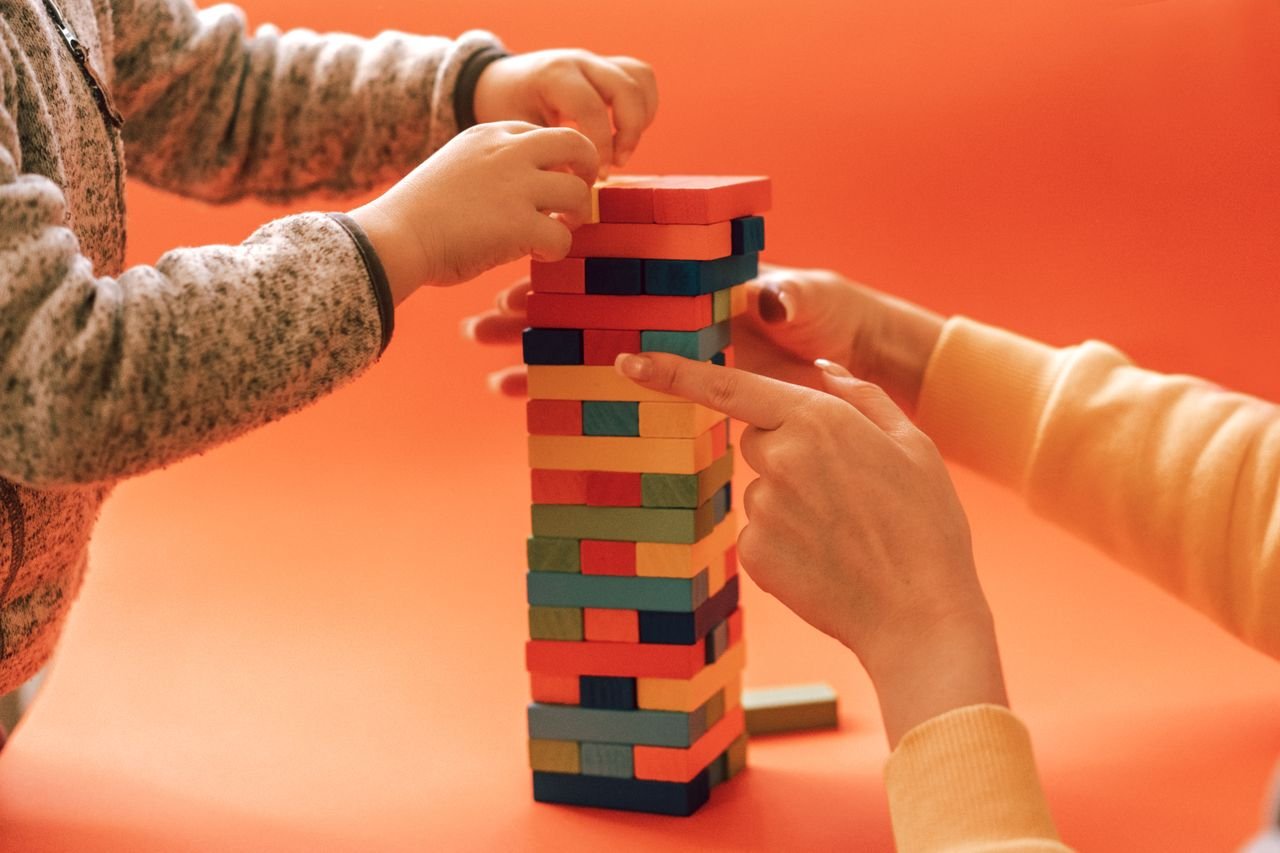
Piaget’s theory of cognitive development is one of the most influential ideas in child psychology and education. Developed by Swiss psychologist Jean Piaget, this theory explains how children think, learn, solve problems, and understand the world as they grow. According to Piaget’s cognitive theory, children are not passive learners who simply absorb information. Instead, they actively build knowledge through exploration, play, observation, and real-life experiences.
Many parents search for answers to questions such as what is Piaget’s theory of cognitive development, what are Piaget’s four stages of development, and how does Piaget’s theory explain child development. Understanding Piaget and stages of development can help parents provide age-appropriate learning opportunities and support healthy child cognitive development.
Piaget proposed that cognitive development in children occurs through four broad stages: the sensorimotor stage, preoperational stage, concrete operational stage, and formal operational stage. Each stage represents a different way of thinking, learning, and understanding the world.
This parent-friendly guide explains Piaget’s theory of cognitive development, Piaget stages of development by age, important concepts such as schemas, assimilation, accommodation, object permanence, conservation, and practical examples of how parents can apply Piaget theory in everyday life.
Who Was Jean Piaget?
Jean Piaget was a Swiss psychologist and one of the most influential figures in developmental psychology. His observations of children led him to develop what is now known as Jean Piaget theory or Piaget cognitive development theory. Piaget believed that children think differently from adults and that their thinking changes in predictable ways as they grow.
Before Piaget’s work, children were often viewed as miniature adults. Piaget changed this perspective by showing that children develop unique ways of understanding the world at different ages. His work influenced education, parenting, child psychology, and early childhood learning.
Even today, Piaget’s theory remains one of the most widely taught child development theories, although modern research has refined and expanded some of his ideas.
What Is Piaget’s Cognitive Theory?
Piaget’s cognitive theory explains how children create mental structures to organize knowledge. These mental structures are called schemas. According to Piaget, children learn by interacting with their environment and adapting their understanding when they encounter new experiences.
Children Are Active Learners
Piaget believed that children learn through:
- Exploring
- Playing
- Touching
- Observing
- Asking questions
- Experimenting
This concept remains important in modern education because active learning supports cognitive development in children.
What Is a Schema?
A schema is a mental framework that helps children understand and organize information.
For example, a toddler may learn that a dog has four legs and fur. At first, the child might call every four-legged animal a dog. Over time, new experiences help the child create more accurate categories.
What Is Assimilation?
Assimilation happens when children fit new information into existing schemas.
Example:
A child who knows what a dog looks like may call a wolf or fox a dog because it resembles their existing understanding.
What Is Accommodation?
Accommodation occurs when children change existing schemas after learning new information.
Example:
The child learns that wolves, foxes, and dogs are different animals and adjusts their understanding.
What Is Equilibration?
Equilibration is the process of balancing old knowledge with new experiences. According to Piaget theory of cognitive development, this process helps children continue learning and adapting.
What Are Piaget’s Four Stages of Cognitive Development?
Piaget proposed four broad stages of cognitive development:
| Stage | Approximate Age | Main Development |
|---|---|---|
| Sensorimotor | Birth to 2 years | Learning through senses and actions |
| Preoperational | 2 to 7 years | Symbolic thinking and language |
| Concrete Operational | 7 to 11 years | Logical thinking about concrete situations |
| Formal Operational | 11 years and older | Abstract thinking and reasoning |
Understanding Piaget stages by age helps parents provide age-appropriate activities and expectations.
Stage 1: Sensorimotor Stage (Birth to About 2 Years)
The sensorimotor stage is the first of Piaget’s stages of cognitive development. During this stage, babies learn through movement, touch, sight, sound, and interaction with their environment.
What Happens During the Sensorimotor Stage?
Babies learn by:
- Grasping objects
- Exploring with their senses
- Crawling and walking
- Listening to sounds
- Repeating actions
Object Permanence in Piaget Theory
One of the most important concepts in Piaget sensorimotor stage is object permanence.
Object permanence means understanding that objects continue to exist even when they are out of sight.
For example, during a game of peekaboo, younger babies may think a hidden face has disappeared, while older babies understand it still exists.
Cause and Effect Learning
Babies begin understanding that actions create results.
Examples include:
- Shaking a rattle to hear sound
- Pressing buttons on toys
- Dropping objects repeatedly
Sensorimotor Stage Examples
Examples of Piaget sensorimotor stage include:
- Looking for hidden toys
- Exploring objects with hands and mouth
- Playing peekaboo
- Learning through sensory experiences
Activities for Babies
Parents can support cognitive development through:
- Sensory play
- Peekaboo
- Stacking toys
- Cause-and-effect toys
- Safe exploration
Stage 2: Preoperational Stage (About 2 to 7 Years)
The preoperational stage is characterized by language growth, imagination, symbolic thinking, and pretend play.
Symbolic Thinking
Children begin using objects to represent other things.
Examples include:
- Pretending a spoon is an airplane
- Using a box as a car
- Playing house
Egocentrism in Piaget Theory
Piaget used the term egocentrism to describe how young children may find it difficult to understand another person’s perspective.
This does not mean children are selfish. It simply reflects their stage of cognitive development.
Conservation in Piaget Theory
Conservation means understanding that quantity remains the same even when appearance changes.
For example:
Water poured from a short glass into a tall glass is still the same amount.
Young children in the preoperational stage often focus on visible changes rather than actual quantity.
Preoperational Stage Examples
Examples include:
- Pretend play
- Storytelling
- Drawing
- Symbolic games
- Talking to toys
Activities for Preschoolers
Parents can encourage development through:
- Role play
- Art activities
- Sorting games
- Storybooks
- Matching games
Stage 3: Concrete Operational Stage (About 7 to 11 Years)
During the concrete operational stage, children become more logical in their thinking.
Characteristics of Concrete Operational Thinking
Children begin understanding:
- Conservation
- Classification
- Seriation
- Reversibility
- Logical reasoning
Conservation Examples
Children understand that:
- Quantity remains the same
- Number remains the same
- Mass remains the same
Classification
Children can organize objects into categories.
Example:
Animals can be grouped into birds, mammals, reptiles, and fish.
Seriation
Children can arrange items according to size, weight, or length.
Concrete Operational Stage Examples
Examples include:
- Solving puzzles
- Following rules in games
- Sorting objects
- Understanding measurements
Activities for School-Age Children
Useful activities include:
- Board games
- Math games
- Science experiments
- Building projects
- Logic puzzles
Stage 4: Formal Operational Stage (Around 11 Years and Beyond)
The formal operational stage is the final stage in Piaget’s theory of cognitive development.
During this stage, teenagers and older children develop abstract thinking and hypothetical reasoning.
Characteristics of Formal Operational Thinking
Children begin:
- Thinking about possibilities
- Planning future goals
- Solving complex problems
- Understanding abstract ideas
- Forming opinions
Formal Operational Stage Examples
Examples include:
- Discussing social issues
- Solving algebra problems
- Conducting experiments
- Understanding hypothetical situations
Not all children develop these abilities at the same pace. Modern developmental psychology recognizes that development varies among individuals.
Piaget’s Key Concepts Explained
Schema
Mental frameworks that organize knowledge.
Assimilation
Adding new experiences to existing understanding.
Accommodation
Changing existing understanding based on new information.
Equilibration
Balancing old knowledge and new learning.
Object Permanence
Understanding that objects exist even when hidden.
Conservation
Understanding that quantity remains unchanged despite changes in appearance.
Egocentrism
Difficulty understanding another person’s perspective.
Symbolic Thinking
Using one object to represent another.
Reversibility
Understanding that actions can be undone mentally.
Piaget Theory Examples in Everyday Parenting
Parents can observe Piaget theory examples in daily life.
Examples include:
- A baby searching for a hidden toy shows object permanence.
- A toddler pretending a block is a phone shows symbolic thinking.
- A preschooler assuming everyone sees things the same way shows egocentrism.
- A school-age child understanding conservation demonstrates logical thinking.
- A teenager discussing future possibilities demonstrates abstract reasoning.
Understanding Piaget cognitive development theory explained for parents can make everyday interactions more meaningful.
How Parents Can Use Piaget’s Theory
Piaget theory and parenting can work together to support healthy development.
Parents can:
- Encourage play-based learning
- Provide hands-on activities
- Ask open-ended questions
- Support curiosity
- Allow children to explore safely
- Match activities to developmental stages
Examples of useful questions include:
- What do you think will happen?
- Why do you think that happened?
- How can we solve this problem?
These simple interactions promote cognitive development in children.
Piaget Theory and Education
Piaget’s ideas strongly influenced classroom teaching.
Educational approaches inspired by Piaget include:
- Learning by doing
- Hands-on experiences
- Problem-solving activities
- Discovery learning
- Interactive teaching
Teachers often use age-appropriate activities that align with Piaget stages of development.
Piaget vs Vygotsky
Piaget believed children learn mainly through independent exploration.
Vygotsky emphasized the importance of social interaction, language, and adult guidance.
Both theories contribute valuable insights into child development and learning.
Criticisms of Piaget’s Theory
Although Piaget’s theory remains influential, researchers have identified some limitations.
Development May Be More Flexible
Children do not always fit neatly into stages.
Some Abilities Appear Earlier
Research suggests that some cognitive skills may develop earlier than Piaget proposed.
Culture Matters
Learning experiences differ across cultures and environments.
What Piaget Got Right
Piaget correctly recognized that:
- Children actively construct knowledge.
- Thinking changes over time.
- Learning depends on experiences.
- Child development follows broad patterns.
Is Piaget’s Theory Still Relevant Today?
Yes, Piaget’s theory remains highly relevant today.
Teachers, psychologists, parents, and educators continue using Piaget’s cognitive theory to understand how children learn and think.
Modern developmental science has refined some aspects of the theory, but Piaget’s stages of cognitive development continue to provide a useful framework for understanding child development.
Piaget theory of cognitive development examples remain valuable because they help parents understand how children process information, solve problems, and explore the world around them.
Frequently Asked Questions
What is Piaget’s theory of cognitive development?
Piaget’s theory explains how children actively construct knowledge and move through four stages of cognitive development.
What are Piaget’s four stages of development?
The four stages are sensorimotor, preoperational, concrete operational, and formal operational.
What is object permanence?
Object permanence is the understanding that objects continue to exist even when hidden.
What is assimilation in Piaget theory?
Assimilation means fitting new information into existing mental frameworks.
What is accommodation in Piaget theory?
Accommodation means changing mental frameworks based on new experiences.
Is Piaget theory still important?
Yes. Piaget’s theory remains a foundational framework in developmental psychology and education.
Key Takeaways for Parents
Piaget’s theory of cognitive development helps parents understand how children learn and think at different ages. Piaget and stages of development provide a useful framework for understanding child behavior, learning patterns, and problem-solving abilities. Although modern research has expanded on Piaget’s original ideas, his work continues to guide parenting, education, and child development practices worldwide.
By encouraging play, exploration, conversation, and hands-on learning, parents can support cognitive development and help children build important skills for life.