

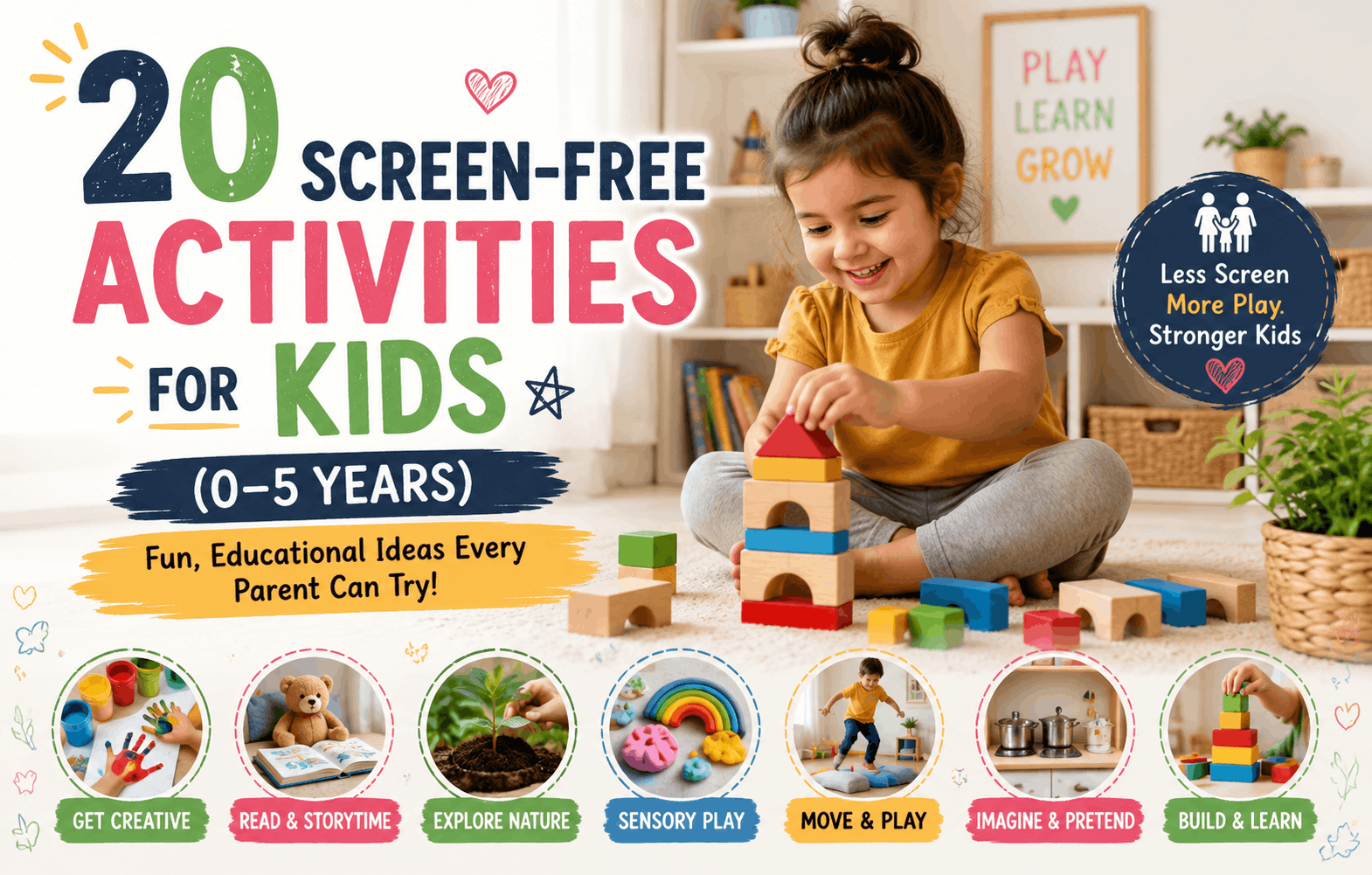
Parents today face a common challenge—keeping young children entertained without relying on smartphones, tablets, or television. While screens can occasionally be helpful, too much screen time during the early years may reduce opportunities for active play, creativity, and meaningful interaction.
The good news is that children under five naturally learn best through hands-on experiences. From stacking blocks and reading books to sensory play and outdoor exploration, there are countless screen-free activities for kids that encourage learning while keeping little ones happily engaged.
Whether you’re looking for screen-free activities for toddlers, screen-free activities for preschoolers, or simple activities for babies, this guide shares practical ideas that are easy to set up at home. Most require only a few everyday supplies, making them perfect for busy parents and caregivers.
By the end of this guide, you’ll have 20 fun activities that help reduce screen time while supporting your child’s physical, emotional, social, and cognitive development.
Key Takeaways
- Screen-free play supports healthy brain, language, and motor skill development.
- Activities can be tailored to babies, toddlers, and preschoolers based on their developmental stage.
- Simple household items often make the best learning tools.
- A mix of indoor activities, outdoor play, sensory experiences, and creative projects keeps children engaged.
- Consistent screen-free routines encourage independent play and stronger family bonding.
Why Screen-Free Activities Matter for Children Under Five
The first five years are one of the most important stages of childhood development. During this time, children’s brains grow rapidly, and every interaction helps build essential life skills. While digital devices have their place, no-screen activities provide experiences that screens simply cannot replace.
1. Supports Healthy Brain Development
Young children learn through touch, movement, listening, and exploration. Activities like building towers, sorting objects, reading stories, and imaginative play strengthen memory, attention, and problem-solving skills.
These early childhood development activities also encourage curiosity, helping children become confident learners.
2. Improves Fine and Gross Motor Skills
Many hands-on learning for toddlers involve grasping, stacking, drawing, running, jumping, or climbing. These movements improve:
- Hand-eye coordination
- Balance
- Strength
- Fine motor skills
- Gross motor development
Activities such as puzzles, finger painting, and obstacle courses are excellent examples of fine motor activities and gross motor activities.
3. Encourages Creativity and Imagination
Unlike passive screen viewing, open-ended play allows children to invent stories, solve problems, and express emotions.
Simple toys like wooden blocks, pretend kitchens, dolls, or craft supplies often inspire hours of creative play.
Recommended Amazon Products
- Melissa & Doug Wooden Building Blocks – [Check Price on Amazon]
- Melissa & Doug Pretend Food Set – [Check Price on Amazon]
4. Builds Language and Communication Skills
Reading together, storytelling, singing songs, and role-playing help children expand their vocabulary naturally.
These educational activities for kids also improve listening skills and encourage meaningful conversations between parents and children.
5. Promotes Better Sleep and Health
Reducing screen exposure, especially before bedtime, helps children develop healthier sleep routines.
Replacing evening screen time with reading, puzzles, or quiet sensory activities creates a calming bedtime routine that benefits both children and parents.
6. Strengthens Family Bonding
Many screen-free family activities encourage parents to actively participate instead of simply supervising.
Whether you’re gardening together or building a blanket fort, shared experiences create lasting memories and strengthen emotional connections.
Age Guide Before You Start
Every child develops at their own pace. Choosing age-appropriate activities ensures they remain safe, enjoyable, and educational.
| Age | Focus | Best Activity Types |
|---|---|---|
| 0–12 Months | Sensory exploration | Tummy time, sensory baskets, reading |
| 1–2 Years | Movement & imitation | Water play, blocks, dancing |
| 2–3 Years | Imaginative play | Pretend kitchen, crafts, play dough |
| 3–5 Years | Creativity & problem-solving | Puzzles, storytelling, obstacle courses |
Remember that these age ranges are only guidelines. Always supervise young children and adapt activities to match your child’s interests and abilities.
1. Sensory Basket Exploration
Best Age: 0–12 Months
One of the easiest screen-free activities for babies is creating a sensory basket filled with safe objects that encourage exploration.
Babies naturally learn by touching, squeezing, shaking, and observing different textures and shapes.
Materials Needed
- Silicone teether
- Wooden spoon
- Soft fabric
- Large textured balls
- Baby-safe mirror
- Soft brush
Skills Developed
- Sensory awareness
- Hand-eye coordination
- Fine motor skills
- Curiosity
Why It Helps
Sensory exploration stimulates multiple areas of the brain and supports early cognitive development.
Safety Tips
- Always supervise your baby.
- Avoid small objects that could become choking hazards.
- Wash sensory items regularly.
Amazon Recommendations
- Baby Einstein Sensory Toys – [Check Price on Amazon]
- Infant Discovery Ball Set – [Check Price on Amazon]
- Baby-Safe Mirror – [Check Price on Amazon]
2. Read Picture Books Together
Best Age: 0–5 Years
Reading is one of the most effective learning activities for toddlers and preschoolers. Even babies benefit from hearing your voice while looking at colorful illustrations.
Instead of simply reading the words, make the experience interactive.
How to Do It
- Point to pictures.
- Ask simple questions.
- Let your child turn the pages.
- Make animal sounds.
- Encourage them to identify colors and objects.
Skills Developed
- Language development
- Listening skills
- Vocabulary
- Memory
- Imagination
Why It Helps
Daily reading improves literacy skills and creates positive reading habits from an early age.
Amazon Recommendations
- “Brown Bear, Brown Bear, What Do You See?” – [Check Price on Amazon]
- “Dear Zoo” Board Book – [Check Price on Amazon]
- National Geographic Little Kids Books – [Check Price on Amazon]
3. Water Play Fun
Best Age: 1–3 Years
Water play is one of the most popular screen-free activities for toddlers because it combines fun with learning.
A small tub filled with water can keep children engaged while teaching basic science and math concepts.
Materials Needed
- Plastic cups
- Measuring spoons
- Funnels
- Floating toys
- Sponges
Activities to Try
- Pouring water
- Filling containers
- Floating and sinking experiments
- Squeezing sponges
- Washing toy animals
Skills Developed
- Hand coordination
- Problem-solving
- Cause and effect
- Fine motor control
Safety Tip
Never leave children unattended around water, even if it’s only a few inches deep.
Amazon Recommendations
- Skip Hop Bath Toys – [Check Price on Amazon]
- Toddler Water Table – [Check Price on Amazon]
- Colorful Measuring Cups – [Check Price on Amazon]
4. Homemade Sensory Bins
Best Age: 18 Months–5 Years
Sensory bins are excellent DIY toddler activities that encourage independent exploration.
Fill a storage container with one sensory material and add themed toys for children to discover.
Sensory Bin Ideas
- Rice
- Dry pasta
- Oats
- Pom-poms
- Sand
- Water beads (only for older preschoolers with supervision)
Themes
- Farm animals
- Dinosaurs
- Ocean life
- Construction
- Alphabet letters
Skills Developed
- Sensory processing
- Creativity
- Language development
- Fine motor skills
Why Parents Love It
Sensory bins offer open-ended play, meaning there is no right or wrong way to explore.
Amazon Recommendations
- Sensory Bin Starter Kit – [Check Price on Amazon]
- Montessori Scooping Tools – [Check Price on Amazon]
- Mini Animal Figures – [Check Price on Amazon]
5. Finger Painting
Best Age: 2–5 Years
Finger painting combines creativity with sensory exploration, making it one of the best creative play ideas for young children.
Instead of focusing on creating perfect artwork, let children experiment with colors, patterns, and textures.
Materials Needed
- Washable finger paints
- Large paper sheets
- Apron
- Wet wipes
Activities
- Mix colors
- Make handprints
- Paint animals
- Create rainbow patterns
- Stamp with leaves
Skills Developed
- Creativity
- Color recognition
- Fine motor development
- Self-expression
Easy Cleanup Tip
Cover the table with newspaper or a reusable plastic mat before starting.
Amazon Recommendations
- Crayola Washable Finger Paint – [Check Price on Amazon]
- Kids’ Art Smock – [Check Price on Amazon]
6. Building Blocks Challenge
Best Age: 1–5 Years
Building blocks remain one of the most valuable Montessori activities at home because they encourage children to think, experiment, and solve problems.
Challenge your child to build:
- Towers
- Bridges
- Castles
- Houses
- Animal shelters
As children grow, encourage them to sort blocks by color, count pieces, or recreate simple structures from memory.
Skills Developed
- Spatial awareness
- Problem-solving
- Hand-eye coordination
- Patience
- Creativity
Why It Helps
Open-ended toys like building blocks support independent play and grow with your child, making them a worthwhile long-term investment.
Amazon Recommendations
- Melissa & Doug Wooden Building Blocks – [Check Price on Amazon]
- Mega Bloks First Builders Set – [Check Price on Amazon]
- Magnetic Tiles Building Set – [Check Price on Amazon]
7. Pretend Kitchen Play
Best Age: 2–5 Years
Pretend play is one of the best educational screen-free games because it combines imagination with real-life learning.
Set up a simple pretend kitchen using toy food, bowls, spoons, or even recycled containers.
Children can take turns being the chef, customer, or grocery store cashier.
Activities to Try
- Cook imaginary meals
- Grocery shopping
- Tea party
- Restaurant role play
- Picnic indoors
Skills Developed
- Social skills
- Communication
- Creativity
- Problem-solving
- Emotional development
Extend the Learning
Ask your child to count apples, identify food colors, or sort fruits and vegetables. This adds early math and language practice while keeping play fun.
Amazon Recommendations
- Melissa & Doug Wooden Food Set – [Check Price on Amazon]
- KidKraft Pretend Kitchen – [Check Price on Amazon]
- Toy Shopping Cart – [Check Price on Amazon]
8. Dance Party
Best Age: 1–5 Years
A dance party is one of the easiest screen-free activities for kids because it requires very little preparation and encourages children to move their bodies. Dancing helps children burn energy, improve coordination, and express themselves through music.
Whether it’s a rainy day indoors or a fun family activity after dinner, dancing is an excellent way to reduce screen time while keeping children active.
Materials Needed
- Music player or Bluetooth speaker
- Open space to move safely
Fun Dance Ideas
- Freeze Dance
- Animal Dance (hop like a bunny, stomp like an elephant)
- Follow the Leader
- Musical Statues
- Copy My Moves
Skills Developed
- Gross motor skills
- Balance and coordination
- Listening skills
- Rhythm and timing
- Confidence
Why It Helps
Dance encourages physical activity while improving body awareness and social interaction. It also supports healthy development by giving children a fun outlet for their energy.
Amazon Recommendations
- Kids Bluetooth Speaker – [Check Price on Amazon]
- Musical Instrument Set for Kids – [Check Price on Amazon]
9. Nature Walk Adventure
Best Age: 2–5 Years
A simple walk outdoors can become an exciting learning adventure. Nature walks encourage curiosity and help children appreciate the world around them while enjoying fresh air and exercise.
This is one of the best screen-free family activities because everyone can participate together.
What to Look For
- Different leaves
- Flowers
- Birds
- Butterflies
- Rocks
- Clouds
- Insects
- Tree bark
Make It Interactive
Ask questions like:
- Which leaf is the biggest?
- How many birds can you spot?
- What colors do you see?
- Can you hear the wind?
Skills Developed
- Observation skills
- Vocabulary
- Critical thinking
- Physical activity
- Appreciation for nature
Why It Helps
Outdoor exploration encourages mindfulness and helps children understand science through real-life experiences.
Amazon Recommendations
- Kids Bug Catching Kit – [Check Price on Amazon]
- Child Binoculars – [Check Price on Amazon]
10. Indoor Obstacle Course
Best Age: 2–5 Years
Turn your living room into an exciting adventure course using everyday household items. This activity is perfect for rainy days when outdoor play isn’t possible.
Materials Needed
- Pillows
- Blankets
- Chairs
- Soft toys
- Masking tape
- Hula hoop (optional)
Challenge Ideas
- Crawl under chairs
- Jump over pillows
- Balance on a tape line
- Toss a soft ball into a basket
- Hop from cushion to cushion
Skills Developed
- Gross motor development
- Coordination
- Balance
- Problem-solving
- Confidence
Safety Tips
- Remove sharp objects from the area.
- Use soft materials.
- Stay nearby to supervise younger children.
Why It Helps
Obstacle courses improve physical fitness while making movement feel like an exciting game rather than exercise.
Amazon Recommendations
- Kids Balance Stepping Stones – [Check Price on Amazon]
- Soft Foam Play Set – [Check Price on Amazon]
11. Simple Puzzles
Best Age: 2–5 Years
Puzzles are classic educational activities for kids that strengthen problem-solving skills and patience.
Start with large wooden puzzles for toddlers and gradually introduce more detailed puzzles as your child grows.
Puzzle Ideas
- Alphabet puzzles
- Animal puzzles
- Number puzzles
- Shape puzzles
- World map puzzles for preschoolers
Skills Developed
- Logical thinking
- Fine motor skills
- Memory
- Hand-eye coordination
- Spatial awareness
Why It Helps
Completing puzzles teaches persistence while improving concentration and cognitive development.
Amazon Recommendations
- Melissa & Doug Wooden Puzzle Set – [Check Price on Amazon]
- Jumbo Floor Puzzle – [Check Price on Amazon]
12. DIY Craft Time
Best Age: 2–5 Years
Crafting encourages children to create something unique using simple materials found at home. It is one of the most enjoyable creative play ideas because there is no right or wrong result.
Easy Craft Supplies
- Construction paper
- Glue sticks
- Stickers
- Cotton balls
- Popsicle sticks
- Pipe cleaners
- Safety scissors
- Googly eyes
Easy Craft Projects
- Paper animals
- Greeting cards
- Paper flowers
- Handprint art
- Paper plate masks
Skills Developed
- Creativity
- Fine motor skills
- Concentration
- Imagination
Parent Tip
Display your child’s artwork around the house. This builds confidence and encourages future creativity.
Amazon Recommendations
- Crayola Craft Kit – [Check Price on Amazon]
- Washable Glue Sticks – [Check Price on Amazon]
- Kids Safety Scissors – [Check Price on Amazon]
13. Play Dough Creations
Best Age: 2–5 Years
Play dough is one of the best hands-on learning for toddlers activities because children can squeeze, roll, flatten, and shape it in endless ways.
Fun Ideas
- Make letters
- Create animals
- Roll snakes
- Build flowers
- Count play dough balls
- Make pretend food
Skills Developed
- Fine motor development
- Creativity
- Finger strength
- Shape recognition
- Early literacy
Extend the Learning
Practice counting, spelling simple words, or identifying colors while playing.
Why It Helps
Manipulating play dough strengthens the small muscles needed later for writing.
Amazon Recommendations
- Play-Doh Classic Set – [Check Price on Amazon]
- Play Dough Tools Kit – [Check Price on Amazon]
14. Sorting & Matching Games
Best Age: 2–5 Years
Sorting games are excellent learning activities for toddlers because they teach children how to identify similarities and differences.
The best part is that you can use items already available at home.
Sorting Ideas
- Socks by color
- Toys by size
- Buttons by shape
- Pom-poms by color
- Blocks by size
- Plastic animals by type
Matching Activities
- Match colors
- Match numbers
- Match shapes
- Match family photos
- Match everyday objects
Skills Developed
- Logical thinking
- Categorization
- Memory
- Language development
- Early math skills
Why It Helps
Sorting activities build foundational skills for mathematics and problem-solving.
Amazon Recommendations
- Montessori Sorting Toys – [Check Price on Amazon]
- Color Sorting Bears Set – [Check Price on Amazon]
15. Music & Rhythm Activities
Best Age: 0–5 Years
Children naturally respond to music from an early age. Singing songs, clapping rhythms, and playing simple instruments are wonderful screen-free play ideas that encourage learning through sound and movement.
Easy Music Activities
- Sing nursery rhymes
- Clap different rhythms
- Dance with scarves
- Make homemade shakers
- Tap spoons on containers
- Copy simple beats
Homemade Instruments
- Rice in plastic bottles
- Pots and wooden spoons
- Empty tissue boxes as guitars
Skills Developed
- Listening skills
- Rhythm
- Memory
- Language development
- Coordination
Why It Helps
Music strengthens brain connections involved in language, memory, and emotional development. Group music activities also encourage cooperation and confidence.
Amazon Recommendations
- Melissa & Doug Band in a Box – [Check Price on Amazon]
- Kids Musical Instruments Set – [Check Price on Amazon]
- Rhythm Egg Shakers – [Check Price on Amazon]
Quick Comparison: Which Activity Builds Which Skills?
| Activity | Fine Motor | Gross Motor | Creativity | Language | Problem-Solving |
|---|---|---|---|---|---|
| Dance Party | ✓ | ✓ | |||
| Nature Walk | ✓ | ✓ | ✓ | ✓ | |
| Indoor Obstacle Course | ✓ | ✓ | |||
| Puzzles | ✓ | ✓ | |||
| DIY Crafts | ✓ | ✓ | |||
| Play Dough | ✓ | ✓ | ✓ | ||
| Sorting Games | ✓ | ✓ | ✓ | ||
| Music Activities | ✓ | ✓ | ✓ |
Parent Tip: Rotate Activities Every Week
Children don’t always need new toys—they often just need a fresh way to play. Instead of buying more, rotate your child’s toys and activity supplies every one to two weeks. This simple strategy keeps familiar items exciting and encourages independent play.
For example:
| Week | Focus Activities |
|---|---|
| Week 1 | Building Blocks, Reading, Water Play |
| Week 2 | Crafts, Play Dough, Nature Walk |
| Week 3 | Puzzles, Music, Pretend Kitchen |
| Week 4 | Obstacle Course, Sorting Games, Sensory Bin |
Rotating activities helps prevent boredom while making the most of the toys and materials you already have.
16. Gardening with Kids
Best Age: 2–5 Years
Gardening is a fun way to introduce children to nature while teaching responsibility and patience. Watching a seed grow into a plant helps children understand how living things change over time.
You don’t need a large garden—even a few pots on a balcony or windowsill are enough to get started.
Easy Gardening Activities
- Plant flower or vegetable seeds
- Water plants every day
- Pull weeds together
- Observe insects like butterflies and ladybugs
- Measure plant growth each week
Skills Developed
- Responsibility
- Observation
- Patience
- Fine motor skills
- Appreciation for nature
Why It Helps
Gardening encourages outdoor exploration, supports early science learning, and gives children a sense of accomplishment.
Amazon Recommendations
- Kids Gardening Tool Set – [Check Price on Amazon]
- Watering Can for Kids – [Check Price on Amazon]
- Beginner Seed Starter Kit – [Check Price on Amazon]
17. Treasure Hunt
Best Age: 2–5 Years
Treasure hunts turn everyday objects into exciting discoveries. This activity encourages children to think, observe, and solve simple clues while staying active.
Indoor Treasure Hunt Ideas
- Find something red.
- Find something soft.
- Find a toy animal.
- Find a round object.
- Find your favorite book.
Outdoor Treasure Hunt Ideas
- Collect three leaves.
- Find a small rock.
- Spot a bird.
- Look for a flower.
- Find something that smells nice.
Skills Developed
- Observation
- Problem-solving
- Memory
- Listening skills
- Physical activity
Why It Helps
Treasure hunts combine learning with movement, making them one of the most engaging screen-free activities for preschoolers.
Amazon Recommendations
- Nature Explorer Kit – [Check Price on Amazon]
- Kids Magnifying Glass – [Check Price on Amazon]
18. Storytelling with Puppets
Best Age: 2–5 Years
Storytelling encourages children to use their imagination while building language and communication skills.
Use puppets, stuffed animals, or even socks to create fun stories together.
Story Ideas
- A trip to the zoo
- A magical forest adventure
- Visiting outer space
- A day at the beach
- A superhero saves the day
Skills Developed
- Vocabulary
- Creativity
- Emotional expression
- Listening skills
- Confidence
Why It Helps
Children often express thoughts and feelings more freely through pretend characters, making puppet play an excellent tool for emotional development.
Amazon Recommendations
- Melissa & Doug Puppet Set – [Check Price on Amazon]
- Animal Hand Puppets – [Check Price on Amazon]
19. Balloon Games
Best Age: 3–5 Years
A balloon provides endless opportunities for movement and laughter while helping children improve coordination.
Fun Balloon Games
- Keep the balloon in the air.
- Balloon volleyball.
- Balloon tennis with paper plate paddles.
- Color matching balloons.
- Balloon relay race.
Skills Developed
- Hand-eye coordination
- Gross motor skills
- Balance
- Teamwork
Safety Tips
- Always supervise children.
- Remove broken balloon pieces immediately.
- Avoid balloons for children under three due to choking hazards.
Why It Helps
Balloon games encourage active movement while slowing the pace enough for younger children to develop coordination.
Amazon Recommendations
- Biodegradable Party Balloons – [Check Price on Amazon]
20. Family Yoga & Stretching
Best Age: 3–5 Years
Yoga introduces children to movement, balance, and relaxation in a playful way.
Instead of focusing on perfect poses, encourage children to imitate animals and enjoy moving together.
Easy Yoga Poses
- Cat
- Cow
- Butterfly
- Tree
- Cobra
- Downward Dog
Skills Developed
- Balance
- Flexibility
- Body awareness
- Emotional regulation
- Concentration
Why It Helps
Family yoga encourages mindfulness while helping children manage emotions and develop healthy movement habits.
Amazon Recommendations
- Kids Yoga Cards – [Check Price on Amazon]
Bonus: Screen-Free Activities by Age
Every child develops differently, but choosing age-appropriate activities helps keep play both safe and engaging.
Activities for Babies (0–12 Months)
- Tummy time
- Sensory baskets
- Peekaboo
- Reading board books
- Singing nursery rhymes
- Baby-safe mirrors
- Soft ball play
- Gentle music
Activities for Toddlers (1–3 Years)
- Water play
- Building blocks
- Dance parties
- Play dough
- Finger painting
- Sorting games
- Simple puzzles
- Pretend kitchen
- Nature walks
- Sensory bins
Activities for Preschoolers (3–5 Years)
- Storytelling
- Treasure hunts
- Gardening
- Balloon games
- Family yoga
- Obstacle courses
- Arts and crafts
- Music games
- Alphabet puzzles
- Role play
How to Reduce Screen Time Without Tantrums
Reducing screen time doesn’t have to be stressful. The key is replacing screens with enjoyable alternatives instead of simply taking devices away.
1. Create a Daily Routine
Set regular times for meals, play, reading, naps, and outdoor activities. Predictable routines help children know what to expect.
2. Offer Choices
Instead of asking, “Do you want the tablet?” ask:
- Would you like to build blocks or paint?
- Should we read a book or play outside?
Giving children choices helps them feel involved.
3. Keep Activity Supplies Ready
Store books, puzzles, craft materials, and toys in easy-to-reach baskets so children can start playing independently.
4. Be a Role Model
Children often copy adult behavior. Limiting your own phone use during family time encourages them to do the same.
5. Rotate Toys
Changing available toys every week keeps familiar activities exciting without buying new ones.
Simple Weekly Screen-Free Activity Planner
| Day | Indoor Activity | Outdoor Activity |
|---|---|---|
| Monday | Picture Books | Nature Walk |
| Tuesday | Play Dough | Ball Games |
| Wednesday | Building Blocks | Gardening |
| Thursday | Finger Painting | Treasure Hunt |
| Friday | Music & Dance | Playground Visit |
| Saturday | DIY Crafts | Family Picnic |
| Sunday | Puzzle Time | Family Yoga |
Screen-Free Activity Essentials
Having a few versatile supplies at home makes it easier to encourage screen-free play ideas every day.
Recommended Essentials
- Wooden building blocks
- Board books
- Washable finger paints
- Play dough
- Crayons and coloring books
- Child-safe scissors
- Puzzles
- Musical instruments
- Sensory bin containers
- Gardening tools
These items can be used in dozens of different activities for children under 5, making them worthwhile investments.
Common Mistakes Parents Make When Reducing Screen Time
Removing Screens Too Quickly
Gradually replace screen time with engaging alternatives rather than eliminating it overnight.
Offering Boring Alternatives
Children are more likely to choose active play when the activities are interactive and age-appropriate.
Buying Too Many Toys
Children often become overwhelmed by too many choices. Rotating a smaller selection of toys is usually more effective.
Forgetting Outdoor Play
Fresh air and movement are essential for healthy development.
Expecting Independent Play Immediately
Independent play is a skill that develops over time. Start by playing together before encouraging children to explore on their own.
Expert Tips for Making Screen-Free Play More Engaging
- Follow your child’s interests instead of forcing activities.
- Keep sessions short for younger children.
- Mix quiet play with active movement.
- Praise effort rather than the final result.
- Read together every day.
- Encourage imaginative play using everyday household objects.
- Spend at least a little time outdoors whenever possible.
- Make screen-free play part of your daily family routine.
Frequently Asked Questions
What are the best screen-free activities for toddlers?
Building blocks, water play, sensory bins, picture books, dancing, pretend play, and sorting games are excellent choices because they support physical, language, and cognitive development while keeping toddlers engaged.
How much screen time should children under five have?
Many child development experts recommend limiting recreational screen time for young children and prioritizing active, hands-on learning. Reading, outdoor play, creative activities, and family interaction should make up most of a child’s daily routine.
What are Montessori-inspired screen-free activities?
Popular Montessori-style activities include building blocks, practical life tasks, sensory play, gardening, sorting objects, pouring water, matching games, and independent exploration using simple everyday materials.
How can I entertain my child without TV?
Create a mix of indoor and outdoor activities such as reading books, painting, puzzles, pretend play, music, obstacle courses, gardening, and nature walks. Rotating activities regularly helps maintain interest.
What indoor activities improve brain development?
Reading, puzzles, sensory bins, storytelling, play dough, building blocks, sorting games, and arts and crafts all encourage problem-solving, language development, creativity, and critical thinking.
Can screen-free play improve speech development?
Yes. Reading together, singing songs, storytelling, role-playing, and everyday conversations provide far more opportunities for language development than passive screen viewing.
What are the best outdoor screen-free activities?
Nature walks, gardening, treasure hunts, ball games, playground visits, and family picnics encourage movement, curiosity, and social interaction.
How can working parents encourage screen-free play?
Focus on quality rather than quantity. Even 20–30 minutes of reading, puzzles, crafts, or outdoor play together each day can help establish healthy screen-free habits.
Final Thoughts
Creating a childhood filled with meaningful play doesn’t require expensive toys or complicated planning. The best screen-free activities for kids are often the simplest—reading a favorite book, building with blocks, exploring nature, dancing in the living room, or creating artwork together.
By introducing a variety of screen-free activities for toddlers, screen-free activities for preschoolers, and activities for babies, you’ll help your child develop creativity, confidence, language, motor skills, and a lifelong love of learning.
Remember, reducing screen time is a gradual process. Start with one or two activities each day, follow your child’s interests, and enjoy the opportunity to create lasting family memories. Small, consistent changes can make a big difference in your child’s growth and development.
If you found these ideas helpful, bookmark this guide and revisit it whenever you need fresh inspiration for fun, educational, and engaging screen-free activities for kids.