
If you are raising children in Dubai — or visiting with them — you already know how quickly ordinary weeks disappear into school runs, swimming lessons and “just one more story.” A family photoshoot will not slow time down. What it can do is give you a calm, intentional hour (or two) where the goal is simply to be together, and to keep a record of how this season of parenting actually felt.
I am Zahra Ali, a Dubai lifestyle photographer and a parent myself. I moved here in 2020 with my husband and our little one, and I have spent years photographing families on beaches, in heritage lanes, in parks, in the desert and — just as often — in living rooms when the heat makes the outdoors unkind. This guide is written for parents: how to choose a season, pick a location that matches your children’s ages, dress without stress, time the session around naps, and keep everyone (including you) as happy as possible on the day.
It is not a sales pitch. It is the same planning conversation I have with families before we meet.
Why family photoshoot matter when life already feels full
Parenting is relentless and beautiful in the same week. You notice your child’s hands look different, or that the toddler who hated shoes now insists on tying them alone. Those shifts rarely announce themselves with a calendar invite. Photographs will not replace the moments you missed while answering WhatsApp — but they do give future-you something kinder than a blurry phone burst from a birthday café.
Parents often tell me they wait for the “right” time: after the baby sleeps through the night, after the toddler’s tantrum phase, after the next holiday. There is never a perfectly tidy season. The families who leave with images they love are usually the ones who booked around real life — nap windows, school holidays, cooler weather — rather than waiting for a mythical calm week.
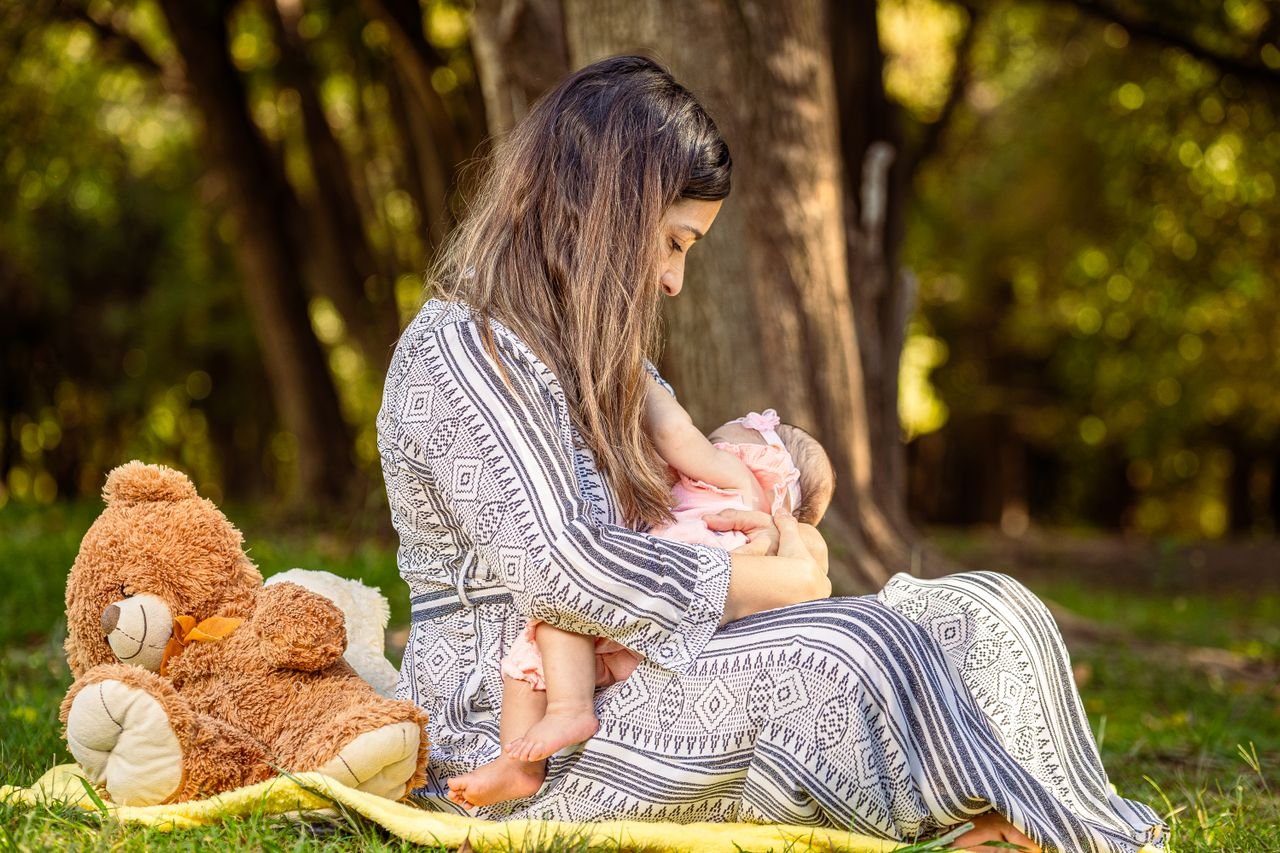
If you are expecting, you may also be thinking about maternity portraits or a newborn session later. Those chapters connect naturally to family photography: the bump, the first weeks at home, then the wider family once siblings are in the mix. Plan them as a story across months, not as three unrelated appointments.
Start with your children, not a landmark
Dubai is full of iconic backdrops. That can be a trap. The “best” location for a parent is the one where your children can be themselves for sixty to ninety minutes without melting down.
Ask yourself:
– How old are the children, and how long can they happily be out of their comfort zone?
– Do they need a toilet nearby, a pushchair path, shade, or a place to run?
– Are you travelling with grandparents who walk slowly?
– Is anyone sensitive to sand, crowds, wind or bright open spaces?
– Do you want play and movement, or quieter cuddles?
A two-year-old who loves digging will often thrive on a beach at golden hour. A newborn and exhausted parents usually do better at home with soft window light. A family with three energetic siblings may prefer a park where chasing is allowed. Matching the place to the children is the single biggest kindness you can do yourselves before you ever open a map.
Dubai’s seasons: plan around heat, not only aesthetics
Cooler months (roughly October to April)
This is outdoor season for most families. Mornings and evenings are comfortable, light is softer at the edges of the day, and children generally last longer before fatigue sets in. Beaches, Al Seef and the Creek area, green parks, desert edges and skyline walks all become realistic options.
Golden hour — the stretch shortly after sunrise and before sunset — is especially kind to faces and to parents who do not want squinting toddlers. Midday outdoor sessions in any month tend to mean harsh light and shorter tempers, so I almost always guide families toward early or late slots when we are outside.
Peak periods for family sessions in Dubai often include the cooler winter months, school holidays, Eid and the festive season. If those windows matter to you, book earlier than you think you need to. I usually suggest three to four weeks’ notice for a standard session, and longer ahead of busy periods — but the exact lead time depends on your photographer’s diary.
Warmer months (roughly May to September)
Summer does not cancel family photography; it relocates it. When the air is heavy and pavements radiate heat, I lean toward in-home or hotel lifestyle sessions, with only brief outdoor attempts at first light if a family is determined to have sea or sand in the frame.
Indoors, afternoon window light is often the most useful. Curtains open, a cleared sofa corner, the toys your children actually love — that is frequently enough. Newborns and toddlers stay on their own feed and nap rhythm. Parents stay cooler. The photographs feel intimate because they were made in the rooms where bedtime stories already happen.
If you insist on outdoors in summer, treat sunrise as non-negotiable, keep the session short, pack water and shade, and have an indoor backup. Midday outdoor family shoots in peak heat rarely produce the relaxed expressions parents hope for, and they are rarely kind to children.
Location ideas that work for real families
Beaches (JBR, Jumeirah coastline, quieter Palm pockets)
Beaches are wonderful when children need sensory play: sand, water’s edge, space to run. They also ask for practical parenting: a change of clothes, wipes, water, and a plan if someone gets sandy and upset. Golden hour softens the scene; the open sky looks generous in neutrals and linens.
Check access and any photography guidance with the specific beach or hotel. Public and private stretches are not identical.
Al Seef and Dubai Creek
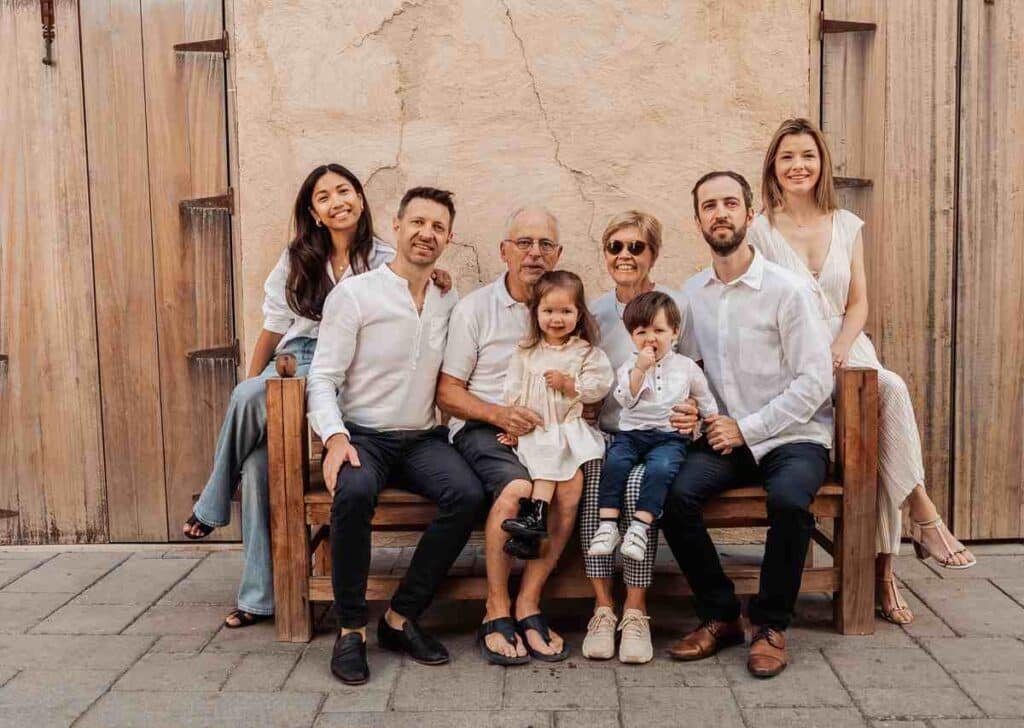
Heritage textures — warm stone, wooden doors, shaded alleys — suit multi-generational groups and coordinated outfits. Toddlers can wander a short distance without open water as the main hazard. Morning light is gentle; weekends can feel busier, so leave buffer time and bring a snack bag.
Parks and green spaces
Parks such as Zabeel or Al Barsha Pond Park are underrated for parenting logistics. Shade, grass, nearby toilets and playgrounds turn a photoshoot into something closer to a family outing. Ideal for siblings who need to move, and for children who find beach sand or desert dunes overstimulating.
Desert
The desert is cinematic and minimal, but it is also soft sand, stronger sun at the wrong hour, and more physical effort for little legs. Wonderful in cooler months at sunrise or sunset with realistic expectations. Confirm access and any photography requirements with the operator or venue you use. Pack more water than you think you need.
Marina, Downtown and skyline walks
Iconic city context works when you want “we lived here / we visited here” in the background and can keep the session focused. Young children often tire of standing still for repeated skyline frames — plan shorter, more playful movement instead of a long posed set.
Home and hotel rooms
For newborns, young toddlers, summer months, or simply exhausted parents, home is not a compromise. It is often the most respectful choice. Soft window light, familiar toys, no car-seat transfer mid-meltdown. Hotels with large windows serve visiting families the same way.
A parent’s timeline: from “we should book” to gallery day
Two to four weeks before (or earlier in peak season)
– Choose season and rough location type (beach / heritage / park / desert / indoor).
– Share children’s ages, nap times and any sensory needs with your photographer.
– Hold a date that respects bedtime and school mornings.
– Start a simple outfit mood — two or three colours, not a full costume brief.
One week before
– Confirm meeting point, parking and toilet access.
– Do a gentle outfit try-on at home (especially shoes — blister day is not photoshoot day).
– Tell children, in age-appropriate language, that you will take pictures while you play and cuddle — not that they must “be good and smile.”
– Prep a small bag: water, snacks, wipes, spare clothes, comforter or favourite book, hat for sun, light layer for breeze.
The day before
– Protect sleep as much as you can.
– Charge phones but plan to put them away during the session so you are present.
– Check the weather and have a reschedule mindset if wind or extreme conditions would make outdoors miserable. Flexibility is part of parenting and part of photography.
On the day
– Arrive with a few minutes’ buffer so nobody starts flustered.
– Feed hungry children before you need them cheerful.
– Let the first ten minutes be warm-up: walking, exploring, no pressure for “the shot.”
– Trust that many of the frames parents love arrive once everyone has forgotten the camera.
Outfits that survive real children
The rule I repeat most often: **coordinate, do not match.**
Choose two or three complementary tones — cream, beige, white, dusty blue, soft sage, warm earth — and let each person keep their own style inside that palette. Light fabrics breathe on beaches and in desert air. Flowing dresses and linen shirts move kindly in a breeze. Loud neon and dense logos pull attention away from faces.
For kids specifically:
– Prioritise comfort and movement over stiff “occasion” clothes.
– Avoid scratchy collars and shoes that only came out of the box that morning.
– Pack a spare top (juice is destiny).
– Bare feet work beautifully on sand and at home; bring clean socks or sandals for hotter pavement.
– Accessories should be minimal — a favourite soft toy in the bag is more useful than a prop basket.
Parents sometimes worry that coordinated neutrals look “styled.” In photographs, they simply look calm. Trends fade; faces do not.
Keeping kids happy: what actually works on a shoot
I do not ask children to perform. I give them jobs and space.
Ideas that consistently help:
– **Time around energy, not only light.** A perfect sunset is wasted if dinner is an hour overdue.
– **One familiar toy or book** as a reset button, not a prop in every frame.
– **Movement prompts:** race to a bench, show me shells, whisper a secret to Mama, jump three times.
– **Sibling fairness:** take turns so nobody feels left out of adult attention.
– **Name feelings:** “It’s okay if you need a break” often shortens the break.
– **Grandparents as anchors:** a steady lap can reset a swirling toddler faster than any pose.
– **End before collapse.** Leave while there is still goodwill in the tank.
Some of the best family photographs happen in the in-between: a forehead lean, a shared laugh after a failed jump, a parent’s hand steadying a wobbly climb. Those moments need patience more than direction.
Maternity, newborn and “the first year” — how the chapters fit
If you are pregnant, a maternity session in the later months can feel like a pause before the house fills with new noise. Soft outdoor light in cooler weather, or gentle indoor window light in summer, both work. Wear what makes you feel like yourself — not a costume of pregnancy.
For newborns, many families prefer the first two weeks at home, when feeds and sleeps dictate the day. Booking during pregnancy helps protect that narrow window. Keep rooms warm enough for a bare baby, open curtains for natural light, and declutter only the main shooting areas — a lived-in home photographs more honestly than a show flat.
Once siblings arrive, family sessions become about weaving the baby into the existing noise: a brother offering a toy, a sister peeking at tiny feet, parents learning a new rhythm. You do not need every combination in one hour. You need a few true ones.
Visitors, residents and the “Dubai trip” photoshoot
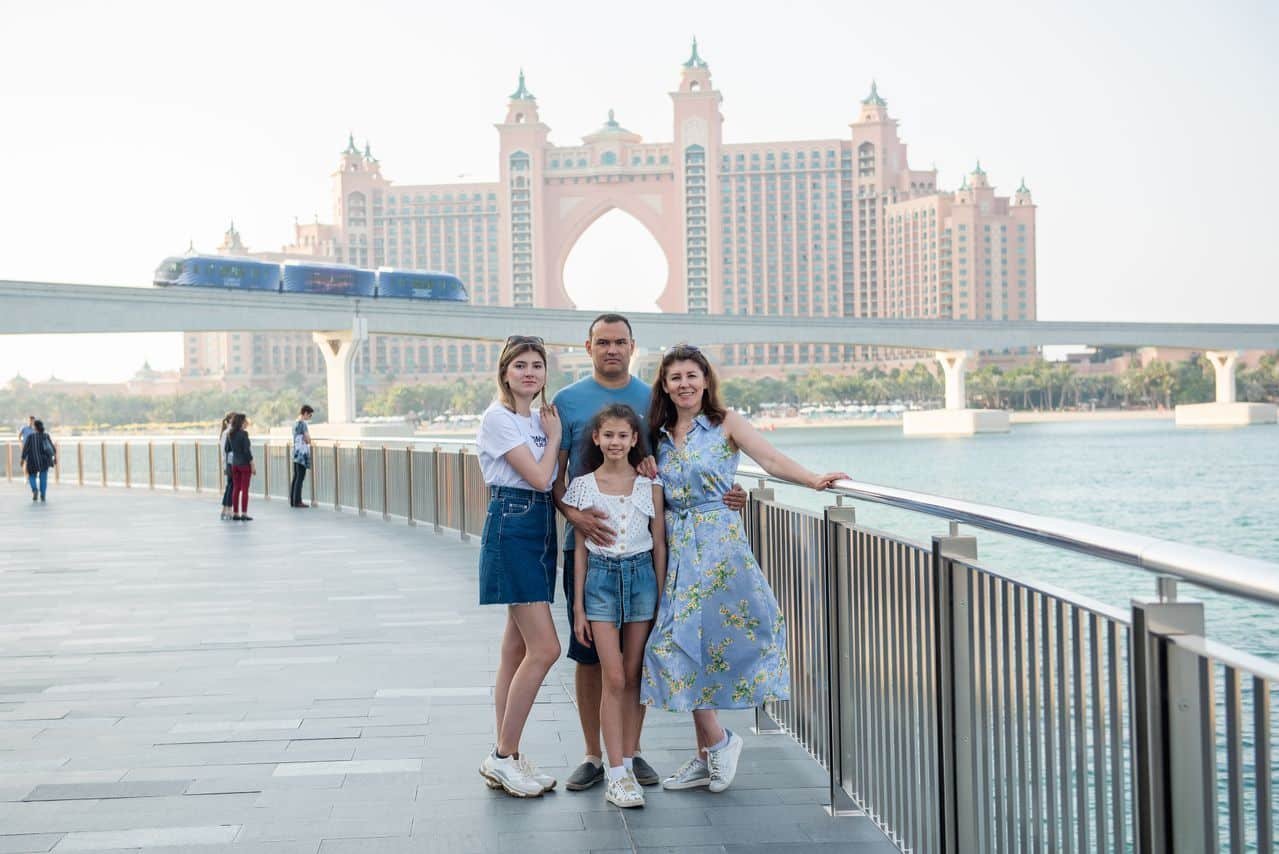
Resident families often want a yearly marker — the same beach at a new age, or home as it looks this year. Visiting families often want proof they were here together: skyline, sand, a quiet café courtyard. Both are valid. If you are visiting, build the session into a realistic day (not after a theme-park marathon). If you live here, treat it like a small celebration of ordinary life, not a performance of perfection.
Either way, share cultural and comfort preferences with your photographer — dress codes for certain areas, privacy needs, whether faces of children should stay off public social media. Good planning includes consent and boundaries, not only locations.
Permits, access and common-sense checks
Dubai’s public spaces, private resorts, malls and some heritage or desert sites have different expectations around professional photography. Rules change and are not identical everywhere. Before the day, check with the specific venue, hotel or operator — especially for tripods, commercial use or larger groups. When in doubt, ask early. Parents already carry enough invisible labour; surprise access issues should not be one more item.
What to expect from a relaxed, documentary-style session
My own approach to [family photography in Dubai](https://www.zahraaliphotography.com/family-photographer-dubai/) is candid and guided rather than stiffly posed. We walk, talk, play and pause. I watch for connection — a hand squeeze, a shared joke, a child burying their face in a parent’s shoulder — and I keep the atmosphere light enough that children can opt in and out of attention.
Sessions commonly run around an hour to two hours depending on package and ages, with edited images delivered through a private gallery afterwards. Exact timing and inclusions vary by photographer; what matters for parents is choosing someone whose process respects children’s pace.
You should leave tired in a good way — like after a lovely outing — not drained from performing.
A simple checklist you can screenshot
**Before booking**
– Season and heat reality checked
– Children’s ages and nap windows noted
– Location type matched to energy (not only to Instagram)
**Before the day**
– Outfits coordinated in 2–3 tones
– Snack / water / spare clothes bag ready
– Meeting point and toilets confirmed
– Weather backup discussed
**On the day**
– Buffer time on arrival
– Warm-up play first
– Phones down when you can
– End while goodwill remains
**Afterwards**
– Download the gallery when it arrives
– Print a few favourites — screens are not the only home for family history
Packing list and micro-logistics parents forget
A beautiful location will not save a session if someone is thirsty, overheated or desperate for a toilet. Before you leave home, run a two-minute logistics check the way you would for a short outing with children — because that is what this is.
**In the bag**
– Water for every adult and child, plus a spare bottle
– A snack that will not destroy outfits (think crackers over chocolate ice cream)
– Wipes, tissues, a small bin bag for sandy shoes
– Spare outfit for the messiest child (and one spare top for a parent)
– Hat and light layer
– Comforter, dummy or favourite book if that is part of your child’s calm toolkit
– Any medication you would normally carry for a half-day out
**On your phone (then mostly away)**
– Meeting pin and photographer’s number
– Parking notes
– A reminder of nap / feed windows so you are not guessing under pressure
**Emotional logistics**
– Agree with your partner who handles the snack bag and who follows the toddler
– Decide in advance that one imperfect hair moment will not become a marital debate mid-session
– Give older children a small choice (“blue shirt or cream?”) so they feel agency
These details sound mundane. They are the difference between a session that feels like connection and one that feels like unpaid overtime.
Talking to children about photographs without creating pressure
Language shapes the day. “You must smile and behave for the photographer” teaches performance. “We are going to play and cuddle by the water, and Zahra will take pictures while we do that” teaches participation.
Age-tuned approaches that help:
– **Toddlers:** Keep explanations short. Focus on the place (“sand!” “birds!”) more than the camera.
– **Preschoolers:** Offer a job — treasure finder, shell collector, jump-counter.
– **School-age children:** Invite collaboration — “What should we do for a fun photo?” — and honour a quiet “I need a break.”
– **Teens:** Respect dignity. Fewer forced group huddles, more natural walking and conversation frames. Ask what they do not want posted publicly.
If a child refuses to participate for a stretch, that is information, not failure. We pause, reset with water, change the game, or shift to sibling / parent frames and return when the weather inside the child improves.
After the gallery: making photographs part of family life
The session ends when you leave the location; the parenting value continues when images enter daily life. A private gallery is easy to favourite and download — and just as easy to forget in a cloud folder.
A few low-effort habits:
– Print one image for the hallway or fridge within a month
– Make a simple album for grandparents who prefer paper
– Choose a yearly “family photo evening” to look back together
– Keep a short note with the gallery: ages, place, one funny thing that happened
Children love seeing themselves loved in pictures. Parents need the reminder too — especially in seasons when the days feel repetitive and the milestones feel invisible until they are gone.
Closing: imperfect is the point
If you wait until every child cooperates on command, you will wait a long time. The photographs parents frame years later are rarely the ones where everyone looked formally perfect. They are the ones where you can still feel the heat of the pavement cooling at sunset, or the quiet of a bedroom at nap time, or the ridiculous joy of a sandy child who refused to look at the lens and somehow became the heart of the frame.
Plan for the season you are in. Choose a place your children can inhabit. Dress for comfort. Protect sleep and snacks. Then let the hour be about being a family in Dubai — resident or visiting — exactly as you are.
That is more than enough.
—
Author Bio: Zahra Ali is a Dubai-based lifestyle photographer and parent who specialises in candid, natural family, maternity, newborn, couple and wedding photography. Born in Pakistan and trained in architecture at the National College of Arts, Lahore, she has photographed since 2017 and has lived in Dubai with her husband and child since 2020. She shares free Dubai photoshoot planning tools at Zahra Ali Photography.