
A teenager asks for a “BJD blind box” for a birthday, and suddenly a simple gift request comes with a small vocabulary lesson. Is it a doll? A collectible? Why can’t you choose the character? And why does one box cost more than the little vinyl figures sitting beside it?
If you are not already part of the designer-toy world, the category can look more complicated than it really is. BJD blind boxes sit somewhere between dolls and display collectibles. They are small enough for a desk or bedroom shelf, often poseable, and sold in themed series where the exact design stays hidden until the package is opened.
That surprise is a big part of the fun, but it is also the part parents should understand before buying. A blind box is not the same as ordering a specific doll. There may be small accessories to keep track of, age guidance to check, and a real possibility that the person opening it will get a character they did not have in mind.
This guide uses Penny’s Box as a practical example because its ranges show several common features of the category: articulated mini figures, plush blind boxes, themed series and occasional hidden designs. The goal is not to tell you which character to buy. It is to help you work out whether this kind of collectible suits the person you are shopping for — and what to check before spending money.
So, What Exactly Is a BJD?
BJD stands for ball-jointed doll. As the name suggests, these dolls have movable joints that let them sit, stand and pose in ways a fixed figure cannot. Traditional BJDs can be highly detailed, especially at the collector end of the hobby. Larger resin dolls may come with changeable wigs and clothing, custom face-ups and plenty of options for personalisation. Some can also be surprisingly expensive.
The larger resin dolls are only one part of the BJD hobby. Blind-box versions offer a simpler way to explore the same style, with movable joints and carefully designed characters in a smaller, more affordable format. They also take up less space and usually do not require the wigs, clothing changes or custom face-ups that are common with larger resin dolls.
Penny’s Box figures, for example, are typically made from PVC and ABS rather than resin. They are closer to small poseable collectibles than traditional handmade BJDs, but the articulated bodies still give them much of the same charm. For someone new to the hobby, that makes them a far less daunting introduction.
What Makes a Blind Box “Blind” ?
The “blind”part is exactly what it sounds like. You can choose the series, but not the character inside. The box is sealed, so the reveal only happens once it is opened.
That is where the appeal comes from for a lot of collectors. A series might have four, six or more regular characters, and sometimes one much rarer hidden design. The odds are usually published, but they are best treated as a rough guide to rarity rather than a promise of what you will get.
For example, the Penny’s Box Antu Cute Beast Magic Series has four regular designs, each listed at 1/4, while the hidden design is listed at 1/72. The Luluya Cloud Feather Pavilion Series follows a similar idea, with six regular designs at 1/6 and the hidden Qingluan at 1/72.
For parents, the more useful question is not really how rare the secret figure is. It is whether the person receiving the gift actually enjoys the surprise. Some teens like the whole experience of opening a box and seeing which character appears. Others already have one favourite design in mind, and in that case a random box can feel less exciting.
A quick conversation before buying can save some disappointment. If they like several figures in the series, a blind box makes sense. If they only want one specific character, it may be worth looking for that figure directly instead.
Why the Surprise Is Part of the Fun
The “blind” part is exactly what it sounds like. You can choose the series, but not the character inside. The box is sealed, so the reveal only happens once it is opened.
That is where the appeal comes from for a lot of collectors. A series might have four, six or more regular characters, and sometimes one much rarer hidden design. The odds are usually published, but they are best treated as a rough guide to rarity rather than a promise of what you will get.
For example, the Penny’s Box Antu Cute Beast Magic Series has four regular designs, each listed at 1/4, while the hidden design is listed at 1/72. The Luluya Cloud Feather Pavilion Series follows a similar idea, with six regular designs at 1/6 and the hidden Qingluan at 1/72.
For parents, the more useful question is not really how rare the secret figure is. It is whether the person receiving the gift actually enjoys the surprise. Some teens like the whole experience of opening a box and seeing which character appears. Others already have one favourite design in mind, and in that case a random box can feel less exciting.
A quick conversation before buying can save some disappointment. If they like several figures in the series, a blind box makes sense. If they only want one specific character, it may be worth looking for that figure directly instead.
Mini BJDs vs. Regular Blind-Box Figures
One of the biggest differences between mini BJDs and many regular blind-box figures is what happens after the box is opened. A standard collectible may be designed to sit on a shelf in one fixed pose. Mini BJD-style figures give you a little more freedom. Their movable joints make it possible to change the pose, adjust how the character sits or stands, and create different looks for a display.
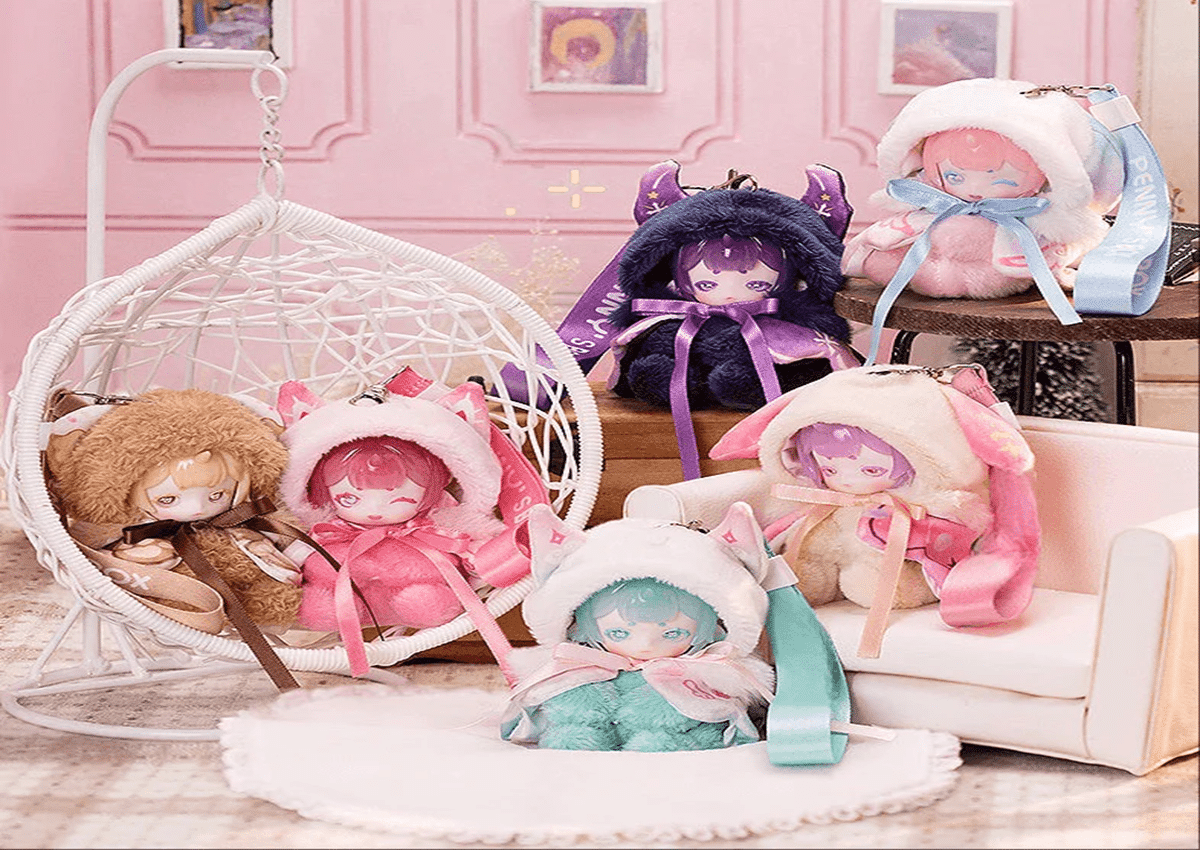
Penny’s Box offers a good example of how much these collectibles can vary. Antu Cute Beast Magic has a playful, fantasy-inspired look, while Luluya Symphonic Poem and Luluya Cloud Feather Pavilion feature larger 1/8-scale figures with a more traditional doll-like appearance. The Cloud Feather Pavilion figures also come with matching ID cards. Antu Cute Petite is different again: it is a soft plush collection rather than a poseable figure.
So two boxes sitting in the same section of a shop may offer quite different experiences once they are opened. Someone who likes changing poses and arranging a shelf may get more out of an articulated figure. Someone drawn to softer, cuddly collectibles might prefer the plush line.
For that reason, it helps to look beyond the words “BJD blind box” on the listing. The photos, materials, size and contents usually tell you much more about what you are actually buying.
Are Penny’s Box Dolls Considered BJDs?
If you’ve spent any time around the BJD hobby, you’ll know that collectors can be pretty particular about the terminology. That’s understandable, since a traditional resin BJD is quite different from a small, mass-produced blind-box figure. Larger resin dolls can be customised in all sorts of ways, and for many collectors, they become a hobby in themselves.
Penny’s Box sits in a lighter, more accessible part of that world. Its figures use ball-jointed articulation, and some releases, such as the limited Cool Mint Zombie figure, specifically highlight that feature. Rather than worrying too much about whether every figure fits a strict definition of a “true” BJD, it is usually more helpful to look at what you are actually getting: movable joints, the size of the figure, the materials used, and any clothing or accessories included.
That difference matters most when you are buying for someone who already knows the hobby well. An experienced resin-BJD collector may have very specific preferences when it comes to materials, scale and customisation. For someone who simply likes poseable character dolls, though, a blind-box figure can be an easy way to try the style without making a much bigger investment.
What Parents Should Check Before Buying
Before ordering, I would check five things. They sound basic, but they prevent most of the misunderstandings that come with this category.
- Check the age guidance on the exact product. Small accessories and detachable pieces can create a choking risk, so do not assume that a cute character is automatically designed as a young child’s toy.
- Confirm that the recipient is happy with a random design. A blind box gives you a chance at a character, not a promise of a particular one.
- Look at the size in centimetres or inches, not just the product photos. Close-up photography can make a mini figure look much larger than it is.
- Read what is actually included. Depending on the series, the box may contain a figure or plush, accessories and, in some cases, an ID card.
- Set a budget before the collecting starts. One box can be an affordable treat; repeatedly buying boxes to chase a rare design is a different spending decision.
That last point is especially worth discussing with younger collectors. A hidden character can be exciting, but rarity should be treated as an extra surprise rather than a reason to keep buying. If the fun disappears when the “wrong” regular character appears, the blind-box format may not be a good fit.
Check the Safety Details Before You Buy
The cute packaging can make a BJD blind box look like an ordinary children’s toy, but that is not always the case. Many of these figures are made with older collectors in mind, particularly when they come with tiny accessories or removable parts.
The Penny’s Box products mentioned in this guide, for example, are listed by the retailer for ages 15 and up. The product information also includes warnings about small parts and keeping them away from children under three. That does not mean every BJD blind box follows the same age guidance, though. Recommendations can vary from one collection to another, so it is worth checking the label or product page before buying.
For parents, the small details are often more useful than the artwork on the box. Look for detachable accessories, tiny decorations or anything that could easily end up on the floor. Even if the figure is intended for a teenager, younger brothers or sisters may still be able to reach it.
None of this makes blind-box figures unusually difficult to own. It simply means they are better treated as collectibles than as everyday play toys. A shelf, desk or display area that keeps the smaller pieces together is usually all that is needed.
What Size Are BJD Blind-Box Figures?
Size is easy to get wrong when you are shopping online. A figure can look tiny in a product photo, then turn up much bigger than expected once it is sitting on a bedroom shelf.
The Antu Cute Petite plush figures are fairly compact at around 3.7 to 4.3 inches tall. The Luluya 1/8-scale figures are noticeably larger, usually around 7.5 to 8.9 inches, while the Cloud Feather Pavilion figure is listed at roughly 8.1 inches.
Those measurements are not always exact from one character to the next. Ears, hats, hairstyles and clothing can all add a little height, and the product listings note that figures may vary by around 0.4 to 1.2 inches.
If you are buying one as a gift, it helps to picture where it is going to end up. A small plush can tuck onto a desk, bedside table or windowsill without much thought. A larger articulated figure needs a bit more room, especially if your teen wants to change the pose or display it with other collectibles. A quick look at the measurements can save you from buying something that does not quite fit the space they have in mind.
What’s Inside the Box
What you find inside depends on the series. With the Penny’s Box collections covered here, each box contains one figure or plush, plus any accessories that belong with that particular character. Depending on the collection, you may see materials such as PVC and ABS for the figures, or cotton, polyester and fibre for the softer designs. Some also come with extras such as a character ID card.
It is worth checking the product photos and description before you buy, especially if you are shopping for a younger collector. Some boxes are wonderfully simple: open them and there is your character. Others come with small accessories that need somewhere to go once the excitement of unboxing is over.
That may sound like a minor detail, but parents probably know how quickly tiny pieces can disappear under a bed or into the back of a drawer. If your teen is good at keeping track of their collectibles, a few extra accessories may be part of the fun. If not, a simpler figure or plush might save everyone a little frustration later.
Simple Care and Display Tips
Collectibles do not need complicated maintenance, but a little care helps them stay presentable. For plastic parts, a soft dry cloth is a sensible first option. Plush figures should not be machine washed or submerged unless the care instructions specifically say otherwise.
Heat and strong direct sunlight are also worth avoiding because long exposure can affect colour or materials. A shelf away from a sunny window is usually a better display spot than a car dashboard or a windowsill that becomes hot in the afternoon.
For articulated figures, gentle handling matters more than constant adjustment. If a joint feels resistant, forcing it is rarely a good idea. Keep small accessories together when the figure is moved, and save the original packaging if the collector cares about keeping the set complete.
Keeping Blind-Box Spending Under Control
Part of the fun of a blind box is not knowing what you are going to get. That mystery can make opening one feel exciting, but it can also make it tempting to keep trying for a particular character.
For families, it helps to agree on a few simple limits before collecting starts to snowball. That might mean blind boxes are saved for birthdays or special occasions, or that there is a set number to collect at one time. If a duplicate turns up, trading with friends can be more fun than immediately opening another box.
It is also worth encouraging kids and teens to enjoy the figures they actually have, rather than focusing too much on the rarest one in the series. They might rearrange a display, take photos, swap accessories or sketch their favourite characters. Those small things can make the collection feel more personal and keep the hobby about creativity rather than simply chasing the next surprise.
For most families, that balance is probably the sweet spot: the excitement of opening something unexpected, without feeling that every box needs to lead to another one.
Is a BJD Blind Box the Right Gift?
A BJD blind box tends to work best for an older child or teenager who already likes the look of the whole series and enjoys the surprise of not knowing exactly what they will get. It can also be a nice first step for someone who is curious about poseable dolls but does not want to jump straight into the more involved world of traditional resin BJDs.
It is less likely to be a good fit if they have their heart set on one particular character or find random purchases more frustrating than fun. The same goes for younger children who may not be ready for small accessories, or for anyone who is likely to feel disappointed enough by one result that they immediately want to keep opening boxes until they get a rarer design.
A simple way to judge it is to imagine the box being opened. Would they still be happy if they pulled an ordinary character rather than the one they were hoping for? If the answer is yes, then the surprise is probably part of the appeal rather than a source of disappointment.
Starting With Penny’s Box
Penny’s Box is a useful example of just how much variety there can be within the BJD blind-box category. Some collections are poseable, others are plush, and the size, materials and extras can vary quite a bit from one series to the next. That is why it is worth looking past the artwork on the box and checking the details before choosing one as a gift.
If you would like to see the current styles mentioned in this guide, you can browse the Penny’s Box collection at Ocare and compare the different sizes, materials and formats available.
Whichever style you choose, the best fit is usually the one that matches the recipient’s age, interests and expectations. A little checking beforehand can make the surprise much more enjoyable when the box is finally opened.
Conclusion
Once you know what a BJD blind box actually is, the idea is fairly simple. You are buying a small collectible from a themed series, with the added fun of not knowing which character will be inside until the box is opened.
For parents, a little checking beforehand goes a long way. It helps to know the recommended age, whether there are small parts, how large the figure really is and, most of all, whether the person receiving it actually likes the series as a whole.
That last point probably matters more than anything else. The fun of a blind box should come from the surprise itself, not from feeling that only the rarest character counts. If your child or teen would be happy to open the box and keep whichever design they get, then the experience is likely to feel a lot more enjoyable.