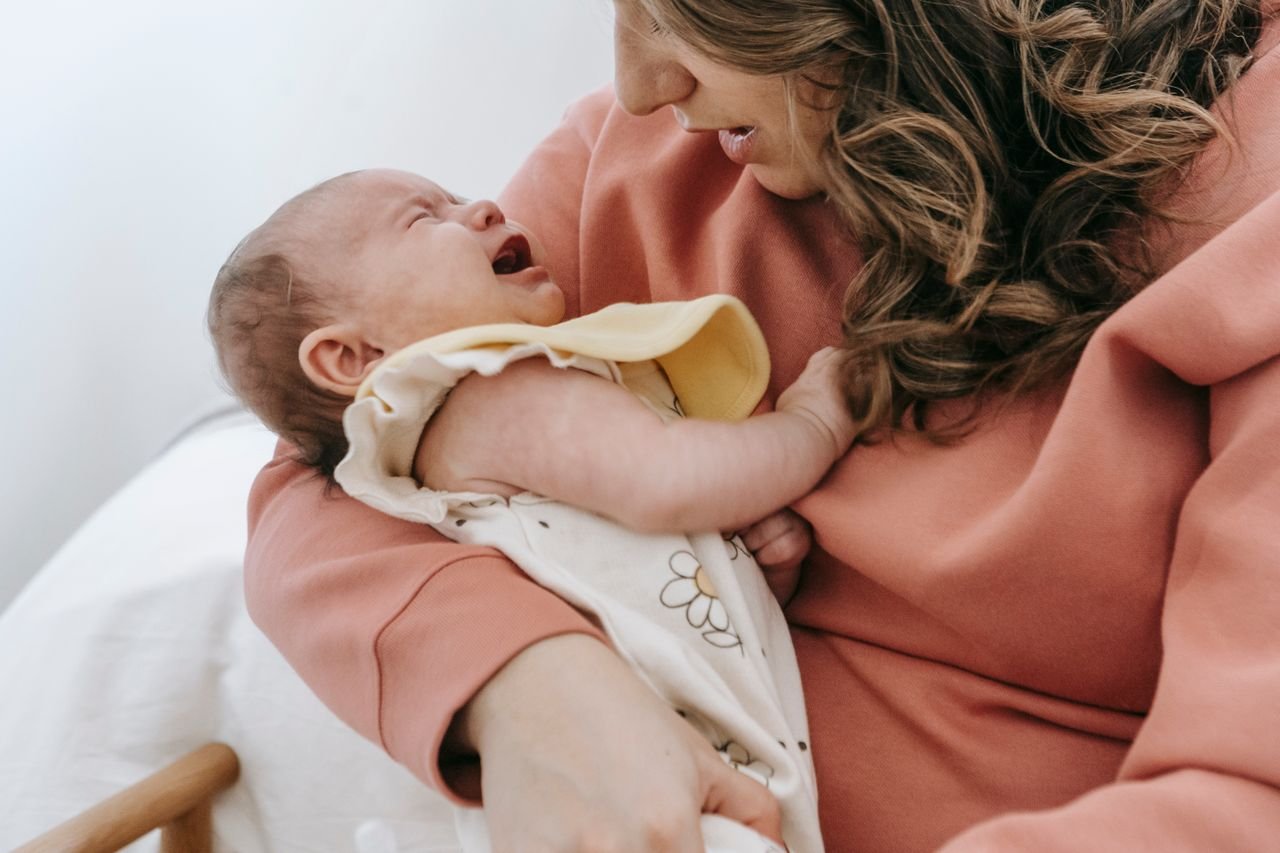


It’s 2 a.m. and your toddler is hot, flushed, and whimpering. You press a hand to her forehead, reach for the thermometer, and see 102.6°F. Your stomach drops. Within minutes you’re doing what millions of parents do: searching your phone, calculating a medicine dose, and wondering whether this is the night you should head to the emergency room.
That reaction is understandable, but fever is not the illness. It is one of the body’s oldest defenses against infection: a coordinated, tightly regulated response that your child’s immune system turns on deliberately. In other words, fever usually is not the problem. But it signals that there is one, and therefore it is reasonable that fever evokes concern, and understandable that it can evoke fear. However, as a pediatrician who has spent years looking at infectious disease through the lens of evolutionary medicine, I’ve come to believe that understanding fever’s adaptive value is the best route to tempering our unproductive, and often exaggerated, fear of it.
None of the discussion here means fevers should be ignored. Sometimes its presence signals serious illness that calls for prompt medical attention, especially in the very young, or in individuals with certain comorbidities. Sometimes it signals the onset of an illness that requires only watchful waiting. The goal of this article is to help you decide. It describes what a fever is actually doing, why it usually is working in your child’s favor, what the research says about treating it, and when it’s time to stop reassuring yourself and call your pediatrician. Along the way, we’ll look at how the same way of thinking applies to another source of parental anxiety that begins in the first hours of life: the vitamin K shot.
Child’s Fever Is an Adaptation
A fever is not simply your child’s body overheating. When the immune system detects an invader, it releases chemical messengers that travel to the brain’s temperature-control center and effectively turn the thermostat up. Your child’s body then works to reach that higher temperature, which is why a feverish child often shivers and wants blankets before the fever peaks [1]. The body is not malfunctioning. It is following instructions.
How old is this response? Much older than humans. A major review in Nature Reviews Immunology describes fever as a response conserved across warm- and cold-blooded vertebrates for more than 600 million years [1]. Cold-blooded animals can’t raise their body temperature internally, so they do it with behavior: infected lizards, fish, and even honeybee colonies seek or create warmth. And it matters. In classic experiments on desert iguanas, survival after bacterial infection dropped by 75 percent when the animals were prevented from raising their body temperature by about 2°C [1,2].
There’s also a simple evolutionary logic. Fever is expensive: in warm-blooded animals, each 1°C rise in body temperature costs roughly 10 to 12.5 percent more metabolic energy [1]. Natural selection does not preserve an energy-hungry response across hundreds of millions of years unless it pays off. As I argue in my book, Bringing Up Baby, fever belongs in the same category as pain and swelling: a designed, functional defense, not a defect to be “fixed.”
What the heat actually does
Research points to several ways fever helps:
- It makes life harder for germs. In laboratory studies, temperatures in the febrile range slowed the replication of poliovirus by more than 200-fold and made certain bacteria more vulnerable to the body’s killing mechanisms [1].
- It energizes the immune system. Fever-range temperatures stimulate multiple immune cells, including neutrophils and dendritic cells, and improve the traffic of lymphocytes into the lymph nodes where immune responses are organized [1].
- It helps starve bacteria of iron. Bacteria need iron to multiply, and infection prompts the body to lower the iron circulating in blood. In lizards, researchers found that fever made low-iron conditions even harder on the infecting bacteria, one reason fever helped the animals survive [3].
A few honest caveats belong here. Much of this evidence comes from animal and laboratory studies, and fever is not helpful in every situation. For example, with malaria, the causative agent, Plasmodium, has evolved to do well in a febrile host. The takeaway is not “fever is always good.” It is that, in an otherwise healthy child fighting an ordinary infection, fever is far more likely to be part of the solution than the problem.
Why We Treat Every Fever Like an Emergency
If fever is a defense, why does it frighten parents so much? Researchers have a name for it. In 1980, pediatrician Barton Schmitt coined the term “fever phobia” to describe parents’ exaggerated and often inaccurate fears about fever [4]. In his survey, 94 percent of parents believed fever could cause harm. Two decades later, researchers repeated the study with 340 caregivers and found that 91 percent still believed an untreated fever could cause harmful effects, and 14 percent worried a fever could be life-threatening. Their conclusion was blunt: “Fever phobia persists” [5].
Where the fear comes from
There are a few likely sources.
The thermometer gives us a number. Fever is easy to measure, and a measurable number feels like something we can and should control. Dr. Janice Sullivan, a lead author of the American Academy of Pediatrics (AAP) report on fever, has pointed out that medicine’s own focus on gathering temperature information “gives the message to parents that fever is bad” [6].
Doctors teach the fear, too. In one Italian survey, about two-thirds of parents named their pediatrician as their primary source of information about fever, and the researchers suggested that pediatricians’ own fear of fever plays a crucial role in driving parental fever phobia [7].
A fever generally signals an infection. Before antibiotics and other modern medical interventions were available, infections led to bad outcomes far more often than they do now, and thus fever acquired a bad reputation, which has persisted.
Our alarm systems are built to be sensitive. Evolutionary psychiatrist Randolph Nesse describes what he calls the smoke detector principle: when a protective response is cheap but missing a real danger would be catastrophic, natural selection favors systems that raise many false alarms [8]. A parent’s vigilance over a sick child may work the same way. It is far better to be anxious a hundred times for nothing than to miss the one serious infection. That makes the anxiety normal. It doesn’t make it accurate.
We may be missing the village. This one is my own hypothesis rather than a settled research finding. For most of human history, a new parent with a feverish baby was surrounded by grandmothers, aunts, and neighbors who had seen dozens of childhood fevers and could say, “I’ve seen this before. She’ll be fine by morning.” Today, many parents face that thermometer alone at 2 a.m. with a search engine for company. Experience that used to be shared is now missing, and anxiety fills the gap.
What the anxiety costs
Fever phobia isn’t harmless. Fever is among the most common reasons children see a health care professional; one estimate attributes about a third of all pediatric visits to it [9]. And the same surveys show the ways fear shapes what parents do at home:
- Overtreating. The AAP notes that many parents give fever reducers even when there is minimal or no fever, believing the child must maintain a “normal” temperature [6].
- Dosing errors. In the 340-caregiver study, 14 percent gave acetaminophen, and 44 percent gave ibuprofen, at intervals that were too frequent [5].
- Outdated home remedies. Almost three-quarters of caregivers reported sponging their child to lower a fever, and most of those who did used methods that aren’t recommended, such as alcohol, cool water, or a cool cloth [10]. The AAP now advises against alcohol baths, ice packs, and sponging, which can have adverse effects [12].
- Watching the number instead of the child. When the thermometer becomes the focus, parents can lose sight of what actually tells us how sick a child is: how the child looks, acts, drinks, and breathes. We’ll come back to that in a moment.
Treat the Child, Not the Number
If fever is usually a helpful response, what should you actually do when your child has one? The American Academy of Pediatrics (AAP) has been clear on this for years. In its clinical report on fever, the AAP states that fever is “not the primary illness but is a physiologic mechanism that has beneficial effects in fighting infection,” that there is no evidence fever itself worsens the course of an illness or causes long-term neurologic complications, and that the primary goal of treatment should be “to improve the child’s overall comfort rather than focus on the normalization of body temperature” [6]. A summary of that report in American Family Physician adds that the evidence does not suggest lowering a fever reduces illness or death, or prevents febrile seizures [9].
The seizure question
For many parents, the real fear behind a fever is a seizure. In the 2001 fever phobia survey, seizures topped caregivers’ list of feared consequences [5]. The fear is understandable, because a febrile seizure is frightening to watch. But the facts are more reassuring than the experience:
- Febrile seizures happen in roughly 3 to 4 out of every 100 children, usually in the first hours of a fever [11].
- They usually last only a minute or two. The AAP says that while they can be very scary, febrile seizures are rarely harmful, and most children outgrow them by school age [11].
- Medicines like acetaminophen and ibuprofen can make a child more comfortable, but they do not prevent febrile seizures [11]. Dosing a child around the clock “to prevent a seizure” doesn’t work.
- If a seizure lasts longer than 5 minutes, call 911. Otherwise, call your child’s doctor after it ends [11].
What comfort-focused care looks like
Treating comfort doesn’t mean doing nothing. The AAP’s guidance for parents includes:
- Fluids first. Fever makes children lose fluid faster, so offer plenty of liquids. The AAP lists a dry mouth, crying without tears, and fewer wet diapers as signs of dehydration [12].
- Light clothing. Don’t overdress a feverish child. One layer is fine, and a blanket if they have the chills [12].
- Skip the cold baths. Alcohol baths, ice packs, and sponging are no longer recommended and can have adverse effects [12].
- Medicine if it helps. Acetaminophen or ibuprofen will usually reduce a fever and can help a miserable child rest. Better rest and feeling more comfortable sometimes can be more beneficial than letting a fever continuously do its job. But remember, fever has a job, so don’t overdo it. Use the correct dose, and for children under two, check the dose with your pediatrician or pharmacist [12]. Don’t give aspirin to a child unless a provider specifically tells you to; it has been linked to a rare but serious condition called Reye syndrome [14].
This is where the evolutionary view and the mainstream guidance agree. Nesse’s smoke detector principle suggests that many of our defenses fire more strongly than strictly necessary, which is why dampening them for comfort is often harmless [8]. The point isn’t that you should never use medicine. It’s that medicine is a comfort tool, not a required response to a number on a thermometer.
One more thing worth knowing
Early research suggests that fever suppression may carry costs beyond the individual child. A mathematical modeling study of influenza estimated that widespread fever suppression could modestly increase the number of flu cases and deaths, by roughly 5 percent in a typical flu season, though the authors acknowledge that the data they relied on were incomplete and the estimate is uncertain [13]. This is preliminary and shouldn’t change how you treat a miserable child. But it is a good reason not to assume that a fever-reducing medicine means a sick child is ready to go back to school or daycare.
When a Fever Is Not Just a Fever
Seeing fever through an evolutionary lens does not mean ignoring danger. The same logic that explains why fever usually helps also explains why some situations deserve a fast response: a defense is only as good as your ability to tell when something more serious is going on. The good news is that, with fever, the most important warning signs are rarely about the number on the thermometer.
Start with age: babies under 3 months
This is the one place where the number matters most. The AAP advises parents to call their child’s doctor right away if a baby younger than 3 months (12 weeks) has a rectal temperature of 100.4°F (38.0°C) or higher [12]. Newborns and young infants can’t tell us how they feel, and as one author of the AAP’s guideline on febrile infants put it, a fever at this age is “an important signal that something is wrong” [15,16]. About 14 out of every 1,000 healthy full-term infants develop a fever between 8 and 60 days of age. Most do well, but some have serious infections, and at that age it can be next to impossible for a parent to tell which is which [16]. For these babies, don’t wait it out.
Then look at the child, not just the thermometer
For older children, the AAP says to call your child’s doctor right away if a child with a fever [12]:
- Looks very ill, is unusually drowsy, or is very fussy
- Has a stiff neck, severe headache, severe sore throat, severe ear pain, an unexplained rash, or repeated vomiting or diarrhea
- Shows signs of dehydration, such as a dry mouth, a sunken soft spot, significantly fewer wet diapers, or an inability to take in fluids
- Has an immune system problem, such as sickle cell disease or cancer, or is taking steroids
- Has had a seizure
- Has been in a very hot place, such as an overheated car (heat exposure is not the same thing as a fever)
- Has a temperature that rises above 104°F (40°C) repeatedly, at any age
The AAP also recommends calling if your child still “acts sick” even after the fever comes down, seems to be getting worse, or has a fever that lasts more than 24 hours in a child younger than 2, or more than 3 days (72 hours) in a child 2 or older [12]. Go to the emergency department or call 911 for trouble breathing [17] or a seizure that lasts longer than 5 minutes [11].
The best test: how does your child act?
Notice what these lists have in common. They’re about behavior, hydration, breathing, and other symptoms, not a threshold temperature. A child with a 103°F fever who is drinking, playing a little between naps, and perks up after a dose of medicine is usually in a very different situation from a child with a 101°F fever who is limp, hard to wake, and refusing all fluids.
This is why the AAP urges parents to monitor activity and watch for signs of serious illness rather than chase a number [6]. If your child is miserable, comfort them. If something seems wrong in a way that goes beyond the thermometer, trust that instinct and call. As the smoke detector principle reminds us, a false alarm is a small price to pay for catching the rare real one [8].
The Same Question, Asked at Birth: What About Vitamin K?
Fever anxiety and vitamin K hesitancy have something in common. Both come from a reasonable instinct: a worry about interfering with a natural process, or about giving a baby something that feels unnatural. But the evolutionary lens leads to opposite answers in these two cases, and that contrast is the most useful lesson in this article.
With fever, the evolutionary question (“is this a designed defense?”) says: usually yes, so leave it alone unless the child is uncomfortable. With vitamin K, the same question says something different: this isn’t a defense. It’s a gap. And as an evolutionary biologist would remind you, “natural” is not always the same as “best.” Natural selection maximizes reproductive success under constraints and tradeoffs, not health. Sometimes we can improve on natural. For instance, when I want to cross the Atlantic, I don’t swim. I buy an airline ticket.
The vitamin K gap
Vitamin K is essential for blood clotting. Newborns, however, are born with very little of it. Transfer of vitamin K across the human placenta is limited (as it is in all placental mammals), and cord blood and infant liver stores are substantially below adult levels [18]. Babies don’t build up a reliable internal supply until the bacteria in their gut become established, which takes about a month.
Why would evolution leave newborns this way? I suspect it’s a tradeoff. The placenta appears to actively keep fetal vitamin K low, since the concentration on the mother’s side is much higher than on the baby’s. One explanation could be that it simply is not feasible to transfer more vitamin K across the placenta. Feasibility, of course, always constrains what can evolve. Nevertheless, even though flight occasionally would be beneficial to pigs (e.g., wolves on the left, cliff on the right), don’t hold your breath waiting for them to evolve wings. Flying pigs, however, seems far more difficult for natural selection to achieve than increased transfer of vitamin K across the placenta, so I suspect that a more plausible explanation is that natural selection faced two competing risks: bleeding on one side, and clotting off the umbilical vessels that are critical to fetal survival on the other. This is my hypothesis, not a settled finding. But if it’s right, low vitamin K at birth is a compromise that natural selection could not improve upon, and modern medicine can.
What the evidence says about the shot
The condition the shot prevents, vitamin K deficiency bleeding (VKDB), is uncommon but serious.
- Without prophylaxis, early and classic VKDB are estimated to occur in 0.25% to 1.7% of births. Late VKDB, which strikes infants between 2 and 24 weeks of age and often involves bleeding in the brain or intestines, occurs in an estimated 4.4 to 7.2 per 100,000 infants. The relative risk of late VKDB has been estimated at 81 times higher among infants who don’t receive the injection [18].
- Between February and September 2013, a single Nashville children’s hospital diagnosed four infants with late VKDB, a cluster the CDC investigated. In every case, the parents had declined the shot. Three of the four had bleeding in the brain. All survived, but one has an apparent gross motor deficit [18].
- The American Academy of Pediatrics recommends a single 1 mg intramuscular dose within six hours of birth for newborns weighing more than 1,500 grams, and concludes that injection is the most effective way to prevent VKDB. It also calls on pediatricians to explain both the benefits of the shot and the risks of refusing it [19].
What about the concern some parents have heard about a link to childhood cancer? That worry traces to studies in the early 1990s. Research since then has not supported it. A UK national case-control study of 2,530 children with cancer (including 1,174 with leukemia) and 4,487 controls found no association between the injection and either leukemia or other cancers, and a pooled analysis of six major studies reached the same conclusion [20,21].
Taking hesitancy seriously
Parents who question the shot aren’t uninformed. Many are weighing pain, ingredients, and a desire to intervene as little as possible, all of which are reasonable things to care about. A good pediatrician should welcome those questions rather than wave them away, and explain the reasoning. The evolutionary framing offers one way to do that: it doesn’t ask parents to abandon their respect for nature. It simply points out that nature, in this one case, left a gap.
The Bottom Line: A Cheat Sheet for the Next 2 a.m. Fever
The next time a thermometer reading sends your stomach into your throat, here is the short version.
- Check age first. A baby under 3 months with a rectal temperature of 100.4°F (38.0°C) or higher needs a call to the doctor right away.
- Look at the child. Is she drinking, responsive, and breathing comfortably? How she looks and acts matters more than the number.
- Support the body’s work. Offer fluids, dress your child lightly, and skip alcohol rubs, ice, and sponging.
- Treat comfort, not the number. If your child is miserable, a correct dose of acetaminophen or ibuprofen is fine (check the dose with your pediatrician if your child is under two). Don’t give aspirin.
- Know your call-the-doctor list. Very ill or unusually drowsy, stiff neck, unexplained rash, signs of dehydration, an immune system problem, a seizure, a temperature above 104°F (40°C) that keeps returning, or a fever that lasts more than 24 hours in a child under 2 (or more than 3 days in an older child).
- Know your emergency list. Trouble breathing, or a seizure that lasts longer than 5 minutes: call 911.
- Trust your gut. If something feels wrong and nothing on this list fits, call anyway.
Fever is one of the oldest defenses in biology, shaped by hundreds of millions of years of natural selection and, in most cases, doing exactly what it is supposed to do. Our job as parents and pediatricians isn’t to fight it reflexively. It’s to understand it: to comfort the child, watch for the rare signs that something more serious is happening, and to stay calm when the answer to “what is this for?” is “to help.”
Sources
- Evans SS, Repasky EA, Fisher DT. Fever and the thermal regulation of immunity: the immune system feels the heat. Nat Rev Immunol. 2015;15(6):335-349. doi:10.1038/nri3843
- Bernheim HA, Kluger MJ. Fever: effect of drug-induced antipyresis on survival. Science. 1976;193:237-239. doi:10.1126/science.935867
- Grieger TA, Kluger MJ. Fever and survival: the role of serum iron. J Physiol. 1978;279:187-196.
- Schmitt BD. Fever phobia: misconceptions of parents about fevers. Am J Dis Child. 1980;134(2):176-181.
- Crocetti M, Moghbeli N, Serwint J. Fever phobia revisited: have parental misconceptions about fever changed in 20 years? Pediatrics. 2001;107(6):1241-1246.
- Sullivan JE, Farrar HC; Section on Clinical Pharmacology and Therapeutics; Committee on Drugs. Fever and antipyretic use in children. Pediatrics. 2011;127(3):580-587. doi:10.1542/peds.2010-3852
- Chiappini E, et al. Parental and medical knowledge and management of fever in Italian pre-school children. BMC Pediatr. 2012;12:97.
- Nesse RM. The smoke detector principle: natural selection and the regulation of defensive responses. Ann N Y Acad Sci. 2001;935:75-85. See also Nesse RM. The smoke detector principle: signal detection and optimal defense regulation. Evol Med Public Health. 2019;2019(1):1. doi:10.1093/emph/eoy034
- AAP reports on the use of antipyretics for fever in children (guideline summary). Am Fam Physician. 2012;85(5):518.
- Parental misconceptions about fever in children (Tips from Other Journals, summarizing Crocetti et al.). Am Fam Physician. 2002;65(3):482-488.
- American Academy of Pediatrics. Febrile seizures. HealthyChildren.org. https://www.healthychildren.org/English/health-issues/conditions/fever/Pages/Febrile-Seizures.aspx
- American Academy of Pediatrics. Fever without fear: information for parents. HealthyChildren.org. Updated September 23, 2025. https://www.healthychildren.org/English/health-issues/conditions/fever/pages/Fever-Without-Fear.aspx
- Earn DJD, Andrews PW, Bolker BM. Population-level effects of suppressing fever. Proc R Soc B. 2014;281(1778):20132570. doi:10.1098/rspb.2013.2570
- MedlinePlus. Reye syndrome. National Library of Medicine. https://medlineplus.gov/ency/article/001565.htm
- Pantell RH, Roberts KB, Adams WG, et al. Evaluation and management of well-appearing febrile infants 8 to 60 days old. Pediatrics. 2021;148(2):e2021052228. doi:10.1542/peds.2021-052228
- American Academy of Pediatrics. Fever in newborns: treatment for babies who otherwise seem well. HealthyChildren.org. July 19, 2021. https://www.healthychildren.org/English/news/Pages/Fever-in-Newborns.aspx
- Nationwide Children’s Hospital. Fever (patient education handout HH-I-105). Revised 2022.
- Centers for Disease Control and Prevention. Notes from the field: late vitamin K deficiency bleeding in infants whose parents declined vitamin K prophylaxis, Tennessee, 2013. MMWR Morb Mortal Wkly Rep. 2013;62(45):901-902.
- Hand I, et al. Vitamin K and the newborn infant (American Academy of Pediatrics policy statement). Pediatrics. 2022;149(3):e2021056036.
- Fear NT, Roman E, Ansell P, et al. Vitamin K and childhood cancer: a report from the United Kingdom Childhood Cancer Study. Br J Cancer. 2003;89(7):1228-1231. doi:10.1038/sj.bjc.6601278
- Roman E, Fear NT, Ansell P, et al. Vitamin K and childhood cancer: analysis of individual patient data from six case-control studies. Br J Cancer. 2002;86:63-69. doi:10.1038/sj.bjc.6600007
About the Author
Dr. Paul Turke is a practicing pediatrician and evolutionary medicine researcher, and the author of Bringing Up Baby.
This article is for general information and does not replace the advice of your child’s pediatrician. If you are worried about your child, call your doctor.