

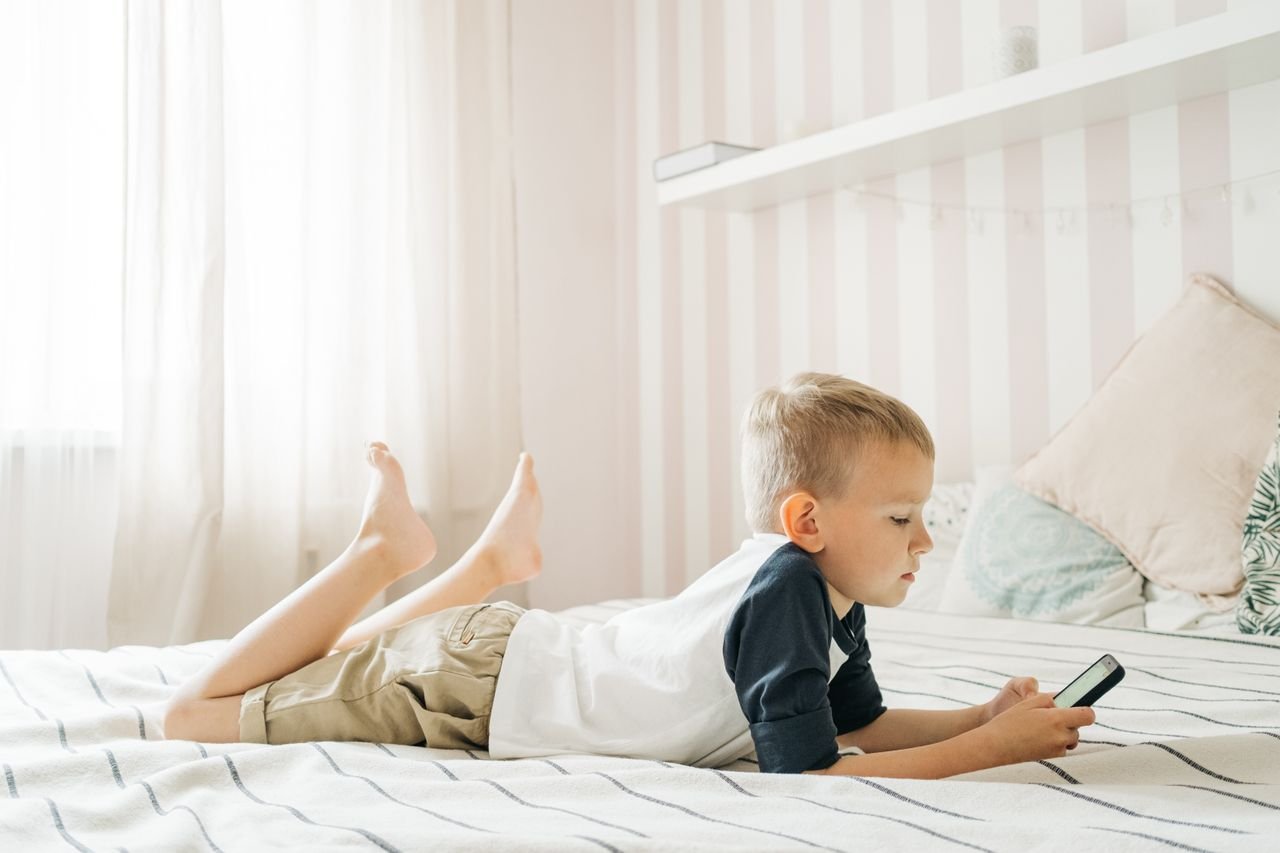
After a summer of loose schedules, later bedtimes and more than a few “just one more episode” negotiations, getting back into a school-year routine can feel like a lot.
The backpacks come back out, homework starts, bedtimes get earlier and activities fill the calendar, and somewhere in the middle of all that, parents are expected to figure out how to get kids to put down their screens without turning every afternoon into an argument.
That struggle is more common than you might think. In a recent survey of more than 400 parents, seven in ten parents say screentime conflicts happen at least weekly, and 59% report that getting their kids off devices is genuinely hard, and sometimes a daily struggle. Another 50% say that their kids’ recreational screen time has gone up over the past year.
It isn’t a fringe concern anymore, either. Earlier this year, the U.S. Surgeon General issued an advisory warning about the harms of excessive screen use among children and adolescents.
The good news is that kids aren’t actually opposed to unplugging. In that same survey, 91% of parents said their kids would put down a screen to join a fun family game. That suggests the fight isn’t really about the device. It’s about what’s waiting when the device goes away, and too often, there isn’t an appealing alternative.
That’s the part we’re interested in. We’re Dave and Maggie, two parents who see this problem from different angles. Maggie is a mom of two school-aged kids and a marketing executive who knows exactly what 5 p.m. on a Tuesday feels like. Dave founded Taco Cat Games, a company that builds the kind of fast, silly games kids will actually choose to play. We certainly don’t have all the answers, but we do have plenty of conversations with families, a brand-new parent survey and a public-health framework that puts words to what many parents already feel.
Here are five simple ways to reset screen habits for this school year without turning it into another daily battle. We’re not aiming for perfection here; we’re trying to make a little more room for sleep, focus, connection and the parts of family life that can get crowded out when a screen becomes the easiest thing to reach for.
Stop Counting Minutes and Start Making Room
Let’s be honest, less screen time sounds like a goal, but it’s really just a number. Most parents aren’t dreaming about cutting 17 minutes off their kids screen time on a Tuesday. You want bedtime to happen before everyone melts down, homework without twelve detours and an actual conversation at dinner. You want a transition from the pleas for extra minutes to pajamas that doesn’t require hostage-negotiator training.
Fewer minutes might help, but the bigger goal is what those minutes make room for: sleep, focus, connection, a little more calm and a household that feels more like yours again.
That matters because the pull of screens is very strong. Common Sense Media’s census found that tweens averaged about five and a half hours of entertainment screen media a day, while teens averaged about eight and a half hours. That time doesn’t include homework or extracurriculars. Against that kind of momentum, telling kids to simply use their willpower probably isn’t going to get very far. Adults have a hard enough time with that ourselves.
Changing a habit means giving people another option that is easy to start and worth choosing. That might be a quick game, a short walk, listening to music together, or something else active, social or creative.
The U.S. Surgeon General offers a helpful framework for practical alternatives so screens aren’t the default when children are bored. What matters most is having something ready before the screen becomes the obvious choice.
Kids aren’t necessarily asking for more technology. Sometimes they just don’t know what to do when the technology goes away, and a few small changes can make that transition easier.
Tip 1: Create Predictable Screen-Free Routines
After school on a weeknight is not the ideal time for a family summit. Someone is hungry, the worksheet that was definitely in the backpack is missing, and you’re trying to get dinner on the table before practice. Then you ask for the screen to go off and get the predictable pushback.
If the screen-time boundary gets negotiated from scratch every afternoon, everyone arrives ready with a closing argument. The easiest way to take some of the heat out of that conversation is to stop making the rule a new decision every time.
Maggie’s parent reset
Start with one predictable screen-free window that fits your actual family, not the fantasy family where everyone has top-notch executive functioning skills.
Maybe the first 30 minutes after school are screen-free, so devices get parked, snacks come out and everyone gets a minute to decompress. Maybe your family does homework first, followed by a screen-free play block. Another option is making the dinner table device-free or charging phones in a basket outside the bedrooms at night.
You have to start somewhere, so pick one and focus on keeping it boringly consistent. And, yes, the grown-up phones go away too, which we understand may be deeply inconvenient.
Dave’s play-design lens
Good play has clear rules that don’t have to be renegotiated every round. Routines work in a similar way because they remove the decision point. The screen goes off because this is what happens next.
The other piece is making sure there is somewhere to go from there. Put a game on the table before everyone gets home, leave a puzzle half-finished or keep a stack of books somewhere easy to reach. When the next activity is already within reach, the transition takes less effort.
Choice still matters. The boundary can stay consistent while kids get to decide what they do within it. Over time, that can make the routine feel less like something being taken away and more like a familiar part of the day.
One routine to try this week
Choose one 30-minute screen-free anchor: after school, at dinner or before bed. Name it, set up one inviting alternative before it starts, and keep the same time for seven days.
Tip 2: Make Room for Boredom and Independent Play
The ubiquitous “I’m bored” can feel less like a statement and more like an emergency siren when it comes from our kids. The knee-jerk instinct is to fix it, suggest an activity or hand over a screen so we can finish dinner or hear ourselves think for six minutes.
But boredom doesn’t always need to be fixed. Sometimes it’s the uncomfortable few minutes before a child comes up with something of their own.
Maggie’s parent reset
At my house, hearing “I’m bored” can trigger guilt and panic. Am I supposed to make childhood magical right now? Should I have a craft ready? A color-coded list of wholesome enrichment activities?
Let’s be real. Some days, I’ve handed over a screen because the whining won. That is not failure. That’s an average day as an adult with a full plate.
What I’m practicing now is a much less impressive response: “I hear you. You’ll figure something out.” And, eventually, they usually do because being bored isn’t a fixed state.
We sometimes set aside a weekly boredom hour with no screens, no agenda and no parent cruise director. The first few minutes can involve dramatic flopping, negotiations and claims that there is “literally nothing to do.” Then something shifts. A fort appears. A comic gets started. Two toys develop an elaborate backstory and a complicated legal dispute.
It doesn’t happen every time, and that’s okay, too. The point isn’t to produce an adorable activity on demand. It’s to give kids a chance to practice starting one themselves.
Dave’s play-design lens
As a game designer, I’ve learned that some of the richest play is self-directed. Adults see empty time and rush to fill it, but kids can come up with something stranger, funnier and more creative than anything we would have assigned if we can tolerate the five minutes (okay, maybe 10 minutes) of complaining first.
You can help by creating a simple space where the answer is always yes. Keep open-ended materials somewhere kids can reach them without asking for permission. Think blocks, blank paper, an art bin, dress-up clothes, cardboard boxes and tape.
It doesn’t need to be fancy, just available.
The materials themselves can be the invitation. Then resist the urge to explain what they should make. Giving kids enough room to surprise you is part of the point.
One thing to try this week
Pick one 30-minute “boredom window.” Put screens away, set out three open-ended options and say, “You do not have to like being bored. You do get to decide what happens next.”
Tip 3: Make Offline Activities Easy to Choose
Screens have one major advantage: they’re almost always ready to go, charged, glowing and usually within arm’s reach. Meanwhile, the card game is buried in a closet and the book is somewhere nobody can find it. Guess which one wins?
This is where the setup of your home can make a difference. It’s hard to expect a child to go searching for an activity when the screen is already right there.
Maggie’s parent reset
In our house, whatever is easiest to grab usually wins, so I stopped expecting willpower to overcome convenience. Books and games went onto open shelves at kid-eye level, and we made a small grab bin by the door with cards and a few activities the kids could start on their own.
I moved charged devices to a place out of sight (we use a charging drawer) instead of leaving them in the middle of the action. We put a family game night on the calendar as a standing invitation. If homework explodes or the evening gets away from us, we move it. The point is to make the habit flexible enough to survive real life.
Dave’s play-design lens
Think of this as user experience for your living room. A game buried in a closet is competing with a tablet already in your kid’s hand, and that’s not a fair fight.
As a game designer, I want the path from “What is this?” to “Let’s play” to take less than a minute: easy to learn, fast to start and simple enough to grab on a whim. The fewer steps between seeing an activity and starting it, the better.
In a July caregiver survey, nearly three-quarters said their kids were more engaged during family game time than while using screens. When an offline activity is easy to see and easy to start, it has a better chance of becoming something kids genuinely look forward to.
One thing to try this week
Pick one offline activity your kids already enjoy. Put it in plain sight and have it ready to go before they get home.
Tip 4: Offer Activities Kids Actually Want to Do
If what comes next is a chore or nothing at all once the screen goes off, kids are going to notice. A reset works better when something genuinely appealing is waiting on the other side. This probably isn’t the moment to announce, “Okay, everyone, time to clean your room.”
Maggie’s parent reset
The tricky part is that there is no universal offline activity that works for every kid. You have to figure out what your child actually enjoys, and that can take some trial and error.
I’ve set up activities I was certain would be a hit, only to watch interest disappear in under four minutes. Then a paper airplane contest somehow takes over the evening.
It’s a huge relief when you find something that actually holds their attention, especially when it means fewer requests for more screen time and fewer speeches about fairness. So pay attention to what gets a reaction. Does your child love making things? Moving? Beating a grown-up at something ridiculous? Try a walk, a creative challenge or a goofy family competition.
Look for the things that get you a “Can we do that again?” Those are the activities worth remembering.
Dave’s play-design lens
Parents are trying to solve a slightly different problem than simply limiting screen time. They’re looking for something their kids will actually choose.
That “choosing” matters. An activity doesn’t have to be educational or impressive. It just needs to be fun enough to get started.
Think about a fast, silly card game the whole table can play, with easy rules, quick rounds and plenty of surprises.
Good offline play can create its own momentum. There’s no long explanation or elaborate setup required. And sometimes you have to model the habit you want to see. Don’t point toward a game while scrolling on your phone. Put the phone down and join in.
Your attention is part of what makes the activity worth choosing.
One thing to try this week
List three things your child genuinely likes. Offer one during a screen-free window, join for ten minutes and see whether it earns an “again.”
Tip 5: Focus on Small, Sustainable Changes
The urge to fix everything at once is strong. There’s also a surplus of hope with the new school year that makes it feel like the perfect time to create new routines and household rules. Then real life shows up.
Maggie’s parent reset
I have tried the dramatic overhaul (the color-coded plan, the sweeping announcement that “things are changing around here”). It feels productive for about 48 hours, until somebody gets sick, work runs late, dinner gets thrown together and the whole system falls apart.
What finally brought relief was giving myself permission to start smaller. For me, this didn’t mean no screens ever. It had to be one change that we could actually keep.
Maybe bedtime moves 20 minutes earlier, with those last 20 minutes screen-free. Maybe one after-school scroll block becomes a quick family game. Maybe devices charge outside the bedrooms overnight. Or maybe you begin with one screen-free dinner.
Pick one and stick with it for two weeks, letting it become predictable before you add another change.
Good enough might mean you held the boundary four nights out of seven. It might mean Friday went completely sideways, but you started Saturday again without turning it into a federal investigation. That still counts. You’re building a rhythm your family can return to, even when the week doesn’t go according to plan.
Dave’s play-design lens
In game design, you want people to come back. The experience has to be clear, rewarding and doable enough to repeat. Family routines work the same way.
The families who build lasting habits aren’t necessarily the strictest. They find a small win and make it feel good: a funny round after dinner, a calmer bedtime, a conversation that wouldn’t have happened with four faces pointed at four devices.
That win gives you information, too. What worked? What caused friction? What did everyone actually enjoy? Keep the parts that fit your family and adjust the rest.
One thing to try this week
Choose one 20-minute screen-free window, tell everyone when it starts and join in yourself. Keep that same window for two weeks before adding anything else.
The Minutes Won’t Be What They Remember
For us, changing screen habits really comes down to changing what happens around the screen. When the game is already on the table and the tablet is charging in another room, you’re making room for things that might not have happened otherwise: a fort built from couch cushions, a ridiculous card game that goes on too long, or a dinner conversation where you actually hear the details of your kid’s day.
Years from now, your kids probably won’t remember how many minutes they spent on a device that September. They’ll remember the rounds they begged to play one more time, the paper airplane contest that somehow took over the evening and the nights you put your own phone down and joined in.
So start small, make the next option easy to choose and give boredom some room. Pay attention to what your kids actually enjoy, and when a week goes sideways, start again.
The goal is to build a household where there is always something worth reaching for.