

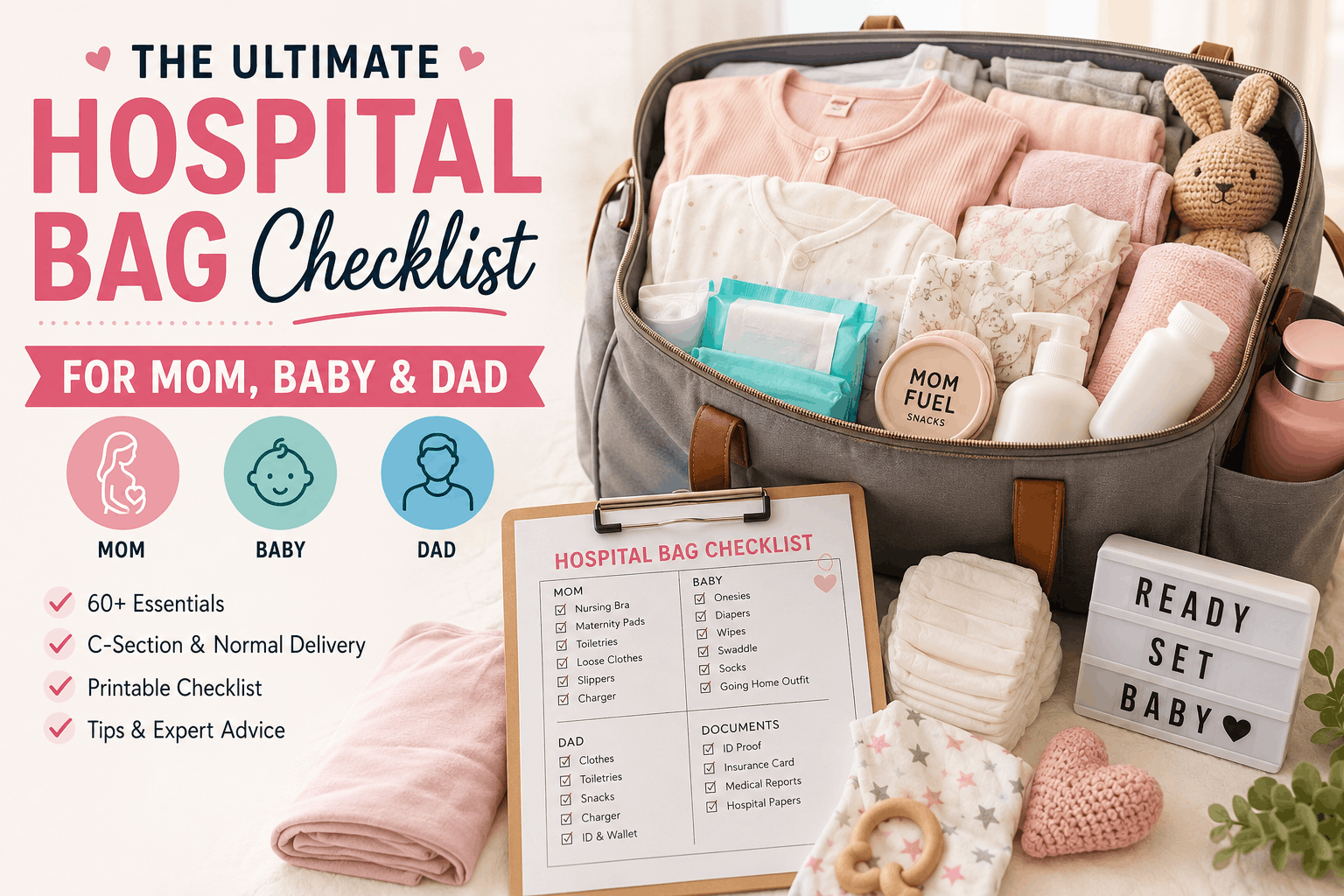
Preparing for your baby’s arrival is one of the most exciting milestones of pregnancy. While decorating the nursery and choosing adorable baby clothes are fun, one task that deserves your full attention is packing your hospital bag. A well-prepared hospital bag checklist ensures you have everything you need for labor, delivery, postpartum recovery, and your baby’s first journey home.
Whether you’re a first-time parent or welcoming another little one, knowing what to pack in a hospital bag can help reduce stress and allow you to focus on the most important moment—meeting your baby.
Many expecting parents wait until the last minute, only to realize they’ve forgotten important documents, chargers, nursing essentials, or baby clothes. Having a complete pregnancy hospital bag checklist ready several weeks before your due date can save valuable time if labor starts unexpectedly.
This comprehensive guide includes:
- A complete hospital bag checklist for mom
- A detailed newborn hospital bag checklist
- A practical hospital bag checklist for dad or birth partner
- A hospital bag checklist for C-section and normal delivery
- Essential hospital documents
- A printable hospital bag packing list
- Expert packing tips and common mistakes to avoid
Whether you’re looking for a maternity hospital bag checklist, a hospital bag checklist India, or simply wondering what should be in a hospital bag, this guide covers everything you need before heading to the maternity ward.
Quick Tip: Every hospital has slightly different policies regarding what they provide. Contact your hospital in advance to confirm whether items like diapers, maternity pads, baby blankets, or toiletries are included.
When Should You Pack Your Hospital Bag?
One of the most common questions expecting parents ask is:
When should you pack your hospital bag?
The ideal time is between 32 and 36 weeks of pregnancy. Packing early gives you peace of mind and ensures you’re prepared if your baby decides to arrive earlier than expected.
Even if your pregnancy has been smooth, labor can begin unexpectedly. Having your hospital bag for delivery packed ahead of time helps avoid unnecessary stress during an exciting but busy moment.
Why Packing Early Matters
Packing your hospital bag essentials before your due date allows you to:
- Avoid last-minute panic
- Double-check important documents
- Buy any missing essentials
- Wash baby clothes in advance
- Prepare your partner or family members
- Feel more confident as your due date approaches
Remember, every pregnancy is different. Some babies arrive before their due date, while others make parents wait a little longer.
Ideal Timeline for Packing Your Hospital Bag
| Pregnancy Week | What You Should Do |
|---|---|
| 28–30 Weeks | Start creating your hospital bag packing list and purchase any missing items. |
| 30–32 Weeks | Wash baby clothes, organize important documents, and prepare toiletries. |
| 32–36 Weeks | Fully pack your maternity hospital bag checklist and keep it near the main door or in your car. |
| 37 Weeks Onward | Stay ready for labor at any time. Double-check chargers, snacks, and paperwork before every prenatal visit. |
Signs Labor May Begin Earlier Than Expected
Although your due date provides an estimate, babies don’t always follow a schedule. If you experience any of the following, it’s important to have your labor hospital bag checklist ready:
- Regular contractions that become stronger over time
- Your water breaks
- Bloody show or mucus plug loss
- Persistent lower back pain
- Pelvic pressure
- Reduced baby movement (contact your healthcare provider immediately)
- Medical advice to visit the hospital
Having your hospital bag packing list prepared means you can leave for the hospital without scrambling to gather essentials.
High-Risk Pregnancy Considerations
If you have a high-risk pregnancy, your healthcare provider may recommend packing even earlier—around 30 to 32 weeks.
This may include pregnancies involving:
- Gestational diabetes
- High blood pressure
- Multiple babies (twins or triplets)
- Placenta previa
- Previous preterm birth
- Other medical conditions requiring close monitoring
For these pregnancies, keeping your hospital admission checklist for pregnancy complete and easily accessible is especially important.
Emergency Packing Tips
Sometimes labor starts with little warning. Here are a few ways to stay prepared:
- Keep your hospital bag in an easily accessible location.
- Store important medical records in a waterproof folder.
- Save your doctor’s and hospital’s phone numbers in your phone.
- Install your baby’s infant car seat before your due date.
- Keep your phone and power bank fully charged.
- Make a checklist on your phone to quickly confirm you’ve packed everything.
Being prepared helps you focus on your baby’s arrival instead of worrying about forgotten essentials.
Hospital Bag Checklist at a Glance
If you’re short on time, here’s a quick hospital bag checklist covering the essentials for everyone.
| Category | Must-Have Essentials |
|---|---|
| Hospital Bag for Mom | Comfortable nightgowns, nursing bras, slippers, toiletries, maternity pads, disposable underwear, lip balm, phone charger, water bottle, going-home outfit, nursing pillow |
| Hospital Bag for Baby | Onesies, newborn diapers, wipes, mittens, socks, cap, swaddle blanket, burp cloths, baby blanket, going-home outfit, infant car seat |
| Hospital Bag for Dad or Birth Partner | Extra clothes, snacks, water bottle, charger, pillow, cash/cards, toiletries, camera, entertainment, medications |
| Important Documents | Photo ID, Aadhaar Card, insurance documents, hospital registration papers, doctor prescriptions, ultrasound reports, blood test reports, birth plan, emergency contacts |
| Electronics | Mobile phone, chargers, power bank, headphones, camera (optional), extension cord |
| Food & Comfort | Healthy snacks, electrolyte drinks, chewing gum, reusable water bottle, cozy blanket (if permitted) |
Pro Tip: Pack your items in separate pouches labeled Mom, Baby, Dad, Documents, and Toiletries. This simple organization method makes it easier to find what you need during labor.
Top 10 Hospital Bag Essentials You Should Never Forget
If you only remember a few things from this guide, make sure these are in your hospital bag for delivery:
- Hospital and insurance documents
- Comfortable maternity clothes
- Nursing bras and underwear
- Phone charger and power bank
- Maternity pads
- Newborn baby clothes
- Diapers and baby wipes (if required by your hospital)
- Toiletries for mom and birth partner
- Snacks and reusable water bottle
- Infant car seat for the trip home
These essentials form the foundation of any delivery hospital bag list, whether you’re planning a vaginal birth or preparing a hospital bag checklist for C-section.
Hospital Bag Checklist for Mom
Your comfort and recovery should be the top priority when packing your hospital bag for mom. While hospitals usually provide some basic supplies, having your own familiar essentials can make labor, delivery, and postpartum recovery much more comfortable.
The following hospital bag essentials are suitable for most expecting mothers. However, every hospital has different policies, so it’s always a good idea to confirm what’s already provided before packing.
Clothing Essentials for Mom
Comfortable clothing is one of the most important parts of any maternity hospital bag checklist. Choose loose, breathable fabrics that are easy to wear before and after delivery.
Comfortable Nightgowns or Nursing Gowns
Pack 2–3 front-opening nightgowns or nursing gowns.
Look for:
- Soft cotton fabric
- Front buttons or zippers for breastfeeding
- Knee-length or longer
- Loose-fitting design
Front-opening gowns make skin-to-skin contact and breastfeeding much easier during your hospital stay.
Nursing Bras
Carry 2–3 nursing bras that provide good support without uncomfortable underwires.
Choose bras that:
- Have one-hand opening clips
- Are made from breathable cotton
- Stretch as your milk supply changes
- Offer comfortable support throughout the day
Comfortable Underwear
Pack at least 5–6 pairs of high-waisted cotton underwear.
Many moms also prefer:
- Disposable postpartum underwear
- Mesh hospital underwear
- Leak-proof maternity underwear
These provide additional comfort, especially during the first few days after birth.
Warm Socks
Hospitals can sometimes feel cold, especially during nighttime.
Carry:
- 2–3 pairs of cotton socks
- One warm pair during winter deliveries
Warm feet can help you stay more comfortable during labor.
Slippers and Flip-Flops
Pack both:
- Comfortable slippers for walking around the maternity ward
- Waterproof flip-flops for the hospital shower
Choose slippers with a non-slip sole to reduce the risk of slipping.
Going-Home Outfit
Remember that your body will still look about 5–6 months pregnant after delivery.
Pack:
- Loose maternity dress
- Comfortable leggings
- Oversized T-shirt
- Lightweight cardigan (if needed)
Avoid tight jeans or fitted clothing.
Labor Essentials
Labor can last several hours, so packing a few comfort items can make a big difference.
These labor hospital bag checklist items help create a calmer, more relaxing environment.
Birth Plan
If you’ve prepared a birth plan, print 2–3 copies.
Include preferences such as:
- Pain relief options
- Delayed cord clamping
- Skin-to-skin contact
- Breastfeeding immediately after birth
- Visitors
- Emergency decisions
Share a copy with your healthcare provider and birth partner.
Reusable Water Bottle
Staying hydrated is important during labor.
Choose:
- A large insulated water bottle
- One with a straw for easier sipping
- Leak-proof design
Some hospitals also provide refill stations.
Lip Balm
Hospital air conditioning often causes dry lips.
A simple lip balm becomes surprisingly useful during labor.
Many experienced moms say it’s one of the most forgotten—but appreciated—items in a hospital bag packing list.
Hair Ties and Headband
If you have long hair, pack:
- Hair ties
- Scrunchies
- Headband
- Hair clips
Keeping hair away from your face makes labor more comfortable.
Massage Oil or Massage Roller
Your birth partner can help relieve lower back discomfort with gentle massage.
Optional comfort items include:
- Pregnancy-safe massage oil
- Massage roller
- Tennis ball for back pressure relief
Always check with your healthcare team before using scented oils.
Portable Fan (Optional)
Many women feel unusually warm during labor.
A small rechargeable fan can provide welcome relief, especially during summer deliveries.
Relaxation Items
To make the labor room feel more familiar, consider packing:
- Playlist with calming music
- Earbuds or headphones
- Meditation app
- Family photos
- Lavender pillow spray (only if permitted by the hospital)
These small comforts can help reduce anxiety during labor.
Toiletries for Mom
Having your own toiletries helps you feel refreshed after delivery.
Pack travel-sized versions to save space.
Oral Care
Include:
- Toothbrush
- Toothpaste
- Mouthwash
- Dental floss
Freshening up after labor can make you feel much more comfortable.
Bath Essentials
Carry:
- Shampoo
- Conditioner
- Body wash
- Soap
- Face cleanser
Choose gentle, fragrance-free products if you have sensitive skin.
Skincare
Pack:
- Moisturizer
- Lip balm
- Face cream
- Sunscreen (if leaving during daytime)
- Hand cream
Hospital air conditioning often dries out the skin.
Hair Care
Bring:
- Hairbrush
- Comb
- Dry shampoo (optional)
- Hair serum (optional)
Dry shampoo is particularly useful if you’re not ready for a full shower after delivery.
Personal Hygiene
Don’t forget:
- Deodorant
- Wet wipes
- Tissues
- Hand sanitizer
- Nail file
These small items help you feel clean and comfortable during your stay.
Postpartum Recovery Essentials
Recovery after childbirth requires a few additional supplies.
Whether you’re planning a vaginal birth or using this hospital bag checklist for C-section, these items are incredibly helpful.
Maternity Pads
Although hospitals usually provide some pads, many moms prefer bringing their own.
Pack:
- Heavy-flow maternity pads
- Overnight maternity pads
- Disposable changing bags
Avoid regular sanitary pads during the first few weeks after birth.
Disposable Underwear
Disposable postpartum underwear offers:
- Better hygiene
- Comfortable fit
- Easy disposal
- Less laundry
Many mothers consider this one of the most useful hospital bag essentials.
Nipple Cream
If you plan to breastfeed, pack a lanolin-based or doctor-approved nipple cream.
It may help soothe sore nipples during the first few days of breastfeeding.
Peri Bottle
A peri bottle makes cleaning easier after a vaginal delivery by allowing gentle rinsing with warm water.
Some hospitals provide one, but carrying your own ensures you have it when needed.
Nursing Pillow
A nursing pillow can:
- Support breastfeeding positions
- Reduce shoulder strain
- Help with skin-to-skin contact
- Improve comfort during feeds
Although slightly bulky, many parents find it worth bringing.
Breast Pads
Leakage can begin within days after delivery.
Pack:
- Reusable breast pads
- Disposable nursing pads
These help keep clothing dry and comfortable.
Comfortable Pillow
Hospital pillows aren’t always the most comfortable.
Bringing your own pillow (with a colorful pillowcase so it’s easy to identify) can improve your sleep and relaxation.
Light Blanket
A lightweight blanket from home can make your hospital room feel more cozy and familiar.
Check your hospital’s policy before packing large bedding items.
Electronics You’ll Be Glad You Packed
Technology keeps you connected with family, helps capture precious memories, and makes your stay more comfortable.
Mobile Phone
Your phone will likely be used for:
- Updating family
- Taking baby photos
- Timing contractions
- Accessing hospital information
- Entertainment
Phone Charger
Bring a long charging cable (6–10 feet) if possible.
Hospital power outlets may not always be close to the bed.
Power Bank
A fully charged power bank is invaluable during long labor or if outlets are occupied.
Extension Cord
Some maternity wards allow extension cords, making it easier to charge multiple devices.
Check hospital rules beforehand.
Camera (Optional)
If you’d like higher-quality photos than a smartphone provides, pack a compact camera along with spare batteries or memory cards.
Always ask permission before recording or photographing inside the hospital.
Headphones or Earbuds
Useful for:
- Relaxing music
- Guided meditation
- Watching videos
- Making calls without disturbing others
Comfort Items That Make a Difference
These aren’t mandatory, but they can make your stay much more pleasant.
Consider packing:
- Healthy snacks (granola bars, nuts, dried fruit)
- Electrolyte drinks
- Reusable straw
- Chewing gum or mints
- Eye mask
- Neck pillow
- Small notebook and pen
- Extra tote bag for hospital supplies
- Zip-lock bags for dirty clothes or toiletries
Important Documents to Pack
One of the biggest mistakes parents make is forgetting essential paperwork. Your hospital admission checklist for pregnancy should include all the documents needed for a smooth admission and discharge process.
Identity & Admission Documents
Pack these in a waterproof folder:
- □ Government-issued Photo ID (Aadhaar Card, Passport, Driving License, etc.)
- □ Health insurance card or policy documents
- □ Hospital registration papers
- □ Admission confirmation (if pre-registered)
- □ Doctor’s referral letter (if applicable)
Medical Records
Carry copies of:
- □ Pregnancy file
- □ Doctor’s prescriptions
- □ Ultrasound reports
- □ Blood test reports
- □ Vaccination records
- □ Blood group information
- □ Allergy details
- □ Medication list
Having these documents readily available helps your medical team provide the best possible care.
Birth Preferences & Emergency Information
Include:
- □ Birth plan
- □ Emergency contact list
- □ Partner’s contact details
- □ Pediatrician’s contact information (if already selected)
Financial Essentials
Don’t forget:
- □ Debit/credit cards
- □ Some cash for small expenses
- □ UPI/payment apps set up on your phone
Even if your hospital accepts digital payments, having multiple payment options is a smart backup.
Packing Tip: Keep all documents together in a clearly labeled folder at the top of your bag. This simple step can save valuable time during hospital admission.
Hospital Bag Checklist for Baby
Meeting your newborn for the first time is a magical experience, and having all your baby’s essentials packed in advance can make those first few days much smoother. While many hospitals provide basic newborn supplies, it’s always best to bring your own hospital bag for baby to ensure your little one has everything they need.
If you’re wondering what to pack in a hospital bag for first baby, this comprehensive newborn hospital bag checklist covers all the essentials—from clothing and diapers to feeding supplies and the all-important going-home outfit.
ParentingFinds Tip: Wash all baby clothes, blankets, and burp cloths using a baby-safe detergent before packing them to remove manufacturing residues and soften the fabric.
Baby Clothing Essentials
Newborns have delicate skin and need soft, breathable clothing. Pack enough outfits for your expected hospital stay, plus one or two extras in case of spit-ups or diaper leaks.
Onesies
Pack 3–5 soft cotton onesies.
Choose:
- Front-open or side-snap designs
- Soft, breathable cotton
- Newborn and 0–3 month sizes (babies can vary in size at birth)
Avoid outfits with complicated buttons or rough seams.
Sleep Suits
Pack 2–3 full-length sleep suits if you’re delivering during cooler months.
These help keep your baby warm and comfortable while reducing the need for additional blankets.
Mittens
Newborns often have sharp little nails that can accidentally scratch their face.
Pack:
- 2–3 pairs of soft mittens
Choose breathable fabric to prevent overheating.
Socks
Tiny feet lose heat quickly.
Bring:
- 2–3 pairs of newborn socks
Even during warmer months, lightweight socks can help maintain your baby’s body temperature.
Caps or Hats
Babies naturally lose body heat through their heads.
Pack:
- 2 cotton newborn caps
Hospitals sometimes provide one, but having an extra is always helpful.
Swaddle Blanket
Swaddling helps many newborns feel secure and sleep more peacefully.
Pack:
- 2 lightweight muslin swaddles
- 1 warmer receiving blanket if delivering during winter
Choose breathable fabrics to reduce the risk of overheating.
Going-Home Outfit
One of the most exciting items to pack is your baby’s first outfit for the journey home.
Choose clothing that’s:
- Comfortable
- Weather-appropriate
- Easy to put on
- Suitable for your baby’s car seat
Don’t forget a matching cap and socks.
Diapering Essentials
Some hospitals provide diapers and wipes, while others ask parents to bring their own. Check your hospital’s policy in advance.
Newborn Diapers
Pack:
- 10–12 newborn diapers
Even if your hospital provides some, having extras gives you peace of mind.
Baby Wipes
Choose:
- Fragrance-free
- Alcohol-free
- Sensitive skin wipes
Many parents prefer cotton pads with warm water during the first few days, so ask your healthcare provider what they recommend.
Diaper Rash Cream
Although diaper rash may not appear immediately, packing a gentle, pediatrician-recommended diaper cream is a good precaution.
Changing Mat
A foldable waterproof changing mat keeps diaper changes clean and convenient, especially if you’re using public changing stations before heading home.
Feeding Essentials
Whether you’re planning to breastfeed, formula feed, or combine both, it’s helpful to be prepared.
Burp Cloths
Pack:
- 3–4 soft burp cloths
These are useful for:
- Milk spills
- Baby spit-ups
- Shoulder protection during burping
Bottles (If Recommended)
If your pediatrician has advised bottle feeding or supplementation:
Bring:
- 1–2 sterilized newborn bottles
Many hospitals have bottles available, so confirm before packing.
Formula (Only If Needed)
If you’re planning to formula feed or have been advised to supplement:
- Bring a small sealed container of infant formula if your hospital requests it.
Always follow your healthcare provider’s guidance regarding newborn feeding.
Baby Comfort & Sleeping Essentials
Although your baby will likely sleep in a hospital bassinet, a few comfort items can be useful.
Baby Blanket
Pack:
- 1–2 soft baby blankets
These are helpful for:
- Skin-to-skin cuddles
- Extra warmth
- Photos
- Going home
Avoid thick quilts or heavy blankets.
Pacifier (Optional)
Some hospitals discourage pacifier use until breastfeeding is established.
If you plan to use one:
- Bring a sterilized newborn pacifier
- Ask your pediatrician when it’s appropriate to introduce it
Soft Toy (Optional)
While not essential, a small soft toy can add a personal touch to newborn photos.
Avoid placing toys in your baby’s sleeping area.
Baby Healthcare Essentials
These aren’t always necessary for the hospital stay but may be useful if recommended by your doctor.
Optional items include:
- Baby nail file
- Soft baby hairbrush
- Digital thermometer (for home use after discharge)
- Nasal aspirator (for later use)
Baby Travel Essentials
Before leaving the hospital, your baby will need a safe way to travel home.
Infant Car Seat
An infant car seat is one of the most important items on any baby hospital essentials list.
Install it:
- Before your due date
- According to the manufacturer’s instructions
- Securely in the rear seat of your vehicle
Many hospitals require parents to have a properly installed car seat before discharge.
Weather Protection
Depending on the season, consider packing:
- Lightweight muslin cover for summer
- Warm blanket for winter
- Rain cover if needed
Never cover the car seat completely, as proper airflow is important.
Quick Checklist: Hospital Bag for Baby
Use this newborn hospital bag checklist while packing.
Clothing
- □ 3–5 onesies
- □ 2–3 sleep suits
- □ 2 caps
- □ 2–3 pairs of socks
- □ 2–3 pairs of mittens
- □ Going-home outfit
Diapering
- □ 10–12 newborn diapers
- □ Baby wipes
- □ Diaper rash cream
- □ Foldable changing mat
Feeding
- □ Burp cloths
- □ Bottles (if needed)
- □ Formula (if advised)
Comfort
- □ Muslin swaddles
- □ Baby blanket
- □ Pacifier (optional)
Travel
- □ Installed infant car seat
- □ Weather-appropriate cover
Pro Tip: Pack baby clothes in separate zip-lock bags by outfit (e.g., Outfit 1, Outfit 2, Going Home Outfit). This makes it easier for your birth partner or nurses to find what you need quickly.
Hospital Bag Checklist for Dad or Birth Partner
While most attention is naturally focused on the mom and baby, the hospital bag checklist for dad or birth partner is just as important. Labor can last many hours—or even more than a day—so being prepared allows your partner to support you without worrying about forgotten essentials.
Whether you’re a spouse, family member, or close friend, packing thoughtfully can help you stay comfortable and available throughout the labor and delivery process.
Comfortable Clothing
Pack enough clothing for a hospital stay of one to two days.
Include:
- 2–3 comfortable T-shirts
- Joggers or comfortable pants
- Lightweight hoodie or sweater
- Extra underwear
- Socks
- Comfortable walking shoes
Hospitals can vary in temperature, so layering is a good idea.
Toiletries
Freshening up after a long labor helps you stay comfortable and focused.
Pack:
- Toothbrush
- Toothpaste
- Face wash
- Soap
- Shampoo
- Deodorant
- Hairbrush or comb
- Hand sanitizer
- Wet wipes
Travel-sized products save space in your bag.
Snacks & Drinks
Hospital cafeterias may have limited hours, and labor can be unpredictable.
Bring:
- Protein bars
- Mixed nuts
- Crackers
- Dried fruit
- Granola bars
- Electrolyte drinks
- Reusable water bottle
Avoid foods with strong smells that may bother the laboring mother.
Electronics
Your role includes helping communicate with family and capturing special memories.
Don’t forget:
- Mobile phone
- Phone charger
- Power bank
- Earphones
- Camera (optional)
- Extra charging cable
A long charging cable is especially useful if power outlets are far from the seating area.
Entertainment
Labor may involve periods of waiting.
Pack:
- Book
- Tablet
- Downloaded movies
- Crossword puzzles
- Podcasts
- Kindle (optional)
Keep entertainment quiet and be ready to put it aside whenever your partner needs support.
Support Items for Mom
As the birth partner, you can make labor more comfortable by bringing:
- Massage roller or tennis ball
- Lip balm
- Cooling towel
- Portable fan
- Refillable water bottle
- Snacks for after delivery
- Phone with calming music playlist
These simple items often become some of the most appreciated hospital bag essentials.
Hospital Bag Checklist for C-Section Moms

If you’re scheduled for a cesarean birth—or there’s a possibility you may need one—it’s helpful to prepare a hospital bag checklist for C-section. Recovery after a C-section is typically different from a vaginal birth and often involves a longer hospital stay, additional wound care, and clothing that won’t irritate the incision area.
While many of the items on a standard hospital bag checklist remain the same, adding a few recovery-focused essentials can make your stay much more comfortable.
ParentingFinds Tip: Most C-section moms stay in the hospital for 2–4 days, depending on their recovery and hospital policies. Pack enough clothing and toiletries accordingly.
Comfortable, Loose-Fitting Clothing
Your abdomen will be sensitive after surgery, so choose clothing that doesn’t press against the incision.
Pack:
- 3–4 loose nursing gowns
- High-waisted cotton underwear
- Soft maternity leggings
- Front-open tops for breastfeeding
- Loose pajamas
Avoid:
- Tight waistbands
- Jeans
- Body-shaping garments
- Rough fabrics
Abdominal Support
Some mothers find an abdominal support belt or postpartum binder helpful after a C-section.
Potential benefits include:
- Gentle abdominal support
- Improved posture
- Easier movement
- Greater comfort when walking
Only use one if recommended by your healthcare provider.
Extra Postpartum Supplies
Because your hospital stay may be longer, pack a few additional recovery items:
- Extra maternity pads
- Disposable underwear
- Nursing bras
- Breast pads
- Nipple cream
- Comfortable slippers
- Compression socks (if advised)
Easy-to-Reach Toiletries
Bending may feel uncomfortable during the first few days.
Pack toiletries in a small pouch that can be placed on your bedside table:
- Toothbrush
- Toothpaste
- Face wipes
- Moisturizer
- Lip balm
- Dry shampoo
- Hair ties
Entertainment During Recovery
You’ll likely spend more time resting in bed.
Consider bringing:
- Books
- Tablet
- Downloaded movies
- Journal
- Earbuds
- Phone charger
- Power bank
Healthy Snacks
Once your doctor allows you to eat normally, light snacks can be convenient between meals.
Pack:
- Mixed nuts
- Whole-grain crackers
- Protein bars
- Dry fruits
- Herbal tea bags (if permitted)
Walking Essentials
Walking is often encouraged within a day after surgery to support recovery.
Bring:
- Non-slip slippers
- Comfortable robe
- Lightweight cardigan
- Refillable water bottle
C-Section Recovery Checklist
✓ Loose clothing
✓ High-waisted underwear
✓ Nursing bras
✓ Maternity pads
✓ Nipple cream
✓ Breast pads
✓ Lip balm
✓ Toiletries
✓ Phone charger
✓ Snacks
✓ Abdominal support belt (if recommended)
Hospital Bag Checklist for Normal Delivery
If you’re planning a vaginal birth, your hospital bag checklist for normal delivery is usually a little simpler because the hospital stay is often shorter—typically 24–48 hours, depending on your recovery and your baby’s health.
Even so, you’ll still need the right combination of comfort, recovery, and baby-care essentials.
Comfortable Clothing
Pack:
- 2–3 nursing gowns
- Loose pajamas
- Comfortable underwear
- Nursing bras
- Going-home outfit
Recovery Supplies
Following a vaginal birth, many mothers find these items especially useful:
- Heavy-flow maternity pads
- Disposable underwear
- Peri bottle
- Witch hazel pads (if recommended)
- Ice packs (if allowed by the hospital)
- Sitz bath instructions for home use
Always use products approved or recommended by your healthcare provider.
Breastfeeding Essentials
If you plan to breastfeed, include:
- Nursing pillow
- Breast pads
- Nipple cream
- Nursing cover (optional)
- Water bottle
Staying hydrated is important, especially during the early days of breastfeeding.
Personal Comfort Items
Bring a few familiar items from home, such as:
- Favorite pillow
- Cozy blanket
- Eye mask
- Relaxing playlist
- Family photos
These can help create a calmer environment during recovery.
Quick Checklist for Normal Delivery
□ Nursing gowns
□ Comfortable underwear
□ Maternity pads
□ Peri bottle
□ Nipple cream
□ Nursing pillow
□ Slippers
□ Toiletries
□ Phone charger
□ Going-home clothes
What NOT to Pack in Your Hospital Bag
Many first-time parents assume they need to bring everything “just in case.” In reality, overpacking can make it harder to find important items and clutter your hospital room.
If you’re wondering what should not be packed in your hospital bag, here are the most common items to leave at home.
Expensive Jewelry
Leave valuable items such as:
- Gold jewelry
- Diamond rings
- Luxury watches
Hospitals are busy environments, and it’s best not to risk losing valuable belongings.
Too Many Baby Clothes
Your newborn will likely wear only a few outfits during the hospital stay.
Packing ten outfits usually isn’t necessary.
Stick to:
- 3–5 onesies
- One going-home outfit
- Extra swaddle
Heavy Blankets
Most hospitals provide blankets.
If bringing one from home, choose a lightweight option.
Full Makeup Kit
A few basic items like lip balm and moisturizer are enough for most moms.
There’s usually no need for a large cosmetics bag.
Strongly Scented Products
Avoid:
- Heavy perfumes
- Strong room sprays
- Scented candles
Hospitals often discourage strong fragrances because they can affect other patients and newborns.
Bulky Electronics
Unless you truly need them, leave behind:
- Laptop
- Large speakers
- Gaming consoles
Your phone or tablet is usually enough.
Too Many Snacks
Bring enough for one or two days.
Packing an entire grocery bag isn’t necessary.
Choose healthy, easy-to-eat snacks instead.
Multiple Large Suitcases
A single medium-sized suitcase plus a diaper bag is usually sufficient.
Keeping luggage manageable makes moving between rooms much easier.
Hospital Bag Packing Tips
A little organization can make a big difference during labor and recovery. These practical hospital bag packing tips will help you stay organized and ensure that everything is easy to find when you need it most.
Use Packing Cubes
Separate your items into categories:
- Mom
- Baby
- Dad
- Toiletries
- Documents
- Electronics
Packing cubes or zippered pouches save time and keep your bag organized.
Label Everything
Label pouches clearly.
Examples:
- Mom Clothes
- Baby Clothes
- Feeding Supplies
- Documents
This is especially helpful if your birth partner or hospital staff needs to find something quickly.
Pack Baby Outfits Individually
Place each baby outfit in a separate zip-lock bag.
For example:
- Outfit 1
- Outfit 2
- Going Home Outfit
This keeps clothing clean and makes dressing your baby much easier.
Keep Important Documents on Top
Store your:
- Aadhaar Card
- Insurance papers
- Hospital registration
- Medical reports
in an easily accessible folder near the top of your bag.
Charge Your Devices Before Labor
Before heading to the hospital, ensure:
- Phone is fully charged
- Power bank is charged
- Camera batteries are full
- Smartwatch chargers are packed (if applicable)
Install the Infant Car Seat Early
Don’t wait until labor begins.
Install and check the infant car seat at least 2–3 weeks before your due date.
Practice adjusting the straps so you’re comfortable using it.
Wash Baby Clothes Before Packing
Always wash:
- Onesies
- Blankets
- Mittens
- Socks
- Swaddles
using a baby-safe detergent before placing them in your hospital bag for baby.
Confirm Your Hospital’s Policies
Every hospital is different.
Before packing, ask whether they provide:
- Newborn diapers
- Baby wipes
- Maternity pads
- Baby blankets
- Formula (if needed)
- Toiletries
This helps avoid unnecessary packing.
Common Mistakes Parents Make
Even the most organized parents can overlook a few important details. Here are some of the most common mistakes to avoid when preparing your hospital bag packing list.
Waiting Too Long to Pack
One of the biggest mistakes is waiting until labor begins.
Aim to have your pregnancy hospital bag checklist completed by 32–36 weeks.
Forgetting Important Documents
Without your medical records or identification, hospital admission may take longer.
Keep all paperwork together in one waterproof folder.
Overpacking
More isn’t always better.
Focus on essentials rather than packing for every possible scenario.
Forgetting Phone Chargers
A dead phone during labor can make it difficult to contact family or capture special moments.
Bring:
- Long charging cable
- Power bank
Packing the Wrong Clothes
Avoid:
- Tight jeans
- Fitted tops
- Clothing that’s difficult to breastfeed in
Comfort should always come first.
Ignoring the Weather
Pack clothing suitable for the season.
Examples:
Summer
- Lightweight cotton clothes
- Breathable blankets
Winter
- Warm cap
- Socks
- Sweater
- Extra blanket
Not Installing the Car Seat
Many new parents buy a car seat but don’t install it until the day of discharge.
Avoid unnecessary stress by installing it well before your due date.
Forgetting Snacks
Labor and recovery can be long.
Healthy snacks help both mom (when permitted) and the birth partner stay energized.
Bringing Too Many Valuables
Leave unnecessary valuables safely at home.
Not Checking the Bag Again
A week before your due date, review your hospital bag checklist one final time.
Replace expired snacks, recharge electronics, and make sure all important documents are still inside.
Frequently Asked Questions (FAQ)
What should be packed in a hospital bag?
A complete hospital bag checklist should include comfortable clothing, nursing bras, toiletries, maternity pads, important medical documents, baby clothes, newborn diapers, feeding essentials, electronics, chargers, snacks, and an infant car seat for the trip home.
What week should I pack my hospital bag?
Most healthcare providers recommend packing your pregnancy hospital bag checklist between 32 and 36 weeks of pregnancy. If you have a high-risk pregnancy or are expecting twins, your doctor may advise packing earlier.
What should dad pack for the hospital?
A hospital bag checklist for dad should include:
- Comfortable clothes
- Toiletries
- Phone charger
- Power bank
- Snacks
- Water bottle
- Wallet
- Identification
- Camera
- Any personal medications
How many baby outfits should I pack?
For most hospital stays, 3–5 newborn outfits are sufficient. Also pack one weather-appropriate going-home outfit, extra socks, mittens, and a soft cap.
Does the hospital provide diapers?
It depends on the hospital. Some maternity hospitals provide newborn diapers, wipes, maternity pads, and baby blankets, while others ask parents to bring their own. Always confirm with your hospital before packing.
Do I need to bring formula to the hospital?
If you plan to formula feed or your healthcare provider has recommended supplementation, ask your hospital whether they provide infant formula. If not, pack a small sealed container as advised by your pediatrician.
What documents should I carry for hospital admission?
Your hospital admission checklist for pregnancy should include:
- Government-issued ID
- Health insurance documents
- Hospital registration papers
- Pregnancy medical records
- Ultrasound reports
- Blood test reports
- Doctor’s prescriptions
- Birth plan
- Emergency contact details
Should I pack differently for a C-section?
Yes. A hospital bag checklist for C-section should include extra loose-fitting clothes, high-waisted underwear, additional maternity pads, an abdominal support belt (if recommended), and enough essentials for a longer hospital stay.
What should I avoid packing in my hospital bag?
Avoid packing:
- Expensive jewelry
- Large amounts of cash
- Heavy blankets
- Bulky luggage
- Strong perfumes
- Too many baby clothes
- Unnecessary electronics
Packing only the essentials keeps your hospital room organized and makes it easier to find what you need.
Final Thoughts
Preparing your hospital bag for delivery is one of the simplest ways to reduce stress before your baby arrives. Whether you’re planning a vaginal birth or a cesarean section, packing ahead of time ensures that you can focus on welcoming your little one instead of worrying about forgotten essentials.
Aim to complete your maternity hospital bag checklist by 32–36 weeks of pregnancy, and customize it based on your hospital’s policies, your birth plan, and your healthcare provider’s recommendations. Remember that every family’s needs are unique, so feel free to adjust this delivery hospital bag list to suit your personal preferences.
A thoughtfully packed hospital bag for mom, hospital bag for baby, and hospital bag for dad can make labor, delivery, and postpartum recovery more comfortable and organized.
Most importantly, don’t forget the little things that make a big difference—important documents, chargers, comfortable clothing, healthy snacks, and your baby’s first outfit. These simple preparations allow you to enjoy one of life’s most memorable moments with greater confidence and peace of mind.
We hope this complete Hospital Bag Checklist helps you feel fully prepared for your baby’s arrival.
Have a packing tip that helped during your delivery? Share it in the comments below—we’d love to hear from you!