

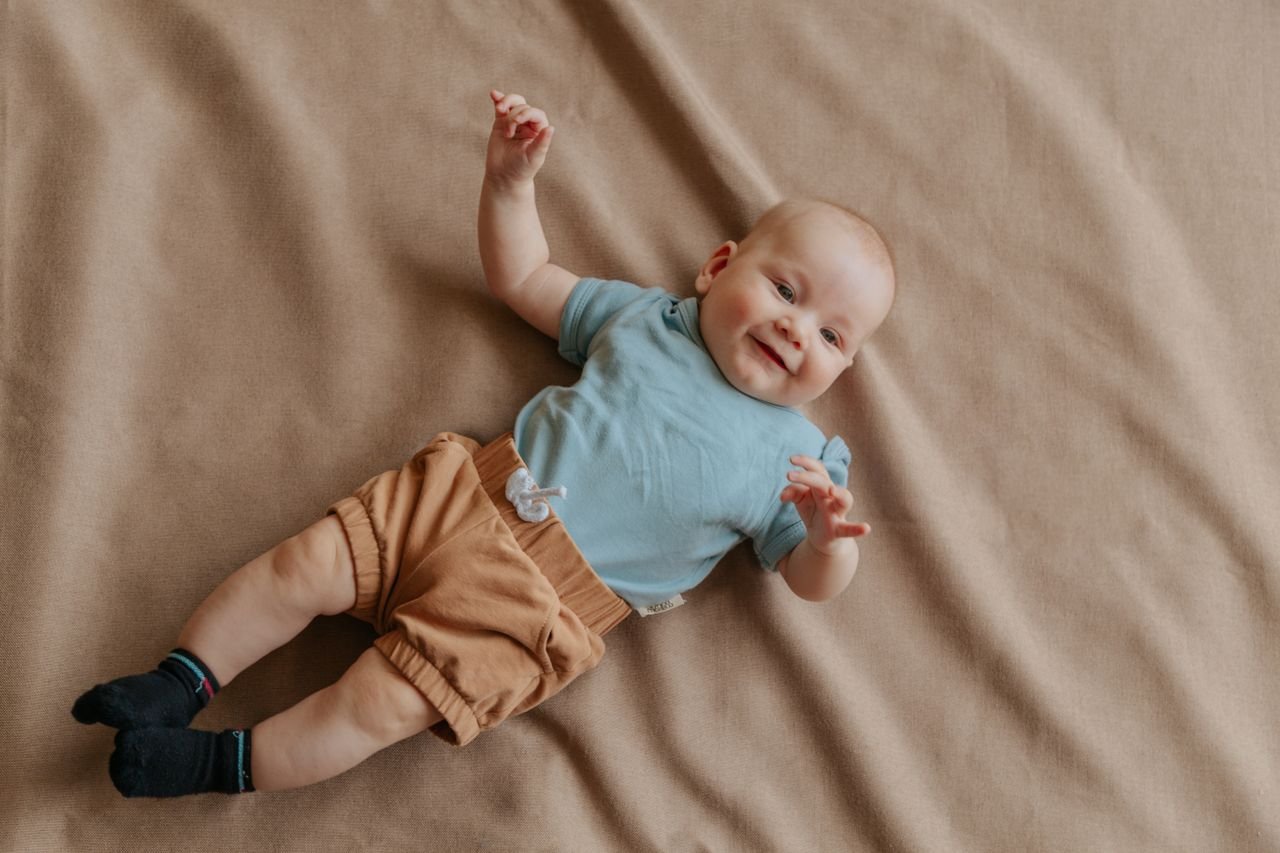
Rolling over is one of the first exciting baby developmental milestones that parents eagerly wait for. If you’re wondering when do babies roll over, the answer is that most babies begin rolling between 4 and 6 months of age, although some may start earlier or later. Every baby’s growth is unique, so slight variations are perfectly normal. Understanding the baby rolling over milestone, recognizing the signs, and knowing how to encourage safe movement can help you support your little one’s development with confidence.
When Do Babies Start Rolling Over?
Most parents ask, when do babies start rolling over or what age do babies roll over? Generally, babies begin rolling from tummy to back around 4 months because this movement requires less coordination. Rolling from back to tummy usually develops between 5 and 6 months, as it requires stronger neck, shoulder, arm, and core muscles.
While some babies surprise parents by rolling at 3 months, others may not roll until 7 months. This range is still considered a normal rolling over baby age, especially if your baby is meeting other baby motor skills milestones.
Rolling Over Timeline by Age
| Baby Age | Expected Development |
|---|---|
| 2 Months | Improved head and neck control |
| 3 Months | May begin turning onto one side |
| 4 Months | Many babies roll from tummy to back |
| 5 Months | Core muscles become stronger |
| 6 Months | Most babies roll both directions |
| 7+ Months | Rolling becomes effortless and frequent |
This rolling over developmental milestone is an important step that prepares babies for sitting, crawling, and eventually walking.
Signs Your Baby Is Ready to Roll Over

Before your baby starts rolling, you’ll usually notice several developmental signs:
- Strong and steady head control
- Pushes up on arms during tummy time
- Rocks from side to side
- Lifts chest while lying on the tummy
- Reaches for toys outside their immediate reach
- Shows increased curiosity and body movement
These signs your baby is ready to roll over indicate that their muscles are becoming stronger and coordination is improving.
How to Help Your Baby Roll Over Safely
Parents often ask how to encourage baby to roll over or how to help baby roll over. The best approach is to provide opportunities for natural movement instead of forcing the milestone.
Here are a few simple ways to encourage rolling:
- Practice supervised tummy time every day. The tummy time benefits include stronger neck, shoulder, and back muscles.
- Place colorful toys slightly out of reach to encourage turning and reaching.
- Allow plenty of supervised floor play instead of extended time in swings, bouncers, or car seats.
- Encourage movement by talking, smiling, and positioning yourself to one side.
- Never force your baby’s body into a rolling position.
Consistent floor play helps babies develop confidence and reach their baby motor skills milestones naturally.
What If My Baby Isn’t Rolling Over Yet?
Many parents worry about a baby not rolling over by a certain age. In most cases, there is no need to panic. Every child develops differently, and premature babies may reach milestones based on their corrected age.
You may wonder, should I worry if my baby isn’t rolling over? Consider speaking with your pediatrician if:
- Your baby has not attempted to roll by 6–7 months.
- They have poor head control.
- They seem unusually stiff or floppy.
- They are missing several other developmental milestones.
A single delayed rolling milestone doesn’t always indicate a problem, but a healthcare professional can assess your baby’s overall development if you have concerns.
Safe Sleep After Your Baby Starts Rolling

Once your baby begins rolling, sleep safety becomes even more important.
Follow these recommendations:
- Always place your baby on their back to sleep.
- Stop swaddling once your baby shows signs of rolling.
- Use a firm mattress with a fitted sheet.
- Keep the crib free from pillows, blankets, bumpers, and stuffed toys.
- Avoid sleep positioners or wedges.
Many parents ask, can babies sleep on their stomach after rolling over? If your baby independently rolls onto their stomach during sleep and can roll both ways, you generally don’t need to reposition them. However, always place them on their back at the beginning of every sleep for safe sleep after baby rolls over.
Frequently Asked Questions
When do babies roll over from tummy to back?
Most babies roll from tummy to back between 4 and 5 months, once they develop sufficient neck and upper-body strength.
When do babies roll over from back to tummy?
Most babies roll from back to tummy between 5 and 6 months, as this movement requires stronger core and shoulder muscles.
Is rolling over at 3 months normal?
Yes. Some babies achieve the baby rolling milestone as early as 3 months, although most start between 4 and 6 months.
What if my 6-month-old isn’t rolling over?
If your baby is otherwise developing normally, there may be no cause for concern. However, if your 6-month-old isn’t rolling over and is also missing other milestones, consult your pediatrician.
What comes after the rolling over milestone?
After mastering rolling, babies typically progress to sitting independently, crawling, pulling up, and eventually taking their first steps.
Conclusion
So, when do babies roll over? Most babies begin rolling between 4 and 6 months, first from tummy to back and later from back to tummy. Regular tummy time, supervised floor play, and plenty of encouragement can help your little one develop this important skill. Remember that every child reaches baby developmental milestones at their own pace. If you ever feel concerned about a baby not rolling over or another delayed rolling milestone, speak with your pediatrician for personalized guidance and reassurance.