
Watching your baby learn new skills is one of the most exciting parts of early parenthood. After rolling over and sitting independently, many parents start wondering: when do babies start crawling?
Most babies start crawling between 6 and 10 months of age, although the exact baby crawling age can vary from one child to another. Some babies crawl earlier around 6 months, while others may begin crawling closer to 10 or 12 months. Some babies even skip crawling completely and move directly toward standing and walking.
Understanding when do babies crawl, the signs your baby is ready, and ways to encourage movement can help parents support this important developmental milestone with confidence.
When Do Babies Start Crawling?
Most babies start crawling between 6 and 10 months old. This is the most common answer to the question “what age do babies start crawling?”
Before crawling, babies usually develop important physical skills such as:
- Stronger neck and back muscles
- Better head control
- Improved balance
- Ability to sit independently
- Coordination between arms and legs
The typical baby crawling timeline looks like this:
- 6–7 months: Some babies begin early crawling movements.
- 7–9 months: Many babies start experimenting with crawling positions.
- 8–10 months: The majority of babies begin crawling on hands and knees.
- 10–12 months: Some babies develop stronger crawling skills or begin walking.
However, there is no single “perfect” age for crawling. Babies develop at different speeds depending on their strength, curiosity, personality, and opportunities for movement.
Factors that influence when babies start crawling include:
- Amount of tummy time
- Muscle development
- Baby’s interest in exploring
- Premature birth
- Opportunities to play on the floor
A baby who spends more time freely moving on the floor often gets more chances to practice crawling skills.
Baby Crawling Timeline Month by Month
Understanding the different crawling stages in babies can help parents recognize normal development.
4–6 Months: Preparing for Crawling
Although most babies do not crawl during this stage, their bodies are getting ready.
Common developmental signs include:
- Lifting the head and chest during tummy time
- Pushing up using arms
- Rolling from tummy to back and back to tummy
- Strengthening shoulder, arm, and core muscles
Tummy time plays an important role because it helps babies build the strength needed for future movements like crawling, sitting, and standing.
6–8 Months: Early Crawling Attempts
Between 6 and 8 months, many babies begin showing signs they are ready to crawl.
During this stage, babies may:
- Push backward instead of moving forward
- Move in circles while lying on their tummy
- Try reaching for toys
- Rock back and forth on hands and knees
- Start pulling themselves forward
Many parents notice their baby getting into a crawling position before actually crawling. This is a normal part of learning movement control.
8–10 Months: Typical Crawling Stage
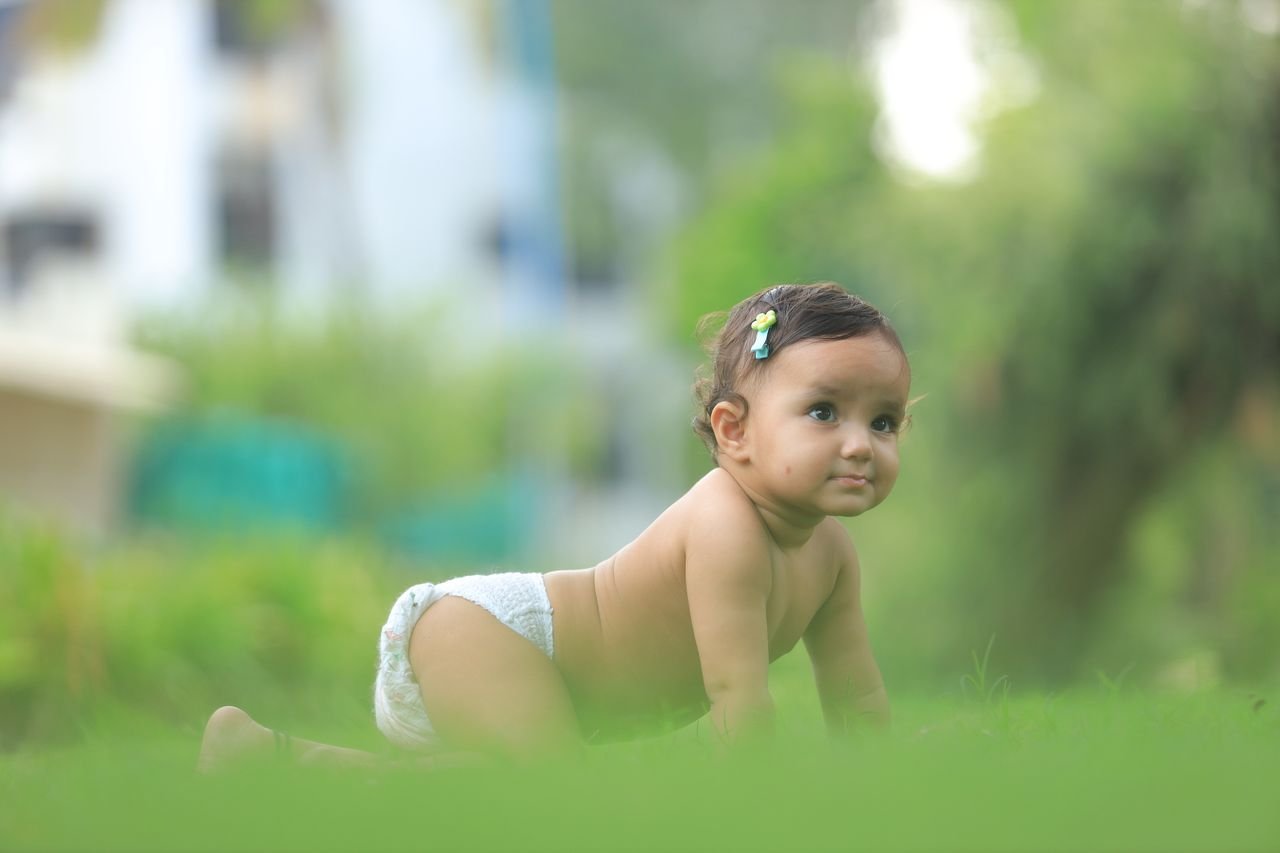
For many babies, 8 to 10 months is the most common age when babies start crawling on hands and knees.
At this stage, babies may begin:
- Traditional hands-and-knees crawling
- Moving across the room independently
- Exploring different areas of the house
- Reaching for objects they want
Some babies crawl quickly within a few days, while others take weeks to master balance and coordination.
10–12 Months: Developing Mobility
By 10 to 12 months, babies usually become more confident movers.
They may:
- Crawl faster
- Change directions easily
- Pull themselves up to stand
- Cruise along furniture
- Practice taking their first steps
This stage shows how crawling helps develop balance, coordination, and confidence before walking.
Signs Your Baby Is Ready to Crawl
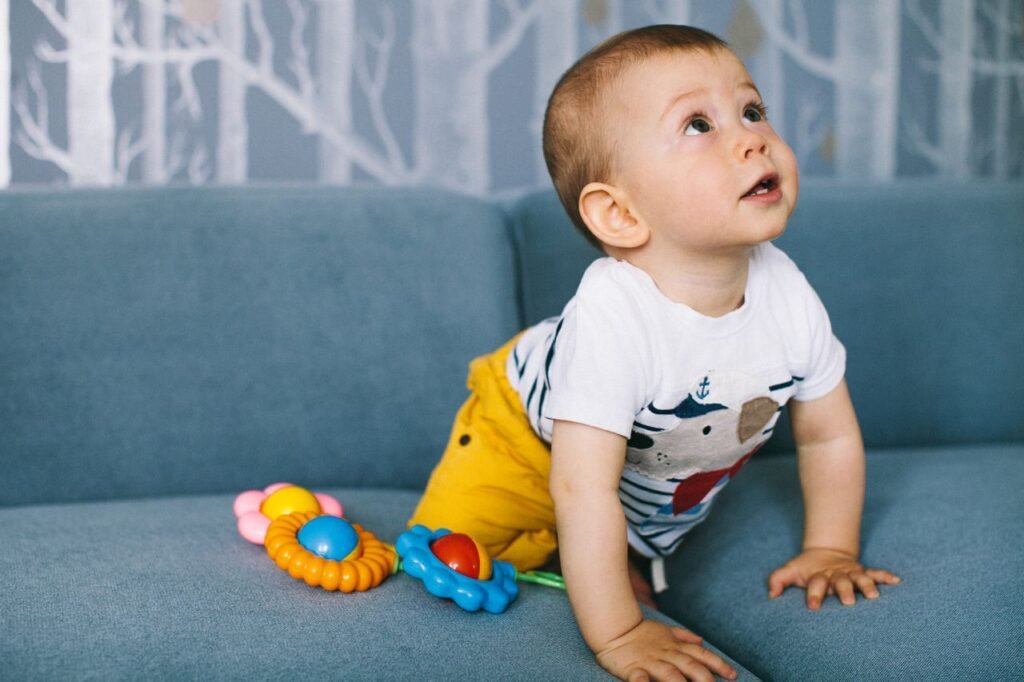
Before your baby starts crawling, they usually show several signs baby is ready to crawl. These early signals indicate that your little one is developing the strength, coordination, and curiosity needed for movement.
Here are common baby crawling readiness signs to look for:
1. Baby Enjoys Tummy Time
A baby who enjoys tummy time and spends more time lifting their head and chest is building important muscles needed for crawling.
Tummy time helps strengthen:
- Neck muscles
- Shoulder muscles
- Arms
- Back muscles
- Core strength
2. Pushing Up on Hands
One of the early signs of crawling is when your baby pushes their upper body up using their hands while lying on their tummy.
This movement helps babies learn how to shift their weight and prepare for crawling.
3. Rocking on Hands and Knees
Many babies start rocking forward and backward on their hands and knees before they crawl.
This movement helps them practice:
- Balance
- Coordination
- Weight shifting
- Arm and leg control
Parents often notice this stage just before their baby begins crawling forward.
4. Reaching for Toys While on the Floor
When babies become interested in reaching for toys, people, or objects around them, they naturally start experimenting with movement.
You may notice your baby:
- Stretching their arms forward
- Pushing with their legs
- Trying different positions to reach objects
This curiosity often motivates the first crawl.
5. Moving Backward or Sideways
Many parents worry when their baby moves backward instead of forward. However, this is completely normal.
During early crawling attempts, babies often:
- Push themselves backward
- Spin around in circles
- Move sideways
- Slide on their tummy
These movements are part of learning body control.
Different Types of Baby Crawling Styles
Not every baby crawls in the same way. The traditional hands-and-knees crawl is common, but many babies develop their own unique crawling style.
Understanding different crawling stages in babies can help parents know what is normal.
1. Traditional Hands-and-Knees Crawling
This is the crawling style most parents imagine.
Baby moves by:
- Supporting weight on hands and knees
- Moving opposite arms and legs together
- Crawling forward independently
Many babies begin this type of crawling between 7 and 10 months.
2. Army Crawling
Some babies prefer belly crawling, also called army crawling.
In this style:
- Baby lies on their tummy
- Uses arms to pull forward
- Legs may drag behind
Army crawling is a normal early movement pattern and often develops before traditional crawling.
3. Bear Crawling
Bear crawling happens when babies move using:
- Hands on the floor
- Feet instead of knees
The baby’s bottom stays raised in the air.
This usually happens when babies become stronger and closer to standing or walking.
4. Bottom Scooting
Some babies move around while sitting instead of crawling.
They may:
- Use their hands to push themselves
- Drag their bottom across the floor
- Rotate their body to move around
Bottom scooting is another normal way babies explore movement.
5. Rolling Instead of Crawling
Some babies prefer rolling as their main method of transportation.
A baby may roll across the room to reach:
- Toys
- Parents
- Interesting objects
While crawling is a common milestone, not all babies crawl before walking.
How to Help Baby Crawl?
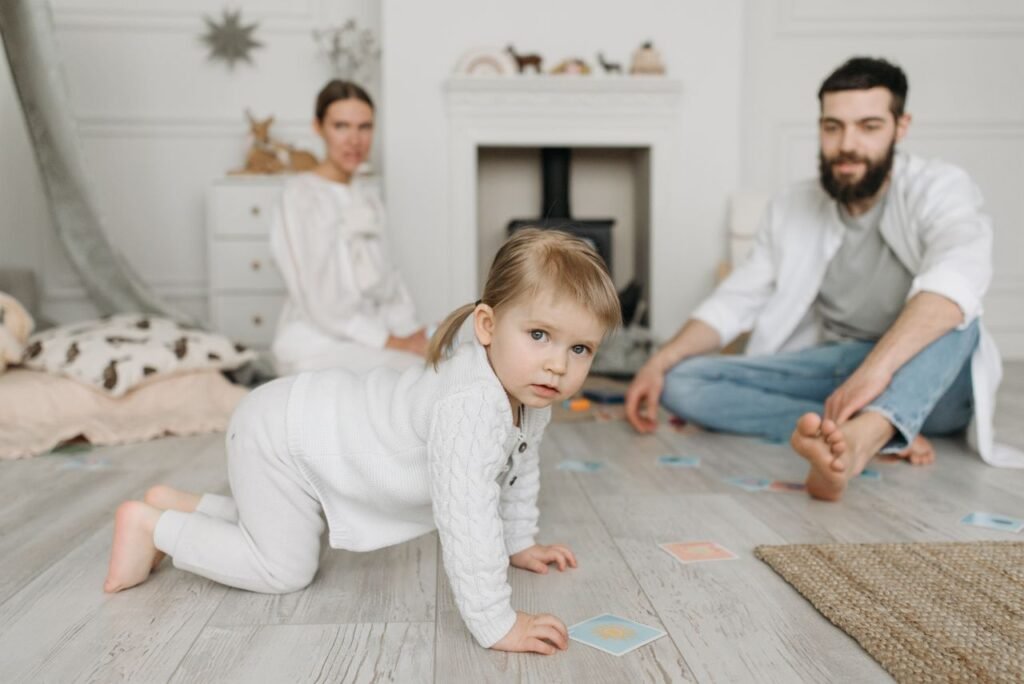
Many parents ask, “How can I encourage my baby to crawl?” The good news is that simple daily activities can support your baby’s crawling development.
Here are effective ways to encourage crawling:
1. Provide Plenty of Tummy Time
Tummy time is one of the best ways to prepare babies for crawling.
Try:
- Short tummy time sessions multiple times a day
- Placing toys nearby during tummy time
- Getting down on the floor with your baby
Regular tummy time helps babies develop the strength required for crawling.
2. Create a Safe Floor Space
Babies need freedom to move and practice.
Create a safe crawling area by:
- Using a clean play mat
- Removing sharp objects
- Keeping small items away
- Allowing enough open space
Floor time gives babies the opportunity to practice new movements.
3. Use Toys to Encourage Movement
Place your baby’s favorite toys slightly out of reach.
This encourages them to:
- Stretch forward
- Push with their legs
- Move their body toward the toy
Avoid placing toys too far away because babies may become frustrated.
4. Get Down on the Floor With Your Baby
Babies learn through observation.
Try:
- Crawling toward your baby
- Encouraging them with smiles
- Playing interactive floor games
Your encouragement can make movement feel fun and rewarding.
5. Limit Long Periods in Baby Equipment
While baby products like swings, bouncers, and seats can be useful, too much time in restricted positions may reduce opportunities for movement.
Allow your baby regular supervised floor play to practice:
Exploring
Rolling
Sitting
Crawling
Why Is My Baby Not Crawling Yet?
Many parents become concerned when their baby is not crawling at the same time as other babies. Questions like “why is my 8 month old not crawling yet?” or “is it normal for a baby not crawling at 9 months?” are very common.
The answer is that every baby develops at their own pace. Some babies start crawling early, while others take more time to build strength and confidence.
A baby who is not crawling at 8, 9, or even 10 months may still be developing normally, especially if they are learning other skills such as:
- Sitting independently
- Rolling over
- Reaching for toys
- Moving around in other ways
- Pulling up while standing
Some babies simply prefer other methods of movement before crawling.
Reasons Why Some Babies Crawl Later
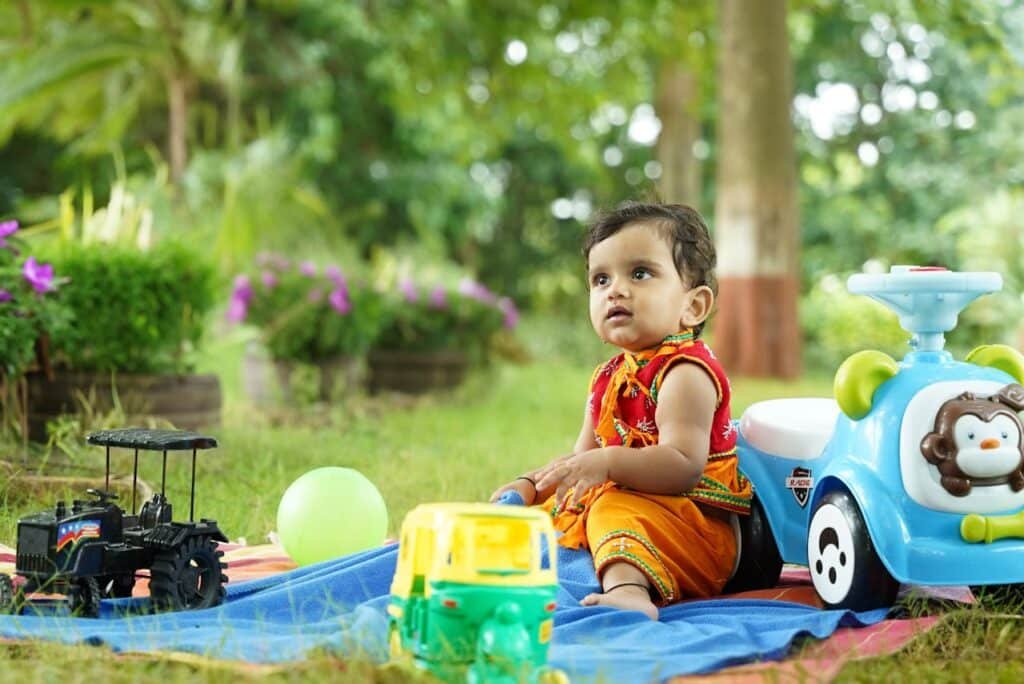
There are several reasons why a baby may start crawling later than expected:
1. Different Development Style
Every baby has a unique development pattern. Some babies spend more time practicing sitting, standing, or using their hands before crawling.
2. Less Floor Time
Babies need opportunities to move freely. Limited floor play may reduce chances to practice crawling skills.
3. Premature Birth
Babies born early may reach milestones based on their adjusted age rather than their actual birth date.
4. Baby’s Personality
Some babies are naturally more adventurous and eager to explore, while others take more time before attempting new movements.
Do All Babies Crawl Before Walking?
A common question parents ask is: “Do babies need to crawl before walking?”
The answer is no. Not all babies crawl before walking.
Some babies:
- Skip crawling completely
- Move from sitting directly to standing
- Walk after using other movement methods
- Prefer rolling or bottom scooting
While crawling is a valuable milestone that supports coordination, balance, and strength, it is not the only path to healthy development.
The important thing is that your baby continues progressing and learning new skills.
When Should Parents Talk to a Doctor?
Although crawling timelines vary, parents should speak with a pediatrician if they notice developmental concerns.
Consider seeking advice if:
- Baby shows no interest in moving by around 9–10 months
- Baby cannot sit independently around 9 months
- Baby does not attempt to reach for objects
- Baby avoids using one side of the body
- Baby appears unusually stiff or floppy
- Baby loses previously learned skills
A healthcare professional can evaluate your baby’s overall development and provide guidance if needed.
Remember, the question “when should babies crawl?” does not have one exact answer. Developmental progress matters more than a specific date.
Baby Crawling Safety Checklist
Once your baby starts crawling, the world becomes a new place to explore. Baby-proofing your home before your little one becomes mobile can help prevent accidents.
Use this crawling safety checklist:
✓ Install Baby Gates
Place safety gates near:
- Stairs
- Balconies
- Unsafe areas
✓ Cover Electrical Outlets
Babies are naturally curious and may touch or explore outlets while crawling.
Use outlet covers to improve safety.
✓ Remove Small Choking Hazards
Keep away:
- Coins
- Small toys
- Buttons
- Batteries
- Tiny household items
A crawling baby can quickly reach objects on the floor.
✓ Secure Furniture
Attach heavy furniture such as:
- Bookshelves
- Cabinets
- TVs
to prevent tipping accidents.
✓ Keep Floors Clean
Babies often explore using their hands and mouth.
Regularly clean floors to remove:
- Dust
- Small objects
- Pet hair
- Unsafe items
✓ Watch Around Stairs
Never leave a crawling baby unattended near stairs.
Frequently Asked Questions About Baby Crawling
Q1. When do babies start crawling for the first time?
Most babies start crawling for the first time between 6 and 10 months. However, some babies crawl earlier, while others begin closer to their first birthday.
Q2. What is the normal age for babies to crawl?
The normal baby crawling age is usually between 6 and 10 months. A wider range can still be normal because every baby develops differently.
Q3. When do babies start crawling on hands and knees?
Many babies begin hands-and-knees crawling between 7 and 10 months after developing enough arm, leg, and core strength.
Q4. Can babies crawl at 5 months?
Some babies may show early crawling movements at 5 months, such as pushing backward or rocking, but independent crawling at this age is uncommon.
Q5. Why is my 9-month-old not crawling?
A 9-month-old baby not crawling is not always a concern. Some babies crawl later, while others use different movements like rolling, scooting, or standing.
Q6. Is crawling necessary for babies?
Crawling is an important developmental milestone because it helps improve:
- Coordination
- Balance
- Muscle strength
- Spatial awareness
However, some babies skip crawling and still develop normally.
Q7. How can I encourage my baby to crawl?
Parents can encourage crawling by:
- Providing daily tummy time
- Creating a safe floor area
- Using toys to motivate movement
- Playing on the floor with their baby
- Allowing supervised exploration
Final Thoughts: Understanding When Babies Start Crawling
The answer to “when do babies start crawling?” is different for every child. While most babies begin crawling between 6 and 10 months, some babies crawl earlier, some later, and some skip crawling completely.
Instead of comparing your baby’s progress with others, focus on encouraging movement, providing plenty of tummy time, and creating a safe environment for exploration.
Every crawl, scoot, roll, and movement is a step toward independence and an exciting part of your baby’s development journey.