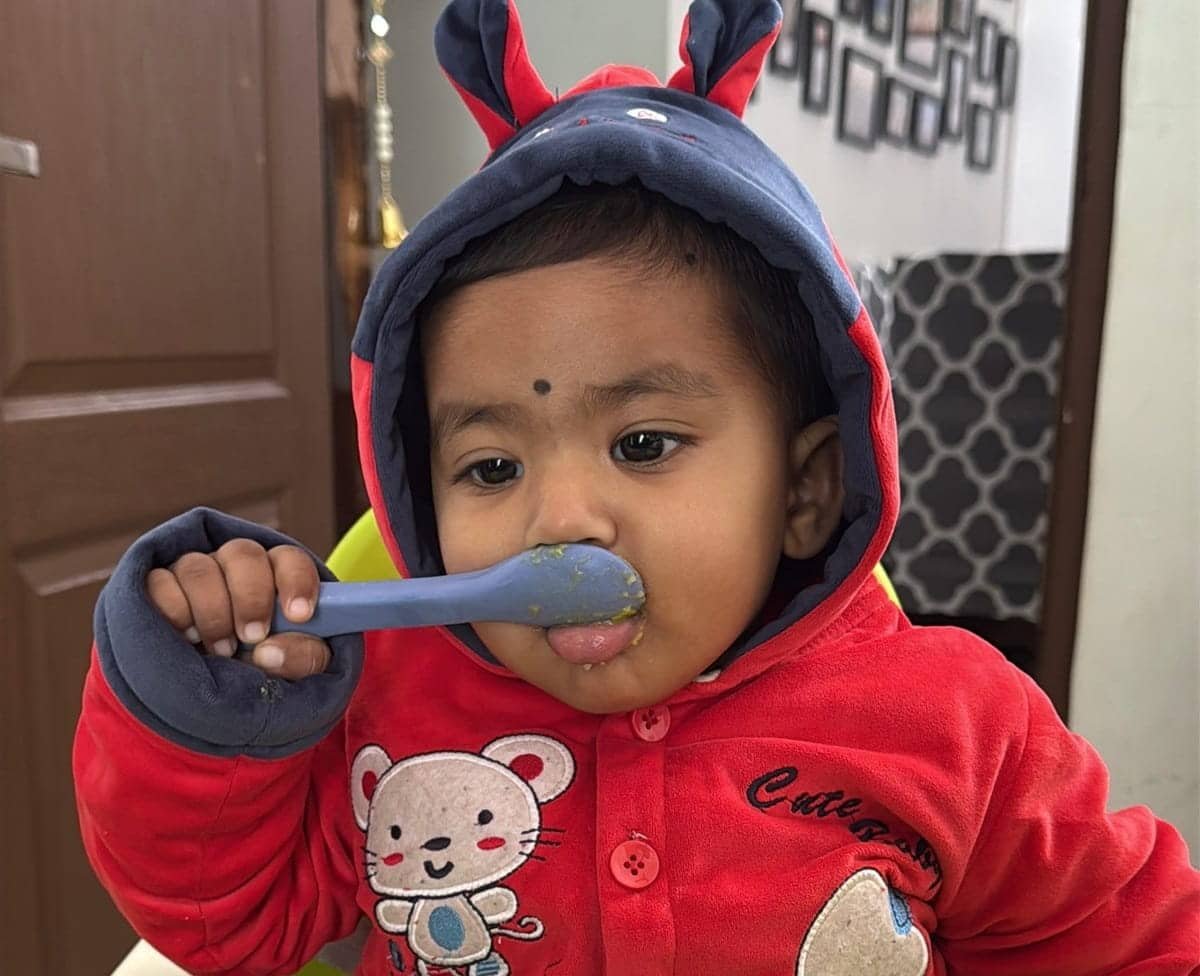

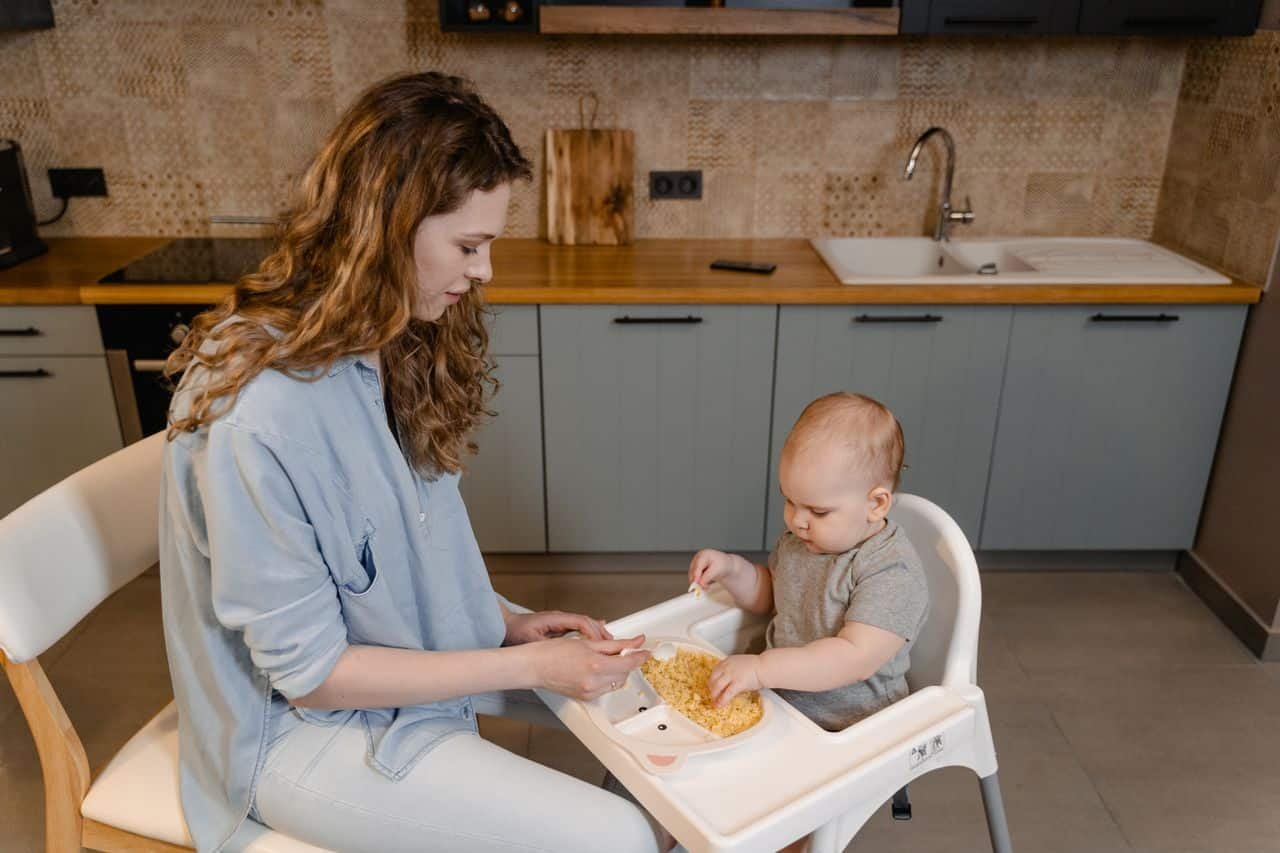
When your baby starts complementary feeding, simple homemade foods can make mealtimes easier for parents. Khichdi is a popular Indian baby food because it can combine grains, dal, vegetables and healthy fats in one soft, easy-to-customize meal.
These khichdi recipes for babies are designed to be simple and adaptable as your baby grows. You can change the ingredients and texture according to your baby’s age, feeding readiness and foods already introduced.
WHO recommends starting complementary foods at around 6 months, alongside continued breastfeeding, and gradually increasing food variety and consistency as the baby grows.
Quick answer: Yes, khichdi can be a nutritious option during complementary feeding when prepared with suitable ingredients, cooked thoroughly and offered in an age-appropriate texture.
When Can Babies Start Eating Khichdi?
Khichdi for 6-Month-Old Babies
You can introduce a simple khichdi for a 6-month-old baby once your baby is developmentally ready for complementary foods. A basic rice and moong dal khichdi is a good starting point because it can be cooked until very soft and mashed to the desired consistency.
For a khichdi recipe for a 6-month-old baby, keep the ingredient list simple at first. Start with a small amount and gradually increase portions as your baby becomes comfortable with complementary foods. WHO recommends beginning complementary foods at about 6 months and gradually increasing both quantity and variety.
Khichdi for 7–8 Month Babies
At this stage, your baby may be ready for more variety. You can introduce different vegetables, grains and dals that your baby has already tolerated.
The consistency can also gradually become thicker and more textured. Instead of completely blending the khichdi, try well-mashing it according to your baby’s feeding skills.
Khichdi for 9–12 Month Babies
For khichdi recipes for 9 month baby and older babies, you can gradually move toward a thicker, softer and more textured preparation.
Finely chopped, thoroughly cooked vegetables can be mixed into the khichdi. As babies develop their eating skills, they can progress toward a wider variety of family foods with suitable modifications. WHO recommends gradually increasing food consistency and variety as children grow.
Basic Baby Khichdi Recipe
This simple baby khichdi recipe can be used as a base for many variations.
Ingredients
- 2 tablespoons rice
- 1 tablespoon yellow moong dal
- 1 to 1½ cups water, depending on the desired consistency
- A small amount of ghee, if appropriate for your baby
- Optional vegetables for older babies
How to Make Baby Khichdi
- Wash the rice and moong dal thoroughly.
- Soak them for a short time if desired.
- Add rice, dal and water to a pressure cooker or suitable cooking pot.
- Cook until the rice and dal are completely soft.
- Mash thoroughly for younger babies or leave a little more texture for older babies.
- Add a small amount of ghee if you choose to use it.
- Allow the khichdi to cool to a safe, lukewarm temperature before serving.
This simple khichdi for baby can then be customized with vegetables, different grains or other age-appropriate ingredients.
10 Easy Khichdi Recipes for Babies
1. Rice & Moong Dal Khichdi
Moong dal khichdi for baby is one of the simplest versions to start with.
Ingredients: Rice, yellow moong dal and water.
Method: Cook the rice and dal together until very soft. Mash thoroughly and adjust the consistency with water if needed.
This dal rice khichdi for baby works well as a basic recipe before experimenting with more ingredients.
2. Vegetable Khichdi
Vegetable khichdi for baby is an easy way to introduce additional vegetables into a familiar meal.
Ingredients: Rice, moong dal, carrot, pumpkin, lauki or another suitable vegetable that your baby has already been introduced to.
Method: Wash and chop the vegetables into small pieces. Cook them with the rice and dal until everything is very soft. Mash according to your baby’s age.
For healthy khichdi for babies, focus on variety rather than adding many ingredients at once.
3. Carrot Khichdi
Carrot can add mild sweetness and colour to a basic khichdi.
Ingredients: Rice, moong dal, carrot and water.
Method: Peel and finely chop the carrot. Cook it with the rice and dal until completely soft. Mash or adjust the texture according to your baby’s age.
This carrot khichdi for baby is a simple variation of the traditional recipe.
4. Pumpkin Khichdi
Pumpkin makes a naturally soft and mild pumpkin khichdi for baby.
Ingredients: Rice, moong dal, pumpkin and water.
Method: Add peeled and chopped pumpkin to the rice and dal. Cook until everything is soft enough to mash easily. Serve at a comfortable temperature.
5. Lauki Khichdi
Lauki, or bottle gourd, can be used to make a light and soft lauki khichdi for baby.
Ingredients: Rice, moong dal, peeled lauki and water.
Method: Remove the skin and seeds if necessary, chop the lauki and cook it thoroughly with rice and dal. Mash well for younger babies.
6. Spinach Khichdi
Once spinach has been introduced appropriately, you can use it in a simple spinach khichdi for baby.
Ingredients: Rice, moong dal, well-washed spinach and water.
Method: Cook the rice and dal until soft, then add finely chopped spinach and cook thoroughly. Mash to the consistency suitable for your baby.
7. Masoor Dal Khichdi
For babies who are already comfortable with different dals, masoor dal khichdi for baby can provide another variation.
Ingredients: Rice, masoor dal and water, with optional age-appropriate vegetables.
Method: Wash the rice and dal and cook them together until very soft. Mash well for younger babies and gradually offer more texture as your baby develops.
8. Millet Khichdi
Millet khichdi for babies is another way to add variety to your baby’s grain options.
Ingredients: A suitable millet, moong dal, vegetables and water.
Method: Wash and cook the millet with dal and vegetables until soft. Adjust the consistency according to your baby’s age and feeding abilities.
When introducing millet khichdi for baby, introduce the grain appropriately rather than adding several unfamiliar ingredients at the same time.
9. Oats Khichdi
Oats can also be used for an easy oats khichdi for baby.
Ingredients: Plain oats, moong dal, finely chopped suitable vegetables and water.
Method: Cook the dal and vegetables until soft. Add oats and cook until the mixture becomes soft and porridge-like. Mash if necessary.
10. Apple & Moong Dal Khichdi
For a slightly different flavour, cooked apple can be combined with rice and moong dal.
Ingredients: Rice, moong dal, peeled apple and water.
Method: Cook the rice and dal until soft. Add peeled, finely chopped apple and cook thoroughly. Mash everything together before serving.
This apple khichdi for baby or apple moong dal khichdi is best introduced after your baby is comfortable with the individual ingredients.
How to Make Khichdi for a 6-Month-Old Baby
If you’re wondering how to make khichdi for a 6 month baby, start with a very simple recipe.
Combine rice and yellow moong dal with enough water and cook until completely soft. Mash the mixture until it reaches a smooth or thick, well-mashed consistency appropriate for your baby’s feeding skills.
Start with a small quantity and gradually increase it as your baby becomes more comfortable with complementary foods. WHO recommends beginning with small amounts and increasing the quantity as the child grows.
For the best khichdi for 6 month old baby, simplicity is usually more useful than adding many ingredients at once. Once individual foods are familiar, you can gradually introduce vegetables and other suitable grains or dals.
How to Adjust Khichdi Texture by Baby’s Age
The texture of baby food recipes 6-12 months should change as your baby develops the skills needed to handle different foods.
| Baby’s Age | Khichdi Texture | What to Add |
|---|---|---|
| 6 months | Smooth or thick, well-mashed | Rice + moong dal |
| 7–8 months | Thicker and mashed/lumpy | Vegetables and different dals |
| 9–11 months | Soft and more textured | Finely chopped, well-cooked vegetables |
| 12+ months | Soft family-style texture | A wider variety of suitable family foods |
There is no need to keep every meal completely smooth as your baby gets older. WHO recommends gradually increasing food consistency and variety according to the child’s abilities.
Ingredients You Can Add to Baby Khichdi
One of the advantages of homemade khichdi for babies is that you can vary the ingredients while keeping the basic preparation simple.
Grains
- Rice
- Dalia
- Oats
- Suitable millets
Dals
- Yellow moong dal
- Masoor dal
- Other suitable pulses introduced according to your baby’s feeding stage
Vegetables
- Carrot
- Pumpkin
- Lauki
- Sweet potato
- Peas
- Spinach
Healthy Fats
- Ghee
- Suitable cooking oils
Rather than trying to include every ingredient in one meal, introduce foods gradually and aim for variety across your baby’s overall diet. WHO recommends increasing food diversity and consistency during complementary feeding.
Can You Add Salt and Spices to Baby Khichdi?
For baby khichdi without salt, there is generally no need to add salt or sugar to make the meal appealing. WHO specifically advises that salt and sugars should not be added to complementary foods for babies and young children.
You also don’t need to make baby food heavily seasoned. For younger babies, keep the flavours mild and focus on the natural taste of the ingredients.
If you’re wondering about spices in baby food, discuss individual ingredients with your pediatrician if your baby has specific dietary needs, allergies or feeding concerns.
Tips for Making Healthy Khichdi for Babies
Keep these practical tips in mind when preparing easy baby food recipes at home:
- Cook rice, dal and vegetables until they are completely soft.
- Adjust the consistency according to your baby’s age and feeding skills.
- Introduce new ingredients gradually.
- Use clean hands, utensils and cooking surfaces.
- Serve freshly prepared food at a suitable temperature.
- Avoid forcing your baby to finish a portion.
- Pay attention to your baby’s hunger and fullness cues.
- Offer a variety of foods over time rather than relying on only one recipe.
- Avoid ingredients that may present a choking risk and ensure foods are prepared in an appropriate texture.
- Continue breast milk or formula as appropriate for your baby’s age.
Safe preparation and responsive feeding are important parts of complementary feeding. WHO recommends feeding slowly and patiently, encouraging babies to eat without forcing them, while gradually increasing food variety and consistency.
Common Questions About Baby Khichdi
Is khichdi good for babies?
Yes, khichdi can be a nutritious baby food when prepared with suitable ingredients and served in an age-appropriate texture. Rice, dal, vegetables and healthy fats can be combined to create a simple homemade meal. However, khichdi should be part of a varied diet rather than the only food offered.
Can I give khichdi to my 6-month-old baby?
Yes, you can introduce a simple khichdi for 6 month baby once your baby is ready for complementary foods. Start with a simple rice and moong dal preparation, cook it thoroughly and offer an appropriate smooth or mashed texture. Complementary foods are generally introduced at around 6 months.
Which dal is best for baby khichdi?
Yellow moong dal is a common choice for a simple baby khichdi recipe because it cooks easily and works well in a soft preparation. Once your baby is comfortable with it, other suitable dals can be introduced gradually for more variety.
How do I make khichdi for a 6-month-old baby?
For an easy khichdi recipe for 6 month baby, cook rice and yellow moong dal with enough water until very soft. Mash the mixture thoroughly and adjust the consistency with water if required. Begin with a small quantity and gradually increase it as your baby becomes comfortable with complementary foods.
Can babies eat vegetable khichdi?
Yes, vegetable khichdi for baby can be introduced as part of complementary feeding. Start with vegetables your baby has already been introduced to, cook them until very soft and adjust the texture according to your baby’s age.
Can I add ghee to baby khichdi?
A small amount of ghee can be included in a baby’s diet as an energy-dense fat, provided it fits your baby’s overall diet and dietary needs. The important thing is to offer a balanced variety of foods rather than relying on ghee as the main source of nutrition.
Can I give khichdi every day to my baby?
Khichdi can be offered regularly, but babies benefit from dietary variety. Instead of serving the same healthy khichdi for babies every day, rotate grains, dals, vegetables and other suitable foods so your baby experiences different tastes and textures.
What can I add to khichdi for babies?
Depending on your baby’s age and foods already introduced, you can add ingredients such as carrot, pumpkin, lauki, sweet potato, spinach, suitable dals, oats or millet. Introduce new foods gradually rather than adding several unfamiliar ingredients at once.
How thick should khichdi be for a baby?
For a younger baby beginning complementary feeding, khichdi can be smooth, thick and well mashed. As the baby develops eating skills, gradually make it thicker and more textured. WHO recommends increasing food consistency as infants get older and according to their abilities.
Can I make khichdi without salt for babies?
Yes. Baby khichdi without salt is a simple option, and babies do not need added salt for flavour. WHO recommends not adding salt or sugars to complementary foods for infants and young children.
Final Takeaway
These khichdi recipes for babies show that homemade baby food doesn’t need to be complicated. Start with a simple rice and moong dal khichdi, then gradually introduce vegetables, different dals, grains and textures as your baby grows.
For khichdi recipes for 7 month baby, khichdi recipes for 8 month baby, and older babies, focus on gradually increasing variety and texture rather than simply making the same recipe thicker. Always prepare food safely and follow your baby’s hunger and fullness cues.
Most importantly, khichdi is just one part of complementary feeding. Offering a diverse range of nutritious foods helps your baby experience different flavours, textures and food groups as they grow.