

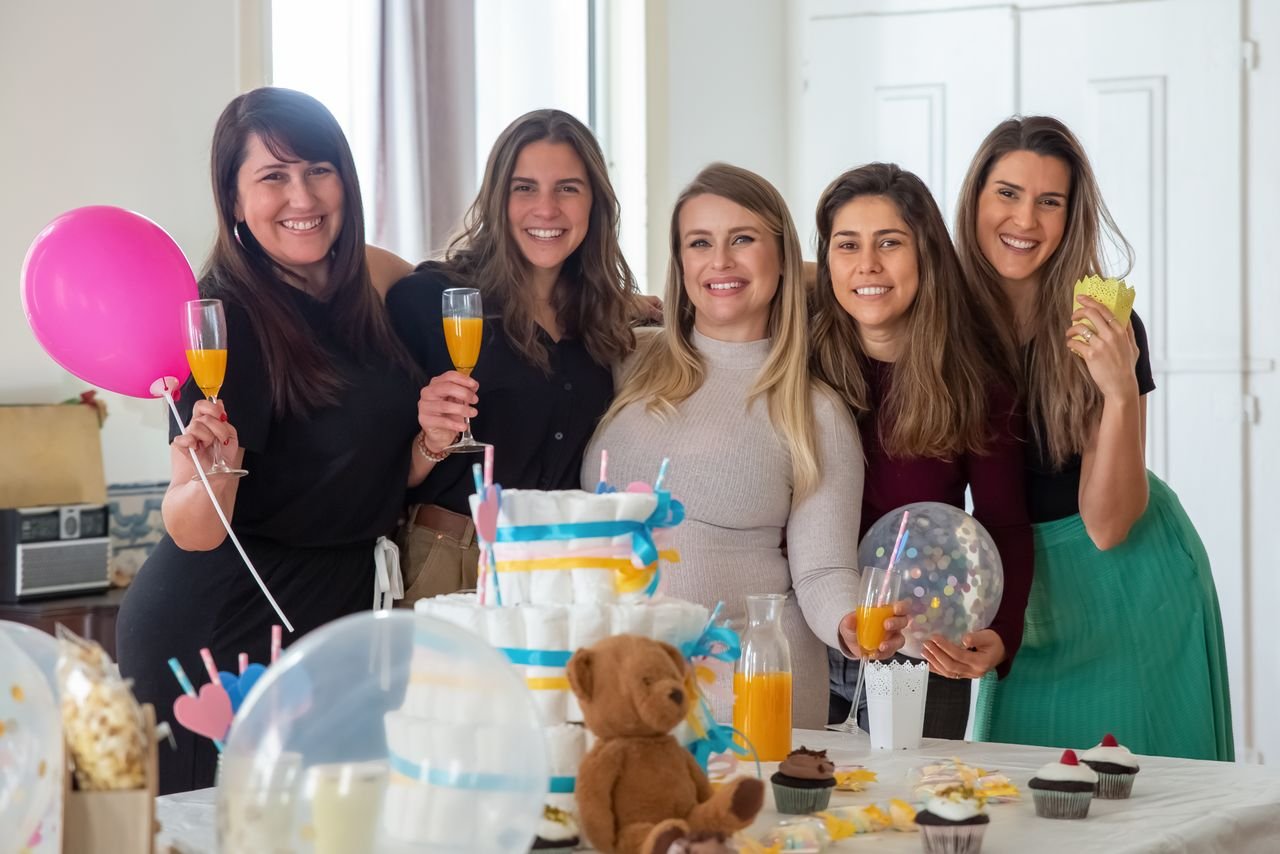
A baby shower is a celebration held before the arrival of a baby to honor and support the expecting parents. It is an opportunity for family members, friends, and loved ones to come together, share their blessings, celebrate the upcoming arrival, and sometimes give useful gifts to help parents prepare for their new baby. Today, baby showers can be traditional, modern, intimate, co-ed, virtual, or combined with cultural celebrations such as Godh Bharai.
While gifts are often part of a baby shower, the purpose goes far beyond receiving baby products. At its heart, a baby shower is about celebrating parenthood, creating happy memories, and surrounding parents-to-be with love and support as they prepare for a major new chapter in their lives.
What Is the Meaning of a Baby Shower?
The term baby shower refers to the idea of “showering” the expecting parent or parents with love, good wishes, support, and often gifts before the baby’s arrival.
Traditionally, baby shower celebrations have focused on the mother-to-be, but modern baby showers increasingly celebrate both parents. A baby shower may also be organized for parents welcoming a child through adoption, surrogacy, or other paths to parenthood.
The exact format of a baby shower ceremony can vary from family to family. Some families prefer a small gathering at home, while others may plan a larger baby shower party with decorations, games, food, music, photography, and gifts.
Why Is It Called a “Baby Shower”?
The word “shower” represents the idea of surrounding the parents-to-be with support and good wishes.
Family and friends may “shower” the expecting parents with:
- Love and blessings
- Encouraging words
- Practical advice
- Baby shower gifts
- Baby essentials
- Emotional support
- Help as the family prepares for the baby’s arrival
Therefore, the meaning of a baby shower is not simply about buying things for a newborn. It is also about reminding parents that they have a community around them.
What Is the Purpose of a Baby Shower?
The purpose of a baby shower can be both emotional and practical.
A baby shower celebration allows loved ones to:
- Celebrate the upcoming arrival of the baby.
- Congratulate the expecting parents.
- Offer emotional support during pregnancy.
- Help parents prepare for their newborn.
- Share parenting advice and encouragement.
- Bring family and friends together.
- Create meaningful memories before the baby arrives.
- Provide useful baby or postpartum essentials when gifts are included.
The deeper purpose is to make parents feel supported rather than overwhelmed as they prepare for life with a new baby.
What Happens at a Baby Shower?
Wondering what happens at a baby shower? There is no single set of activities that every celebration must follow.
A typical baby shower may include:
- Welcoming guests
- Food and refreshments
- Baby shower games
- Conversations with family and friends
- Blessings and wishes for the parents
- Cake cutting
- Opening baby shower gifts
- Baby-related activities
- Advice cards for the parents
- Photography
- Music
- Family traditions
- A special ceremony or blessing
Some parents may enjoy games and activities, while others may prefer a relaxed meal and time with loved ones.
The most important thing is that the baby shower celebration reflects the preferences and comfort of the parents-to-be.
Who Hosts a Baby Shower?
Traditionally, baby showers were often hosted by close friends, cousins, aunts, sisters-in-law, or coworkers. Modern baby shower etiquette, however, is considerably more flexible.
Today, a baby shower can be hosted by a friend, relative, colleague, sibling, parent, or another person close to the expecting family. Emily Post notes that immediate family members may also host a baby shower when it makes practical sense.
The most important consideration is that the host communicates with the parents and understands what they would like from the celebration.
Can Parents Host Their Own Baby Shower?
Yes. Modern families can choose to host their own baby shower if that works best for them.
Some couples prefer to organize the entire event themselves because they have a specific vision for the celebration. Others prefer to let a friend or family member take responsibility for planning.
There is no need to follow an outdated rule simply because it is traditional. The parents can decide whether they want to organize the event, co-plan it, or allow someone else to host it.
If someone else is hosting, parents should still feel comfortable sharing preferences about the guest list, food, activities, gifts, and overall format.
What Is the Role of Parents at a Baby Shower?
The parents are the honorees of the baby shower, so their role is primarily to participate, enjoy the celebration, and communicate what makes them comfortable.
They do not necessarily have to organize every detail.
In fact, good baby shower planning usually begins by asking the expecting parents about their preferences. This can include the guest list, location, refreshments, games, gift registry, and whether they want a virtual component.
The Role of the Expecting Mother
The expecting mother should be able to enjoy the baby shower rather than feel responsible for managing it.
Her role may include:
- Sharing her preferred date and location.
- Providing input on the guest list.
- Communicating food preferences or dietary requirements.
- Deciding whether she wants baby shower games.
- Choosing whether she wants traditional rituals.
- Sharing her baby registry if she has one.
- Communicating preferences about photographs and social media.
- Taking breaks whenever she needs them.
- Enjoying time with family and friends.
Pregnancy can be physically demanding, especially during the later months. A baby shower should therefore be planned around the mother’s comfort rather than making her follow a rigid schedule.
The Role of the Expecting Father
The dad-to-be can be an active part of a modern baby shower.
His role may include:
- Participating in planning discussions.
- Sharing preferences about guests and activities.
- Welcoming family members and friends.
- Participating in baby shower games.
- Opening gifts with the mother-to-be.
- Sharing memories and excitement about becoming a parent.
- Helping communicate practical preferences.
- Joining family photographs.
- Thanking guests for their support.
A baby shower does not have to be exclusively about the mother. If both parents want to celebrate together, a co-ed baby shower can be a wonderful option.
The Role of Both Parents
For couples celebrating together, parents can jointly decide:
- What type of baby shower they want.
- Whether it will be traditional or modern.
- Whether the event will be co-ed.
- Who they want to invite.
- Whether they want baby shower games.
- What food and refreshments they prefer.
- Whether they want a baby registry.
- Whether cultural traditions should be included.
- What photographs can be shared online.
- How much time they want to spend at the celebration.
The key principle is simple: the baby shower should support the parents rather than create additional pressure for them.
When Is a Baby Shower Usually Held?
One of the most common questions is, “When is a baby shower usually held?”
There is no medically required baby shower month. The timing is generally based on the parents’ preferences, pregnancy circumstances, family traditions, availability of guests, and how comfortable the expecting mother feels.
A common etiquette guideline is to hold a baby shower around four to six weeks before the expected due date, although celebrations can take place earlier or later. Some families also choose to celebrate after the baby arrives.
Is There a Best Month for a Baby Shower?
Many families choose the later part of pregnancy, often around the seventh or eighth month, because the baby shower is close enough to the due date to feel meaningful while still giving parents time to prepare.
However, there is no universal “best month.”
The right time depends on:
- The mother’s comfort.
- The pregnancy and any individual considerations.
- Travel plans.
- Family availability.
- Weather and venue.
- Cultural traditions.
- The expected due date.
- Whether the family wants to receive gifts before birth.
For a comfortable celebration, it is generally better to choose a time when the expecting parent can participate without feeling exhausted or rushed.
What Is Godh Bharai? Understanding the Indian Baby Shower
For Indian families, a baby shower may be connected with Godh Bharai, one of the best-known Indian pregnancy celebrations.
Godh Bharai is traditionally associated with celebrating the expectant mother and offering blessings for the mother and baby. The Hindi expression is commonly explained as “filling the lap.”
However, it is important to remember that Indian baby shower traditions are not identical across the country. Different communities, regions, families, and cultural backgrounds may follow different rituals.
What Does Godh Bharai Mean?
The phrase Godh Bharai is commonly understood to mean “filling the lap.” The ceremony celebrates pregnancy, impending motherhood, and the arrival of a new member of the family.
Depending on the family and region, a Godh Bharai ceremony may include:
- Blessings for the mother-to-be.
- Fruits and sweets.
- Traditional clothing.
- Jewellery or bangles.
- Songs and music.
- Family gatherings.
- Traditional rituals.
- Games.
- Gifts.
- Prayers or religious ceremonies.
FirstCry notes that Godh Bharai practices vary considerably across different parts of India, which is why families may have very different versions of the ceremony.
What Happens During Godh Bharai?
During a traditional Godh Bharai ceremony, the expecting mother may be dressed in traditional clothing and seated in a prominent but comfortable place while relatives and friends offer blessings.
Depending on the family’s customs, women relatives may place fruits, sweets, gifts, bangles, clothing, or other items in her lap. Songs, dancing, prayers, games, and family rituals may also form part of the celebration.
Some communities have their own names and variations for pregnancy ceremonies. For example, regional customs can differ significantly, so it is better to describe Godh Bharai as a broad cultural tradition rather than one fixed ceremony.
Is Godh Bharai the Same as a Baby Shower?
Godh Bharai and a baby shower have a similar overall purpose—celebrating the arrival of a baby and supporting the expecting family—but they are not necessarily the same ceremony.
| Baby Shower | Godh Bharai |
|---|---|
| Modern celebration common in many countries | Traditional Indian pregnancy celebration |
| May focus on both parents | Traditionally often centers on the expectant mother |
| Games and social activities are common | Cultural rituals, blessings, songs, and family customs may be important |
| Gifts are commonly given | Gifts may be given to the mother, baby, or both depending on family customs |
| Can be casual, themed, co-ed, or virtual | Customs vary according to region, community, and family |
| Usually focused on celebrating and supporting parents | Often combines celebration with cultural and family traditions |
The two celebrations can also be combined. An Indian family may have a modern baby shower with games and decorations while also incorporating traditional Godh Bharai rituals.
Who Is Invited to a Baby Shower?
The guest list depends on the parents and the type of celebration.
Common guests include:
- Grandparents
- Siblings
- Close relatives
- Friends
- Colleagues
- Neighbours
- Family friends
- Other people who are important to the parents
A baby shower can be women-only, co-ed, family-focused, or include a broader circle of friends and colleagues.
The parents should have meaningful input into the guest list, particularly because the celebration is about them and their growing family.
What Do Parents Need to Do Before a Baby Shower?
Parents do not have to manage every part of the event, but providing clear preferences can make baby shower planning much easier.
Decide What Type of Baby Shower You Want
First, decide what kind of celebration feels right.
Options include:
- Traditional baby shower
- Modern baby shower
- Indian baby shower
- Godh Bharai
- Small family gathering
- Co-ed baby shower
- At-home celebration
- Outdoor gathering
- Brunch
- Virtual baby shower
- Hybrid celebration
There is no requirement to have an elaborate baby shower party. A simple gathering can be just as meaningful.
Prepare a Guest List
Parents should communicate who they would like to invite.
Consider:
- Immediate family.
- Close friends.
- Work colleagues.
- Relatives.
- Family friends.
- People who live nearby.
- Guests who may need virtual access.
If the host is preparing the invitations, parents should review important names and details before invitations are sent.
Create a Baby Registry
A baby registry allows parents to identify products they genuinely need.
Depending on the family’s situation, a registry might include:
- Diapers
- Baby clothes
- Swaddles
- Feeding supplies
- Baby bath essentials
- Baby books
- Nursery items
- Baby blankets
- Practical newborn supplies
A registry is optional. Parents should not feel pressured to request expensive items or create a long list simply because it is expected.
Share Food and Activity Preferences
The parents should feel comfortable telling the host what they would and would not enjoy.
This may include:
- Food preferences
- Dietary restrictions
- Preferred beverages
- Baby shower games
- Music
- Cultural rituals
- Seating arrangements
- Duration of the event
- Photography
- Social-media sharing
The purpose is not to control every detail but to help the host create an event that the parents can genuinely enjoy.
Baby Shower Etiquette for Parents
Baby shower etiquette has become more flexible, but a few principles can help parents navigate the celebration comfortably.
Parents do not need to manage everything. If someone else is hosting, allow them to handle logistics.
It is okay to say no to games. Not every parent enjoys traditional baby shower games.
Give input on the guest list. The people attending should ideally be people the parents feel comfortable celebrating with.
Communicate gift preferences politely. If parents have a registry, they can share it through the host or invitation according to the event’s format.
Set boundaries around photographs. Parents can let guests know if they prefer that pregnancy or family photos not be posted publicly.
Don’t compare celebrations. A small family gathering can be just as special as a large themed baby shower.
Prioritize comfort. The expecting mother should be able to sit, rest, eat, hydrate, and leave early if necessary.
Most importantly, parents should remember that the celebration is meant to make them feel loved and supported.
Is a Baby Shower Only for the First Baby?
No. A baby shower is not only for the first baby.
Families may choose to celebrate a second, third, or subsequent baby as well. A smaller celebration for a subsequent baby is sometimes called a baby sprinkle.
The idea behind a sprinkle is that parents who already have children may already own many basic baby supplies, so the gathering can focus more on celebrating the new baby than on collecting essential equipment. Emily Post also recognizes showers and sprinkles for second and subsequent children.
A family may also choose a simple meal, blessing ceremony, family gathering, or another celebration instead of a traditional baby shower.
There is no universal rule. Every new baby can be celebrated in a way that feels appropriate for the family.
Baby Shower Ideas for Modern Parents
A modern baby shower does not need to follow a particular formula. The best baby shower ideas are those that reflect the parents’ personality and comfort.
Simple Baby Shower Ideas
If you prefer a low-key celebration, consider:
- At-home brunch
- Family lunch
- Garden gathering
- Afternoon tea
- Small family party
- Baby-name guessing activity
- Advice cards for parents
- Memory-book activity
- Simple cake-cutting ceremony
- Family blessing circle
Baby Shower Ideas for Couples
For couples who want to celebrate together, consider:
- Co-ed baby shower
- Couple’s quiz
- Baby-name game
- Parenting predictions
- Family photo session
- Joint gift opening
- Advice-for-new-parents cards
- Shared family blessing ceremony
Including the father-to-be or partner can make the celebration feel like a true event for both expecting parents.
Low-Budget Baby Shower Ideas
A memorable baby shower does not have to be expensive.
Parents and hosts can consider:
- Homemade decorations
- DIY games
- Digital invitations
- Home-cooked food
- Potluck-style meals
- Simple flowers
- Homemade desserts
- Family photography
- Printable activities
- A small gathering at home
The emotional value of a baby shower comes from the people who attend, not from the amount spent on decorations.
What Gifts Do Parents Usually Receive at a Baby Shower?
Baby shower gifts often focus on practical items that parents can use after the baby arrives.
Common baby shower gifts include:
- Baby clothes
- Diapers
- Swaddles
- Baby blankets
- Feeding essentials
- Baby bath products
- Baby books
- Nursery items
- Baby-care products
- Postpartum essentials for the mother
- Practical household items
Parents can also use a baby registry to communicate what they actually need.
However, a baby shower gift does not have to be expensive to be meaningful. A children’s book, handmade blanket, meal for the family, or thoughtful note can be just as valuable.
How Can Guests Support Parents Beyond Gifts?
The most meaningful support may continue long after the baby shower party is over.
Family and friends can help parents by:
- Preparing meals.
- Helping with errands.
- Offering practical support.
- Checking in after the baby arrives.
- Sharing reliable parenting resources.
- Helping with household tasks.
- Offering emotional encouragement.
- Respecting the parents’ boundaries.
- Being available when parents genuinely need help.
This is one reason baby showers can be so meaningful. They can help establish the support network that parents may rely on during the early months of parenthood.
A baby shower is therefore not simply about giving gifts before birth. It can be the beginning of a community of support around a growing family.
Frequently Asked Questions About Baby Showers
What is a baby shower?
A baby shower is a celebration held to honor and support expecting parents before their baby arrives. It usually brings together family and friends and may include food, games, blessings, activities, and gifts.
Why is a baby shower celebrated?
A baby shower is celebrated to welcome the upcoming arrival of a baby, celebrate the parents-to-be, bring loved ones together, and provide emotional or practical support to the growing family.
Who hosts a baby shower?
A baby shower can be hosted by a close friend, relative, colleague, sibling, or another person close to the expecting parents. Modern etiquette is flexible, and immediate family members may also host when appropriate.
Can parents host their own baby shower?
Yes. Parents can host their own baby shower if they prefer. They can also have a friend or family member host while they provide input on the guest list, food, activities, and other details.
What month is a baby shower usually held?
A baby shower is often held during the later part of pregnancy. One common etiquette guideline is approximately four to six weeks before the due date, although the timing can vary according to the parents’ preferences and circumstances.
What happens at a baby shower?
A baby shower may include food, refreshments, conversations, baby shower games, gifts, blessings, photography, cake cutting, and other activities. The format depends on the parents and host.
Is a baby shower only for the first baby?
No. Families can celebrate subsequent babies too. A smaller celebration for a second or later baby is sometimes called a baby sprinkle.
Can fathers attend a baby shower?
Yes. Modern baby showers can include fathers or partners, and many families choose to have co-ed baby shower celebrations where both parents participate.
Is Godh Bharai the same as a baby shower?
Godh Bharai is an Indian pregnancy celebration with cultural and regional traditions, while a baby shower generally refers to a broader modern celebration for expecting parents. The two can have similar purposes and may also be combined, but Godh Bharai can include specific cultural rituals that are not part of every baby shower.
What is the role of parents at a baby shower?
Parents are the honorees of the celebration. Their role is to communicate their preferences, participate as much as they wish, enjoy time with loved ones, receive blessings and support, and thank guests.
What should parents do at a baby shower?
Parents should enjoy the celebration, interact with family and friends, participate in activities they like, open gifts if they wish, take photographs, and express appreciation for the people celebrating with them.
Final Takeaway
A baby shower is much more than a party or a collection of baby gifts. It is a celebration of a growing family and an opportunity for loved ones to show expecting parents that they are not alone as they enter parenthood.
Whether you choose a modern co-ed baby shower, a simple family gathering, a traditional Godh Bharai ceremony, or a small baby sprinkle for a subsequent child, there is no single right way to celebrate.
The best baby shower is one that reflects the parents’ culture, personality, budget, comfort, and wishes. The decorations, games, food, and gifts are all secondary to what matters most: celebrating the baby, honoring the parents, and creating a circle of love and support around the family.