

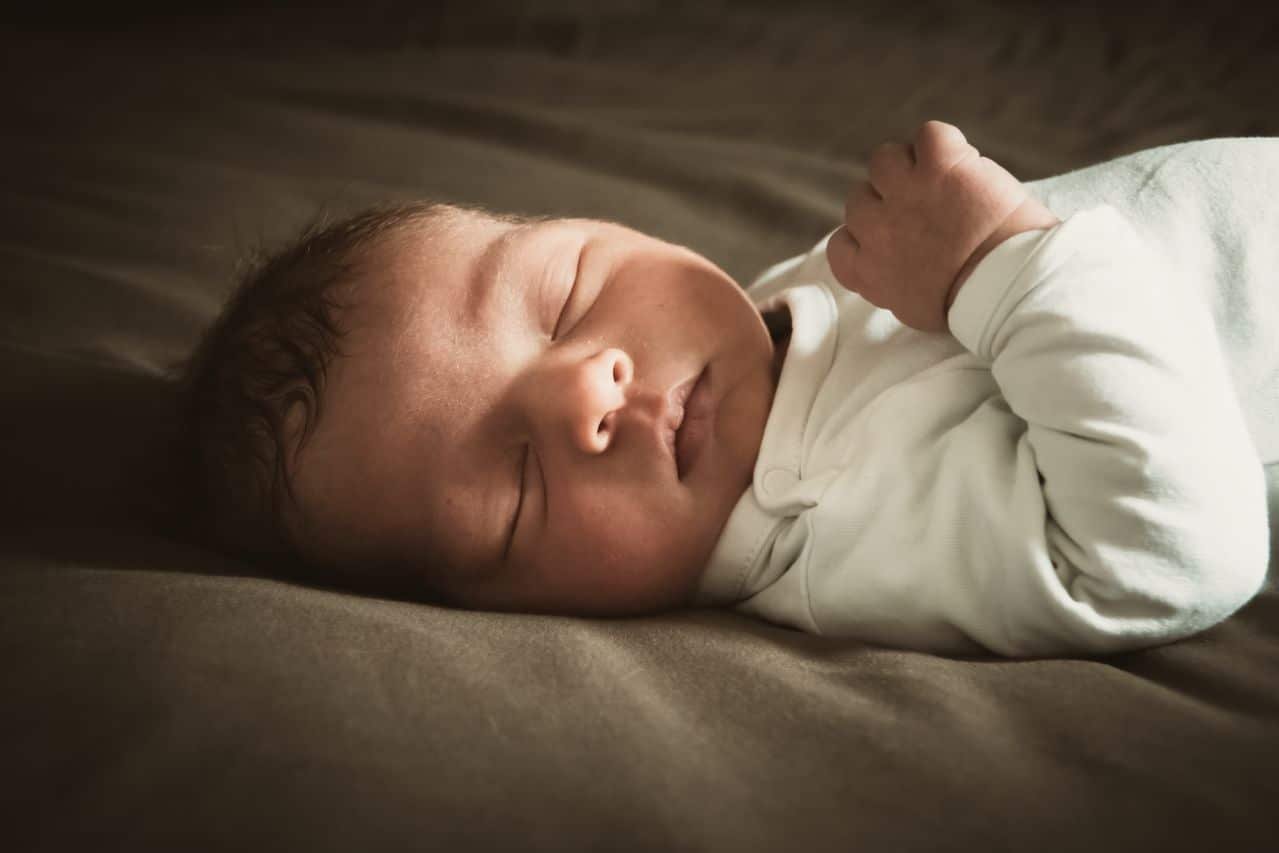
If your baby was sleeping relatively well and suddenly starts waking several times a night, fighting naps, resisting bedtime, or needing much more help to fall asleep, you may be wondering: Is this a baby sleep regression?
The term baby sleep regression is commonly used by parents to describe a temporary period when a baby’s previously predictable sleep pattern becomes more difficult. These changes often happen around developmental transitions, but there is no universal sleep regression calendar that every baby follows. Babies develop at different rates, and sleep can also change because of feeding needs, teething, illness, separation anxiety, changing nap schedules, travel, or other disruptions.
The most commonly discussed baby sleep regression ages and stages include around 4 months, 6 months, 8–10 months, 12 months, 15–18 months, and 2 years. However, a baby can experience sleep disruption at other ages too.
In this guide, you’ll find a practical baby sleep regression chart, common sleep regression signs, possible causes, age-by-age guidance, tips for helping your baby sleep, and answers to common questions such as how long does baby sleep regression last, why your baby may suddenly be waking every 2 hours, and how to tell sleep regression from teething, illness, or a nap transition.
Quick answer: Baby sleep regressions are periods of noticeable sleep disruption that may occur as babies and toddlers develop new skills or move through changes in sleep patterns. Commonly discussed stages include 4 months, 6 months, 8–10 months, 12 months, 18 months, and 2 years, but the timing and duration vary from child to child.
What Is Baby Sleep Regression?
What does sleep regression mean?
Baby sleep regression is a commonly used parenting term for a period when an infant or toddler who previously had a relatively manageable sleep pattern begins experiencing more difficulty sleeping.
A baby may suddenly:
- Wake more frequently at night
- Take shorter naps
- Fight naps
- Resist bedtime
- Need more help settling
- Wake earlier than usual
- Cry when placed in the crib
- Wake soon after falling asleep
- Become more difficult to resettle
- Want more parental comfort at night
The important thing to understand is that sleep regression in babies is not a strict medical diagnosis and does not happen according to a precise schedule. Instead, it is a useful way for parents to describe noticeable changes in sleep that often coincide with development.
Babies’ sleep patterns naturally change as they grow. The American Academy of Pediatrics notes that babies do not have regular sleep cycles until around 4 months, while the NHS emphasizes that every baby develops an individual sleeping and waking pattern.
This is why one baby might experience significant sleep disruption around 4 months while another may have relatively little difficulty at that age but struggle more around 8 or 9 months.
Why does sleep regression happen?
There isn’t one single cause of baby sleep regression. Sleep may become disrupted when several developmental or environmental changes happen at the same time.
Possible factors include:
- Development of more mature sleep patterns
- New physical skills such as rolling, crawling, sitting, or standing
- Separation anxiety
- Teething discomfort
- Growth and changing feeding needs
- Changes in daytime naps
- Transitioning between nap schedules
- Illness or discomfort
- Travel or changes in surroundings
- Changes in bedtime routines
- Increased awareness of the environment
- Emerging independence in toddlers
For example, a baby who has just learned to pull up may repeatedly practice standing in the crib instead of settling to sleep. An older baby may become more upset when a parent leaves the room because separation anxiety is a normal part of development.
Separation anxiety commonly occurs between about 6 months and 3 years and can cause babies and toddlers to become clingy or cry when their caregiver leaves.
Is sleep regression normal?
Temporary changes in sleep are common during infancy and toddlerhood.
However, that doesn’t mean every instance of poor sleep should automatically be called a sleep regression.
A baby who wakes once after sleeping well may simply be having a difficult night. A baby who suddenly wakes frequently for several nights could be experiencing a developmental change, but hunger, teething, illness, temperature, routine changes, or another factor could also be responsible.
The goal is therefore not to identify a perfect “regression week.” Instead, look at your baby’s overall pattern and consider what else may have changed.
Baby Sleep Regression Ages and Stages Chart
The following baby sleep regression chart provides a practical overview of commonly discussed sleep regression ages. These are approximate developmental periods rather than guaranteed milestones.
| Age/Stage | Common Sleep Changes | Possible Developmental Triggers | What Parents May Notice |
|---|---|---|---|
| 3–4 months | More frequent waking, shorter naps | Changing sleep patterns and development | Frequent night waking, catnaps |
| 5–6 months | Sleep disruption may occur | Development, feeding, teething | Nap resistance, waking |
| 7–10 months | Increased waking or settling difficulties | Crawling, standing, separation anxiety | Crying, crib practice |
| Around 12 months | Bedtime or nap resistance | Walking, language, changing nap needs | Early waking, nap refusal |
| 15–18 months | Strong bedtime resistance | Independence, mobility, separation | Tantrums, night waking |
| Around 2 years | Toddler sleep disruption | Independence, boundaries, schedule changes | Bedtime battles, night waking |
Remember that sleep regression ages vary. Your baby does not have to experience every stage in the table.
4-Month Sleep Regression
The 4 month sleep regression is one of the most searched baby sleep regression stages.
Around this period, babies undergo major developmental changes, including changes in how their sleep is organized. The American Academy of Pediatrics notes that babies do not have regular sleep cycles until approximately 4 months of age.
This can make the transition around 4 months particularly noticeable to parents.
What happens during the 4-month sleep regression?
A baby who previously had a longer stretch of nighttime sleep may suddenly begin waking more frequently.
You may notice:
- Your baby wakes every 1–2 hours.
- Naps become much shorter.
- Your baby fights naps.
- Bedtime becomes harder.
- Your baby wakes shortly after being put down.
- Your baby needs more help falling back asleep.
- Early morning waking becomes more frequent.
This can be frustrating because parents often feel that their baby had finally developed a good sleep routine, only for it to suddenly change.
However, nighttime waking itself is not necessarily abnormal. Babies have different sleep cycles and individual sleep needs, and waking during the night can remain developmentally appropriate.
4-month sleep regression signs
Common 4 month sleep regression signs include:
- More frequent night waking
- Short daytime naps
- Increased nap resistance
- Bedtime struggles
- Increased fussiness around sleep
- Difficulty settling
- Waking between sleep cycles
- Needing more parental assistance to fall asleep
If your baby is suddenly waking more often, don’t immediately assume something is wrong. First consider whether your baby’s feeding, health, environment, or daytime routine has changed.
How long does the 4-month sleep regression last?
There is no guaranteed duration for the 4-month sleep regression.
Some babies adjust relatively quickly, while others may have sleep disruption for longer. The length can depend on development, temperament, routine, sleep habits, feeding, and other individual factors.
Instead of counting down to a specific number of days, focus on maintaining a predictable routine and responding appropriately to your baby’s needs.
How to handle the 4-month sleep regression
A few practical strategies can help:
- Keep bedtime predictable.
- Create a short, calming bedtime routine.
- Keep nighttime interactions quiet and low stimulation.
- Pay attention to early sleepy cues.
- Avoid allowing your baby to become extremely overtired.
- Give your baby opportunities for active play during the day.
- Keep the sleep environment safe and consistent.
- Make changes gradually rather than changing everything at once.
For babies 4 months and older, the AAP also recommends putting babies down when drowsy rather than always waiting until they are fully asleep, as this can give them opportunities to learn how to settle in their own sleep space.
5- and 6-Month Sleep Regression

Not every baby experiences a clearly defined 5 month sleep regression or 6 month sleep regression, but sleep disruption can certainly occur during this period.
At 5–6 months, babies are becoming increasingly active and aware of their surroundings. They may also experience changes related to feeding, teething, motor development, and daytime sleep.
Can babies have a 5-month sleep regression?
Yes, sleep can become disrupted around 5 months, even though it is not necessary to label it a formal regression.
If your baby suddenly starts waking more frequently at 5 months, consider the entire picture rather than focusing only on age.
Ask yourself:
- Is your baby teething?
- Has daytime sleep changed?
- Has your baby’s bedtime changed?
- Is your baby learning a new physical skill?
- Is your baby hungry?
- Has your family recently traveled?
- Is your baby showing signs of illness?
- Has the sleep environment changed?
These questions can help identify a more specific reason for the change.
6-month sleep regression signs
Possible 6 month sleep regression signs include:
- More frequent nighttime waking
- Fighting naps
- Shorter naps
- Early morning waking
- Increased fussiness
- Difficulty falling asleep
- Increased need for parental reassurance
- Disrupted sleep associated with teething or other discomfort
The NHS notes that some babies between 6 and 12 months may sleep for longer stretches at night, but teething discomfort or hunger can still disturb sleep.
How to help a 6-month-old sleep better
If you’re dealing with a possible 6-month baby sleep regression, focus on consistency.
Try to:
- Keep a regular bedtime routine.
- Watch your baby’s sleepy cues.
- Provide plenty of daytime activity.
- Keep nighttime feeds and interactions calm.
- Make sure the sleep space remains safe.
- Avoid introducing multiple major sleep changes at the same time.
- Consider whether hunger, teething, or illness could be contributing.
Remember that not all babies of the same age require exactly the same amount of sleep.
8–10 Month Sleep Regression
The 8 month sleep regression is another commonly searched stage. Sleep disruption can also appear around 9 or 10 months.
This period can be particularly challenging because babies may suddenly become much more mobile.
They may be:
- Sitting independently
- Crawling
- Pulling up
- Cruising around furniture
- Practicing new sounds
- Becoming more socially aware
- Showing stronger separation anxiety
What causes the 8-month sleep regression?
The 8-month sleep regression can coincide with several developmental changes.
A baby who has learned to crawl may want to practice crawling everywhere. A baby who has learned to stand may repeatedly pull up in the crib.
At the same time, separation anxiety can make bedtime more difficult.
Your baby may suddenly realize that you can leave the room and may protest when you do.
This does not necessarily mean your baby has developed a “bad habit.” Separation anxiety is a normal developmental stage and is particularly common during infancy and toddlerhood.
8-month sleep regression signs
Common 8 month sleep regression signs include:
- Increased night waking
- Crying when you leave the room
- Standing in the crib
- Difficulty settling
- Fighting naps
- Waking shortly after falling asleep
- Early morning waking
- Increased clinginess
- Wanting a parent nearby
9-month sleep regression
A 9 month sleep regression may look very similar to the 8-month stage.
At this age, developmental progress can be rapid. One baby may be crawling, another may be standing, while another may be focusing heavily on communication.
Sleep disruption can therefore occur at slightly different times.
If your baby is suddenly waking at 9 months, consider whether a developmental milestone, separation anxiety, teething, illness, or a changing nap schedule is contributing.
10-month sleep regression
A 10 month sleep regression can also involve increased mobility and separation anxiety.
Your baby may resist sleep because there is simply so much happening developmentally.
Rather than repeatedly changing your bedtime routine, keep the routine familiar and give your baby plenty of opportunities to practice new skills during the day.
How to handle the 8–10 month sleep regression
Try these practical approaches:
- Practice crawling, standing, and other new skills during daytime play.
- Give your baby predictable cues before bedtime.
- Keep nighttime interactions calm.
- Avoid turning nighttime waking into playtime.
- Offer reassurance when needed.
- Keep your baby’s sleep environment safe.
- Maintain a consistent response to repeated waking.
- Review whether the daytime nap schedule still suits your baby.
One of the biggest mistakes parents make during a difficult sleep period is changing the entire routine every night. Consistency gives your baby predictable signals about when and where sleep happens.
12-Month Sleep Regression
The 12 month sleep regression, also called the 1 year sleep regression, can be confusing because some babies appear ready to drop a nap while others still need substantial daytime sleep.
Around the first birthday, babies may also be learning to walk, communicating more, and becoming increasingly independent.
Is there a 1-year sleep regression?
Sleep disruption can happen around 12 months, but not every baby experiences a distinct 12-month sleep regression.
Your baby may suddenly:
- Refuse a nap
- Fight bedtime
- Wake during the night
- Wake unusually early
- Become more clingy
- Resist being put into the crib
Sometimes parents interpret this as a regression when the underlying issue is actually a changing daytime schedule.
12-month sleep regression signs
Common 12 month sleep regression signs include:
- Nap refusal
- Bedtime resistance
- Night waking
- Early morning waking
- Increased clinginess
- Crying when a caregiver leaves
- Difficulty settling
- Changes in usual sleep duration
Why does sleep change around 12 months?
Several developmental factors may influence sleep around the first birthday.
Your baby may be:
- Learning to walk
- Practicing new words
- Becoming more independent
- Experiencing separation anxiety
- Changing nap patterns
- Becoming more aware of their surroundings
The NHS notes that sleep patterns naturally change as children grow and that growth spurts, teething, illness, and other changes can affect sleep.
How to handle the 12-month sleep regression
Try to maintain:
- A predictable bedtime
- A familiar bedtime routine
- Consistent daytime sleep opportunities
- Plenty of physical activity
- Calm nighttime responses
- A developmentally appropriate nap schedule
Avoid assuming that refusing one nap means your baby is immediately ready to eliminate it permanently.
15–18 Month Sleep Regression
The 18 month sleep regression is often associated with a toddler becoming more independent.
This can be a dramatic developmental period. Your toddler may understand more, communicate more clearly, walk or run confidently, and have strong opinions about what they want.
Sleep can become another area where they test that independence.
What causes the 18-month sleep regression?
Possible contributors include:
- Separation anxiety
- Increased independence
- Walking and running
- Language development
- Strong preferences
- Boundary testing
- Nap changes
- Changes in the family routine
At this stage, “No!” may become a favorite word—and bedtime may become the perfect place to practice it.
18-month sleep regression signs
Common 18 month sleep regression signs include:
- Fighting bedtime
- Crying when placed in bed
- Repeated requests for parents
- Night waking
- Early morning waking
- Refusing naps
- Getting out of bed repeatedly
- Increased separation anxiety
- Prolonged bedtime routines
How long does the 18-month sleep regression last?
There is no fixed duration.
Some toddlers adjust relatively quickly when their routine remains consistent. Others may experience sleep disruption for longer.
The important thing is to distinguish a temporary developmental change from persistent sleep problems or a medical issue.
How to handle 18-month sleep regression
At 18 months, consistency becomes especially important.
Try:
- Keeping bedtime at approximately the same time.
- Following the same wind-down routine.
- Setting simple and predictable bedtime boundaries.
- Offering limited choices, such as which pajamas to wear.
- Keeping nighttime responses calm and brief.
- Avoiding lengthy negotiations.
- Making sure your toddler has plenty of active daytime play.
A consistent bedtime routine can help toddlers understand what comes next. The NHS recommends a predictable wind-down routine and clear limits around bedtime for young children who struggle to settle.
2-Year Sleep Regression
Parents sometimes ask, “Can toddlers have a 2-year sleep regression?”
Yes, sleep can become disrupted around age 2. However, just like other sleep regression stages, this is not an exact developmental event that every toddler experiences.
2-year sleep regression signs
A 2 year sleep regression may involve:
- Bedtime battles
- Refusing to go to bed
- Delaying bedtime
- Asking for repeated stories or drinks
- Night waking
- Early waking
- Nap refusal
- Increased independence
- Strong emotional reactions around bedtime
What causes the 2-year sleep regression?
Around age 2, toddlers are developing rapidly.
Possible contributors include:
- Increased independence
- Testing boundaries
- Language development
- Separation anxiety
- Changes in naps
- A new sibling
- Travel
- Moving house
- Starting childcare
- Changes in bedtime
- Transitioning away from daytime naps
At this age, your child may understand much more of what you’re saying and may also be much better at negotiating.
“Just one more story” can quickly become five stories.
How to handle the 2-year sleep regression
Keep bedtime simple and predictable.
You can:
- Give limited choices.
- Keep the bedtime routine consistent.
- Set clear boundaries.
- Use the same response to repeated requests.
- Avoid turning bedtime into a long negotiation.
- Provide plenty of daytime activity.
- Maintain an age-appropriate nap schedule.
- Offer reassurance without constantly changing the routine.
Children aged around 2 generally need about 12–14 hours of total sleep over 24 hours, including naps, although individual needs vary.
Baby Sleep Regression Signs: How Do You Know It’s a Regression?
If you’re asking “How do I know if my baby is going through sleep regression?”, look for a noticeable change from your baby’s usual sleep pattern.
Common signs of baby sleep regression
Your baby may:
- Suddenly wake up more frequently.
- Wake every 1–2 hours.
- Start fighting naps.
- Take unusually short naps.
- Resist bedtime.
- Cry when you leave the room.
- Wake shortly after falling asleep.
- Wake earlier in the morning.
- Need more help settling.
- Become more difficult to soothe.
- Practice new developmental skills instead of sleeping.
Is one bad night a sleep regression?
Usually, one difficult night isn’t enough to conclude that your baby is experiencing sleep regression.
Sleep naturally varies from night to night.
Instead, look for a persistent change in your baby’s normal pattern.
For example, if your baby normally wakes once and suddenly wakes every two hours for several nights, that’s a more meaningful change than a single restless night.
Also consider whether your baby may be hungry, uncomfortable, teething, sick, too hot, too cold, or adjusting to a change in routine.
What Causes Baby Sleep Regression?
There are several possible reasons that sleep can become disrupted.
Developmental milestones
Babies learn new skills quickly.
Rolling, sitting, crawling, standing, walking, and language development can all change how babies behave during sleep periods.
A baby who is learning to stand may repeatedly pull up in the crib. A toddler learning new words may want to keep talking instead of sleeping.
Changes in sleep cycles
Sleep architecture develops during infancy. Around 4 months, sleep becomes more organized into patterns that are more similar to older children and adults.
This is one reason the 4-month period can feel particularly dramatic.
Separation anxiety
Separation anxiety is a normal developmental process that can make bedtime more difficult.
A baby may be perfectly happy playing with you but cry as soon as you walk toward the door.
This can be particularly noticeable around the 8–10 month period, although separation anxiety can occur across a broader age range.
Teething
Teething discomfort can disturb sleep.
If your baby’s sleep suddenly changes and you also notice increased chewing, drooling, gum sensitivity, or fussiness, teething may be contributing.
However, don’t assume every sleep problem is caused by teething.
Growth spurts
Changing nutritional needs can sometimes affect sleep.
If you’re concerned that your baby’s increased waking is related to feeding, discuss your baby’s individual needs with a pediatrician or other qualified healthcare professional.
Nap transitions
A changing nap schedule is another common reason for sleep disruption.
As babies grow, their daytime sleep requirements change. A baby may resist a nap because they are ready for a different schedule—or because they are overtired.
Illness or discomfort
A cold, fever, congestion, digestive discomfort, eczema, or another illness can make sleep more difficult.
If your baby seems unwell, don’t assume it’s a sleep regression.
Changes in routine or environment
Sleep can be disrupted by:
- Travel
- Holidays
- Moving house
- Starting childcare
- A new sibling
- Visitors
- Changes in caregiver
- Changes in bedtime
- Changes in the sleep environment
Sometimes the simplest explanation is that your baby’s normal routine has changed.
How Long Does Baby Sleep Regression Last?
One of the most common questions parents ask is “How long does baby sleep regression last?”
The honest answer is: there is no fixed duration.
A sleep disruption may last a relatively short time for one baby and continue longer for another.
The duration can depend on:
- The child’s developmental stage
- Temperament
- Sleep habits
- Daytime schedule
- Feeding needs
- Teething
- Illness
- Separation anxiety
- Family routine
- Environmental changes
Instead of focusing on an exact number of days, look for gradual improvement.
If your baby’s sleep remains significantly disrupted, your baby appears uncomfortable, or you are concerned about your child’s health or development, speak with your pediatrician.
How to Help Your Baby During Sleep Regression
There is no single method that works for every baby, but several evidence-informed principles can make difficult periods more manageable.
Keep a consistent bedtime routine
A bedtime routine doesn’t need to be complicated.
It might include:
- Dim the lights.
- Change into pajamas.
- Feed if appropriate.
- Read a short book.
- Sing a quiet song.
- Cuddle.
- Move into the sleep space.
Repeating familiar steps gives your baby predictable signals that sleep is approaching.
Follow an age-appropriate sleep schedule
A baby’s sleep needs change with age.
Avoid assuming that another baby of the same age should have exactly the same schedule.
The NHS emphasizes that babies have individual sleep patterns and that some sleep longer while others sleep in shorter bursts.
Avoid overtiredness
An overtired baby may be harder to settle.
Watch for your baby’s individual sleepy cues instead of relying only on the clock.
Signs can include:
- Yawning
- Rubbing eyes
- Looking away
- Reduced activity
- Fussiness
- Becoming unusually quiet
Give your baby daytime opportunities to practice new skills
If your baby is learning to crawl, sit, or stand, provide opportunities to practice those skills during awake periods.
This can help separate active developmental practice from bedtime.
Respond calmly during nighttime waking
Keep nighttime interactions quiet and predictable.
Avoid turning every waking into playtime.
The AAP recommends keeping nighttime interactions calm and quiet and minimizing stimulation during feeds and changes.
Keep the sleep environment safe and comfortable
For infants, sleep safety should never be sacrificed in an attempt to solve a sleep regression.
The American Academy of Pediatrics recommends placing babies on their backs for sleep and using a firm, flat sleep surface. The baby’s sleep space should be free of loose blankets, pillows, bumper pads, and soft objects.
Avoid introducing too many changes at once
When parents are exhausted, it can be tempting to try a completely new bedtime routine, new sleep method, new schedule, and new sleep product all at once.
Instead, make changes thoughtfully and give your baby time to adjust.
Baby Sleep Regression vs Other Common Sleep Problems
Not every sleep disruption is a regression.
| Sleep Problem | What Parents May Notice |
|---|---|
| Sleep regression | Noticeable change in an established sleep pattern |
| Teething | Gum discomfort, chewing, fussiness |
| Growth-related changes | Changes in feeding or sleep needs |
| Separation anxiety | Crying when caregiver leaves |
| Illness | Sleep disruption plus symptoms of illness |
| Nap transition | Changes in daytime sleep |
| Overtiredness | Difficulty settling and frequent waking |
Sleep regression vs teething
Teething can cause discomfort that interferes with sleep.
If your baby is chewing more, drooling, or showing gum discomfort at the same time as sleep disruption, teething may be contributing.
But don’t automatically attribute persistent or severe sleep changes to teething.
Sleep regression vs growth spurt
A growth-related change may be accompanied by increased feeding needs.
If you’re unsure whether your baby’s feeding pattern is appropriate, consult your pediatrician rather than assuming the issue is simply a sleep regression.
Sleep regression vs separation anxiety
Separation anxiety can look like sleep regression because babies may suddenly cry when parents leave the room.
If your baby sleeps reasonably well when a caregiver remains nearby but becomes upset as soon as the caregiver leaves, separation anxiety may be part of the picture.
Sleep regression vs illness
Illness deserves special attention.
If your baby’s sleep suddenly changes and you notice fever, breathing difficulty, unusual lethargy, persistent vomiting, significant pain, poor feeding, or other concerning symptoms, don’t simply label the change as sleep regression.
Contact your child’s healthcare professional for guidance.
What Not to Do During a Baby Sleep Regression
Sleep deprivation can make parents feel desperate for an immediate solution.
However, avoid assuming that every sleep regression requires a dramatic intervention.
Don’t panic after one difficult night
Babies have good nights and difficult nights.
One bad night doesn’t mean your baby’s entire sleep pattern has changed.
Don’t completely change the routine every few days
Frequent changes can make it difficult to determine what is actually helping.
Choose a reasonable routine and give it time.
Don’t assume every waking is a regression
Consider hunger, teething, illness, temperature, developmental changes, and environmental disruptions.
Don’t ignore possible illness or discomfort
A baby who is sick needs appropriate care, not simply a new sleep strategy.
Don’t compare your baby with another baby
Your friend’s baby may sleep for long stretches while yours wakes more frequently.
That doesn’t automatically mean you are doing something wrong.
The NHS specifically emphasizes that every baby has their own sleep pattern.
Don’t rely on rigid age-based expectations
A baby sleep regression chart is useful for understanding developmental periods, but it shouldn’t become a strict timetable.
Your baby doesn’t have to experience the 4-month, 8-month, 12-month, and 18-month regressions exactly on schedule.
Baby Sleep Regression Survival Tips for Parents
Sleep regression can be exhausting—not just for babies but for parents.
Try these practical survival strategies.
Keep bedtime predictable
A familiar sequence can make bedtime easier for both you and your child.
Protect daytime sleep
If your baby still needs naps, don’t assume that eliminating them will automatically improve nighttime sleep.
Watch for overtiredness
Learn your baby’s individual tired cues.
Keep nighttime interactions calm
Dim lights, quiet voices, and minimal stimulation can help communicate that nighttime is for sleep.
Practice developmental skills during the day
If your baby is learning to stand, crawl, or walk, provide plenty of opportunities to practice while awake.
Share nighttime responsibilities
If you have a partner, divide responsibilities where possible.
Even if one parent handles feeding, the other may be able to manage diaper changes, early-morning care, or household responsibilities.
The NHS recommends sharing nighttime responsibilities when possible because repeated night waking can be extremely difficult for parents.
Focus on consistency rather than perfection
You don’t need every night to be perfect.
Your goal is to create a safe, predictable environment while responding appropriately to your baby’s changing needs.
Safe Sleep During Baby Sleep Regression
When your baby isn’t sleeping, you may be tempted to try anything that seems to work.
Safety should remain the priority.
For babies, the American Academy of Pediatrics recommends:
- Place your baby on their back for every sleep.
- Use a firm, flat sleep surface.
- Keep the baby’s sleep area free of pillows, loose blankets, bumper pads, and soft objects.
- Keep the baby in their own sleep space.
- Room-share without bed-sharing.
- Avoid placing babies to routinely sleep in sitting devices such as car seats, swings, or other products not intended for routine sleep.
If you bring your baby into your bed to feed or comfort them, the AAP recommends moving the baby back to their own sleep space when you’re ready to sleep.
Never sacrifice safe sleep practices simply because your baby is experiencing a sleep regression.
When Should You Talk to a Pediatrician About Sleep Problems?
Most temporary sleep disruptions don’t require medical treatment.
However, you should talk with your baby’s pediatrician or healthcare professional if you are concerned about your baby’s sleep, health, feeding, growth, development, or behavior.
Seek professional advice particularly when:
- Your baby seems to be in significant pain.
- Your baby has symptoms of illness.
- Your baby’s breathing during sleep concerns you.
- Your baby has persistent feeding difficulties.
- Your baby is not gaining weight as expected.
- Your baby’s behavior changes significantly.
- Sleep disruption is severe or persistent.
- You are worried about your baby’s development.
- You are so exhausted that caring for your baby safely is becoming difficult.
Remember that a sleep regression should not be used as a catch-all explanation for every change in behavior.
Baby Sleep Regression Ages and Stages FAQs
What are the most common baby sleep regression ages?
The most commonly discussed baby sleep regression ages are around 4 months, 6 months, 8–10 months, 12 months, 18 months, and 2 years. However, these are approximate developmental periods rather than guaranteed regressions. Not every baby experiences every stage.
What age does sleep regression start?
Many parents first notice significant changes around 4 months, which is why the 4 month sleep regression is so widely discussed. However, sleep disruption can occur at any age.
Is 4 months the worst sleep regression?
The 4-month stage is often described as one of the most noticeable because infant sleep patterns become more mature around this time. However, there is no objectively “worst” sleep regression. The experience varies from baby to baby.
Can babies have a 5-month sleep regression?
Yes. A baby can experience sleep disruption around 5 months, although there isn’t a universal 5-month regression that every baby goes through.
Is there a 6-month sleep regression?
A 6 month sleep regression can occur as babies experience developmental changes, teething, feeding changes, and evolving daytime sleep. However, not every baby will experience a distinct regression at 6 months.
What is the 8-month sleep regression?
The 8 month sleep regression refers to a period of disrupted sleep that may occur around 8 months, often alongside developmental milestones such as crawling, pulling up, increased awareness, and separation anxiety.
Can there be a 9-month sleep regression?
Yes. A 9 month sleep regression may occur, particularly when a baby is learning new motor skills or experiencing increased separation anxiety. The timing varies between children.
Is there a 10-month sleep regression?
Some babies experience sleep disruption around 10 months. A 10 month sleep regression may overlap with crawling, standing, mobility, separation anxiety, or changing nap patterns.
What happens during the 12-month sleep regression?
The 12 month sleep regression may involve nap refusal, bedtime resistance, night waking, early waking, or increased clinginess. Walking, language development, independence, and changing nap needs may contribute.
Is 18 months a sleep regression?
Sleep disruption can occur around 18 months. The 18 month sleep regression is often associated with increased independence, separation anxiety, language development, mobility, and bedtime boundary testing.
Is there a 2-year sleep regression?
Yes, some toddlers experience significant sleep disruption around age 2. The 2 year sleep regression may involve bedtime battles, night waking, early waking, nap refusal, or repeated requests at bedtime.
How long does sleep regression usually last?
There is no fixed answer to how long does baby sleep regression last. The duration varies depending on the child’s development, health, temperament, sleep habits, routine, and other factors.
How do I know if my baby is going through sleep regression?
Look for a noticeable and sustained change in your baby’s usual sleep pattern, such as suddenly waking more frequently, fighting naps, resisting bedtime, waking early, or needing more help settling.
At the same time, check for other possible explanations such as hunger, illness, teething, discomfort, separation anxiety, or schedule changes.
Why is my baby suddenly waking up at night?
A baby may suddenly wake at night because of developmental changes, changing sleep patterns, hunger, teething, illness, discomfort, separation anxiety, environmental changes, or an altered daytime schedule.
Night waking itself is normal for babies, so the important question is whether the pattern represents a significant change for your child.
Why is my baby fighting naps?
Your baby may fight naps because of changing sleep needs, developmental excitement, overtiredness, undertiredness, a changing nap schedule, illness, teething, or environmental distractions.
If nap resistance continues, look at the entire 24-hour sleep pattern rather than focusing only on the individual nap.
Can teething cause sleep disruption?
Yes, teething discomfort can disturb sleep. However, not every period of sleep disruption is caused by teething.
Can sleep regression happen more than once?
Yes. Because sleep and development continue changing throughout infancy and toddlerhood, children can experience multiple periods of disrupted sleep.
What should I do when my baby has a sleep regression?
Start with the basics: maintain a predictable routine, provide a safe sleep environment, respond calmly at night, watch for tired cues, consider developmental changes, and check whether hunger, teething, illness, or another issue could be contributing.
If you’re concerned about your baby’s health or sleep, talk with your pediatrician.
Final Takeaway
Understanding baby sleep regression ages and stages can make sudden changes in sleep feel less confusing.
The most commonly discussed periods include the 4 month sleep regression, 6 month sleep regression, 8 month sleep regression, 9 month sleep regression, 10 month sleep regression, 12 month sleep regression, 18 month sleep regression, and 2 year sleep regression. But your baby doesn’t have to experience all of them—and the timing may be different from what you see in a sleep regression chart.
The most useful approach is to look at your individual child’s development and overall sleep pattern.
If your baby suddenly starts waking every 2 hours, fighting naps, or resisting bedtime, take a step back and consider what else may have changed. Is your baby learning a new skill? Experiencing separation anxiety? Teething? Sick? Going through a nap transition? Or simply developing a different sleep pattern?
A consistent bedtime routine, age-appropriate expectations, calm nighttime responses, daytime opportunities for development, and safe sleep practices can provide a strong foundation during periods of disrupted sleep.
Most importantly, remember that baby sleep is developmental, not perfectly linear. A difficult week doesn’t mean you’ve failed, and a temporary sleep regression doesn’t mean your baby has forgotten how to sleep.
When sleep changes are accompanied by signs of illness, pain, feeding or growth concerns, breathing problems, developmental concerns, or persistent severe disruption, seek advice from your child’s pediatrician or healthcare professional.
Every baby is different. The goal isn’t to make your baby’s sleep look exactly like another child’s. The goal is to support healthy development, safe sleep, and a routine that works for your family.