

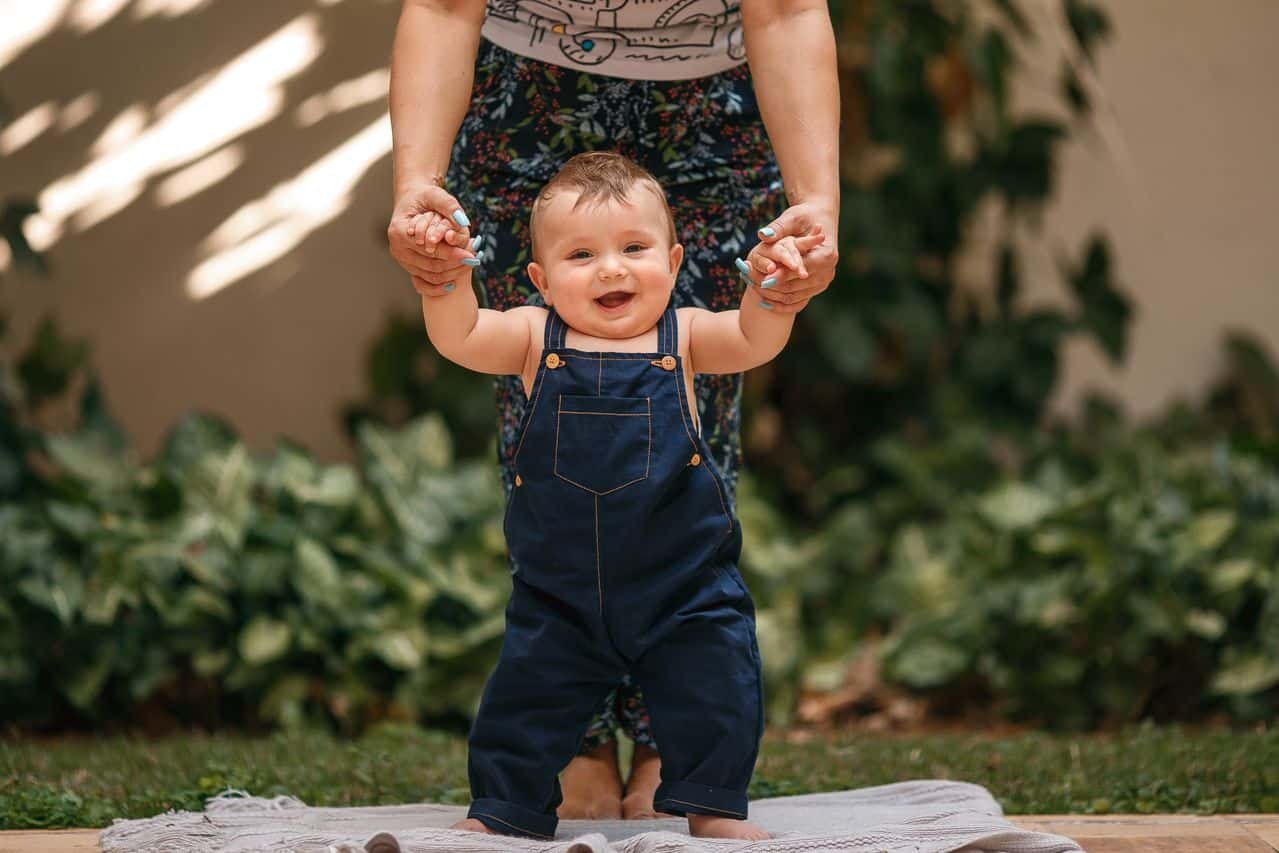
Watching your baby grow from a tiny newborn into an active one-year-old is an incredible journey. During the first 12 months, babies go through rapid changes in their body, movement, communication, thinking, and social skills. Knowing about baby growth milestones can help parents understand what to expect, celebrate new skills, and recognize when it may be useful to talk with a pediatrician.
Baby growth milestones include both physical growth—such as weight, length, and head circumference—and developmental milestones such as smiling, rolling, sitting, babbling, crawling, standing, and interacting with caregivers.
The important thing to remember is that babies do not all develop at exactly the same pace. A milestone chart is a helpful guide, not a test that your baby must pass on a particular day.
The CDC describes developmental milestones as skills children reach in how they play, learn, speak, act, and move. Its milestone checklists focus on what most children—at least 75%—can do by a particular age.
This comprehensive guide to baby developmental milestones from 0 to 12 months explains physical growth, gross and fine motor skills, language, cognitive development, social-emotional development, and practical ways parents can support their baby’s progress.
Quick answer: Baby growth and development during the first year includes changes in body size, movement, communication, learning, and social interaction. Around 2 months, many babies begin smiling socially; around 4 months, they may laugh and reach for objects; by 6 months, many babies are rolling and interacting more actively; by 9 months, sitting and responding to their name are common skills; and by 12 months, many babies can pull to stand, cruise while holding furniture, use gestures, and communicate with early words or names.
Baby Growth vs. Baby Development: What’s the Difference?
The terms baby growth and development are often used together, but they describe different things.
What does baby growth mean?
Baby growth refers primarily to physical changes in your baby’s body. Pediatric healthcare providers commonly monitor:
- Weight
- Length
- Head circumference
- Growth rate over time
- Weight relative to length
Your baby’s measurements are plotted on an appropriate baby growth chart to help healthcare professionals understand the overall growth pattern.
The World Health Organization (WHO) provides Child Growth Standards for children from birth to 5 years. These include standards for weight-for-age, length/height-for-age, weight-for-length/height, BMI-for-age, and head circumference-for-age.
What does baby development mean?
Baby development refers to the skills your baby gradually learns. These include:
- Gross motor skills
- Fine motor skills
- Language and communication
- Cognitive skills
- Social and emotional skills
For example, a baby’s increase in weight is a growth milestone, while learning to roll from tummy to back is a developmental milestone.
Why both matter
Healthy development isn’t determined by weight or height alone. A baby can be smaller or larger than another baby and still be developing normally.
Likewise, developmental milestones should be considered alongside your baby’s health history, feeding, growth pattern, temperament, and individual circumstances.
The best approach is to look at your baby’s progress over time rather than comparing them with another child.
Baby Milestones at a Glance: 0–12 Months
The following baby milestones chart gives parents a quick overview of common skills during the first year.
| Age | Physical & Motor | Language & Communication | Cognitive | Social & Emotional |
|---|---|---|---|---|
| 1 month | Brief head lifting, active arms and legs | Cries and makes early sounds | Watches faces and objects | Calms with caregiver |
| 2 months | Better head control | Makes sounds | Watches people move | Smiles socially |
| 3 months | Improved head control | Coos and vocalizes | Tracks objects | Enjoys interaction |
| 4 months | Holds head steady, reaches | Laughs and makes sounds | Explores hands and objects | Responds to attention |
| 5 months | Rolls and reaches more purposefully | Vocal play increases | Explores objects | Recognizes familiar people |
| 6 months | Rolls and may sit with support | Babbling begins to increase | Explores objects | Responds to emotions |
| 7 months | Sits more steadily | Varied babbling | Transfers objects | Responds to name |
| 8 months | Crawling or scooting may begin | More vocal sounds | Looks for objects | Shows stranger awareness |
| 9 months | Sits independently; may move around | Responds to name | Looks for hidden objects | Uses different expressions |
| 10 months | Pulls up or cruises may begin | Uses sounds and gestures | Imitates actions | Enjoys interaction |
| 11 months | Stands with support | More purposeful sounds | Understands simple requests | Shows preferences |
| 12 months | Pulls to stand and cruises | May use mama/dada or another special name | Looks for hidden objects | Plays simple interactive games |
These ages are broad developmental guideposts. They should not be interpreted as strict deadlines. The CDC’s current milestone framework uses skills that most children—at least 75%—can do by the specified age.
Baby Growth Milestones Month by Month

Understanding baby development month by month can make it easier to notice gradual changes. Remember that development is continuous, so your baby may begin practicing a skill before they can consistently demonstrate it.
1-Month Baby Milestones
During the first month, your newborn is adjusting to life outside the womb. Much of their day is still centered around feeding, sleeping, crying, and being comforted.
Common 1 month baby milestones include:
- Briefly lifting or turning the head
- Moving arms and legs actively
- Looking at faces
- Focusing briefly on nearby objects
- Reacting to loud or sudden sounds
- Calming when held or comforted
- Making early vocal sounds
- Showing short periods of alertness
At this stage, head control is still developing. Always support your baby’s head and neck when carrying them.
You may notice your newborn staring at your face during quiet, alert periods. Talking softly, making eye contact, singing, and responding to your baby’s sounds are simple ways to encourage early communication and connection.
Keywords: newborn milestones, 1 month baby milestones, 1 month baby development, baby development milestones.
2-Month Baby Milestones
Two months is an exciting period because many babies become more socially interactive.
Common 2 month baby milestones include:
- Smiling when you talk or smile at them
- Making sounds other than crying
- Watching you as you move
- Looking at toys for several seconds
- Reacting to loud sounds
- Holding the head up briefly during tummy time
- Becoming more comfortable with familiar caregivers
The CDC lists social smiling, making sounds, watching people move, looking at toys for several seconds, reacting to loud sounds, and holding the head up during tummy time among its 2-month developmental milestones.
If you are wondering about the baby smiling milestone, a social smile around this period is an exciting developmental change. Your baby is beginning to understand that interactions with people are enjoyable and meaningful.
3-Month Baby Milestones
At three months, babies are becoming increasingly alert and interactive.
Typical 3 month baby milestones may include:
- Better head and neck control
- Longer periods of looking at faces
- Following moving objects with the eyes
- Smiling more frequently
- Cooing
- Making sounds in response to caregivers
- Bringing hands toward the mouth
- Becoming more interested in toys
- Enjoying face-to-face interaction
Your baby’s movements may also look less jerky than they did during the newborn period.
Try placing your baby on a safe floor mat for supervised play. You can place an interesting toy within visual range and slowly move it from side to side to encourage visual tracking.
4-Month Baby Milestones
Four months often brings noticeable changes in movement, communication, and social interaction.
Common 4 month baby milestones include:
- Holding the head steady without support
- Pushing up on the forearms during tummy time
- Reaching for toys
- Bringing hands to the mouth
- Holding or shaking toys
- Laughing
- Making sounds back when spoken to
- Turning toward voices
- Showing excitement through movement
The CDC’s 4-month milestone guidance includes holding the head steady, bringing hands to the mouth, holding a toy, reaching for toys, laughing, making sounds, and turning toward a caregiver’s voice.
Parents often ask, “When do babies roll over?” Rolling commonly develops during the middle months of infancy, but there is considerable individual variation. Some babies begin practicing rolling around four months, while others take longer.
Never leave a baby unattended on a bed, sofa, changing table, or other elevated surface simply because they have not rolled yet. Rolling can appear suddenly.
5-Month Baby Milestones
At five months, your baby may become much more interested in exploring their environment.
Possible 5 month baby milestones include:
- Reaching for objects intentionally
- Grabbing toys
- Bringing objects to the mouth
- Rolling or attempting to roll
- Sitting with support
- Pushing up during tummy time
- Laughing and squealing
- Making different vocal sounds
- Recognizing familiar people
- Showing excitement when interacting with caregivers
This is a great time to offer safe, age-appropriate objects with different textures and shapes for supervised exploration.
6-Month Baby Milestones
Six months is a major developmental checkpoint and one of the most searched stages for baby developmental milestones.
Common 6 month baby milestones include:
- Rolling from tummy to back
- Rolling from back to tummy
- Reaching for objects
- Exploring objects with the hands and mouth
- Sitting with support or beginning to sit independently
- Making more varied sounds
- Babbling
- Laughing
- Recognizing familiar people
- Responding to emotional expressions
The CDC’s 6-month milestone guidance covers social-emotional, communication, cognitive, and movement development.
Parents frequently search for 6 month baby development because this is also the period when babies often become more mobile and interactive.
Instead of focusing on whether your baby can perform one specific skill perfectly, look at the overall progression. Is your baby becoming stronger? More interactive? More interested in objects? More expressive?
Those changes are all valuable parts of infant development.
7-Month Baby Milestones
At seven months, many babies are becoming more mobile and purposeful with their hands.
Possible 7 month baby milestones include:
- Sitting independently or for longer periods
- Moving from one position toward another
- Transferring toys from one hand to another
- Reaching accurately for objects
- Turning toward sounds
- Responding to their name
- Babbling with different sounds
- Showing excitement or frustration
- Becoming more cautious around unfamiliar people
Not every baby crawls at this age. Some babies roll, pivot, scoot, or find other ways to move.
8-Month Baby Milestones
During eight months, babies often become enthusiastic explorers.
Common 8 month baby milestones may include:
- Sitting steadily
- Crawling, scooting, or moving around
- Reaching for desired objects
- Transferring objects between hands
- Dropping objects intentionally
- Looking for objects that disappear from view
- Babbling frequently
- Responding to familiar voices
- Showing stronger preferences for caregivers
This is also a good time to take baby-proofing seriously.
Once your baby can move independently, everyday objects that previously seemed unreachable may suddenly become accessible.
9-Month Baby Milestones
Nine months is another major checkpoint in the baby development chart.
Common 9 month baby milestones include:
- Sitting without support
- Getting into or attempting different positions
- Moving around through crawling, scooting, rolling, or another method
- Looking when their name is called
- Showing different facial expressions
- Making lots of different sounds
- Looking for objects that are hidden
- Moving objects between hands
- Enjoying interactive games
The CDC identifies nine months as one of its major developmental milestone checkpoints.
If you are searching for 9 month baby development information, remember that crawling style can vary. Some babies crawl on hands and knees, some bottom-shuffle, and some use other movement patterns.
10-Month Baby Milestones
By ten months, your baby may be increasingly interested in standing and moving around furniture.
Possible 10 month baby milestones include:
- Crawling or another form of independent movement
- Pulling up on furniture
- Standing with support
- Cruising along furniture
- Picking up small objects
- Using gestures
- Imitating actions
- Babbling with different sounds
- Understanding familiar words
- Participating in simple games
This is an important stage for home safety. Secure furniture, cover electrical outlets where appropriate, keep small choking hazards away, and make sure stairs and other hazards are inaccessible.
11-Month Baby Milestones
At eleven months, your baby’s movement and communication skills may become increasingly purposeful.
Possible 11 month baby milestones include:
- Pulling to stand
- Cruising while holding furniture
- Standing with support
- Improved pincer grasp
- Picking up small pieces of food
- Using gestures
- Imitating sounds
- Understanding familiar instructions
- Showing clear preferences
- Participating in social games
Some babies may take independent steps before their first birthday, while others need considerably more time.
12-Month Baby Milestones
The first birthday is a major milestone—not because every baby suddenly changes overnight, but because many important skills are emerging around this period.
Common 12 month baby milestones include:
- Pulling up to stand
- Walking while holding furniture
- Standing with support
- Using a pincer grasp
- Picking up small pieces of food
- Waving goodbye
- Playing simple interactive games
- Understanding “no”
- Looking for hidden objects
- Putting objects into containers
- Calling a parent “mama,” “dada,” or another special name
The CDC’s current 1-year milestone checklist includes waving, using a parent name, understanding “no,” putting objects into containers, looking for hidden objects, pulling to stand, cruising, drinking from a cup with help, and picking up small pieces using the thumb and pointer finger.
If your baby has not taken independent steps by 12 months, that alone does not mean there is a developmental problem. Walking has a broad normal range.
Baby Developmental Milestones by Category

Looking at milestones by developmental area can help parents understand what each skill represents.
Gross Motor Milestones
Gross motor milestones involve large muscle groups and whole-body movement.
Examples include:
- Head control
- Pushing up during tummy time
- Rolling
- Sitting
- Crawling
- Pulling to stand
- Cruising
- Walking
Parents commonly search for:
- gross motor milestones baby
- baby motor development
- when should baby sit
- when should baby crawl
- when should baby walk
- baby physical development
Gross motor development builds gradually. A baby needs opportunities for safe movement and floor play, but parents do not need to force babies into positions they are not ready for.
Fine Motor Milestones
Fine motor skills in babies involve smaller movements of the hands and fingers.
Examples include:
- Reaching
- Grasping
- Holding toys
- Transferring objects between hands
- Picking up small objects
- Developing a pincer grasp
- Putting objects into containers
Fine motor development becomes particularly obvious during feeding and play.
Your baby may first grab objects with the whole hand and later develop more precise finger movements.
Language and Communication Milestones
Language development begins long before a baby says their first recognizable word.
Baby language milestones include:
- Crying to communicate needs
- Responding to voices
- Cooing
- Making different sounds
- Babbling
- Responding to their name
- Using gestures
- Imitating sounds
- Understanding familiar words
- Saying mama, dada, or another meaningful name
Parents often ask, “When do babies start babbling?” Babbling typically develops during the first year and becomes increasingly varied over time.
Another common question is, “When do babies say mama?” Some babies use “mama” or “dada” around the end of the first year, while individual timing varies.
Talking to your baby throughout the day is one of the simplest ways to support communication. Describe what you are doing, respond to their sounds, sing songs, and read picture books together.
Cognitive Milestones
Cognitive development in babies refers to learning, thinking, remembering, exploring, and solving simple problems.
Cognitive milestones can include:
- Watching moving objects
- Exploring toys
- Understanding cause and effect
- Looking for partially hidden objects
- Looking for objects that disappear from view
- Imitating actions
- Putting objects into containers
- Exploring different ways to interact with toys
For example, a baby repeatedly dropping a spoon from the high chair may seem mischievous, but they are also learning about cause and effect.
Social and Emotional Milestones
Social emotional milestones baby development includes how babies interact with people and express feelings.
Examples include:
- Social smiling
- Enjoying face-to-face interaction
- Recognizing familiar caregivers
- Laughing
- Responding to emotions
- Showing preferences
- Becoming cautious around strangers
- Enjoying interactive games
- Expressing excitement, frustration, or discomfort
Responsive caregiving is important. When you respond consistently to your baby’s sounds, facial expressions, and needs, you help build early communication and emotional security.
Baby Growth Milestones: Weight, Length and Head Circumference
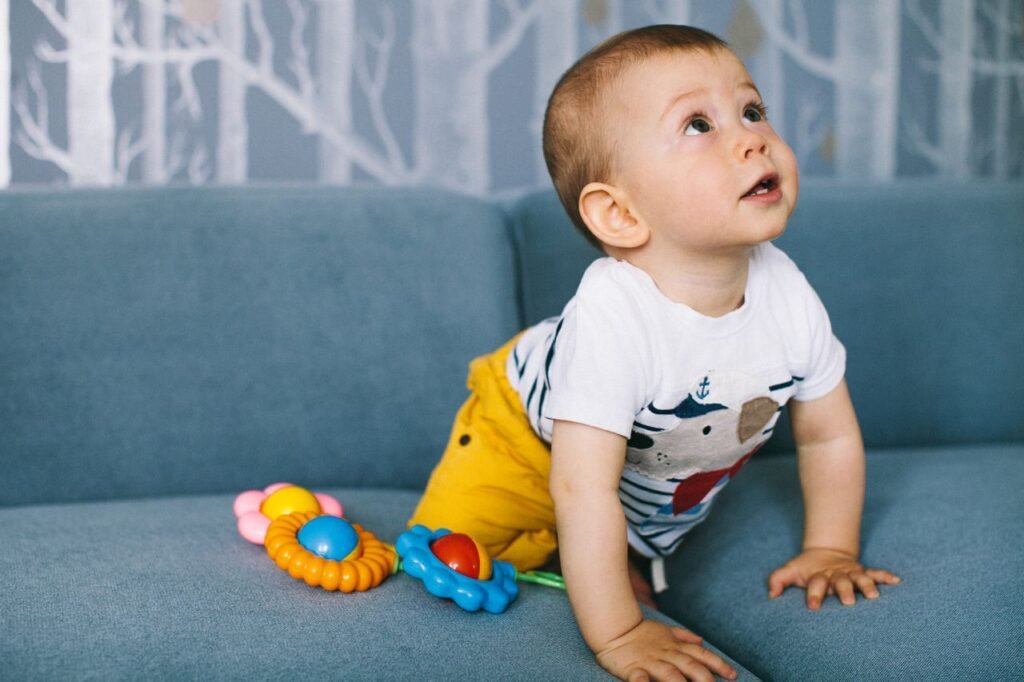
Not all baby growth milestones are developmental skills. Physical growth is another important part of your baby’s health.
How baby’s weight changes during the first year
Baby weight changes rapidly during infancy, but the exact rate differs from child to child.
Healthcare providers look at:
- Birth weight
- Weight changes after birth
- Current weight
- Weight-for-age
- Weight relative to length
- The pattern of measurements over time
Rather than asking only, “What should my baby’s weight be?” it is more useful to ask whether your baby is following an appropriate growth pattern.
WHO provides weight-for-age and weight-for-length standards for infants and young children.
How baby’s length changes
During infancy, healthcare providers measure length rather than standing height.
Length is plotted according to age and sex on an appropriate growth chart.
The WHO Child Growth Standards include length-for-age standards from birth through early childhood.
Why head circumference is measured
Head circumference provides information about physical growth of the head and brain during infancy.
It is usually measured during routine pediatric visits and tracked over time.
The WHO standards include head-circumference-for-age and head circumference velocity references.
What baby growth charts and percentiles mean
A baby growth chart allows healthcare professionals to compare a baby’s measurements with standardized reference data.
You may hear terms such as:
- 10th percentile
- 50th percentile
- 90th percentile
A percentile is not a grade.
A baby at the 10th percentile is not “less healthy” simply because another baby is at the 90th percentile.
Healthcare providers consider the child’s overall pattern, measurements, health, nutrition, family characteristics, and other clinical information.
WHO states that its child growth standards can be applied to children everywhere, regardless of ethnicity, socioeconomic status, or type of feeding.
Why growth percentiles should not be interpreted alone
A single measurement rarely tells the whole story.
Your pediatrician may be more interested in how your baby’s measurements change over time than in one isolated percentile.
Growth assessment commonly involves measuring weight and length or height and comparing the measurements with growth standards.
If you are worried about your baby’s weight gain, feeding, length, or head circumference, discuss the measurements with your baby’s healthcare provider rather than trying to diagnose a problem from an online chart.
What Can Parents Do to Support Baby Development?
You do not need expensive toys or complicated programs to support baby development milestones.
Everyday interaction can provide rich opportunities for learning.
Give your baby plenty of supervised tummy time
Tummy time gives babies opportunities to practice lifting their heads, moving their arms, and strengthening muscles.
Always provide tummy time while your baby is awake and supervised.
Talk, sing and read to your baby
Narrate everyday activities:
“Now we’re putting on your socks.”
“Let’s wash your hands.”
“Here is your red ball.”
These simple conversations expose your baby to language and help make communication part of everyday life.
Encourage safe floor play
A safe floor space gives babies opportunities to:
- Reach
- Roll
- Pivot
- Sit
- Crawl
- Explore
Let your baby move freely rather than keeping them in containers for long periods.
Respond to your baby’s sounds
If your baby makes a sound, respond.
You can imitate the sound, add words, smile, or wait for your baby to respond again.
This creates an early back-and-forth conversation.
Play peekaboo and interactive games
Peekaboo can support social interaction and early understanding that people and objects can disappear and return.
Simple games such as pat-a-cake, waving, and copying facial expressions can also make learning fun.
Offer age-appropriate objects to explore
Provide safe objects that allow your baby to practice:
- Grasping
- Reaching
- Transferring
- Tapping
- Shaking
- Exploring textures
Always consider choking and other safety hazards.
Encourage reaching and grasping
Place a safe toy within your baby’s reach and allow them to attempt to grab it.
You don’t have to move the toy rapidly or make the activity difficult. The goal is simply to give your baby opportunities to practice.
Let babies practice movement safely
As babies become mobile, give them opportunities to move on a safe surface.
Avoid comparing crawling speed or walking age with other babies.
Create a safe environment for exploration
As soon as your baby begins rolling, crawling, pulling up, or cruising, reassess your home.
Check:
- Stairs
- Electrical cords
- Small objects
- Furniture
- Hot liquids
- Medicines
- Cleaning products
- Unsecured cabinets
- Choking hazards
The CDC also provides age-specific activities that parents can use to support learning and development.
Baby Milestone Checklist: 0–12 Months

Use this baby milestones checklist as a simple reference. It is not a diagnostic tool.
0–3 Months
☐ Looks at faces
☐ Responds to sounds
☐ Begins smiling socially
☐ Makes early sounds
☐ Watches moving objects
☐ Begins improving head control
☐ Enjoys interaction with caregivers
4–6 Months
☐ Holds head steady
☐ Reaches for toys
☐ Brings hands to mouth
☐ Laughs
☐ Makes more sounds
☐ Rolls or practices rolling
☐ Begins sitting with support
☐ Explores objects
7–9 Months
☐ Sits independently
☐ Transfers objects between hands
☐ Responds to name
☐ Babbling becomes more varied
☐ Looks for hidden objects
☐ Moves around in some way
☐ Shows different facial expressions
☐ Enjoys interactive games
10–12 Months
☐ Pulls to stand
☐ Cruises along furniture
☐ Uses gestures
☐ Picks up small objects
☐ Uses a pincer grasp
☐ Waves
☐ Understands “no”
☐ Puts objects into containers
☐ Plays simple interactive games
☐ Uses mama/dada or another special name
For a formal developmental checklist, use validated resources and discuss concerns with your healthcare provider. The CDC specifically notes that its milestone checklists are communication and monitoring tools and are not substitutes for standardized developmental screening.
When Do Babies Usually Reach Major Milestones?
Parents often search for individual milestones rather than a complete baby development chart.
| Milestone | Common developmental period |
|---|---|
| Social smiling | Around 2 months |
| Laughing | Around 4 months |
| Rolling | Often during the middle months |
| Sitting | Commonly develops during the second half of the first year |
| Crawling | Often develops during the later middle months, but varies considerably |
| Pulling to stand | Often during the later part of the first year |
| Cruising | Often during the later part of the first year |
| First meaningful words | Often around the end of the first year, but varies |
| First independent steps | Often around the end of the first year or later |
These ranges should be viewed as broad guides rather than deadlines.
The CDC’s milestone system is based on skills that most children can do by a particular age rather than requiring every child to achieve them at exactly the same time.
What If My Baby Is Not Meeting a Milestone?
This is one of the most important questions parents have about infant developmental milestones.
First, try not to panic.
One skill developing later than expected does not automatically mean your baby has a developmental problem. Babies have individual patterns, and some skills may emerge at different rates.
However, concerns should not simply be ignored.
The CDC recommends acting early if a child is not meeting one or more milestones, has lost skills they previously had, or if parents have other concerns.
Developmental delay vs. normal variation
There is an important difference between normal variation and developmental delay.
Normal variation means babies can acquire the same skills at different times.
Developmental delay means a child is not reaching expected developmental skills in one or more areas and may benefit from further assessment.
Only a qualified healthcare professional can determine whether a child’s development warrants further evaluation.
When should parents talk to a pediatrician?
Talk with your baby’s pediatrician if:
- Your baby is not meeting one or more expected milestones
- Your baby loses a skill they previously had
- You notice unusual movement patterns
- Your baby seems significantly less responsive than expected
- You are concerned about hearing or vision
- Feeding difficulties are affecting growth
- Your instincts tell you something isn’t right
You do not need to wait until your next routine appointment if you have a significant concern.
What information should you bring to the appointment?
It can help to record:
- Which milestones your baby has reached
- Which skills concern you
- When you first noticed the concern
- Videos of movements or behaviors that concern you
- Feeding information
- Sleep patterns if relevant
- Any relevant medical history
The CDC recommends sharing concerns with your child’s doctor and asking about developmental screening when appropriate.
Baby Milestones and Premature Babies
Premature baby milestones can be confusing because babies born early may be assessed using a corrected or adjusted age.
If your baby was born prematurely, ask your pediatrician how they want you to track developmental milestones.
For example, the CDC’s online milestone checklist advises using corrected age when a baby was born more than three weeks prematurely.
Why premature babies may follow different timelines
A premature baby has had less time to develop outside the womb than a baby born at full term.
That does not mean your baby will necessarily have developmental problems. It simply means developmental progress may need to be interpreted in the context of gestational age and medical history.
Corrected or adjusted age
Corrected age accounts for how early a baby was born.
For example, a baby born several weeks before their due date may be evaluated according to an adjusted developmental timeline.
Your healthcare provider can tell you how long corrected age should be used for your particular baby.
Why parents should avoid direct comparisons
Comparing a premature baby with a full-term baby of the same chronological age can create unnecessary anxiety.
Instead, discuss your baby’s progress with the pediatrician who knows their medical history.
Common Reasons Parents Worry About Baby Milestones
My baby is not crawling—is that normal?
Crawling has considerable variation.
Some babies crawl on hands and knees. Others scoot, roll, or use different movement patterns. Some may move directly from sitting to pulling up and walking.
Rather than focusing only on crawling, look at your baby’s overall motor development and discuss concerns with the pediatrician.
My baby is not sitting independently—should I worry?
Sitting develops during the first year, and babies reach independent sitting at different times.
If your baby is approaching an age when you expected more progress and you are concerned about head control, trunk control, or sitting, talk with the pediatrician.
My baby is not babbling yet—what should I do?
Babbling develops gradually. Babies also differ in how vocal they are.
Talk, sing, read, and respond to your baby’s sounds. If you have concerns about your baby’s communication, hearing, or responsiveness, discuss them with your healthcare provider.
My baby is not walking at 12 months—is that normal?
Yes, many babies do not walk independently by their first birthday.
At 12 months, the CDC’s movement milestones include pulling to stand and walking while holding furniture; independent walking is not required as a 1-year milestone.
My baby skips crawling—is that okay?
Some babies use alternative ways of moving and may not crawl in the classic hands-and-knees style.
The important consideration is the broader pattern of motor development. If you have concerns about how your baby moves, talk with your pediatrician.
Why is my baby reaching some milestones early and others late?
Development does not always progress evenly.
A baby may be advanced in motor skills while taking longer with speech, or may be highly communicative while developing movement skills more slowly.
This is one reason a complete baby developmental checklist by month should not be treated as a competition or scorecard.
Baby Growth Milestones FAQs
What are the most important baby milestones?
Important milestones include skills involving movement, communication, learning, and social interaction. Physical growth measurements such as weight, length, and head circumference are also important parts of infant health monitoring.
What milestones should a baby reach by 3 months?
By around three months, babies are typically becoming more alert, interactive, and physically controlled. Many babies smile, make sounds, watch faces, follow objects, and demonstrate improving head control.
What should a 6-month-old baby be able to do?
Many 6-month-old babies can roll, reach for objects, explore toys, laugh, make varied sounds, and interact more actively with familiar people. Sitting skills are also developing around this stage.
What should a 9-month-old baby be doing?
Common 9-month developmental milestones include sitting independently, responding to their name, making different sounds, moving objects between hands, looking for hidden objects, and showing different facial expressions.
What should a 1-year-old baby be able to do?
At one year, many babies can pull to stand, cruise while holding furniture, wave goodbye, play simple games, pick up small objects with a pincer grasp, understand “no,” and use mama, dada, or another special name.
When do babies start sitting?
Sitting develops during the second half of the first year, but the exact timing varies. Babies generally progress from better head and trunk control to sitting with support and eventually sitting independently.
When do babies start crawling?
Crawling often emerges during the later middle months of infancy, but there is no single age when every baby should crawl. Some babies use other movement patterns.
When do babies start standing?
Many babies begin pulling themselves up to stand during the later part of the first year.
When do babies start walking?
First independent steps commonly occur around the end of the first year or later, but there is a wide range of normal development.
When do babies say their first words?
Communication develops gradually from crying and cooing to babbling, gestures, and meaningful words. Some babies use meaningful words or names around their first birthday, while individual timing varies.
When should a baby respond to their name?
Responding to their name develops during infancy and is included among later first-year communication milestones. If you are concerned that your baby rarely responds to sounds or their name, discuss it with your pediatrician.
Can babies skip crawling?
Yes. Babies may crawl, scoot, roll, move in other ways, or progress toward standing and walking without a classic hands-and-knees crawling stage.
What are signs of developmental delay?
Potential concerns include missing expected milestones, significant difficulty across one or more developmental areas, or losing a skill the baby previously had. A pediatrician or other qualified professional should assess concerns rather than relying on an online checklist alone.
Should I worry if my baby is late reaching a milestone?
Not necessarily. Development varies widely. However, if your baby is not meeting one or more milestones, has lost a previously acquired skill, or you have concerns, talk with your baby’s healthcare provider. Early evaluation can help identify whether additional support is needed.
Final Thoughts: Every Baby Has Their Own Timeline
The first year of life is full of remarkable changes. From the first social smile to rolling, sitting, babbling, crawling, standing, waving, and those first attempts at words, every new skill can feel like a major celebration.
A baby growth milestones chart can help you understand what may come next, but it should never become a source of unnecessary pressure.
Focus on your baby’s individual progress. Notice new skills, encourage exploration, talk and read together, provide safe opportunities for movement, and enjoy everyday interactions.
Remember that baby developmental milestones are guides, not competitions. Two healthy babies can reach the same milestone at different times.
Growth should also be considered over time. Your baby’s weight, length, and head circumference can be tracked using appropriate growth standards, while developmental progress can be monitored through age-appropriate milestone checklists. WHO provides standardized growth references for children from birth to 5 years, while the CDC provides developmental milestone checklists for monitoring skills and encouraging conversations between families and healthcare professionals.
Most importantly, trust your instincts as a parent. If something about your baby’s development concerns you, you do not have to wait and wonder. Talk with your pediatrician and ask whether developmental screening or further evaluation would be appropriate.
Your baby’s journey does not need to look exactly like anyone else’s. Every baby grows, learns, and develops at their own pace—and the goal is to support that journey with patience, love, safe experiences, and appropriate healthcare.