

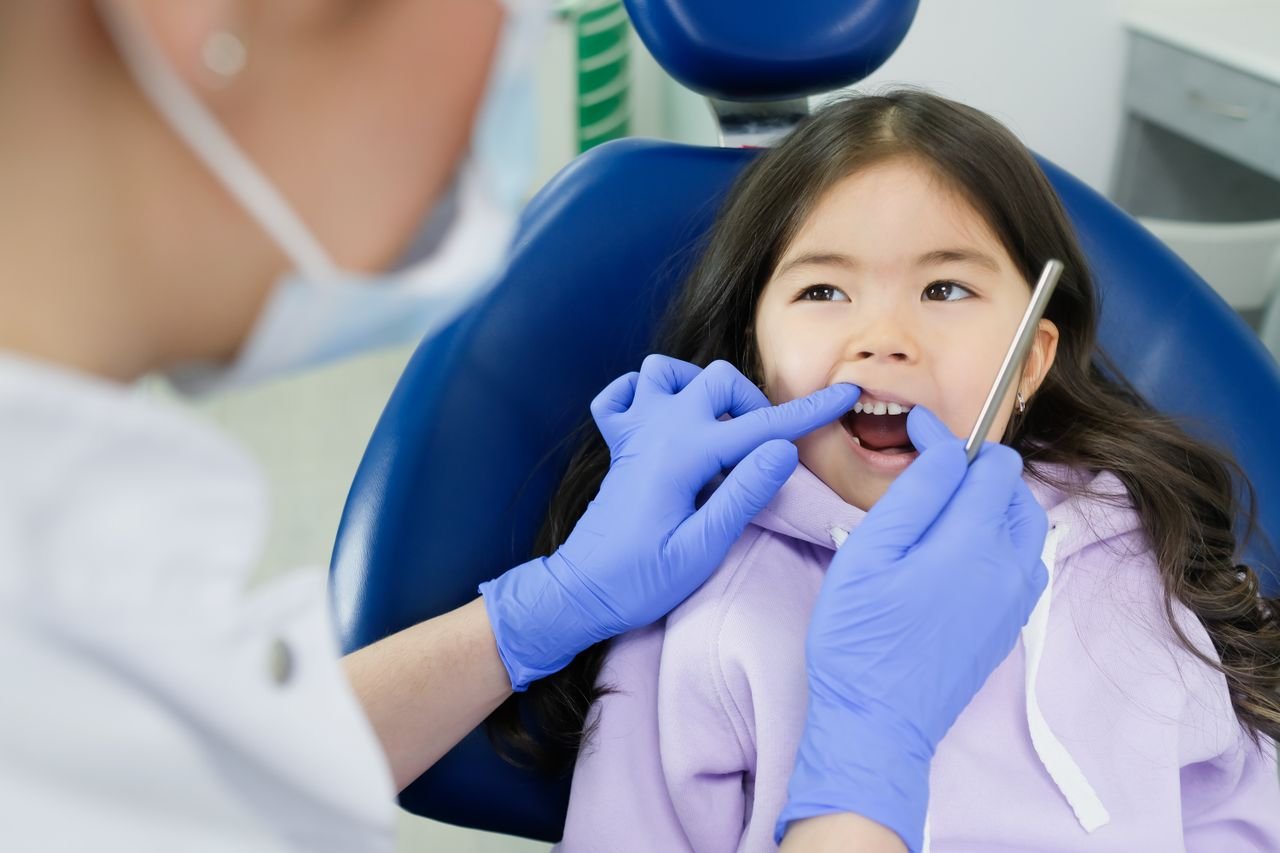
If you have noticed your child’s teeth overlapping, twisting, or squeezing in at odd angles, you are far from alone. Crowded teeth are one of the most common reasons parents start asking questions about their child’s smile. Many families worry that crowding means something has gone wrong, or that treatment will be complicated and expensive.
The reassuring news is that crowding is usually a matter of space. Crowded teeth most often appear when the jaws do not have enough room for all the teeth to come in properly. Genetics can play a role. So can habits, early tooth loss, and the way teeth erupt. Because many of these factors are visible in childhood, crowding is often easier to understand and manage when it is noticed early.
In this guide, we will walk through what crowded teeth look like, what causes them, why they matter for your child’s oral health, when to get an evaluation, and what treatment options may be recommended. We will also answer some of the questions parents ask most often.
What Do Crowded Teeth Look Like in Children?
Crowding can look different from one child to another. For some children it is mild, such as one front tooth sitting slightly in front of its neighbor. For others, it is more obvious, with several teeth overlapping or rotated.
Here are some common signs to watch for:
- Teeth that overlap one another
- Teeth that are twisted or turned sideways
- Permanent teeth coming in behind or in front of baby teeth
- Teeth that look squeezed together with no visible gaps
- Floss that snaps, shreds, or gets stuck between teeth
- A permanent tooth that seems to have no room to come in
- A narrow-looking smile, or front teeth that look cramped
It is also normal for children’s smiles to look a little uneven during the mixed dentition stage, when baby teeth and permanent teeth are both present. Permanent teeth are larger than baby teeth, so a child’s mouth can look crowded for a while as the new teeth settle in. That is one reason a professional evaluation is more useful than guessing at home. A dentist or orthodontist can tell the difference between normal development and crowding that needs attention.
What Causes Crowded Teeth in Children?
There is rarely one single cause. Often several factors combine. Here is what usually contributes to crowded teeth in children.
1. Genetics
Sometimes crowded teeth simply run in the family. A child may inherit a smaller jaw, a narrow dental arch, or teeth that are larger than the space available. If either parent had crowded teeth or needed orthodontic treatment, their child may have a higher chance of developing similar issues.
This does not mean crowding is guaranteed. It just means it is worth paying attention to your child’s tooth development. If you know that crowding runs in your family, mention it at your child’s next dental visit so your dentist can keep it in mind.
2. Early Loss of Baby Teeth
Baby teeth do more than help children chew and speak. They also hold space for the permanent teeth growing underneath. If a baby tooth falls out much earlier than expected, whether from decay, an injury, or another problem, nearby teeth can drift into that empty space.
When the permanent tooth is ready to come through later, there may not be enough room for it. The result can be a tooth that comes in crooked, comes in blocked out of the arch, or becomes stuck beneath the gums.
This is one reason pediatric dentists take baby tooth decay seriously, even though those teeth will eventually fall out. Protecting baby teeth until they are ready to be lost naturally is one of the simplest ways to support healthy spacing later.
3. Delayed or Irregular Tooth Eruption
Permanent teeth do not always erupt in exactly the same way or at the same time in every child. A tooth may come in at an unusual angle or take longer than expected to appear. Some children’s teeth erupt earlier, and some later, and a range of timing is normal.
Sometimes, though, an irregularly erupting tooth can lead to overlapping or crowding as other teeth continue to develop around it. A dental X-ray can show a dentist where a permanent tooth is positioned beneath the gums and whether it is on a normal path.
4. Delayed Loss of Baby Teeth
The opposite problem can happen too. If a baby tooth stays in place longer than it should, the permanent tooth underneath may struggle to erupt normally. It may come through behind the baby tooth, creating what some parents describe as “shark teeth,” a double row of teeth. Or it may be partially trapped.
A retained baby tooth is not always an emergency, and some wiggle loose on their own within a few weeks. But if a permanent tooth is visibly coming in while the baby tooth is firmly in place, it is worth having a dentist take a look.
5. Oral Habits
Habits such as prolonged thumb sucking, finger sucking, or pacifier use can affect how the teeth and jaws develop, particularly when they continue beyond the early years.
Many children outgrow these habits on their own. They tend to matter more when they continue as permanent teeth begin coming in. Depending on how long, how often, and how intensely the habit occurs, it may contribute to changes in the position of the front teeth or the shape of the developing bite.
If your child is still sucking a thumb or pacifier at an older age, try not to scold or shame them. Gentle encouragement, praise for going without it, and guidance from your dentist usually work better than pressure.
6. Mouth Breathing
Children who regularly breathe through their mouths instead of their noses may develop changes in how their jaws and teeth grow. Mouth breathing can have several possible causes, including nasal blockage from allergies or enlarged tonsils and adenoids.
Signs of mouth breathing include sleeping with the mouth open, snoring, dry lips, and frequent difficulty breathing through the nose. If you notice these in your child, it is worth discussing them with a dentist or pediatrician. Mouth breathing is a health matter in its own right, and it is not something to treat only by moving teeth.
7. Jaw Size and Growth Patterns
A child’s jaws are still growing, and the way they grow matters a great deal for tooth alignment. If the upper jaw is narrow, for example, the teeth may not have enough width to line up properly. How the upper and lower jaws relate to each other can also affect crowding and bite.
This is one reason orthodontists look at more than just the teeth. They evaluate the jaws, the bite, and the child’s growth stage together.
How Can Crowded Teeth Affect Your Child’s Oral Health and Confidence?
Crowded teeth are often thought of as a cosmetic issue, and a child may certainly feel self-conscious about how their smile looks. But when teeth overlap or lack room, the effects can go beyond appearance. Here are some of the ways crowding can affect a child’s oral health and everyday comfort:
- Harder cleaning. When teeth overlap or sit tightly together, toothbrush bristles and floss may not reach every surface. Plaque can build up in the hard-to-reach spots.
- Cavity and gum concerns. Areas that are difficult to clean may be more likely to develop plaque-related problems over time.
- Bite concerns. Crowding sometimes goes along with bite problems, where the upper and lower teeth do not fit together well.
- Blocked-out or impacted teeth. A permanent tooth with no room to erupt may come in out of position or stay trapped beneath the gums.
- Confidence. Children may feel shy about their teeth, especially as they get older and become more aware of their appearance.
None of this means every child with crowding will have problems. It means crowding is worth understanding and monitoring, and that good hygiene habits become even more important.
When Should My Child See an Orthodontist?
Many parents wonder whether they need to wait until all the baby teeth are gone before seeing an orthodontist. In most cases, you do not.
The American Association of Orthodontists recommends that children have an initial orthodontic evaluation around age 7. By this age, a child usually has a mix of baby and permanent teeth, and the first permanent molars and some front teeth have started to come in. That gives an orthodontist a good view of how the jaws and teeth are developing.
An early visit does not mean your child will start braces right away. In many cases, a children’s orthodontist will simply monitor growth and check in periodically as the permanent teeth come in. Some children need nothing at that stage, while others benefit from a short period of early treatment to guide the development of their teeth and jaws.
You do not have to wait until age 7 if something concerns you. Consider contacting a dentist or orthodontist sooner if your child:
- Loses a baby tooth very early
- Has teeth that look severely crowded or out of place
- Has a jaw that shifts or makes noise when it moves
- Still sucks a thumb or pacifier at an older age
- Breathes through the mouth most of the time
- Has trouble chewing or biting
What Are the Options for Treating Crowded Teeth in Children?
Treatment depends on your child’s age, how much crowding there is, how the permanent teeth are developing, and what is causing the crowding. Here is a closer look at the options.
1. Monitoring and Early Evaluation
Sometimes the best first step is simply watching. An orthodontist may track how the teeth and jaws develop over time, taking X-rays or photos at intervals. This approach can work well when crowding is mild or when a child is still losing baby teeth.
An early evaluation can also help catch problems while there is still time to guide the growth of the developing teeth and jaws. Waiting to see what happens is not neglect. It is often a deliberate part of a good treatment plan.
2. Space Maintainers
If a baby tooth is lost too early, a dentist may recommend a space maintainer. This is a small appliance, usually made of metal or plastic, that holds the empty space open until the permanent tooth is ready to come through.
Space maintainers can reduce the chance of neighboring teeth moving into the gap. They are usually simple, not painful, and removed once the permanent tooth begins to erupt. Children need to avoid very sticky foods and keep the area clean so the appliance stays in place and works properly.
3. Palatal or Jaw Expanders
When the upper jaw is too narrow, an orthodontist may recommend an expander. This appliance fits against the roof of the mouth and gradually widens the upper dental arch over a period of weeks or months. That can create more room for permanent teeth.
Expanders are generally used while a child is still growing. Whether one is suitable depends on the child’s age, growth, and the specific reason behind the crowding. Many children feel pressure or notice slight changes in speech for the first few days, but they typically adjust quickly.
4. Early or “Phase One” Treatment
Some children benefit from a first phase of treatment while they still have many baby teeth. The goal is not to finish straightening everything. It is to correct specific problems, such as a narrow jaw, harmful habits, or a developing bite issue, so that the permanent teeth have a better path.
If a child has two phases of treatment, there is usually a resting period between them while the remaining permanent teeth come in. Then a second phase, often with full braces, fine-tunes alignment. Not every child needs this approach. An orthodontist will recommend it only when there is a clear reason.
5. Braces
For more noticeable crowding, braces may be used to gradually move teeth into better positions. Modern braces are smaller and more comfortable than many parents remember. Options may include traditional metal braces and clear or ceramic braces, depending on the child’s needs and the orthodontist’s recommendations.
Braces work around the clock and do not depend on the child remembering to wear them, which makes them a good choice for many younger patients. They do require extra care with brushing, flossing, and avoiding certain foods.
6. Clear Aligners
Clear aligners are removable, nearly invisible trays that gradually shift teeth. They may be an option for some children and teens, especially when the crowding is mild to moderate and the child has enough permanent teeth to treat.
Aligners only work when they are worn as directed, usually for most of the day. The orthodontist will decide whether this option makes sense based on the child’s teeth, bite, jaw development, and ability to follow the treatment instructions.
7. Retainers
After braces or aligners, retainers help hold teeth in their new positions. This step is just as important as the treatment itself, because teeth can drift back toward their old positions if they are not held in place. Your orthodontist will explain how and when your child should wear a retainer.
8. Tooth Extraction When Necessary
In more severe cases, there may simply not be enough room for all the teeth, even after other options have been considered. An orthodontist may recommend removing one or more teeth to create the space needed for proper alignment.
This is not required for every child with crowded teeth. It is considered only after carefully examining the teeth, jaw development, and overall bite. Many children with crowding never need an extraction.
How to Help Your Child Through Orthodontic Treatment
If your child does start treatment, a few simple habits can make the process smoother.
- Make brushing a routine. Appliances and braces trap food and plaque. Encourage brushing after meals and before bed, and ask the orthodontist about special brushes or floss threaders.
- Choose foods wisely. Hard, sticky, or chewy foods can damage braces and appliances. Your orthodontist will give you a list of foods to avoid.
- Expect a little soreness. Teeth may feel tender for a few days after an adjustment. Soft foods usually help.
- Keep appointments. Regular visits keep treatment on track and allow small problems to be fixed early.
- Offer encouragement. Children may feel self-conscious at first. Praise and patience go a long way.
- Do not skip dental checkups. Orthodontic care works alongside regular cleanings and exams with your child’s dentist.
Closing Thoughts
Crowded teeth are common in children, and they usually have understandable causes, from genetics and early tooth loss to habits, mouth breathing, and jaw growth. They are usually easier to manage when they are noticed early, but they are not something to panic about.
If your child’s teeth look unusually close together, overlap, or seem to be coming in at odd angles, an orthodontic evaluation can help explain what is happening. The right treatment depends on the cause and your child’s stage of development, so getting professional advice early can make it easier to plan what comes next.
Frequently Asked Questions
Can crowded teeth fix themselves?
Sometimes mild crowding improves as a child grows, especially during the mixed dentition stage. In many cases, though, crowding does not fully resolve without help. Because permanent teeth are larger than baby teeth, and because the jaw may not grow enough to make room, crowding can persist or even become more noticeable. An evaluation can tell you which situation your child is in.
Do all children with crowded teeth need braces?
No. Some children need only monitoring, and others may need a space maintainer or expander. Braces are one option among several. The right approach depends on your child’s individual situation.
Do baby teeth really matter if they are going to fall out anyway?
Yes. Baby teeth help children chew and speak, and they hold space for the permanent teeth underneath. Losing them too early can contribute to crowding. Protecting baby teeth through good brushing and regular dental visits is one of the best things parents can do.
Is early treatment always necessary?
No. Early treatment is helpful for some children and unnecessary for others. An orthodontist will recommend it only if there is a specific benefit to starting before all the permanent teeth are in.
Is orthodontic treatment painful for children?
Most children feel pressure or soreness for a few days after getting braces or an appliance, or after an adjustment. This typically fades quickly and can be managed with soft foods. Ask your orthodontist what pain relief is appropriate for your child.
Can thumb sucking or pacifier use cause crowding?
Prolonged habits can affect how the teeth and jaws develop, especially if they continue as permanent teeth come in. Many children outgrow these habits naturally. If your child continues, a dentist can offer advice and gentle strategies.
How do I know if my child is mouth breathing?
Common signs include sleeping with the mouth open, snoring, dry lips, and difficulty breathing through the nose. If you notice these, speak with your child’s pediatrician or dentist. They can look for causes such as allergies or enlarged tonsils and adenoids.