
Ask a child what they would change about the world and the answer is rarely abstract. They may want every person to have dinner, every animal to have a safe home, every child to attend a kind school, or every beach to be free of plastic. Children naturally notice what is fair, what is beautiful, and what needs care. The challenge for parents is helping that curiosity grow without turning a family conversation into a lesson, a list of disasters, or a demand that a young person fix problems created by adults.
The United Nations Sustainable Development Goals can help. The 17 goals connect familiar parts of life – food, health, learning, clean water, safe communities, nature, peace, and fairness – to a wider picture of human well-being. Parents do not need to teach all 17 at once. They do not need expert vocabulary, elaborate activities, or perfect answers. A better starting point is a question, a story, and one small action that a child can understand.
This guide offers a practical way to make global citizenship part of ordinary family life. The aim is not to produce a child who can recite every goal. It is to help children become observant, empathetic, confident question-askers who understand that their choices matter and that meaningful change is usually made with other people.
Begin With the World Your Child Can Already See
“Global” can sound enormous, but every global issue has a local doorway. Clean water begins at the sink. Responsible consumption appears in a lunchbox. Biodiversity lives in the tree outside the window. Quality education is visible in the classroom, library, or homework routine. Peace and justice show up when children decide how to treat someone who has been excluded.
Start by naming what is already present. While preparing breakfast, ask where the food came from and how many people helped it reach the table. On a walk, notice whether the neighborhood has shade, safe crossings, litter bins, and places to play. At the library, talk about why free access to books matters. These observations make the goals real before children ever encounter their formal titles.
A useful rule is to move from near to far. First explore the child’s own experience, then another person’s experience, and finally the larger system. For example: “We can turn on the tap. How does clean water help our day? What might be different for a family without reliable water? Who works to make water safe?” That sequence builds understanding without beginning with fear.
Replace a Lecture With Four Simple Moves
Families can use a repeatable rhythm: discover, discuss, do, and reflect.
- Discover: Notice something in a story, meal, walk, photograph, or news item.
- Discuss: Ask what the child sees, wonders, or thinks is fair.
- Do: Choose one realistic response, however small.
- Reflect: Return later and ask what changed, what was learned, and what question comes next.
This rhythm is more powerful than a one-time project because it teaches a way of thinking. Suppose a child notices food left on a plate. The family can discover where waste goes, discuss why food access differs, do something practical such as planning portions or using leftovers, and reflect after a week. The action is modest, but the thinking connects Goal 2, Zero Hunger, with Goal 12, Responsible Consumption and Production.
Reflection matters because it prevents action from becoming a chore. It also makes room for complexity. Perhaps smaller portions reduced waste, but the child also learned that some scraps can be composted. One answer creates another question, which is exactly how curiosity grows.
Group the 17 Goals Into Family-Sized Conversations
Seventeen separate topics can overwhelm adults and children alike. Instead, group them into seven conversations that naturally overlap.
1. Food, Health, and Well-Being
Goals 1, 2, and 3 concern poverty, hunger, and health. For young children, begin with what bodies need: nutritious food, rest, movement, safety, and care when sick. Invite children to help plan a balanced meal, compare the roles of different foods, or make a card for someone recovering from illness. Older children can examine why healthy choices are easier in some places than others and how transport, income, time, or access to shops can affect a family’s options.
Avoid framing poverty as a problem solved by giving away unwanted items. Emphasize dignity, shared needs, and listening. Ask, “What support would help a family make its own choices?” This moves the conversation from pity to partnership.
2. Water, Sanitation, and Energy
Goals 6 and 7 invite children to explore two systems that often remain invisible until they stop working. Trace the journey of water from source to tap and back through drains. Count how many daily activities require it. Compare natural light, batteries, fuel, and electricity. Try a short family energy check: Which lights or devices are used when no one needs them? Which habits can change without making anyone unsafe or uncomfortable?
The key is not to make children police every drop or switch. Adults manage the family’s resources. Children can participate through observation and problem-solving, not anxiety.
3. Learning, Equality, and Opportunity
Goals 4, 5, 8, and 10 connect education, gender equality, decent work, and reduced inequalities. A family can explore who appears as a leader, scientist, caregiver, artist, or builder in books and media. Ask whether everyone gets the same chance to learn and contribute. Invite children to interview an adult about a skill they use at work and how they learned it.
These conversations can gently challenge stereotypes. If a child says a certain job is “for boys” or “for girls,” curiosity works better than scolding: “What makes you think that? Can we find examples that show more possibilities?” The goal is to widen imagination while keeping the conversation safe and respectful.
4. Things, Places, and How They Are Made
Goals 9, 11, and 12 cover industry, innovation, sustainable communities, and responsible consumption. Choose an everyday object and investigate its story. What materials were used? Who designed, made, transported, and sold it? How long might it last? Could it be repaired, shared, reused, or recycled?
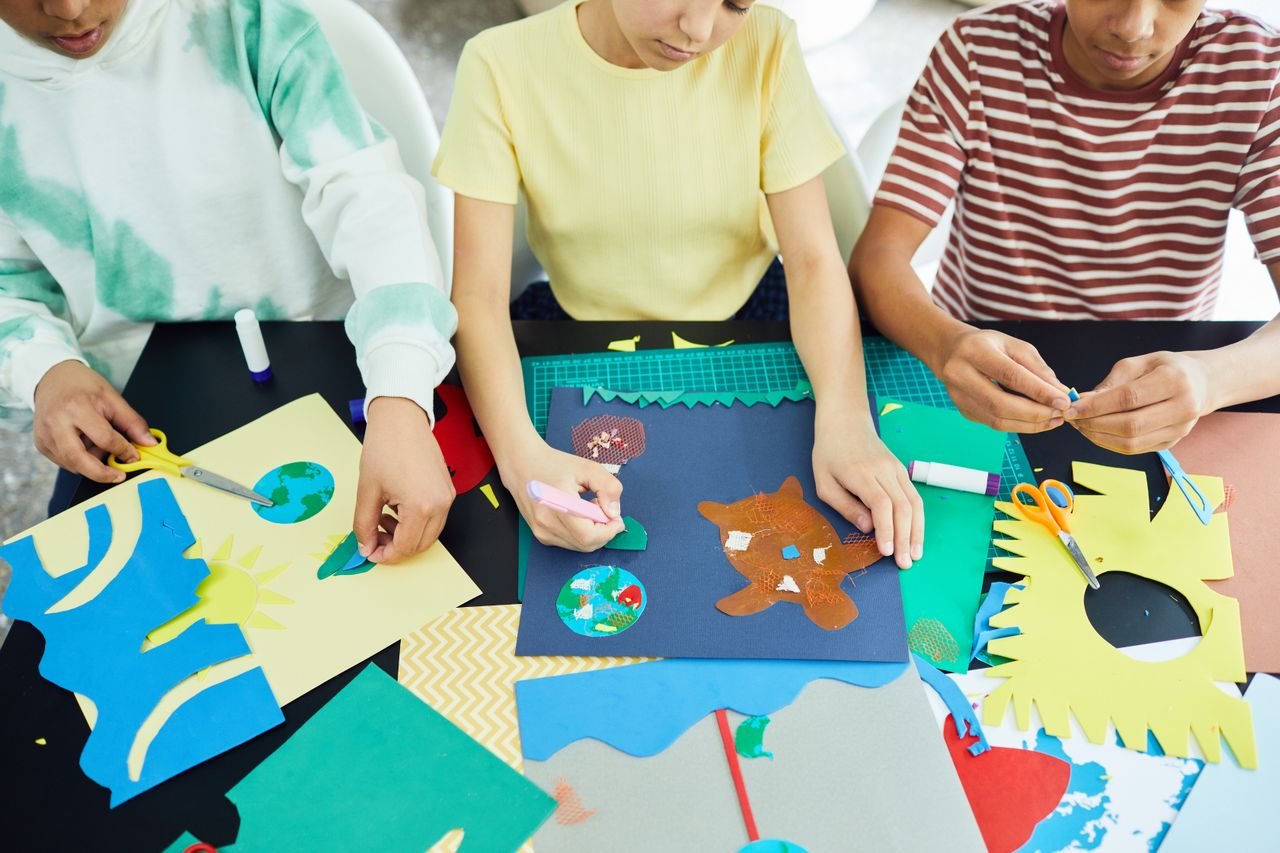
Children enjoy redesign challenges. Ask them to improve a playground for people of different ages and abilities, invent packaging that uses less material, or sketch a safer route to school. They learn that sustainability is not only about using less; it is also about designing better.
5. Climate, Oceans, and Life on Land
Goals 13, 14, and 15 are often introduced through alarming images. While children deserve honesty, fear should not be the only emotional doorway. Begin with relationship. Learn the name of a local bird, tree, insect, shoreline, or green space. Return to it in different seasons. Children are more likely to care for nature when they first have a chance to know it.
Then connect local observations to larger patterns. A very hot day can prompt discussion about weather and climate. Litter near a drain can lead to questions about rivers and oceans. A pollinator garden can open a conversation about habitats and food systems. Pair every difficult fact with examples of people restoring ecosystems, improving technology, protecting places, and working together.
6. Fairness, Peace, and Belonging
Goals 5, 10, and 16 include equality, inclusion, peace, justice, and strong institutions. Children meet these ideas in games, sibling disagreements, classroom rules, and friendship groups. Ask what makes a rule fair. Talk about the difference between treating everyone identically and giving each person what they need to participate.
Practice listening during low-stakes disagreements. Each person explains what happened, how it felt, and what repair might look like. This is not a complete lesson in justice, but it develops habits that matter: hearing more than one perspective, taking responsibility, and seeking solutions that restore trust.
7. Partnership
Goal 17 sits at the end of the list but belongs in every conversation. Children should not come away believing that one heroic person solves global problems alone. Families, schools, scientists, artists, public workers, community groups, businesses, and governments all contribute different skills.
Whenever your child imagines an action, ask, “Who else would we need?” A litter cleanup may require gloves, adult supervision, permission, waste collection, and help from neighbors. A book drive may require guidance from the receiving organization about what is actually useful. Partnership turns good intentions into respectful, effective action.
Use Stories Before Statistics
Numbers can show the scale of an issue, but stories help children understand why it matters. A character who wants to attend school, find clean water, restore a habitat, or include a lonely classmate gives a child someone to care about. After reading, pause before explaining the message. Ask:
- What did the character notice?
- What choice was difficult?
- Who helped?
- What would you ask the character?
- What might happen next?
Open questions make space for the child’s interpretation. They also reveal misconceptions that can be explored together. If the story is set in a community different from your own, avoid presenting one character as a symbol for an entire country or culture. Look for stories created by people with direct knowledge of the place and experience. Compare several voices rather than relying on a single account.
Fiction and nonfiction work well together. A story can build emotional connection; a map, short article, interview, or age-appropriate video can add context. The parent’s role is not to deliver a final explanation. It is to help the child evaluate what they encounter and keep asking thoughtful questions.
Ask Questions That Open the Door
Some questions invite a correct answer. Others invite investigation. Global citizenship grows through the second kind.
Try prompts such as:
- What do you notice?
- Who benefits from this choice?
- Who might be missing from the picture?
- What would make this easier for more people?
- What information would we need before deciding?
- What is one part we can influence?
- Who is already working on this?
- How could we help without taking over?
It is fine for a parent to say, “I don’t know.” In fact, saying it calmly models intellectual honesty. Follow with, “Let’s find out,” and compare trustworthy sources. Children learn that uncertainty is not failure; it is the beginning of research.
Match the Conversation to the Child’s Age
Children develop at different rates, but a few broad patterns help.
Ages 5-7: Concrete, Hopeful, and Close to Home
Focus on immediate needs, feelings, living things, and visible actions. Use picture books, sorting games, nature observation, and brief conversations. A five-year-old can understand that everyone needs clean water and that turning off a tap while brushing prevents waste. They do not need detailed accounts of water conflict or infrastructure failure.
Keep actions short and satisfying: refill a bird-water dish with adult help, choose a reusable item for lunch, thank a community worker, or draw a welcoming playground.
Ages 8-10: Systems, Comparisons, and Teamwork
Children in this range can trace connections and consider multiple perspectives. They can investigate where an object came from, compare two neighborhoods on a map, track family food waste, or write questions for a local expert. Introduce the idea that a problem may have several causes and several useful responses.
Let them help plan a project, divide roles, and assess results. Keep adult support visible, especially when contacting organizations or sharing anything publicly.
Ages 11-13: Evidence, Tradeoffs, and Responsible Voice
Older children can examine competing priorities. Renewable energy projects, for example, may provide cleaner power while raising questions about land, materials, cost, and community consent. Encourage them to ask who produced a source, what evidence is offered, and whose perspective may be absent.
They can also practice constructive civic participation: preparing questions for a public meeting, interviewing a community leader, comparing policy proposals, or creating an evidence-based presentation. Adults should guide privacy, safety, and respectful communication.
Choose Action That Is Useful, Not Performative
Children often want to act immediately. That impulse is valuable, but the first idea is not always what a community needs. Before collecting, donating, posting, or fundraising, contact a credible organization and ask what would be helpful. A shelter may need specific supplies rather than a general collection. A conservation group may prefer volunteers at an organized event rather than an independent activity in a sensitive habitat.
Use a five-question check:
- Did people affected by the issue identify this need?
- Is the action safe and age-appropriate?
- Does it protect privacy and dignity?
- Can we complete it responsibly?
- How will we learn whether it helped?
This check teaches that service is a relationship, not a photo opportunity. If the useful role is listening, learning, or supporting someone else’s plan, that still counts.
Keep Climate Conversations Honest and Emotionally Safe
Many children encounter climate news before adults realize it. If a child raises a frightening claim, begin by asking what they heard and how it made them feel. Correct misinformation, but do not dismiss the emotion. A response might be: “Yes, this is a serious problem. Many people are working on it, and adults are responsible for making big changes. We can learn about one part together.”
Give children three anchors:
- Truth: Clear information suited to their age.
- Agency: A realistic action they can take with others.
- Connection: Time with people and places they care about.
Agency should never imply that the child carries the burden. Recycling one container is not presented as saving the planet. It is practice in caring for materials while society also needs decisions by institutions, industries, and governments. That distinction protects children from guilt and helps them understand shared responsibility.
Turn Screen Time Into Inquiry Time
Digital media can widen a child’s world, but global content deserves guidance. Watch or explore together when possible. Pause to ask who created the material, when it was made, and what it wants the viewer to think or do. Check whether a dramatic image actually matches the story attached to it.
For younger children, choose short, calm resources with a clear connection to an offline activity. After a video about pollinators, observe flowers outside. After a virtual museum visit, draw an artifact and research where it came from. The screen becomes a doorway, not the destination.
Older children can compare coverage from two credible sources. Ask what facts overlap, what language differs, and what information remains uncertain. Media literacy is central to global citizenship because action based on false or incomplete information can cause harm even when intentions are good.
Make Room for Culture Without Turning It Into Decoration
Food, clothing, music, and festivals can be joyful ways to encounter cultures, but they are only the surface. Add people, history, language, values, and contemporary life. Avoid describing a country as if everyone there lives the same way.
If your family cooks a dish from another culture, learn who commonly makes it, when it is eaten, and how recipes vary. If a book includes words from another language, listen to a fluent speaker pronounce them. Seek creators from the culture being explored. Most importantly, connect difference with equality: another way of living is not automatically strange, simple, or in need of rescue.
Children can learn to appreciate without pretending to own an identity that is not theirs. A useful question is, “How can we show respect while we learn?”
Create a Weekly Ten-Minute Global-Citizen Ritual
Consistency matters more than scale. Choose one predictable time each week – perhaps during breakfast, a walk, or the trip to the library – and use three prompts:
- What did we notice this week?
- What do we want to understand better?
- What is one kind, fair, or sustainable choice we can try?
Keep a small notebook of questions and actions. A child might record: “Why are there fewer bees near our apartment?” “Who decides where bus stops go?” “Can our school share unused books?” Revisit older entries. Some questions will be answered, some will change, and some will lead to people who know more.
This ritual shows that citizenship is not a special event. It is a pattern of paying attention, learning, and participating.
Try a One-Week Family Challenge
For families ready to begin, choose one theme and follow this seven-day plan:
- Day 1 – Notice: Pick one issue visible in daily life.
- Day 2 – Ask: Write three questions about it.
- Day 3 – Learn: Use two credible, age-appropriate sources.
- Day 4 – Listen: Find the perspective of someone directly connected to the issue.
- Day 5 – Plan: Select one safe, useful action.
- Day 6 – Act: Complete the action together.
- Day 7 – Reflect: Discuss what changed and what comes next.
The theme could be food waste, accessible play spaces, local wildlife, water use, welcoming new neighbors, or another topic the child selects. Letting the child choose increases engagement, while the adult keeps the scope realistic.
Avoid Six Common Mistakes
1. Trying to Cover Everything
A single meaningful connection is better than a rushed tour of all 17 goals. Follow the child’s question and allow themes to overlap naturally.
2. Leading With Catastrophe
Serious facts matter, but constant crisis language can produce fear or numbness. Pair problems with people, solutions, and opportunities to participate.
3. Treating One Community Only as Needy
Every community has knowledge, creativity, strengths, and leadership. Present people as partners and problem-solvers, not as passive recipients.
4. Confusing Buying With Helping
A new “green” product is not always better than repairing, borrowing, sharing, or using what the family already owns. Investigate before purchasing.
5. Turning the Child Into the Family Monitor
Children can contribute ideas, but adults remain responsible for finances, transport, energy systems, and major decisions. Participation should build confidence, not vigilance or blame.
6. Measuring Success Only by Visible Action
Careful listening, changed language, a better question, or a corrected misconception may be the most important result. Learning is part of action.
How Parents Can Tell Whether Learning Is Happening
You do not need a quiz. Listen for changes in how the child thinks and speaks. Are they asking who is affected? Do they recognize that people may experience the same situation differently? Can they connect a personal choice to a larger system without claiming that one choice solves everything? Do they look for partners and credible information?
Other signs include:
- Using specific words instead of stereotypes
- Showing care without pity
- Suggesting repair after a conflict
- Considering reuse or access before buying
- Noticing nature and changes over time
- Asking for evidence before sharing a claim
- Understanding that progress can be partial
These habits are more durable than memorized slogans. They prepare children to learn about new issues long after a particular activity ends.
Where Benji Fits
Characters can make large ideas approachable when they invite children into a story instead of preaching at them. Benji the SDG Fox is designed as a friendly guide who helps children discover connections among the goals, ask questions, and imagine practical responses. Parents can use a character-led story as the “discover” step, then let the child’s own observations guide the discussion and action.
The emphasis remains on the child’s thinking. Benji can introduce a theme, but families decide what it means in their own context. More information about the Benji SDG Education Program is available for parents and educators who want a story-based entry point.
The Goal Is Participation, Not Perfection
Raising a global citizen does not require a flawless low-impact family, constant volunteering, or a parent who knows every answer. It requires attention, humility, empathy, and the willingness to learn alongside a child.
Begin with one moment: a question at dinner, a bird on a walk, a book from the library, a disagreement that needs repair. Connect that moment to another person, another living thing, or a wider system. Choose one useful response. Then return and reflect.
Over time, children learn something larger than the names of 17 goals. They learn that the world is connected, that fairness deserves thought, that evidence matters, that care can become action, and that change is strongest when people work together. Those are not extra lessons added to family life. They are part of preparing children to live well with others in the world they already share.
Author Bio
Safwan Bey is an author, SDG education advocate, and humanitarian working to make sustainable development education accessible to children and communities. He is the author of Benji and the SDGs: A Fox’s Journey to Save the World (ISBN 9781105904363) and creator of the Benji SDG Education Program.