
Finding out you’re pregnant is one of life’s most exciting moments. During the first month of pregnancy, your baby’s journey has only just begun, but remarkable changes are already taking place. While you may not notice a visible baby bump yet, your body is working hard to support implantation, placental development, and the formation of your baby’s vital organs.
This is why following a healthy first month pregnancy diet is one of the most important steps you can take. Eating a balanced diet rich in folic acid, iron, protein, calcium, vitamins, and healthy fats provides your growing baby with the nutrients needed for healthy development while helping your body adapt to pregnancy.
Many women also experience symptoms such as nausea, fatigue, food cravings, bloating, or morning sickness during this stage. Choosing the right foods can help ease these symptoms while ensuring both you and your baby receive optimal nutrition.
In this guide, you’ll learn:
- What to eat during the first month of pregnancy
- Essential nutrients for baby’s early development
- Foods to avoid in the first month
- A sample Indian pregnancy diet chart
- Tips to manage morning sickness naturally
- Frequently asked questions about first-month pregnancy nutrition
Whether you’ve just confirmed your pregnancy or are planning ahead, this guide will help you make informed food choices for a healthy first trimester.
Why Your Diet Matters in the First Month of Pregnancy
The first month is often considered the foundation of a healthy pregnancy. During these early weeks, your baby’s major organs begin to develop—even before many women realize they’re pregnant.
By the end of the first month:
- The fertilized egg implants into the uterus.
- The placenta begins forming.
- The neural tube starts developing, which later becomes the baby’s brain and spinal cord.
- The tiny heart begins forming.
- Blood vessels start developing.
- The embryo receives nutrients directly from your body.
Because these developmental milestones happen so early, your nutritional choices have a significant impact on your baby’s growth.
A healthy pregnancy diet during the first month helps:
- Support healthy fetal development
- Reduce the risk of neural tube defects
- Build a healthy placenta
- Promote healthy blood circulation
- Strengthen your immune system
- Reduce fatigue and weakness
- Support hormonal balance
- Prepare your body for the months ahead
Even if you’re struggling with nausea or reduced appetite, eating small, nutrient-dense meals throughout the day can make a big difference.
What Happens During the First Month of Pregnancy?
Although your baby is only about the size of a poppy seed (around 1–2 mm) by the end of the first month, an incredible amount of development is taking place.
Baby’s Development
During weeks 1–4:
- Fertilization occurs.
- The embryo implants into the uterus.
- The placenta begins developing.
- The neural tube forms.
- The primitive heart starts developing.
- Early brain tissue begins forming.
- The umbilical cord starts developing.
These early developmental stages rely heavily on nutrients such as folate, protein, iron, and essential vitamins.
Changes in Your Body
Your hormone levels begin rising rapidly, particularly human chorionic gonadotropin (hCG), progesterone, and estrogen.
As a result, you may experience:
- Missed period
- Mild cramping
- Spotting (implantation bleeding)
- Tender breasts
- Fatigue
- Mood swings
- Frequent urination
- Bloating
- Food aversions
- Morning sickness
- Heightened sense of smell
Not everyone experiences all these symptoms, and some women may not notice any symptoms during the first month.
Essential Nutrients During the First Month of Pregnancy
Your body requires a variety of nutrients to support your baby’s rapid growth and your own health. Instead of focusing on eating more, aim to eat smarter by including nutrient-rich foods in every meal.
| Nutrient | Why It’s Important | Best Food Sources |
|---|---|---|
| Folic Acid | Helps prevent neural tube defects and supports brain and spinal cord development. | Spinach, methi, broccoli, oranges, fortified cereals, lentils, chickpeas |
| Protein | Supports cell growth, placenta formation, and fetal tissue development. | Eggs, paneer, dal, milk, yogurt, tofu, chicken, fish, soybeans |
| Iron | Helps produce healthy red blood cells and prevents anemia. | Spinach, beetroot, jaggery, dates, rajma, black chana, lean meat |
| Calcium | Supports healthy bones, muscles, and early skeletal development. | Milk, curd, paneer, ragi, sesame seeds, almonds |
| Vitamin D | Helps your body absorb calcium and supports immune function. | Fortified milk, egg yolks, mushrooms, safe sunlight exposure |
| Vitamin C | Boosts immunity and improves iron absorption. | Oranges, amla, guava, kiwi, lemons, tomatoes |
| Vitamin B6 | May help reduce nausea and morning sickness. | Bananas, potatoes, chickpeas, nuts, whole grains |
| Omega-3 Fatty Acids | Supports early brain and eye development. | Walnuts, flaxseeds, chia seeds, low-mercury fish |
Should You Take Prenatal Vitamins?
Even with a healthy diet, it can be difficult to meet all your nutritional needs through food alone during pregnancy. Your healthcare provider may recommend prenatal supplements—especially folic acid, iron, vitamin D, calcium, or iodine—based on your individual health needs.
Important: Never start supplements on your own. Always follow your obstetrician or healthcare provider’s advice regarding dosage and timing.
Best Foods to Eat During the First Month of Pregnancy
A healthy first month pregnancy diet should include a variety of fresh, minimally processed foods that provide essential vitamins, minerals, protein, and healthy fats. Instead of following restrictive diets, focus on balanced meals that nourish both you and your growing baby.
If you’re experiencing nausea or food aversions, don’t worry if you can’t eat large meals. Eating smaller portions every 2–3 hours can help maintain energy levels while ensuring a steady supply of nutrients.
1. Folate-Rich Foods for Healthy Brain and Spinal Cord Development
Folate (vitamin B9) is one of the most important nutrients during the first month of pregnancy. It supports the development of your baby’s neural tube, which later becomes the brain and spinal cord. Adequate folate intake significantly reduces the risk of neural tube defects.
Best folate-rich foods include:
- Spinach (Palak)
- Fenugreek leaves (Methi)
- Mustard greens (Sarson)
- Broccoli
- Asparagus
- Avocados
- Lentils (Masoor Dal)
- Chickpeas (Chana)
- Kidney beans (Rajma)
- Black-eyed peas (Lobia)
- Oranges
- Fortified whole-grain cereals
Quick Tip: Steam or lightly cook leafy greens instead of overcooking them to preserve their folate content.
2. Protein-Rich Foods to Support Your Baby’s Growth
Protein plays a vital role in building your baby’s organs, muscles, tissues, and placenta. It also supports the increased blood volume your body produces during pregnancy.
Aim to include a source of protein with every meal.
Vegetarian protein sources
- Paneer
- Milk
- Curd (Yogurt)
- Tofu
- Soybeans
- Dal
- Rajma
- Chana
- Sprouts
- Quinoa
Non-vegetarian protein sources
- Eggs
- Chicken
- Lean mutton (occasionally)
- Fresh low-mercury fish (well cooked)
Expert Tip: Pair dals with whole grains like rice or roti to create a complete protein meal.
3. Iron-Rich Foods to Prevent Pregnancy Anemia
During pregnancy, your body needs more iron to produce extra blood for your growing baby. Low iron levels can increase the risk of anemia, fatigue, and weakness.
Iron-rich foods
- Spinach
- Beetroot
- Rajma
- Black chana
- Jaggery (in moderation)
- Dates
- Raisins
- Pumpkin seeds
- Sesame seeds
- Lean meat
- Egg yolks
Improve iron absorption naturally
Pair iron-rich foods with vitamin C sources such as:
- Lemon
- Orange
- Guava
- Amla
- Tomatoes
For example, squeeze fresh lemon over spinach, dal, or sprouts to enhance iron absorption.
4. Calcium-Rich Foods for Strong Bones and Teeth
Although your baby’s bones are only beginning to develop during the first month, maintaining adequate calcium intake supports healthy skeletal development and helps protect your own bone health.
Excellent calcium sources
- Milk
- Curd
- Paneer
- Cheese (pasteurized)
- Ragi
- Sesame seeds
- Almonds
- Tofu
- Soy milk (fortified)
- Green leafy vegetables
Did You Know? If your calcium intake is inadequate, your baby will draw calcium from your bones, making it even more important to meet your daily needs.
5. Healthy Fruits to Include in Your First Month Pregnancy Diet
Fresh fruits provide vitamins, antioxidants, fiber, and natural hydration. Eating a variety of colorful fruits helps strengthen immunity and supports healthy fetal development.
Best fruits during the first month of pregnancy
- Apples
- Bananas
- Oranges
- Guava
- Pomegranate
- Kiwi
- Mango (in moderation)
- Pears
- Papaya (only fully ripe; avoid unripe or semi-ripe papaya)
- Watermelon
- Sweet lime (Mosambi)
These fruits are rich in vitamin C, potassium, fiber, and natural sugars that help maintain energy levels.
Note: Wash fruits thoroughly before eating to reduce the risk of foodborne infections.
6. Nutrient-Dense Vegetables for a Healthy Pregnancy
Vegetables are packed with vitamins, minerals, antioxidants, and dietary fiber that support digestion and fetal growth.
Include a variety of:
Green vegetables
- Spinach
- Fenugreek
- Amaranth leaves
- Broccoli
Orange vegetables
- Carrots
- Pumpkin
- Sweet potatoes
Other nutritious vegetables
- Bell peppers
- Tomatoes
- Bottle gourd (Lauki)
- Ridge gourd (Turai)
- Bitter gourd (Karela)
- Cauliflower
- Cabbage
- Green beans
- Peas
Try to include at least 3–5 servings of vegetables each day.
7. Whole Grains for Sustained Energy
Whole grains provide complex carbohydrates that release energy gradually, helping reduce fatigue and maintain stable blood sugar levels.
Healthy choices include:
- Whole wheat roti
- Brown rice
- Oats
- Millets (Bajra, Jowar)
- Ragi
- Barley
- Quinoa
- Whole wheat bread
These foods are also rich in B vitamins and fiber, which support digestion and overall health.
8. Healthy Fats That Support Brain Development
Healthy fats are essential for your baby’s developing brain and nervous system. They also help absorb fat-soluble vitamins such as A, D, E, and K.
Healthy fat sources
- Walnuts
- Almonds
- Pistachios
- Flaxseeds
- Chia seeds
- Pumpkin seeds
- Avocados
- Olive oil
- Groundnut oil
- Mustard oil (used in moderation)
Avoid foods containing trans fats or excessive saturated fats, such as deep-fried snacks and commercially baked products.
9. Dairy Foods for Complete Nutrition
Dairy products provide calcium, protein, vitamin B12, and probiotics that support both maternal and fetal health.
Healthy dairy options
- Milk
- Curd
- Buttermilk
- Paneer
- Homemade yogurt
Always choose pasteurized dairy products to reduce the risk of harmful bacterial infections during pregnancy.
10. Nuts and Seeds for Daily Nutrition
A handful of nuts and seeds each day can provide healthy fats, protein, magnesium, zinc, and antioxidants.
Best options
- Almonds
- Walnuts
- Cashews
- Pistachios
- Pumpkin seeds
- Sunflower seeds
- Flaxseeds
- Chia seeds
You can enjoy them as a snack or add them to smoothies, oatmeal, yogurt, or homemade trail mixes.
Indian Superfoods to Include During the First Month of Pregnancy
Many traditional Indian foods are naturally rich in pregnancy-friendly nutrients and can easily be included in your daily meals.
| Superfood | Benefits |
|---|---|
| Ragi | Rich in calcium, iron, and fiber |
| Moong Dal | Easy to digest and high in protein |
| Homemade Curd | Supports gut health and digestion |
| Coconut Water | Helps maintain hydration and replenishes electrolytes |
| Roasted Chana | High in protein and fiber, making it a filling snack |
| Jaggery (in moderation) | Provides small amounts of iron and minerals |
| Amla | Excellent source of vitamin C, which helps with iron absorption |
| Sesame Seeds | Rich in calcium, healthy fats, and essential minerals |
| Makhana (Fox Nuts) | Low in calories and a good source of calcium and magnesium |
Foods That May Help Reduce Morning Sickness

Morning sickness is one of the most common symptoms during the first month of pregnancy. While it can be uncomfortable, choosing the right foods may help ease nausea for many women.
Try including:
- Plain crackers or toast before getting out of bed
- Ginger tea (in moderation, after consulting your healthcare provider)
- Fresh ginger in meals
- Lemon water
- Bananas
- Apples
- Plain curd
- Rice porridge
- Oats
- Khichdi
- Coconut water
Eating habits that may help
- Eat small meals every 2–3 hours.
- Avoid skipping breakfast.
- Choose bland foods if strong smells trigger nausea.
- Drink fluids between meals rather than during meals if it worsens nausea.
- Keep healthy snacks like roasted makhana, nuts, or whole-grain crackers handy.
Pro Tip: If you’re unable to keep food or fluids down due to severe nausea or vomiting, contact your healthcare provider promptly. Persistent vomiting may require medical evaluation and treatment.
Sample Indian Diet Chart for the First Month of Pregnancy
| Time | Meal | Healthy Options |
|---|---|---|
| Early Morning | Start your day | Warm water with a few soaked almonds and walnuts, or a glass of milk (if tolerated) |
| Breakfast | Balanced meal | Vegetable poha with peanuts, vegetable upma, oats porridge with fruits, vegetable cheela with curd, or whole wheat toast with paneer |
| Mid-Morning Snack | Fresh fruit | Apple, banana, orange, guava, pear, or pomegranate with a handful of roasted chana |
| Lunch | Complete meal | Whole wheat roti or brown rice, dal, seasonal vegetables, curd, salad, and a small serving of paneer or grilled chicken (if non-vegetarian) |
| Evening Snack | Light snack | Roasted makhana, sprouts chaat, fruit smoothie, buttermilk, or boiled corn |
| Dinner | Light but nutritious | Vegetable khichdi, dal with roti, vegetable pulao with raita, or mixed vegetable soup with whole wheat bread |
| Bedtime Snack | Before sleep | Warm milk or a small bowl of curd with a few nuts |
This meal pattern helps maintain steady energy levels, reduces long gaps between meals, and supports your baby’s early development.
One-Day Vegetarian First Month Pregnancy Meal Plan
If you follow a vegetarian diet, here’s a balanced example that includes a variety of nutrient-rich foods:
Early Morning
- 1 glass warm water
- 5 soaked almonds
- 2 walnuts
Breakfast
- Vegetable oats upma
- 1 glass milk
- 1 seasonal fruit
Mid-Morning
- Coconut water
- Roasted chana
Lunch
- 2 whole wheat rotis
- Moong dal
- Palak paneer
- Mixed salad
- Curd
Evening Snack
- Roasted makhana
- Lemon water
Dinner
- Vegetable khichdi
- Mixed vegetable curry
- Cucumber raita
Before Bed
- Warm turmeric milk (if recommended by your doctor)
One-Day Non-Vegetarian First Month Pregnancy Meal Plan
For women who eat non-vegetarian foods, lean protein can be included safely when cooked thoroughly.
Breakfast
- Vegetable omelet
- Whole wheat toast
- Milk
Snack
- Apple
- Walnuts
Lunch
- Brown rice
- Dal
- Grilled chicken
- Mixed vegetables
- Curd
Evening
- Fruit bowl
- Buttermilk
Dinner
- Chapati
- Fish curry prepared with low-mercury fish (well cooked)
- Steamed vegetables
Bedtime
- Warm milk
Foods to Avoid During the First Month of Pregnancy
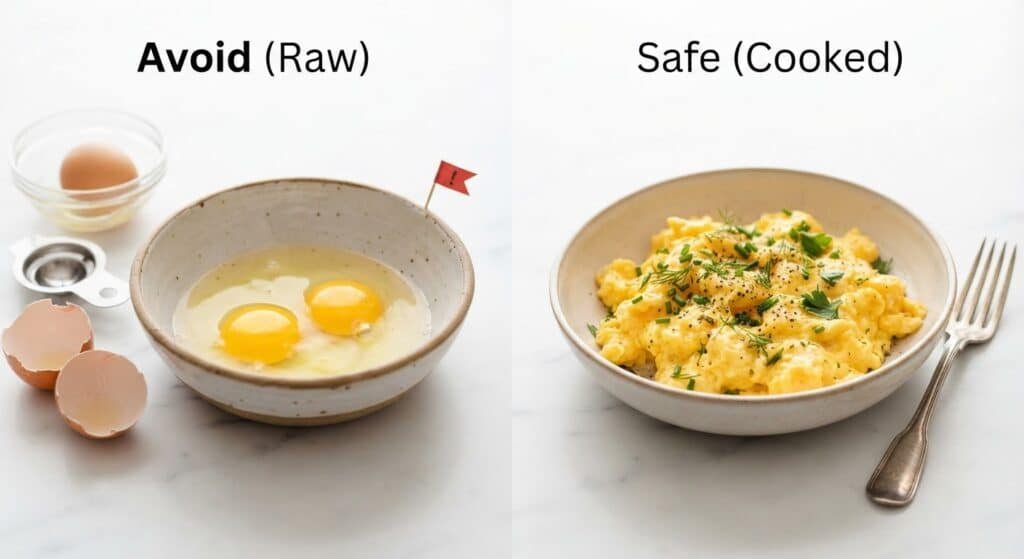
Knowing what not to eat during the first month of pregnancy is just as important as knowing which foods to include. Certain foods can increase the risk of foodborne illnesses or expose your baby to harmful substances.
1. Raw or Undercooked Eggs
Raw eggs may contain bacteria such as Salmonella, which can cause food poisoning.
Avoid:
- Homemade mayonnaise made with raw eggs
- Raw cookie dough
- Soft-scrambled or undercooked eggs
Instead, eat eggs only when both the yolk and white are fully cooked.
2. Raw or Undercooked Meat and Seafood
Undercooked meat may contain harmful bacteria or parasites.
Avoid:
- Rare or medium-rare meat
- Raw fish
- Sushi containing raw seafood
- Raw shellfish
Choose freshly prepared, thoroughly cooked meat and seafood instead.
3. High-Mercury Fish
Fish is an excellent source of protein and omega-3 fatty acids, but some species contain high levels of mercury that can affect your baby’s developing nervous system.
Avoid high-mercury fish such as:
- Shark
- Swordfish
- King mackerel
- Marlin
Instead, choose low-mercury options recommended by your healthcare provider and ensure they are well cooked.
4. Unpasteurized Milk and Dairy Products
Unpasteurized dairy products can carry harmful bacteria like Listeria, which may cause serious infections during pregnancy.
Always choose:
- Pasteurized milk
- Pasteurized curd
- Pasteurized cheese
- Pasteurized yogurt
5. Unripe or Semi-Ripe Papaya
While fully ripe papaya is generally considered safe in moderation, unripe or semi-ripe papaya contains latex, which may stimulate uterine contractions. It is best to avoid unripe papaya during pregnancy.
6. Excess Caffeine
High caffeine intake may be associated with an increased risk of pregnancy complications.
Limit:
- Coffee
- Strong tea
- Energy drinks
- Cola beverages
Discuss safe caffeine limits with your healthcare provider, and consider healthier alternatives like milk, coconut water, or homemade fruit smoothies.
7. Alcohol
There is no known safe amount of alcohol during pregnancy. Alcohol can interfere with fetal development and should be avoided throughout pregnancy.
8. Smoking and Tobacco
Smoking, secondhand smoke, and all tobacco products can reduce oxygen supply to your baby and increase the risk of pregnancy complications. Avoid tobacco exposure as much as possible.
9. Highly Processed and Junk Foods
Occasional treats are fine, but frequent consumption of processed foods can add excess salt, sugar, and unhealthy fats without providing essential nutrients.
Limit:
- Chips
- Instant noodles
- Sugary desserts
- Soft drinks
- Packaged snacks
- Deep-fried fast food
Choose homemade meals and snacks whenever possible.
10. Unwashed Fruits and Vegetables
Fresh produce can carry bacteria, pesticides, or parasites if not cleaned properly.
Before eating:
- Wash fruits and vegetables thoroughly under running water.
- Peel fruits when appropriate.
- Avoid pre-cut fruits that have been sitting unrefrigerated.
Healthy Drinks During the First Month of Pregnancy
Staying hydrated is essential for maintaining blood volume, supporting amniotic fluid production later in pregnancy, and helping reduce constipation and fatigue.
Best drinks to include
- Plain water
- Coconut water
- Milk
- Buttermilk
- Fresh homemade soups
- Lemon water
- Fresh fruit smoothies (without added sugar)
- Fresh vegetable soups
Drinks to limit or avoid
- Alcohol
- Energy drinks
- Excess coffee
- Excess tea
- Sugary soft drinks
- Unpasteurized juices
Aim to sip fluids regularly throughout the day instead of drinking large amounts at once, especially if you’re experiencing nausea.
Managing Common First Month Pregnancy Symptoms Through Diet
The first month of pregnancy can bring several physical and emotional changes as your body adjusts to rising hormone levels. Fortunately, making thoughtful food choices can help ease many common discomforts while ensuring your baby receives the nutrients needed for healthy development.
1. Morning Sickness
Morning sickness can occur at any time of the day and usually begins around the first month of pregnancy. While it can be uncomfortable, eating the right foods may help reduce nausea.
What to eat
- Plain crackers or whole-grain toast before getting out of bed
- Bananas
- Apples
- Rice porridge
- Oatmeal
- Plain yogurt
- Ginger (in moderation, after consulting your doctor)
- Lemon water
- Coconut water
Helpful tips
- Eat small meals every 2–3 hours.
- Avoid skipping breakfast.
- Stay away from greasy, spicy, or overly oily foods if they trigger nausea.
- Drink fluids between meals instead of with meals if that feels more comfortable.
- Avoid strong food odors whenever possible.
2. Fatigue
Feeling unusually tired is common during the first month because your body is producing more hormones and increasing blood volume.
Energy-boosting foods
- Whole grains
- Oats
- Brown rice
- Lentils
- Eggs
- Paneer
- Nuts
- Seeds
- Fresh fruits
Getting enough iron and protein can also help reduce fatigue associated with early pregnancy.
3. Constipation
Hormonal changes can slow digestion, leading to constipation.
Include more
- Whole grains
- Fruits with edible skin
- Leafy vegetables
- Oats
- Chia seeds
- Flaxseeds
- Plenty of water
Regular light physical activity, such as walking (if approved by your healthcare provider), may also support healthy digestion.
4. Bloating and Gas
Progesterone slows digestion, which can lead to bloating.
Helpful foods
- Yogurt with probiotics
- Buttermilk
- Fennel seeds (in culinary amounts)
- Cooked vegetables
- Smaller meals
Try to avoid overeating and reduce carbonated beverages if they worsen symptoms.
5. Food Cravings and Food Aversions
Many women experience sudden cravings or develop aversions to foods they previously enjoyed.
Healthy alternatives
Instead of reaching for processed snacks, choose:
- Fresh fruit
- Roasted makhana
- Roasted chana
- Mixed nuts
- Homemade smoothies
- Vegetable sandwiches
- Sprouts chaat
It’s perfectly normal if your preferences change during pregnancy. Focus on maintaining overall nutritional balance rather than trying to eat “perfectly.”
Common Mistakes to Avoid During the First Month of Pregnancy
Even with the best intentions, some eating habits may not provide the nutrition your body needs. Avoiding these common mistakes can help support a healthy pregnancy.
Skipping Meals
Skipping meals may increase nausea, fatigue, and fluctuations in blood sugar.
Instead:
- Eat every 2–3 hours.
- Keep healthy snacks nearby.
Eating for Two
You don’t need to dramatically increase your calorie intake during the first month. Instead of eating significantly more, focus on improving the quality of your meals with nutrient-dense foods.
Ignoring Folic Acid
Folic acid is essential during early pregnancy because the neural tube develops within the first few weeks.
Take prenatal supplements only as prescribed by your healthcare provider, even if you’re eating folate-rich foods.
Drinking Too Little Water
Dehydration may contribute to headaches, constipation, fatigue, and dizziness.
Aim to drink fluids regularly throughout the day rather than waiting until you feel thirsty.
Consuming Too Many Processed Foods
Highly processed foods are often high in sugar, sodium, and unhealthy fats while providing few essential nutrients.
Choose homemade meals whenever possible.
Taking Supplements Without Medical Advice
Not all supplements are safe during pregnancy.
Avoid self-medicating with vitamins, herbal products, or nutritional supplements unless recommended by your obstetrician.
Frequently Asked Questions
What should I eat during the first month of pregnancy?
A healthy first month pregnancy diet should include leafy green vegetables, fresh fruits, whole grains, milk, curd, paneer, lentils, beans, eggs (fully cooked), nuts, seeds, and healthy fats. Focus on foods rich in folic acid, protein, iron, calcium, and vitamin C.
Which fruits are best during the first month of pregnancy?
Some of the best fruits include:
- Apples
- Bananas
- Oranges
- Guava
- Pomegranate
- Pears
- Kiwi
- Watermelon
- Sweet lime
- Fully ripe papaya (in moderation)
Always wash fruits thoroughly before eating.
Can I drink milk during the first month of pregnancy?
Yes. Pasteurized milk is an excellent source of calcium, protein, and vitamin B12. If you are lactose intolerant, speak with your healthcare provider about suitable fortified alternatives.
Is coffee safe during early pregnancy?
Small amounts of caffeine may be acceptable for many pregnant women, but excessive intake should be avoided. Speak with your healthcare provider about the amount that’s appropriate for you and consider limiting coffee, strong tea, and energy drinks.
Can I eat spicy food during pregnancy?
Spicy foods do not generally harm the baby, but they may worsen heartburn, acidity, or indigestion in some women. If spicy foods make you uncomfortable, choose milder meals.
Is fasting safe during the first month of pregnancy?
Pregnancy increases your nutritional needs, so prolonged fasting may not be suitable. If you plan to fast for religious or personal reasons, consult your healthcare provider to ensure you and your baby receive adequate nutrition and hydration.
What foods should I completely avoid during the first month?
Avoid:
- Raw or undercooked meat
- Raw seafood
- High-mercury fish
- Raw eggs
- Unpasteurized milk and dairy products
- Alcohol
- Tobacco
- Unripe papaya
- Highly processed foods in excess
How much water should I drink during early pregnancy?
Hydration needs vary from person to person, but most pregnant women benefit from drinking fluids regularly throughout the day. Water should be your primary beverage, with options like milk, buttermilk, coconut water, and homemade soups contributing to your daily fluid intake.
Can I continue exercising during the first month?
If you had a healthy pregnancy before and your healthcare provider has not advised against it, gentle activities such as walking, stretching, or prenatal yoga may be appropriate. Always consult your obstetrician before beginning or continuing an exercise routine during pregnancy.