
Children are not born knowing how to share, listen, cooperate, communicate their feelings, or handle disagreements. These are skills they gradually learn through everyday experiences with parents, siblings, friends, teachers, and other people.
The good news is that parents do not need complicated lessons or expensive programs to help. Simple conversations, pretend play, family activities, playdates, stories, and everyday situations can become opportunities to develop social skills in kids.
If you are wondering how to build social skills in kids, start with small, consistent activities at home. Encourage your child to listen, communicate, take turns, recognize emotions, cooperate with others, and solve simple problems. Over time, these experiences can help children become more confident in social situations.
Social and emotional learning (SEL) broadly includes skills such as self-awareness, self-management, social awareness, relationship skills, and responsible decision-making. These areas overlap with many of the everyday social skills children practice at home and school.
What Are Social Skills in Kids?
Social skills are the abilities children use to interact, communicate, cooperate, and build relationships with other people.
For example, when a child waits for a turn on the slide, asks another child to play, listens while someone is speaking, comforts a friend, or finds a solution when two children want the same toy, they are practicing social skills.
Some important social skills for children include:
- Listening to others
- Communicating clearly
- Taking turns
- Sharing
- Cooperating
- Showing empathy
- Making and maintaining friendships
- Understanding emotions
- Expressing feelings appropriately
- Following social rules
- Respecting personal boundaries
- Asking for help
- Solving conflicts
- Working as part of a team
- Understanding another person’s perspective
These skills develop gradually. A toddler, preschooler, and school-age child will not have the same level of social understanding, so expectations should match the child’s developmental stage.
CASEL describes relationship skills as including clear communication, active listening, cooperation, collaborative problem-solving, constructive conflict resolution, and seeking or offering help.
Why Are Social Skills Important for Children?
Good social skills can help children communicate their needs, participate in group activities, build friendships, cooperate with others, and handle everyday disagreements.
They can also support children’s ability to:
- Make friends
- Express emotions
- Understand other people’s feelings
- Work with others
- Participate in classroom activities
- Handle disagreements
- Ask for help
- Respect boundaries
- Build confidence in social situations
Social development is closely connected to emotional development. A child who can recognize that they are frustrated, for example, is better positioned to communicate that feeling instead of immediately hitting, grabbing, or yelling.
Social-emotional learning also focuses on empathy, supportive relationships, emotional management, responsible decisions, and relationship skills.
For young children, play with other children provides valuable opportunities to practice sharing and friendship. The CDC specifically encourages preschoolers to play with other children to help them learn these skills.
15 Simple Ways to Build Social Skills in Kids
You do not need to turn every interaction into a formal lesson. The most effective ways to develop social skills in kids are often simple activities that naturally fit into everyday family life.
1. Model Good Social Behavior
One of the simplest ways to teach social skills to children is to demonstrate the behavior you want them to learn.
Children observe how adults communicate, respond to frustration, apologize, listen, and treat other people. When you regularly model respectful behavior, your child gets a practical example to follow.
Try to model:
- Saying please and thank you
- Listening without interrupting
- Apologizing when you make a mistake
- Asking before taking something
- Speaking calmly during disagreements
- Showing appreciation
- Helping others
- Respecting personal boundaries
For example, instead of simply telling your child to say “thank you,” let them hear you say it regularly.
You can also narrate your own behavior:
“I was upset, so I took a deep breath before answering.”
This helps children understand that social and emotional skills are something everyone practices.
Parents are especially important in this process because families and caregivers are one of the key settings in which children develop social and emotional competencies.
2. Teach Kids to Take Turns
Taking turns is one of the foundational kids social skills.
Young children may naturally want something immediately, so expecting perfect patience is unrealistic. Instead, give them frequent opportunities to practice.
Try:
- Taking turns with a ball
- Playing simple board games
- Taking turns building with blocks
- Sharing the TV remote
- Taking turns choosing a bedtime story
- Taking turns during family conversations
Use simple language:
“First your turn, then my turn.”
You can also use a timer for certain activities when children are struggling to understand when their turn will end.
As children get older, gradually move from adult-directed turn-taking to allowing them to negotiate turns independently.
3. Practice Sharing Through Everyday Activities
Sharing is an important social skill, but children do not master it overnight.
Instead of constantly saying, “You have to share,” help your child understand the idea of taking turns and finding fair solutions.
Practice with:
- Toys
- Books
- Art supplies
- Snacks
- Building materials
- Household activities
If two children want the same toy, you might say:
“You both want the truck. What can we do so everyone gets a turn?”
The American Academy of Pediatrics recommends helping young children use words to deal with disagreements, take turns, and find solutions when children want the same toy.
It is also helpful to remember that very young children may have difficulty understanding sharing in the way adults do. Expectations should therefore be age-appropriate.
4. Encourage Face-to-Face Conversations
If you want to know how to improve communication skills in kids, start with everyday conversations.
You do not need special activities. Talk to your child while:
- Eating meals
- Getting dressed
- Bathing
- Walking outside
- Driving
- Preparing food
- Reading books
- Playing together
Instead of asking only yes-or-no questions, try open-ended questions:
- “What was your favorite part of today?”
- “What happened next?”
- “Why do you think she felt sad?”
- “What would you do?”
- “Tell me about your game.”
Give your child time to answer rather than immediately filling every silence.
Active listening is another important part of communication. The CDC recommends giving children your full attention, reflecting feelings, and validating emotions as ways to strengthen connection and communication.
5. Teach Children to Identify and Express Feelings
A child cannot always communicate appropriately if they do not have the words to explain what they are feeling.
Start by helping your child recognize basic emotions:
- Happy
- Sad
- Angry
- Scared
- Excited
- Worried
- Frustrated
- Disappointed
- Proud
You can say:
“You look frustrated because the tower fell down.”
Then teach simple phrases:
“I feel angry.”
“I need help.”
“I don’t like that.”
“Can I have a turn?”
This helps children connect emotions with appropriate communication.
You can also use picture books, emotion cards, dolls, or family conversations to practice recognizing feelings.
6. Teach Empathy Through Everyday Situations
Learning how to teach empathy to children does not require complicated activities.
Use real-life moments to help children think about how another person might feel.
Ask:
- “How do you think your friend feels?”
- “What could we do to help?”
- “How would you feel if someone did that to you?”
- “What do you think she needs right now?”
Books are particularly useful. When reading a story, pause and ask what a character might be thinking or feeling.
Pretend play can also help children explore different perspectives.
Empathy is an important part of social awareness. CASEL describes social awareness as understanding other people’s perspectives and showing empathy toward others.
7. Give Kids Opportunities for Free Play
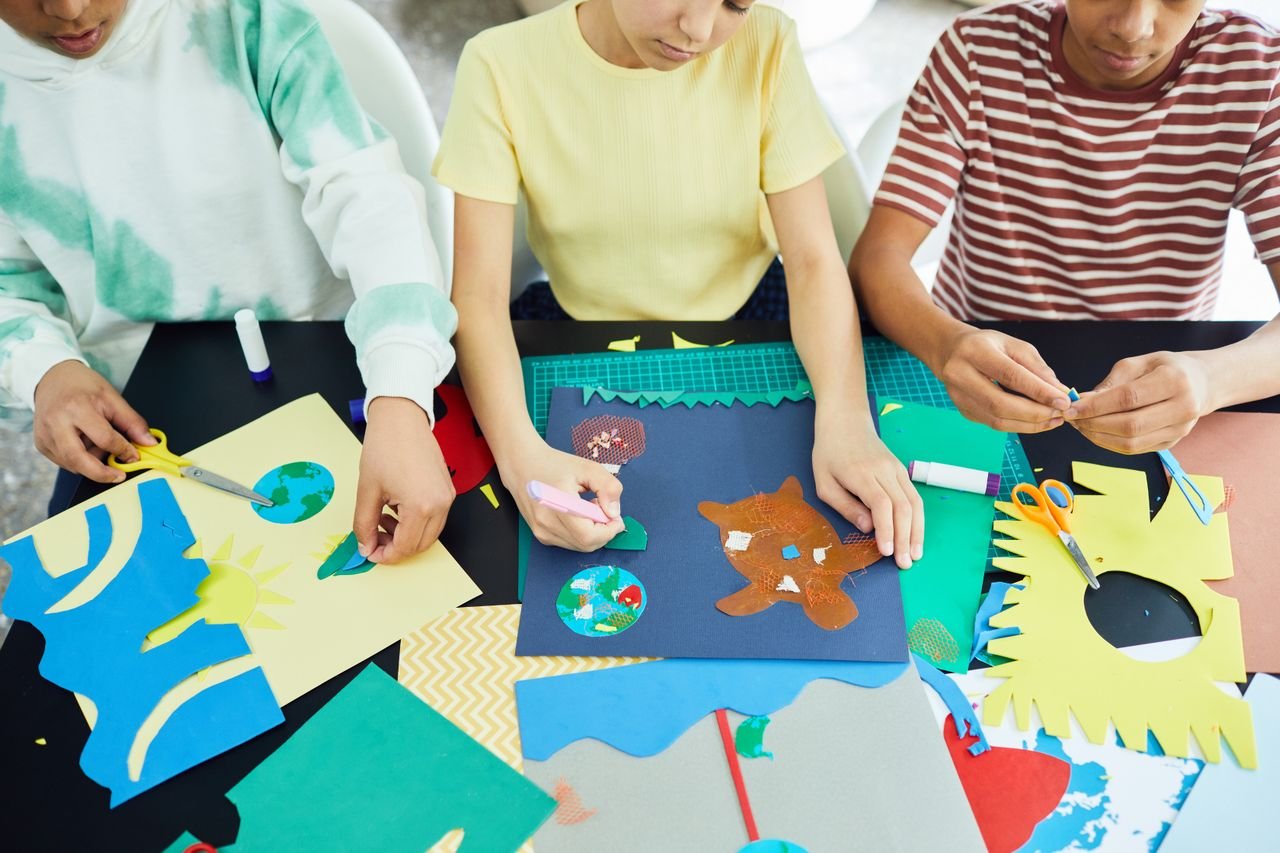
Free play can provide some of the best social skills activities for kids because children have to communicate, negotiate, cooperate, and make decisions naturally.
Encourage opportunities such as:
- Playground play
- Outdoor games
- Pretend play
- Building with blocks
- Drawing together
- Playing with dolls
- Simple group games
During play, children may naturally encounter situations such as:
“I want the red block.”
“You can’t play.”
“It’s my turn.”
These moments can become opportunities to teach communication and problem-solving.
Parents do not need to solve every disagreement immediately. Sometimes children benefit from having space to attempt a solution themselves, while an adult remains nearby to support when necessary.
8. Arrange Regular Playdates
If you are wondering how to help kids make friends, regular opportunities to interact with other children can help.
For younger children, start with simple playdates rather than large gatherings.
Try to:
- Invite one familiar child
- Keep the first playdate relatively short
- Choose a comfortable environment
- Have a few cooperative activities available
- Stay nearby when needed
- Give children opportunities to play independently
If your child is shy, avoid forcing them to immediately join a group. Give them time to observe and warm up.
The AAP recommends parental guidance and supervision during early friendships and notes that play experiences can help parents understand their child’s social strengths and challenges.
9. Use Pretend Play and Role-Playing
Pretend play is one of the easiest social skills activities at home.
You can create simple scenarios such as:
- Meeting a new friend
- Asking someone to play
- Asking for a turn
- Saying sorry
- Ordering food
- Visiting a doctor
- Going to school
- Helping someone who is sad
For example, pretend that you are another child and say:
“Can I play with you?”
Then let your child practice responding.
You can switch roles so your child gets to practice both sides of the conversation.
Role-playing is especially useful when preparing children for a new situation because they can practice the words before they need them in real life.
10. Teach Active Listening
Listening is just as important as speaking.
Help children understand that a conversation involves both talking and listening.
Practice:
- Looking toward the person speaking
- Waiting for their turn
- Avoiding interruptions
- Asking relevant questions
- Responding to what someone said
Try a simple family game:
“What did you hear?”
Say a short sentence and ask your child to repeat the important part.
For older children, ask them to tell you one thing they remember from another person’s story.
Active listening is an important relationship skill because effective relationships require children to communicate clearly and listen to others.
11. Teach Kids How to Solve Conflicts
Conflict is a normal part of childhood. The goal is not to prevent every disagreement but to teach children what to do when one happens.
A simple STOP–THINK–TALK–SOLVE strategy can help:
1. Stop: Pause before reacting.
2. Take a breath: Give your body a moment to calm down.
3. Talk: Explain what happened.
4. Listen: Hear the other person’s side.
5. Think: Come up with possible solutions.
6. Solve: Choose a fair and safe solution.
For example:
“You both want the same toy. What are two ways we could solve this?”
Children may suggest taking turns, finding another toy, playing together, or using a timer.
The AAP recommends helping children use words, understand another child’s perspective, and find peaceful ways to resolve conflicts.
12. Encourage Cooperative Household Tasks
Some of the best social emotional activities for children are ordinary family responsibilities.
Give children age-appropriate opportunities to help with:
- Putting toys away
- Setting the table
- Sorting laundry
- Watering plants
- Preparing simple foods
- Organizing books
- Cleaning up after play
Instead of presenting every task as something they must do alone, occasionally work together.
Say:
“You put the spoons on the table, and I’ll bring the plates.”
This teaches cooperation, teamwork, communication, and responsibility.
The CDC recommends letting preschoolers help with simple chores and giving them opportunities to participate in family routines.
13. Teach Kids How to Ask for Help
Asking for help is an important but sometimes overlooked social skill.
Children should know that they can communicate when something is difficult instead of immediately giving up, yelling, or becoming aggressive.
Practice phrases such as:
- “Can you help me?”
- “I don’t understand.”
- “Can you show me?”
- “I need help.”
- “Can we do this together?”
- “I don’t know what to do.”
You can also teach children to offer help:
“Do you need help?”
This connects communication with cooperation and relationship-building.
14. Encourage Respect for Personal Boundaries
Social skills also include understanding that other people have their own feelings, preferences, space, and boundaries.
Teach children to:
- Ask before taking something
- Respect someone’s “no”
- Give people personal space
- Ask before hugging
- Avoid grabbing
- Listen when someone says they want to stop
- Respect different preferences
For example:
“Grandma doesn’t want a hug right now. We can wave instead.”
This teaches children that affection and friendship should involve respect and consent.
Age-appropriate conversations about body boundaries can also help children understand that they can say no to unwanted or unsafe touch and seek help from trusted adults. Parents should adapt these conversations to the child’s age and understanding.
15. Praise Positive Social Behavior
When children demonstrate a social skill, point it out specifically.
Instead of:
“Good job!”
Try:
“I noticed you waited for your sister’s turn. That was very patient.”
Or:
“You saw that your friend was upset and asked if she was okay. That was thoughtful.”
Specific praise tells children exactly which behavior they can repeat.
You can notice:
- Sharing
- Listening
- Helping
- Waiting
- Using words
- Showing empathy
- Asking for help
- Solving disagreements calmly
The CDC recommends giving attention to behaviors parents want children to repeat, including positive social behaviors.
Easy Social Skills Activities for Kids at Home
You don’t need expensive toys or structured classes to practice social skills activities for kids.
Here are simple activities you can try at home:
| Activity | Social Skill Practiced |
|---|---|
| Board games | Turn-taking and patience |
| Pretend play | Communication and perspective-taking |
| Emotion cards | Emotional awareness |
| Storytelling | Listening and communication |
| Building blocks together | Cooperation |
| Puppet play | Empathy |
| Family cooking | Teamwork |
| “How would you feel?” game | Perspective-taking |
| Ball games | Turn-taking |
| Family clean-up | Cooperation and responsibility |
Try one activity for just 10–15 minutes rather than trying to practice every skill at once.
The goal is regular practice, not perfection.
Social Skills by Age
Children develop social abilities at different rates. What is realistic for a toddler may be very different from what you can expect from a school-age child.
Social Skills for Toddlers
For toddlers, focus on simple skills such as:
- Responding to simple greetings
- Using words or gestures to communicate
- Taking short turns
- Playing near other children
- Naming basic emotions
- Following simple social routines
- Asking for help
Don’t expect a toddler to consistently share a favorite toy just because an adult asks.
At this age, adults often need to guide interactions and model simple language.
Social Skills for Preschoolers
Preschoolers can gradually practice:
- Sharing
- Taking turns
- Cooperative play
- Making friends
- Showing empathy
- Following simple group rules
- Expressing emotions
- Solving small disagreements
- Helping with simple tasks
The CDC recommends encouraging preschoolers to play with other children because these interactions can help them learn sharing and friendship.
The AAP also describes preschool as a period when children increasingly interact with peers, develop friendships, learn to take turns, and become more capable of working out simple disputes.
Social Skills for School-Age Children
As children grow, social skills become more complex.
School-age children can practice:
- Having conversations
- Listening to different opinions
- Understanding perspectives
- Working in teams
- Managing disagreements
- Negotiating
- Showing empathy
- Following group expectations
- Maintaining friendships
- Asking for help appropriately
At this stage, parents can move gradually from solving social problems for children to coaching them through possible solutions.
How to Help a Shy Child Develop Social Skills
Some children are naturally quiet, cautious, or slow to warm up. Shyness by itself does not mean that a child lacks social skills.
If you want to know how to help a shy child develop social skills, start gently.
Try:
- Giving your child time to warm up
- Starting with one-on-one play
- Practicing conversations at home
- Using pretend play
- Choosing familiar environments
- Arriving early to new activities
- Praising small efforts
- Avoiding labels such as “He is shy”
- Avoiding pressure to perform socially
Instead of saying:
“Why aren’t you talking?”
Try:
“You can take your time. I’m right here.”
You can also give your child a simple script:
“Hi, can I play with you?”
or:
“What are you building?”
The AAP notes that parents can support shy children during early peer interactions by helping them warm up, while also allowing children opportunities to develop friendships at their own pace.
What Parents Should Avoid When Teaching Social Skills
When teaching social skills in kids, what you avoid can be just as important as what you do.
Don’t Force Children to Share Immediately
Young children may need time to understand ownership, turn-taking, and sharing. Teach the skill gradually instead of expecting instant compliance.
Don’t Compare Siblings
Avoid statements such as:
“Your sister knows how to behave. Why can’t you?”
Comparison can create shame rather than teach the desired behavior.
Don’t Label Your Child
Avoid repeatedly calling a child:
- Shy
- Rude
- Selfish
- Difficult
- Bad at making friends
A child can have difficulty with a particular skill without that difficulty becoming their identity.
Don’t Speak for Your Child Every Time
If your child can answer independently, give them an opportunity to do so.
Instead of immediately saying:
“She doesn’t want the red one.”
Pause and ask:
“What would you like?”
Don’t Punish Every Social Mistake
Children will interrupt, grab, argue, forget to say thank you, or struggle with sharing.
Correct the behavior while teaching the replacement behavior.
Don’t Expect Adult-Level Emotional Control
A child’s ability to manage frustration develops gradually. Expectations should be age-appropriate.
Don’t Solve Every Disagreement for Them
When it is safe, give children an opportunity to think about possible solutions.
Don’t Demand Physical Affection
Children should learn that other people’s bodies and boundaries matter.
A child can greet someone with a wave, smile, or verbal hello instead of being forced to hug or kiss.
When Should Parents Be Concerned About Social Skills?
Children develop at different rates, so an occasional awkward interaction, disagreement, or period of shyness does not automatically indicate a problem.
However, if you have ongoing concerns about your child’s communication, social interaction, emotional development, friendships, or ability to participate in everyday activities, talk with your child’s pediatrician or another qualified child-development professional.
Consider discussing your concerns if you consistently notice difficulties with:
- Communicating with other people
- Engaging in age-appropriate interactions
- Making or maintaining relationships
- Understanding or expressing emotions
- Participating in everyday activities
- Responding to social situations
Developmental milestones are useful guides, but they are not a substitute for an individual evaluation.
The CDC recommends tracking developmental milestones and talking with a healthcare provider when parents have concerns about a child’s development.
The important thing is not to compare your child with every other child. Instead, look at your child’s development over time and seek professional guidance when concerns persist.
How Parents Can Build Social Skills Every Day
The easiest way to build social skills is to make practice part of everyday life.
You can create simple opportunities throughout the day:
Morning:
Practice greetings.
“Good morning! How are you feeling today?”
Breakfast or lunch:
Practice conversation.
“What was your favorite part of yesterday?”
Playtime:
Practice sharing and turn-taking.
“Let’s take turns building the tower.”
Storytime:
Practice empathy.
“How do you think the character feels?”
Family chores:
Practice cooperation.
“Let’s clean up together.”
Evening:
Reflect on kindness.
“What was one kind thing you did today?”
These small moments can add up.
CASEL emphasizes that social and emotional learning happens across settings including families, schools, classrooms, and communities.
Frequently Asked Questions About Social Skills in Kids
What are the most important social skills for kids?
Some of the most important social skills for kids include communication, active listening, empathy, sharing, taking turns, cooperation, friendship-building, emotional awareness, conflict resolution, asking for help, and respecting boundaries.
How can I improve my child’s social skills?
You can improve social skills in children by modeling positive behavior, talking and listening regularly, encouraging play with other children, practicing turn-taking, teaching emotional vocabulary, using pretend play, encouraging teamwork, and helping children solve everyday conflicts.
How do I teach my child to make friends?
Give your child regular opportunities to interact with other children. Start with one-on-one playdates, practice simple conversation starters at home, encourage cooperative play, and allow your child time to warm up. Avoid forcing friendships or comparing your child with more outgoing children.
What activities improve social skills in children?
Useful social skills activities for kids include board games, pretend play, storytelling, puppet play, emotion games, building together, ball games, cooking as a family, cooperative chores, and role-playing common social situations.
How can I teach my child empathy?
Talk about emotions during everyday situations, read stories together, ask how characters might feel, encourage children to notice when someone needs help, and model empathy yourself.
Questions such as “How do you think she feels?” and “What could we do to help?” can encourage perspective-taking.
How do I teach my child to share and take turns?
Start with simple activities where children naturally take turns. Use phrases such as “first your turn, then my turn,” and help children find fair solutions when they both want the same item. Remember that expectations should be appropriate for the child’s age and developmental stage.
How can I help a shy child socialize?
Give a shy child time to warm up, begin with smaller interactions, practice conversations at home, use role-play, and praise small attempts rather than demanding immediate participation.
What are social-emotional skills in children?
Social-emotional skills include abilities related to understanding and managing emotions, understanding other people’s perspectives, showing empathy, communicating, developing relationships, cooperating, solving problems, and making responsible decisions. These areas overlap with the five broad competencies in the CASEL SEL framework: self-awareness, self-management, social awareness, relationship skills, and responsible decision-making.
At what age do children develop social skills?
Social development begins from infancy and continues throughout childhood. The specific skills children demonstrate change as they grow. Toddlers may practice simple communication and turn-taking, preschoolers increasingly practice sharing and friendship, and school-age children develop more advanced cooperation, perspective-taking, communication, and conflict-resolution abilities.
When should I seek professional help for my child’s social development?
Consider speaking with your child’s pediatrician or a qualified child-development professional when you have persistent concerns about communication, social interaction, emotional development, friendships, or other everyday functioning. Professional guidance can help determine whether additional evaluation or support would be useful.
Final Takeaway
Learning how to build social skills in kids is not about teaching one perfect lesson.
It happens through hundreds of small moments.
A child learns to listen when you listen to them. They learn empathy when you acknowledge their feelings. They learn cooperation when you work together. They learn conflict resolution when you calmly guide them through disagreements. They learn friendship skills when they get opportunities to play, communicate, and connect with other children.
Think of it as:
Connect → Model → Practice → Encourage → Repeat
You don’t need to make every day a social-skills lesson. Use everyday opportunities—mealtimes, playtime, storytime, errands, family chores, sibling interactions, and playdates—to help your child practice.
With patience and consistent support, children can gradually develop the communication, empathy, cooperation, emotional awareness, and relationship skills they need to navigate the world around them.