

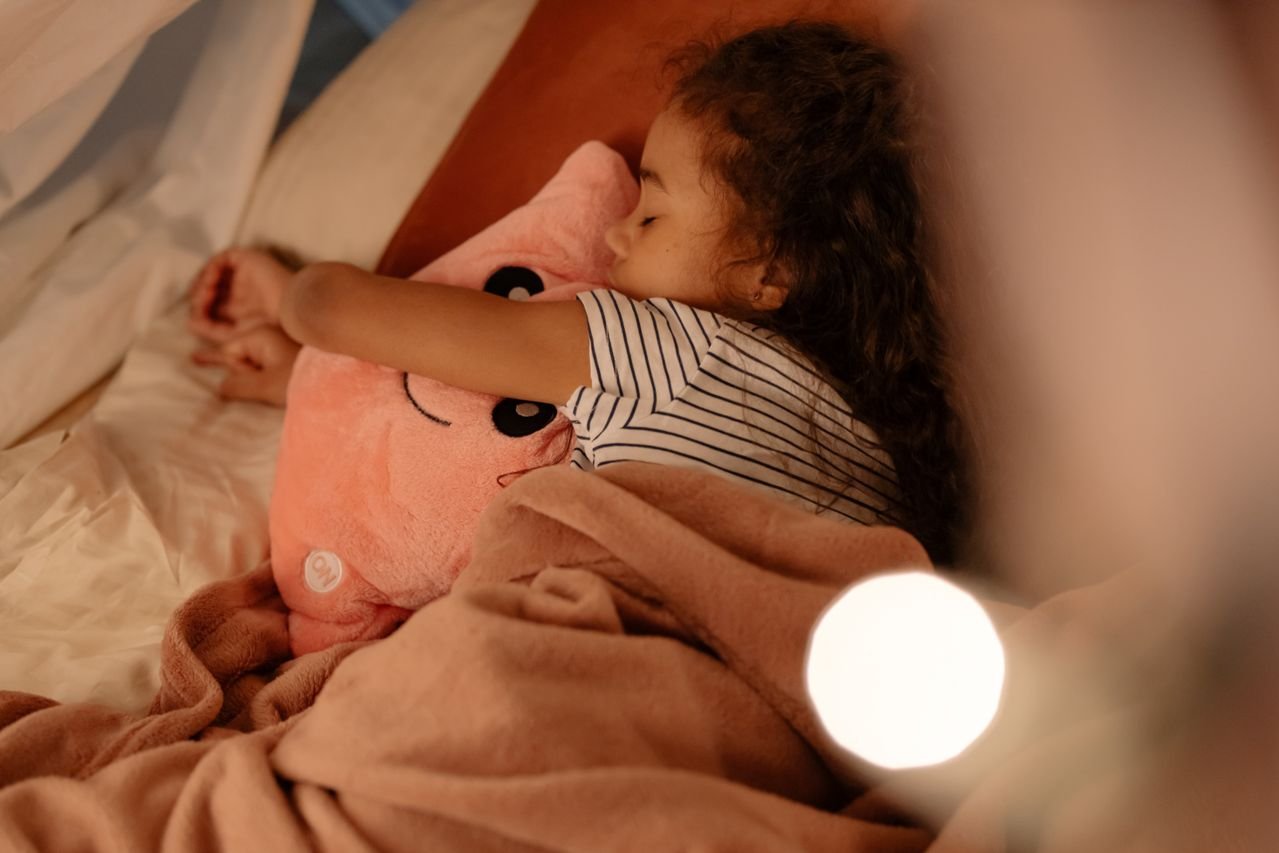
Your toddler is clearly tired, but bedtime has suddenly turned into a battle. Maybe your child keeps getting out of bed, asks for “one more story,” cries when you leave the room, or simply refuses to fall asleep.
If you’re wondering, “Why won’t my toddler sleep?”, you’re not alone. Toddler bedtime resistance, nighttime waking, and difficulty falling asleep are common concerns for parents. And while it can sometimes feel like your toddler is simply refusing to cooperate, there may be a very real reason behind the struggle.
A toddler may refuse to sleep because of an inconsistent sleep schedule, an overly long or late nap, overtiredness, separation anxiety, developmental changes, screen exposure, an uncomfortable sleep environment, illness, or learned bedtime habits. A consistent routine and age-appropriate sleep schedule are good places to start, while persistent or concerning sleep problems should be discussed with your child’s pediatrician.
Let’s look at the 12 common reasons toddlers won’t sleep and what you can try.
How Much Sleep Does a Toddler Need?
Before changing your toddler’s bedtime, it helps to understand how much sleep children generally need.
According to recommendations from the American Academy of Sleep Medicine, supported by the American Academy of Pediatrics, children ages 1–2 years generally need 11–14 hours of sleep in 24 hours, including naps. Children ages 3–5 years generally need 10–13 hours, including naps.
Toddler Sleep Needs by Age
| Age | Recommended Sleep in 24 Hours |
|---|---|
| 1–2 years | 11–14 hours, including naps |
| 3–5 years | 10–13 hours, including naps |
These are general recommendations, not a requirement that every child sleep exactly the same number of hours. Individual sleep needs vary.
Does Nap Sleep Count?
Yes. When thinking about whether your toddler is getting enough sleep, add nighttime sleep and daytime naps together.
For example, a toddler who sleeps 10 hours at night and takes a 2-hour nap is getting approximately 12 hours of sleep in 24 hours.
This is important because parents sometimes assume their toddler is not sleeping enough at night when the child may simply be getting a significant portion of their sleep during the day.
Signs Your Toddler May Not Be Getting Enough Sleep
A toddler who isn’t getting enough sleep may be:
- More irritable than usual
- More prone to tantrums
- Difficult to wake in the morning
- Less attentive during the day
- Unusually hyperactive or energetic
- Sleepy during the daytime
- More emotional than usual
- Struggling with bedtime or nighttime waking
Sleep and behavior are closely connected, which is one reason maintaining a regular sleep schedule is so important.
Toddler Won’t Sleep? 12 Common Reasons
There isn’t one universal answer to why a toddler won’t sleep at night. The cause can be related to your child’s schedule, environment, development, emotions, habits, or physical comfort.
Here are 12 common possibilities.
1. Your Toddler Isn’t Tired Enough
One reason your toddler won’t go to sleep may be that they simply haven’t built up enough sleep pressure by bedtime.
This can happen when:
- Your toddler takes a long nap.
- The nap ends late in the afternoon.
- Bedtime is earlier than your child’s current sleep pattern requires.
- Your child has had a relatively inactive day.
- The daytime schedule has changed.
If your toddler happily plays, talks, sings, or asks for activities at bedtime without appearing sleepy, their schedule may need a closer look.
What to Try
Rather than immediately moving bedtime earlier or later, look at the entire 24-hour schedule.
Track:
- Morning wake-up time
- Nap start and end time
- Bedtime
- Approximate time your child actually falls asleep
- Nighttime awakenings
Regular daily routines, including consistent waking, meals, naps and play, can help young children establish predictable sleep patterns.
Related searches: toddler not tired at bedtime, toddler won’t sleep at night, why is my toddler not tired at bedtime.
2. Your Toddler Is Overtired
It sounds contradictory, but an overtired toddler may also struggle to fall asleep.
When bedtime gets pushed too late, your child may become increasingly cranky, hyperactive, emotional, or resistant instead of calmly settling down.
You may notice your toddler:
- Becomes unusually energetic at bedtime
- Has a sudden burst of activity
- Cries or becomes irritable
- Fights sleep
- Takes a long time to settle
- Wakes frequently during the night
This is why putting an overtired toddler to sleep isn’t always as easy as simply waiting until they are exhausted.
What to Try
Watch your child’s overall sleep pattern instead of waiting until they are extremely tired.
A consistent bedtime can help, and in some situations moving bedtime slightly earlier may make settling easier. The American Academy of Pediatrics notes that waiting until a child is already showing obvious signs of tiredness may be too late; an earlier bedtime can sometimes help.
Related searches: toddler overtired but won’t sleep, overtired toddler won’t sleep, toddler fighting sleep.
3. The Nap Schedule Is Getting in the Way
Your toddler’s nap may be one of the biggest clues if your toddler won’t sleep after a nap.
As children grow, their daytime sleep needs change. Some toddlers may start resisting naps, shortening their naps, or eventually transitioning away from daytime sleep.
A nap that is:
- Too long
- Too late
- Too close to bedtime
may make it harder for your child to fall asleep at night.
At the same time, removing a nap too quickly can leave a toddler overtired.
What to Try
Don’t assume that dropping the nap is automatically the solution.
Instead, observe how nap timing affects bedtime over several days. Keep a simple sleep log and look for patterns.
If your child consistently takes a long time to fall asleep after a late nap, discuss possible schedule changes with your pediatrician if you’re unsure what is appropriate for your child’s age and development.
Related searches: toddler won’t sleep after nap, toddler nap schedule, 2 year old won’t sleep at night after nap, toddler skipping nap.
4. Bedtime Isn’t Consistent
A toddler’s body and brain learn through repetition.
If bedtime is 7:30 p.m. one night, 9:30 p.m. the next night, and 8:15 p.m. the following night, your child may have difficulty knowing when it is time to wind down.
An inconsistent schedule can contribute to toddler bedtime problems and make bedtime resistance harder to manage.
What to Try
Try keeping:
- Wake-up time reasonably consistent
- Nap time predictable
- Bedtime consistent
- The bedtime routine in the same order
AAP guidance recommends regular daily routines and consistent sleep schedules for children.
You don’t need a perfect schedule every single day. Travel, illness, family events and special occasions happen. The goal is to make the normal routine predictable.
Related searches: toddler bedtime routine, consistent bedtime for toddler, toddler sleep schedule.
5. Your Toddler Has Too Much Stimulation Before Bed
A toddler who is running around, wrestling with siblings, watching exciting videos, or playing an energetic game right before bedtime may have trouble switching from “play mode” to “sleep mode.”
This can look like:
“My toddler is too hyper to sleep.”
Active play can make some children more stimulated when they need to be winding down. AAP guidance recommends a quiet routine before bedtime rather than active play immediately before sleep.
What to Try
Create a calm wind-down period before bedtime.
You might use:
- A warm bath
- Pajamas
- Dimmer lighting
- Quiet music
- A story
- Cuddles
- Gentle conversation
- Brushing teeth
The goal isn’t to create an elaborate routine. It is to give your child’s brain predictable signals that the day is ending.
Related searches: toddler too hyper to sleep, toddler won’t settle at bedtime, calm toddler before bed.
6. Screens Are Making Bedtime Harder
Screens can become a major part of the bedtime battle, especially when a toddler is used to watching cartoons, YouTube videos, or playing on a tablet before bed.
Bright light and stimulating content can make it harder for some children to wind down. The AAP recommends keeping screens out of children’s bedrooms and turning off screens at least one hour before bedtime.
What to Try
If your toddler has screen time in the evening, gradually establish a screen-free period before bed.
Instead of:
TV → pajamas → bed
try:
Screen off → quiet play → pajamas → brush teeth → book → bed
Keep phones, tablets and other devices out of the sleep space whenever possible.
If your toddler becomes upset when the screen is turned off, give a predictable warning such as:
“Five more minutes, then screen off and bedtime.”
Consistency makes the transition easier over time.
Related searches: toddler screen time before bed, toddler won’t sleep after watching TV, screen time and toddler sleep.
7. Separation Anxiety Is Showing Up at Bedtime
Sometimes the problem isn’t sleep at all.
Your toddler may simply not want to be separated from you.
Separation anxiety at bedtime can look like:
- Crying when you leave
- Calling “Mama” or “Papa”
- Asking you to stay
- Repeatedly requesting hugs
- Getting out of bed to find you
- Becoming upset as soon as the bedroom routine begins
This can become especially noticeable during periods of developmental change, travel, illness, or other disruptions.
What to Try
Give your toddler reassurance while keeping the routine predictable.
You might say:
“It’s bedtime. You’re safe. I’ll see you in the morning. Goodnight.”
A familiar comfort object may also help some toddlers. AAP notes that a favorite stuffed animal, blanket or similar safe comfort object can help children settle. Make sure the object is age-appropriate and free from choking or strangulation hazards.
Try to avoid turning every bedtime into a longer and longer series of check-ins, stories and negotiations.
Related searches: toddler separation anxiety at bedtime, toddler cries when put to bed, toddler won’t sleep without mom.
8. Your Toddler Is Testing Boundaries
Toddlers are developing independence rapidly. Bedtime can become one of the places where they practice that independence.
Suddenly you may hear:
“I need water.”
“One more story.”
“I have to pee.”
“Another hug.”
“I don’t want to sleep.”
These are classic examples of toddler bedtime resistance.
What to Try
Address genuine needs before lights out, then keep boundaries calm and predictable.
For example:
- Water? Offer it before the final goodnight.
- Toilet? Include it in the routine.
- Story? Decide in advance whether there will be one or two.
- Hug? Give one and say goodnight.
The objective isn’t to punish your child. It is to make bedtime predictable.
AAP recommends consistency and notes that repeatedly returning to the room can sometimes reinforce calling out when a child is safe and well.
Related searches: toddler bedtime resistance, toddler fighting bedtime, toddler refuses bedtime, toddler bedtime battles.
9. Your Toddler Is Going Through a Developmental Change
Toddlers learn an incredible amount in a short period.
New skills and life changes can temporarily affect sleep.
Potential triggers include:
- Learning to walk or run
- Rapid language development
- Increased independence
- Potty training
- Starting daycare or preschool
- Moving to a new room
- Transitioning from a crib to a toddler bed
- Travel
- Changes in family routine
Parents often call these periods a toddler sleep regression.
You may hear terms such as “2 year old sleep regression” or “3 year old sleep regression,” but not every sleep disruption represents a formal medical sleep disorder.
What to Try
Keep as many familiar sleep cues as possible.
For example, maintain the same:
- Bedtime
- Story
- Song
- Sleep phrase
- Bedroom environment
- Morning routine
If your toddler has recently moved to a bed, calmly return them to bed when needed while keeping the same bedtime routine. AAP guidance also recommends maintaining familiar routines during the transition from a crib to a larger bed.
Related searches: toddler sleep regression, 2 year old sleep regression, 3 year old sleep regression, toddler developmental sleep changes.
10. Teething, Illness, or Physical Discomfort Is Disrupting Sleep
Sometimes your toddler won’t sleep because of teething, illness, or discomfort, rather than a bedtime behavior problem.
Consider whether your child has:
- Fever
- Cough
- Congestion
- Ear pain
- Teething discomfort
- Itching
- A wet diaper
- Uncomfortable clothing
- Hunger or thirst
- Another source of physical discomfort
A child who normally sleeps well but suddenly begins waking frequently may need a comfort and health check before you change the entire sleep routine.
What to Try
Before assuming your toddler is simply fighting bedtime, check whether they are comfortable and feeling well.
If your child appears ill, is in significant pain, has concerning symptoms, or the problem persists, speak with your pediatrician.
Avoid automatically treating every sleep disruption as a behavioral issue.
Related searches: toddler won’t sleep because of teething, toddler sick won’t sleep, toddler waking up crying at night.
11. The Sleep Environment Isn’t Working
Even a good bedtime routine can be disrupted by an uncomfortable sleep environment.
Possible problems include:
- Too much light
- Excessive noise
- An uncomfortable room temperature
- Uncomfortable pajamas or bedding
- Sibling noise
- A new bedroom
- Fear of the dark
- A distracting bedroom
What to Try
Make the bedroom calm, comfortable and predictable.
Consider:
- Dimming lights before bedtime
- Reducing household noise
- Keeping the sleep space comfortable
- Removing distracting screens
- Using familiar bedding
- Keeping bedtime cues consistent
AAP guidance recommends creating a comfortable, quiet and sleep-supportive environment and reducing digital distractions around bedtime.
If your toddler is afraid of the dark, a small, child-appropriate night-light may be helpful for some families.
Related searches: toddler sleep environment, best room temperature for toddler sleep, toddler afraid of dark, toddler wakes from noise.
12. Your Toddler May Have an Underlying Sleep or Health Problem
Most toddler sleep problems are not caused by a serious medical condition. However, persistent sleep difficulties sometimes deserve a conversation with your child’s pediatrician.
Pay particular attention to:
- Frequent loud snoring
- Difficult or unusual breathing during sleep
- Persistent difficulty falling asleep
- Very frequent nighttime waking
- Significant daytime sleepiness
- Ongoing sleep problems that affect daytime behavior
- Possible pain or illness
Sleep problems can include bedtime resistance, difficulty falling asleep, nighttime awakenings and breathing-related sleep problems.
What to Try
Keep a simple sleep diary for several days.
Record:
- Bedtime
- Approximate time your child falls asleep
- Nap timing
- Nighttime awakenings
- Morning wake-up
- Snoring or unusual breathing
- Daytime sleepiness
- Major changes in behavior
Sharing this information with your pediatrician can make the conversation more useful.
Don’t start medication or supplements for toddler sleep without discussing them with your child’s healthcare professional.
What to Do Tonight If Your Toddler Won’t Sleep
If you’re dealing with a bedtime battle tonight, don’t try to completely redesign your child’s sleep schedule in one evening.
Instead, start with the basics.
A Simple Tonight Checklist
- Check whether your toddler is sick, uncomfortable or in pain.
- Turn off screens and reduce stimulation.
- Dim the lights.
- Follow your usual bedtime routine.
- Offer a final drink or toilet trip if appropriate.
- Read a short story.
- Give a brief cuddle.
- Use the same goodnight phrase.
- Keep boundaries calm and consistent.
- Avoid turning bedtime into a long negotiation.
A predictable sequence can help your toddler understand what comes next and prepare mentally for sleep. The AAP’s Brush, Book, Bed approach uses tooth brushing, reading and a regular bedtime as a simple bedtime ritual.
A Simple Toddler Bedtime Routine That Works
The best toddler bedtime routine doesn’t have to be complicated.
What matters most is that it is calm, predictable and repeated regularly.
60 Minutes Before Bed
Start reducing stimulation.
Choose quiet activities instead of energetic games or exciting screen content.
30 Minutes Before Bed
Move into the normal bedtime routine:
- Bath, if part of your routine
- Pajamas
- Diaper or toilet
- Dim lights
- Quiet conversation
15 Minutes Before Bed
Move toward sleep:
- Brush teeth
- Read a favorite book
- Cuddle
- Sing a quiet song
Lights Out
Keep the final step short and predictable.
For example:
“Goodnight. I love you. It’s time to sleep. I’ll see you in the morning.”
The AAP’s Brush, Book, Bed program emphasizes brushing teeth, reading a book and getting to bed at a regular time each night.
Remember: the sequence matters more than making the routine elaborate.
What If My Toddler Keeps Getting Out of Bed?
If your toddler has transitioned to a bed and keeps getting up, bedtime can quickly become exhausting.
First, make sure genuine needs have been addressed:
- Toilet
- Water
- Comfort
- Temperature
- Illness or pain
Then keep your response boring, brief and predictable.
You can calmly say:
“It’s bedtime. Back to bed.”
Walk your toddler back without turning the interaction into playtime or a long discussion.
If your child gets up again, repeat the same response.
This can be difficult, particularly when you’re exhausted, but consistency helps your child understand that getting out of bed doesn’t create a new activity.
AAP guidance for children transitioning to larger beds also recommends calmly and quietly returning a child to bed and maintaining the same bedtime routine.
Toddler Won’t Sleep Without a Parent: What Can You Do?
Some toddlers only fall asleep when a parent:
- Lies beside them
- Rocks them
- Holds them
- Sits next to the bed
- Stays in the room
- Repeatedly checks on them
There is no single approach that works for every family.
If your current routine is exhausting and you want to change it, consider making gradual, predictable changes.
For example, instead of suddenly leaving the room when your toddler expects you to stay, you might gradually reduce how much help you provide.
You can move from:
Lying beside your toddler → sitting beside the bed → sitting farther away → brief check-ins
The pace can depend on your child’s temperament and your family’s comfort.
Most importantly, avoid changing the approach dramatically every night. Consistency is easier for a toddler to understand.
If your child has persistent sleep difficulties, discuss them with your pediatrician.
When Should You Talk to a Pediatrician About Toddler Sleep?
Not every toddler sleep problem requires medical evaluation. But some situations deserve professional guidance.
Talk with your child’s pediatrician if your toddler has:
- Persistent difficulty falling asleep
- Frequent nighttime waking that doesn’t improve
- Loud or frequent snoring
- Unusual or difficult breathing during sleep
- Significant daytime sleepiness
- Ongoing sleep problems affecting daytime behavior
- Signs of pain or illness
- A major change in sleep without an obvious explanation
- Sleep difficulties that continue despite consistent healthy sleep habits
AAP guidance encourages parents to discuss ongoing sleep concerns with their child’s pediatrician.
If you notice breathing pauses, significant breathing difficulty, or another urgent health concern, seek appropriate medical care rather than treating it as a normal bedtime problem.
Frequently Asked Questions About Toddler Sleep
Why won’t my toddler sleep at night?
A toddler may not sleep at night because of an inconsistent schedule, a late or long nap, overtiredness, screen exposure, separation anxiety, developmental changes, bedtime resistance, illness, discomfort or an unsuitable sleep environment. Look at the entire daily routine rather than focusing only on bedtime.
How do I get my toddler to sleep?
Start with a consistent wake time, age-appropriate naps, a predictable bedtime and a calming routine. Reduce stimulation and screens before bed, address basic needs, and use consistent bedtime boundaries. If sleep problems persist or your child has concerning symptoms, talk with a pediatrician.
Why is my toddler fighting sleep?
Toddlers may fight sleep because they aren’t tired enough, are overtired, have had a late nap, want more independence, are experiencing separation anxiety, or have become accustomed to a particular bedtime habit. Developmental changes can also temporarily affect sleep.
Why does my toddler take hours to fall asleep?
Taking hours to fall asleep may be related to the timing of naps, an inconsistent bedtime, too much stimulation before bed, screens, anxiety, discomfort or a mismatch between bedtime and your child’s current sleep needs. Tracking naps, bedtime and actual sleep onset can help identify patterns.
Why does my toddler wake up multiple times at night?
Nighttime waking can happen for many reasons, including developmental changes, separation anxiety, illness, discomfort, environmental disruptions, or learned sleep associations. If frequent waking is persistent or accompanied by snoring, breathing problems or significant daytime sleepiness, discuss it with your pediatrician.
Why won’t my 2-year-old sleep?
A 2-year-old who won’t sleep may be experiencing bedtime resistance, separation anxiety, developmental changes, nap-related issues, overtiredness or a changing sleep schedule. A predictable bedtime routine and consistent boundaries can help, but persistent sleep difficulties should be discussed with a pediatrician.
Why won’t my 3-year-old sleep?
A 3-year-old who won’t sleep may resist bedtime because of growing independence, changes in nap needs, fears, stimulation, inconsistent routines or developmental changes. Review the child’s total sleep schedule and bedtime routine before making major changes.
Is it normal for toddlers to resist bedtime?
Yes. Toddler bedtime resistance is common. Toddlers are developing independence and may test boundaries at bedtime. A predictable routine, consistent expectations and calm responses can help reduce bedtime battles.
Does a late nap make toddlers sleep later?
It can. A long or late nap may reduce the amount of sleep pressure your toddler has at bedtime. However, removing naps completely can also lead to overtiredness. Look at your child’s entire sleep pattern rather than focusing on one nap.
Should I move my toddler’s bedtime earlier?
Sometimes an earlier bedtime can help, particularly if your toddler is becoming overtired. AAP guidance notes that waiting until obvious tired signs appear may be too late for some children.
How long should a toddler nap?
There isn’t one universal nap length that works for every toddler. Nap needs change with age and development. What matters is whether your child’s total 24-hour sleep is appropriate and whether nap timing is interfering with nighttime sleep.
Can screen time affect toddler sleep?
Yes. Screens can increase stimulation and make it harder for some children to wind down. The AAP recommends avoiding screens for at least an hour before bedtime and keeping screens out of children’s bedrooms.
When is toddler sleep trouble a medical concern?
Persistent sleep difficulties, loud or frequent snoring, unusual breathing during sleep, significant daytime sleepiness, ongoing nighttime waking, pain or other concerning symptoms are reasons to speak with your child’s pediatrician.
Key Takeaway: Don’t Chase Sleep—Build the Conditions for It
When your toddler won’t sleep, it can be tempting to try a different trick every night.
But sleep usually becomes easier when the conditions around bedtime are predictable.
Start with the basics:
- Keep a reasonably consistent schedule.
- Make sure your toddler gets an age-appropriate amount of total sleep.
- Pay attention to nap timing.
- Create a calming bedtime routine.
- Reduce screens before bed.
- Make the sleep environment comfortable.
- Address genuine hunger, thirst, illness or discomfort.
- Keep bedtime boundaries calm and consistent.
- Give new routines time to become familiar.
Most importantly, remember that a toddler who refuses bedtime isn’t necessarily being “difficult.” Sleep resistance can be connected to development, emotions, schedule, environment, habits or health.
If your child’s sleep problems are persistent or accompanied by concerning symptoms, your pediatrician can help determine whether something beyond normal toddler bedtime resistance is going on.
Medical Disclaimer
This article is intended for general educational purposes and is not a substitute for individualized medical advice, diagnosis or treatment. Children’s sleep needs and health circumstances vary. If you have concerns about your toddler’s sleep, breathing, development, behavior, pain or overall health, consult your child’s pediatrician.