

Finding out you’re pregnant is one of life’s most exciting moments. Along with happiness and anticipation, it often brings a flood of questions. Is this nausea normal? What should I eat during the first trimester? Which foods should I avoid? Can I exercise? How does my baby develop during these early weeks?
If these questions sound familiar, you’re not alone.
The first trimester of pregnancy, which spans weeks 1 to 13, is a remarkable period of rapid growth and change. During these weeks, your baby’s major organs begin to form, the placenta develops, and your body undergoes significant hormonal changes to support the pregnancy. While these changes are essential, they can also lead to symptoms such as morning sickness, pregnancy fatigue, mood swings, food cravings, bloating, and breast tenderness.
The good news is that understanding what’s happening inside your body can make this stage much easier to navigate. A balanced first trimester diet, proper hydration, prenatal vitamins like folic acid, gentle physical activity, and regular prenatal checkups all play an important role in supporting both your health and your baby’s development.
This comprehensive first trimester survival guide covers everything you need to know, including:
- Common first trimester symptoms and what causes them
- Week-by-week baby development
- The best pregnancy diet for the first trimester
- Foods to eat and foods to avoid during pregnancy
- Essential pregnancy vitamins and nutrients
- Safe exercises and travel tips
- Practical morning sickness remedies
- A complete first trimester checklist
- Important pregnancy do’s and don’ts
- Warning signs that require immediate medical attention
Whether you’re experiencing your first pregnancy or simply looking for reliable, evidence-based guidance, this guide is designed to help you feel informed, confident, and prepared for the exciting months ahead.
Note: Every pregnancy is unique. While this guide provides general information, always follow the advice of your obstetrician or healthcare provider regarding your individual health needs.
First Trimester Survival Guide at a Glance
| Topic | Quick Facts |
|---|---|
| Pregnancy Weeks | Weeks 1–13 |
| Baby’s Size by Week 13 | Approximately the size of a lemon |
| Major Development | Brain, heart, spinal cord, limbs, and major organs begin forming |
| Common Symptoms | Morning sickness, fatigue, mood swings, breast tenderness, bloating, food aversions |
| Most Important Nutrient | Folic acid |
| Daily Water Goal | Around 2–3 liters (unless advised otherwise by your healthcare provider) |
| Recommended Exercise | Walking, prenatal yoga, stretching (if approved by your doctor) |
| First Prenatal Visit | Usually between 6–10 weeks |
| Medical Priority | Avoid alcohol, smoking, recreational drugs, and self-medication |
Why the First Trimester Matters Most
The first trimester is often considered the foundation of a healthy pregnancy. Although your baby is still tiny, this is when nearly every major organ system begins to develop.
During these 13 weeks:
- The neural tube forms and develops into the baby’s brain and spinal cord.
- The heart begins beating, often by around the sixth week of pregnancy.
- Tiny arms, legs, fingers, and toes begin to appear.
- The digestive system, kidneys, liver, and lungs start developing.
- The placenta forms to provide oxygen and nutrients to your growing baby.
Because these critical milestones happen so early, healthy habits during the first trimester can have a lasting impact on pregnancy outcomes.
This is also why healthcare providers emphasize taking folic acid before conception and during early pregnancy, as it helps reduce the risk of certain neural tube defects.
What Is the First Trimester?
The first trimester is the initial stage of pregnancy, covering weeks 1 through 13. During this period, your baby’s organs begin forming, and your body undergoes major hormonal and physical changes to support pregnancy. It’s also the time when many women experience early pregnancy symptoms such as nausea, fatigue, and breast tenderness.
When Does the First Trimester Start and End?
Pregnancy is measured from the first day of your last menstrual period (LMP), even though conception usually occurs about two weeks later.
Here’s how pregnancy is generally divided:
| Trimester | Weeks | What’s Happening |
|---|---|---|
| First Trimester | Weeks 1–13 | Fertilization, implantation, organ development |
| Second Trimester | Weeks 14–27 | Rapid growth, stronger fetal movements, reduced nausea for many |
| Third Trimester | Weeks 28–40 | Weight gain, lung maturation, preparation for birth |
Although your baby may only be a few weeks old biologically, pregnancy dating starts before conception to provide a standardized timeline for medical care and ultrasounds.
Why Is the First Trimester So Important?
The first trimester lays the groundwork for your baby’s future development. Nearly every major organ begins forming during these early weeks, making proper nutrition, prenatal care, and healthy lifestyle choices especially important.
Key reasons this trimester matters include:
Rapid Organ Development
The baby’s heart, brain, lungs, liver, kidneys, digestive system, and nervous system all begin developing during the first trimester.
Placenta Formation
The placenta develops and gradually takes over the important role of supplying oxygen and nutrients to your growing baby while removing waste products.
Hormonal Changes
Hormones such as human chorionic gonadotropin (hCG), progesterone, and estrogen increase dramatically. These hormones support the pregnancy but also contribute to many common first trimester symptoms, including nausea, fatigue, and mood swings.
Increased Nutritional Needs
Even though you may not need significantly more calories during early pregnancy, your body requires more essential nutrients like:
- Folic acid
- Iron
- Calcium
- Vitamin D
- Protein
- Iodine
- Choline
- DHA
Meeting these nutritional needs supports healthy fetal development and maternal well-being.
Major Milestones During Weeks 1–13
The first trimester is filled with incredible developmental milestones.
Some of the most significant include:
- Fertilization of the egg
- Implantation into the uterus
- Positive pregnancy test
- Formation of the amniotic sac
- Development of the placenta
- Baby’s heartbeat begins
- Brain and spinal cord development
- Formation of facial features
- Development of arms and legs
- Fingers and toes become distinct
- External ears begin forming
- Baby starts making tiny movements
- Most major organs are formed by the end of week 13
Although many of these movements can’t yet be felt by the mother, they’re crucial steps in fetal development.
Week-by-Week First Trimester Timeline
Your baby grows from a single fertilized cell into a fully formed fetus during the first trimester. Each week brings significant changes in both fetal development and your body. Understanding these milestones can help you know what to expect and recognize normal pregnancy symptoms week by week.
Weeks 1–4: A New Beginning
Baby Development
Although pregnancy officially starts with your last menstrual period, conception typically occurs around week two.
During these early weeks:
- Fertilization takes place.
- The fertilized egg travels through the fallopian tube.
- Implantation occurs in the uterus.
- The placenta begins developing.
- The amniotic sac forms to protect the embryo.
By the end of week four, the embryo is extremely small—about the size of a poppy seed—but rapid development has already begun.
Mother’s Changes
Many women don’t yet realize they’re pregnant, but hormonal changes are already underway.
You may notice:
- Missed period
- Mild cramping
- Implantation spotting
- Breast tenderness
- Fatigue
- Elevated basal body temperature
- Frequent urination
- Increased sense of smell
These are among the earliest early pregnancy symptoms.
Weeks 5–8: Major Organs Begin Forming
Baby Development
This is one of the most important periods of pregnancy.
During weeks five through eight:
- The baby’s heart begins beating.
- The neural tube develops into the brain and spinal cord.
- Eyes and ears begin forming.
- Tiny limb buds appear.
- The digestive system starts developing.
- Facial features begin to take shape.
- The placenta becomes more established.
By week eight, your baby is approximately the size of a raspberry.
Mother’s Changes
Hormone levels continue to rise rapidly, often making symptoms more noticeable.
Common first trimester symptoms include:
- Morning sickness
- Food aversions
- Food cravings
- Extreme fatigue
- Mood swings
- Bloating
- Constipation
- Increased saliva
- Heightened sense of smell
- Frequent urination
These changes are generally a normal part of early pregnancy, although their intensity varies from person to person.
Weeks 9–13: Baby Starts Looking More Like a Newborn
Baby Development
Your baby is now officially called a fetus.
During these weeks:
- Fingers and toes become fully separated.
- Bones begin hardening.
- Facial muscles develop.
- Eyelids form.
- Tiny fingernails start growing.
- The kidneys begin producing urine.
- The liver starts functioning.
- Muscles develop.
- The baby starts making small movements.
- Most major organs are formed.
By week 13, your baby measures around 7–8 cm (about 3 inches) and is roughly the size of a lemon.
Mother’s Changes
Many women continue to experience symptoms, although some begin to notice gradual improvement in nausea toward the end of the first trimester.
You may experience:
- Reduced morning sickness
- Increased appetite
- Slight weight gain
- Visible waistline changes
- Continued fatigue
- Emotional ups and downs
- Mild headaches
- Skin changes
Even if symptoms lessen, maintaining a healthy first trimester diet, staying hydrated, taking prenatal vitamins, and attending prenatal appointments remain essential.
Week-by-Week Baby Development and Mother’s Changes
| Pregnancy Week | Baby Development | Mother’s Common Changes |
|---|---|---|
| 1–2 | Body prepares for ovulation | Menstrual cycle, hormonal preparation |
| 3 | Fertilization and implantation | Mild cramping, implantation spotting |
| 4 | Embryo forms | Missed period, positive pregnancy test |
| 5 | Heart begins developing | Fatigue, nausea, breast tenderness |
| 6 | Heartbeat often detectable on ultrasound | Morning sickness becomes more noticeable |
| 7 | Brain develops rapidly | Food aversions, bloating, mood swings |
| 8 | Limb buds become arms and legs | Fatigue, constipation, frequent urination |
| 9 | Facial features become clearer | Headaches, cravings, emotional changes |
| 10 | Major organs continue developing | Increased appetite, nausea may continue |
| 11 | Bones begin strengthening | Less fatigue for some mothers |
| 12 | Baby begins tiny movements | Morning sickness may gradually improve |
| 13 | Most major organs formed | Energy often starts returning |
Common First Trimester Symptoms

Morning Sickness
Morning sickness is one of the most well-known early pregnancy symptoms, affecting nearly 7 out of 10 pregnant women. Despite its name, nausea and vomiting can occur at any time of the day or night.
Why Does Morning Sickness Happen?
Experts believe that rapidly increasing levels of human chorionic gonadotropin (hCG) and estrogen play a major role. A heightened sense of smell and a more sensitive digestive system may also contribute.
Morning sickness usually begins around weeks 5–6, peaks between weeks 8–10, and often improves by weeks 12–16. However, some women may continue to experience nausea beyond the first trimester.
Common Symptoms
- Nausea after waking up
- Vomiting
- Food aversions
- Strong sensitivity to smells
- Metallic taste in the mouth
- Reduced appetite
How to Reduce Morning Sickness
- Eat small, frequent meals every 2–3 hours.
- Keep plain crackers or dry toast by your bedside and eat a little before getting out of bed.
- Sip water throughout the day to stay hydrated.
- Try ginger tea, ginger candies, or fresh ginger in meals.
- Lemon water or citrus scents may help ease nausea for some women.
- Avoid greasy, spicy, or heavily fried foods if they worsen symptoms.
- Eat protein-rich snacks such as yogurt, roasted chickpeas, or nuts.
Expert Tip: If you’re unable to keep food or fluids down for more than 24 hours, lose weight rapidly, or notice signs of dehydration, contact your healthcare provider. Severe vomiting may be a condition called hyperemesis gravidarum, which requires medical treatment.
Pregnancy Fatigue
Feeling unusually tired is one of the earliest and most common first trimester pregnancy symptoms.
Why Are You So Tired?
Your body is working around the clock to support your growing baby. During the first trimester, it is:
- Building the placenta
- Increasing blood volume
- Producing more progesterone
- Supporting rapid fetal development
All of these changes require significant energy.
Common Signs
- Needing extra sleep
- Feeling exhausted even after resting
- Difficulty concentrating
- Low energy throughout the day
Survival Tips
- Aim for 7–9 hours of sleep each night.
- Take short daytime naps if needed.
- Eat balanced meals rich in iron and protein.
- Stay hydrated.
- Accept help from family and friends with household tasks.
- Include light physical activity, such as walking, if approved by your healthcare provider.
Remember, it’s perfectly normal to slow down during early pregnancy. Your body is doing an incredible amount of work behind the scenes.
Breast Tenderness
Many women notice breast changes even before taking a pregnancy test.
Why It Happens
Higher levels of estrogen and progesterone increase blood flow and prepare your breasts for future milk production.
Symptoms
- Tenderness
- Swelling
- Tingling
- Heaviness
- Darkening of the nipples and areolas
- More visible veins
What Helps?
- Wear a well-fitting, supportive bra.
- Choose soft, breathable fabrics.
- Avoid underwire bras if they’re uncomfortable.
- Sleep in a maternity sleep bra if needed.
Breast tenderness often improves after the first trimester as your body adjusts to hormonal changes.
Frequent Urination
If you find yourself visiting the bathroom more often, you’re not imagining it.
Why It Happens
Pregnancy hormones increase blood flow to the kidneys, causing them to produce more urine. As pregnancy progresses, the growing uterus also places pressure on the bladder.
Helpful Tips
- Stay hydrated, even if you’re urinating more often.
- Limit caffeinated drinks, which can increase urination.
- Empty your bladder completely each time.
- Lean slightly forward while urinating to help fully empty the bladder.
Don’t reduce your water intake to avoid bathroom trips. Proper hydration is essential for both you and your baby.
Mood Swings
You may laugh one moment and cry the next—and that’s completely normal.
Why Do Mood Swings Happen?
Hormonal fluctuations, physical discomfort, fatigue, and the emotional adjustment to pregnancy can all affect your mood.
You May Feel
- Happy
- Excited
- Emotional
- Irritable
- Anxious
- Overwhelmed
Ways to Feel Better
- Get enough sleep.
- Talk openly with your partner or loved ones.
- Practice deep breathing or meditation.
- Spend time outdoors.
- Join pregnancy support groups if you feel isolated.
- Don’t hesitate to discuss persistent sadness or anxiety with your healthcare provider.
Emotional well-being is just as important as physical health during pregnancy.
Food Cravings
Many women develop cravings during the first trimester of pregnancy, though they can begin at any point.
Common Pregnancy Cravings
- Fresh fruits
- Ice cream
- Chocolate
- Pickles
- Yogurt
- Spicy foods
- Citrus fruits
- Traditional comfort foods
Cravings are thought to be influenced by hormonal changes, changes in taste and smell, and sometimes nutritional needs.
Healthy Ways to Manage Cravings
- Enjoy treats in moderation.
- Choose healthier alternatives when possible.
- Balance cravings with nutrient-rich meals.
- Keep healthy snacks available at home and work.
Food Aversions
Just as cravings increase, many women suddenly dislike foods they once enjoyed.
Common Food Aversions
- Coffee
- Eggs
- Meat
- Fish
- Fried foods
- Strong-smelling dishes
Food aversions often occur because heightened smell sensitivity makes certain aromas overwhelming.
If protein-rich foods become difficult to eat, try alternatives such as:
- Lentils
- Greek yogurt
- Cottage cheese (paneer)
- Tofu
- Beans
- Nuts
- Seeds
Maintaining a balanced pregnancy diet during the first trimester is still possible with a little flexibility.
Constipation
Constipation is another common complaint during early pregnancy.
Why Does It Happen?
Progesterone relaxes the muscles of your digestive tract, slowing digestion. Iron supplements may also contribute.
Symptoms
- Hard stools
- Difficulty passing stool
- Bloating
- Feeling of incomplete bowel movements
Natural Relief
- Eat fiber-rich foods such as fruits, vegetables, oats, and whole grains.
- Drink plenty of water.
- Stay physically active with gentle exercise.
- Include prunes, pears, and flaxseeds if suitable for you.
- Never take laxatives without consulting your healthcare provider.
Bloating and Gas
Many women mistake early pregnancy bloating for weight gain.
Why It Happens
Progesterone slows digestion, allowing food to remain in the intestines longer. This can lead to increased gas and abdominal fullness.
Tips to Reduce Bloating
- Eat smaller meals more frequently.
- Avoid carbonated drinks if they worsen gas.
- Chew food slowly.
- Limit overly processed foods.
- Stay active with gentle walking.
Mild Cramping
Mild abdominal cramping during the first trimester is often normal.
Common Causes
- Implantation
- Uterine stretching
- Increased blood flow
- Digestive changes
When Is It Usually Normal?
Mild cramps without heavy bleeding that come and go are often not a cause for concern.
However, severe pain or one-sided abdominal pain should never be ignored.
Spotting
Light spotting can occur in early pregnancy, especially around implantation.
Possible Causes
- Implantation bleeding
- Cervical changes
- Hormonal adjustments
Contact Your Doctor If You Notice
- Heavy bleeding
- Large blood clots
- Severe abdominal pain
- Dizziness
- Persistent bleeding
While spotting can be harmless, it’s always a good idea to inform your healthcare provider.
Headaches
Headaches are common during the first trimester.
Possible Causes
- Hormonal changes
- Dehydration
- Fatigue
- Low blood sugar
- Stress
- Caffeine withdrawal
Relief Tips
- Drink enough water.
- Eat regular meals.
- Rest in a quiet room.
- Practice relaxation techniques.
- Avoid self-medicating with pain relievers unless approved by your healthcare provider.
Increased Sense of Smell
Many pregnant women notice that everyday smells suddenly become much stronger.
Common Triggers
- Perfumes
- Cooking odors
- Cleaning products
- Smoke
- Coffee
- Garlic
- Onion
How to Cope
- Open windows for better ventilation.
- Ask family members to help with cooking if certain smells trigger nausea.
- Use unscented household products when possible.
- Carry a handkerchief with a mild citrus scent if it helps.
Heartburn and Indigestion
Although more common later in pregnancy, some women experience heartburn during the first trimester.
Why It Happens
Progesterone relaxes the valve between the stomach and esophagus, allowing stomach acid to move upward.
Tips to Prevent Heartburn
- Eat smaller meals.
- Avoid lying down immediately after eating.
- Reduce spicy, greasy, or acidic foods if they trigger symptoms.
- Sleep with your head slightly elevated if nighttime heartburn is bothersome.
Dizziness and Lightheadedness
Feeling dizzy occasionally can happen as your body adjusts to pregnancy.
Possible Causes
- Lower blood pressure
- Hormonal changes
- Low blood sugar
- Dehydration
What You Can Do
- Stand up slowly.
- Eat small, frequent meals.
- Stay hydrated.
- Avoid standing for long periods.
- Sit or lie down immediately if you feel faint.
If dizziness is severe, persistent, or accompanied by chest pain, vision changes, or fainting, seek medical care promptly.
White Vaginal Discharge (Leukorrhea)
A thin, milky white discharge is common during pregnancy and helps protect against infections.
Normal Discharge
- Clear or milky white
- Mild odor
- Thin consistency
When to Seek Medical Advice
Contact your healthcare provider if the discharge:
- Has a strong or foul odor
- Is green, yellow, or gray
- Is accompanied by itching or burning
- Contains significant amounts of blood
Expert Tip Box: Normal Symptoms vs. Warning Signs
| Usually Normal First Trimester Symptoms | Seek Medical Attention Immediately If You Experience |
|---|---|
| Mild nausea and vomiting | Persistent vomiting with inability to keep fluids down |
| Fatigue | Fainting or loss of consciousness |
| Mild cramping | Severe or one-sided abdominal pain |
| Breast tenderness | Heavy vaginal bleeding or passing clots |
| Food cravings or aversions | Leaking fluid from the vagina |
| Frequent urination | Burning or pain while urinating with fever |
| Mood swings | High fever (38°C/100.4°F or above) |
| Mild headaches that improve with rest | Severe headache with blurred vision |
| Light spotting | Heavy bleeding with severe pain |
Remember: Trust your instincts. If something doesn’t feel right, it’s always better to contact your obstetrician or healthcare provider for guidance.
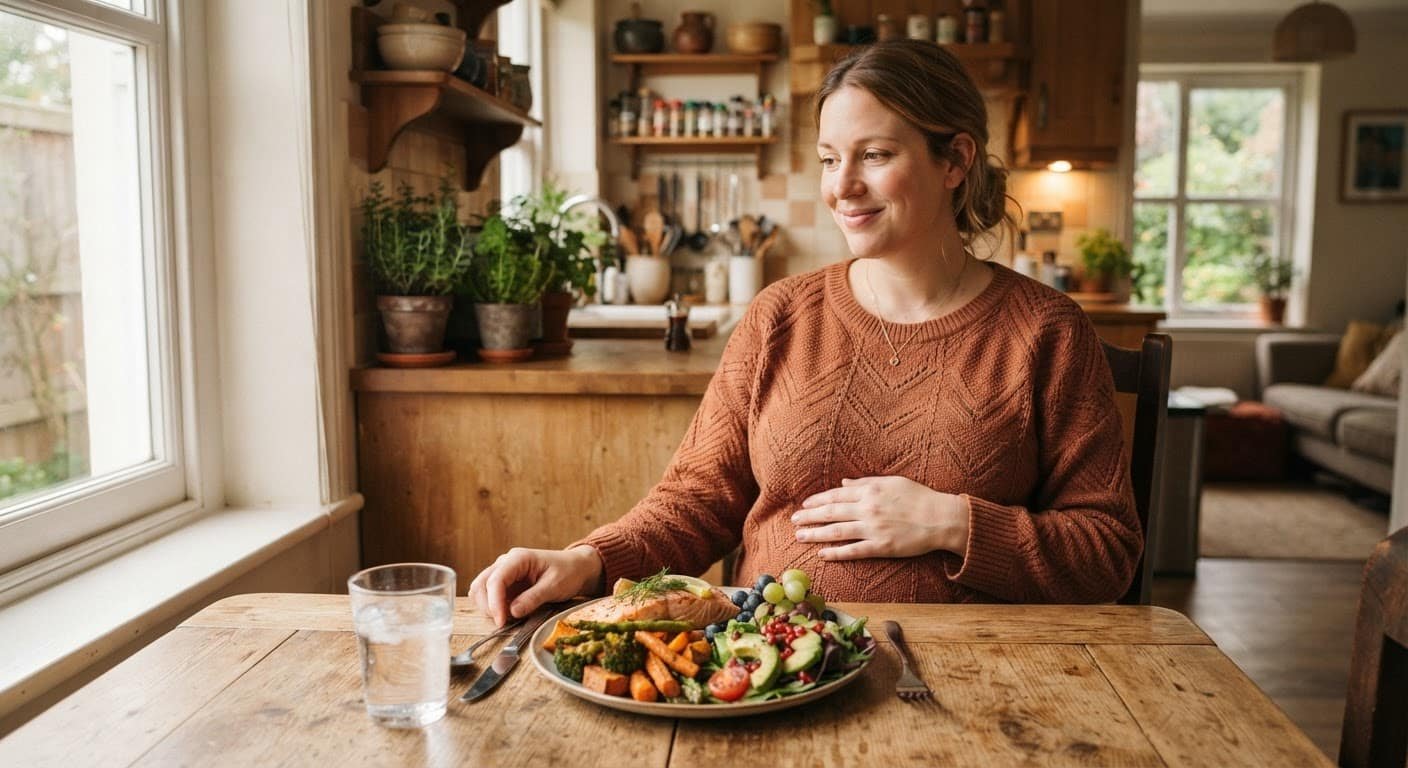
First Trimester Survival Guide Diet Plan
Why Nutrition Matters During the First Trimester
The first trimester is when your baby’s:
- Brain and spinal cord begin forming
- Heart starts beating
- Major organs develop
- Placenta begins functioning
- Bones and muscles start developing
Since these milestones occur so early, the food you eat provides the essential building blocks for healthy fetal development.
A balanced pregnancy diet for the first trimester also helps:
- Reduce the risk of neural tube defects
- Support healthy blood production
- Maintain your energy levels
- Reduce constipation
- Support your immune system
- Promote healthy pregnancy weight gain
- Lower the risk of certain pregnancy complications
Remember, pregnancy is not about “eating for two.” Instead, focus on eating twice as healthy by choosing nutrient-rich foods over empty calories.
Essential Nutrients During the First Trimester
Each nutrient plays a unique role in your baby’s development and your overall well-being.
| Nutrient | Why It’s Important | Healthy Food Sources |
|---|---|---|
| Folic Acid (Vitamin B9) | Helps prevent neural tube defects and supports brain and spinal cord development | Spinach, broccoli, lentils, chickpeas, oranges, fortified cereals, prenatal supplements |
| Iron | Supports increased blood volume and helps prevent anemia | Lean meat, chicken, fish (low-mercury), spinach, beans, jaggery (in moderation), pumpkin seeds |
| Calcium | Builds baby’s bones and teeth while protecting your own bone health | Milk, yogurt, paneer, cheese, ragi, sesame seeds |
| Vitamin D | Helps absorb calcium and supports immune function | Fortified dairy, eggs, sunlight exposure, supplements if prescribed |
| Protein | Supports growth of baby’s tissues, organs, and placenta | Eggs, chicken, fish, tofu, paneer, dal, lentils, soybeans |
| DHA (Omega-3) | Supports brain and eye development | Low-mercury fatty fish, walnuts, chia seeds, flaxseeds, DHA supplements if advised |
| Fiber | Helps prevent constipation and supports digestion | Oats, fruits, vegetables, whole grains, legumes |
| Vitamin C | Boosts immunity and improves iron absorption | Oranges, guava, kiwi, strawberries, amla, bell peppers |
| Iodine | Supports healthy thyroid function and baby’s brain development | Iodized salt, dairy products, eggs, seafood (low-mercury) |
| Choline | Supports brain and nervous system development | Eggs, soybeans, chicken, milk, peanuts |
Expert Tip: Rather than relying on a single “superfood,” aim for a colorful and varied diet. Diversity in your meals helps ensure you’re getting a wide range of nutrients.
What to Eat During the First Trimester
If you’re wondering what to eat during the first trimester, focus on fresh, minimally processed foods from all major food groups. A balanced plate should include whole grains, lean protein, healthy fats, fruits, vegetables, and dairy or calcium-rich alternatives.
Fruits
Fruits provide vitamins, antioxidants, hydration, and fiber.
Best fruits during the first trimester include:
- Apples
- Bananas
- Oranges
- Sweet lime (mosambi)
- Guava
- Kiwi
- Mango (in moderation during the season)
- Pomegranate
- Papaya (only fully ripe; avoid unripe or semi-ripe papaya)
- Pears
- Watermelon
- Berries
Vegetables
Vegetables are packed with folate, iron, calcium, and fiber.
Choose a variety of:
- Spinach
- Fenugreek leaves (methi)
- Broccoli
- Carrots
- Beetroot
- Pumpkin
- Sweet potatoes
- Green peas
- Bottle gourd (lauki)
- Ridge gourd (turai)
- Okra (bhindi)
- Bell peppers
- Cucumber
Wash all vegetables thoroughly before eating.
Whole Grains
Whole grains provide slow-releasing energy and fiber.
Healthy options include:
- Oats
- Brown rice
- Whole wheat roti
- Millet (bajra)
- Jowar
- Ragi
- Quinoa
- Barley
Protein-Rich Foods
Protein is essential for your baby’s growing tissues and placenta.
Include:
- Eggs (fully cooked)
- Dal
- Rajma
- Chole
- Sprouts (well-cooked)
- Paneer
- Tofu
- Lean chicken
- Low-mercury fish
- Greek yogurt
- Milk
- Soy products
Aim to include a source of protein with every meal and snack.
Healthy Fats
Healthy fats support your baby’s brain development.
Choose:
- Walnuts
- Almonds
- Pistachios
- Cashews (in moderation)
- Chia seeds
- Flaxseeds
- Pumpkin seeds
- Sesame seeds
- Avocado
- Olive oil
Dairy Products
Dairy provides calcium, protein, and probiotics.
Healthy choices include:
- Milk
- Yogurt (curd)
- Paneer
- Cheese (made from pasteurized milk)
- Buttermilk
If you’re lactose intolerant, speak with your healthcare provider about suitable alternatives.
Superfoods for the First Trimester
While no single food can guarantee a healthy pregnancy, these nutrient-rich options are excellent additions to a balanced diet.
| Superfood | Benefits |
|---|---|
| Spinach | Rich in folate and iron |
| Eggs | High-quality protein and choline |
| Greek yogurt | Protein, calcium, and probiotics |
| Salmon (low-mercury) | DHA and protein |
| Lentils | Protein, fiber, and folate |
| Sweet potatoes | Vitamin A (as beta-carotene) and fiber |
| Oats | Energy and digestive health |
| Walnuts | Omega-3 fatty acids |
| Avocados | Healthy fats and potassium |
| Berries | Antioxidants and vitamin C |
Indian First Trimester Diet Plan

Here’s an example of a balanced Indian first trimester meal plan. Adjust portion sizes based on your appetite and your healthcare provider’s advice.
| Time | Meal |
|---|---|
| Early Morning | Warm water or lemon water (if tolerated), followed by a handful of soaked almonds and walnuts |
| Breakfast | Vegetable poha, vegetable upma, oats porridge, or stuffed vegetable paratha with curd |
| Mid-Morning Snack | Apple, banana, guava, or seasonal fruit with coconut water or buttermilk |
| Lunch | Whole wheat roti, dal, seasonal vegetable, brown rice, curd, and salad |
| Evening Snack | Roasted makhana, sprouts chaat (well-cooked sprouts), fruit smoothie, or yogurt |
| Dinner | Khichdi with vegetables, chapati with paneer or chicken curry, or vegetable pulao with raita |
| Bedtime Snack | Warm milk or a small bowl of yogurt with a few nuts |
Pro Tip: If nausea is severe, don’t force yourself to eat large meals. Small, nutritious meals every 2–3 hours are often easier to tolerate.
Hydration During Pregnancy
Proper hydration is just as important as nutrition. Drinking enough fluids helps maintain amniotic fluid levels, supports increased blood volume, prevents constipation, and reduces the risk of dehydration.
Aim for around 2–3 liters of fluids daily, unless your healthcare provider recommends otherwise.
Good hydration choices include:
- Water
- Coconut water
- Buttermilk
- Lemon water
- Homemade soups
- Fresh fruit-infused water
- Milk
Try to limit sugary soft drinks and energy drinks.
Foods to Avoid During the First Trimester
Knowing first trimester foods to avoid is just as important as knowing what to eat. Certain foods increase the risk of foodborne illness, exposure to harmful bacteria, or excessive mercury, all of which can affect pregnancy.
Safe Foods vs. Foods to Avoid
| Safe Choices | Foods to Avoid | Why? |
|---|---|---|
| Fresh fruits | Unwashed fruits and vegetables | Risk of harmful bacteria and parasites |
| Cooked vegetables | Raw sprouts | May contain bacteria like Salmonella or E. coli |
| Pasteurized milk | Unpasteurized milk | Risk of Listeria infection |
| Pasteurized cheese | Soft cheeses made from unpasteurized milk | Increased risk of bacterial contamination |
| Fully cooked eggs | Raw or undercooked eggs | Salmonella risk |
| Well-cooked chicken | Raw or undercooked meat | Food poisoning risk |
| Low-mercury fish | High-mercury fish (such as shark, swordfish, king mackerel) | Mercury may affect baby’s developing nervous system |
| Homemade fresh food | Processed meats unless thoroughly heated | Risk of Listeria contamination |
| Herbal teas approved by your doctor | Certain herbal supplements and teas | Safety may not be established during pregnancy |
Limit Caffeine
Most healthcare organizations recommend limiting caffeine intake during pregnancy.
This includes:
- Coffee
- Strong tea
- Energy drinks
- Cola
- Chocolate (in moderation)
If you’re unsure how much caffeine you’re consuming, discuss it with your healthcare provider.
Avoid Alcohol and Smoking
There is no known safe amount of alcohol during pregnancy.
Avoid:
- Alcoholic beverages
- Smoking
- Secondhand smoke
- Recreational drugs
These substances significantly increase the risk of pregnancy complications and can affect fetal growth and development.
Essential Pregnancy Supplements
Even with a healthy first trimester diet, supplements are often necessary because some nutrients are difficult to obtain in adequate amounts through food alone. Your healthcare provider will recommend supplements based on your individual needs.
Folic Acid
Usually recommended before conception and throughout early pregnancy.
Benefits:
- Supports brain development
- Helps prevent neural tube defects
- Essential during the earliest weeks of pregnancy
Iron
Iron supports:
- Healthy red blood cell production
- Oxygen transport
- Prevention of iron-deficiency anemia
Take iron supplements only as prescribed, as excessive intake may cause side effects.
Calcium
Calcium supports:
- Baby’s bones
- Teeth
- Muscles
- Heart function
If your dietary intake is low, supplementation may be recommended.
Vitamin D
Vitamin D works together with calcium to support:
- Bone health
- Immune function
- Healthy fetal development
DHA (Omega-3)
DHA contributes to:
- Brain development
- Eye development
- Nervous system growth
Some prenatal vitamins include DHA, while others may require a separate supplement if advised.
Prenatal Multivitamins
Prenatal vitamins often combine several essential nutrients, including:
- Folic acid
- Iron
- Iodine
- Vitamin D
- Vitamin B12
- Zinc
Important: Never start, stop, or change supplements without consulting your obstetrician or healthcare provider. More isn’t always better, and excessive intake of certain vitamins or minerals can be harmful.
Common Diet Mistakes to Avoid During the First Trimester

Even with the best intentions, many expecting mothers make a few common nutrition mistakes.
Try to avoid:
- Skipping meals due to nausea
- Eating only carbohydrate-rich foods without enough protein
- Relying heavily on processed snacks
- Drinking too little water
- Consuming excessive caffeine
- Following restrictive diets without medical guidance
- Taking herbal supplements without professional advice
- Assuming all “natural” products are safe during pregnancy
Small, consistent improvements in your eating habits can make a big difference for both you and your growing baby.
First Trimester Do’s
1. Take Prenatal Vitamins Daily
One of the most important things you can do is take your prenatal vitamins exactly as prescribed.
These supplements help provide essential nutrients such as:
- Folic acid
- Iron
- Vitamin D
- Calcium
- Iodine
- Vitamin B12
- DHA (if recommended)
Set a daily reminder on your phone so you don’t forget.
2. Stay Hydrated
Pregnancy increases your body’s need for fluids.
Aim to drink approximately 2–3 liters of water daily, unless your healthcare provider advises otherwise.
Hydration helps:
- Prevent constipation
- Reduce headaches
- Maintain amniotic fluid
- Support increased blood circulation
- Reduce dizziness
- Improve digestion
If plain water is difficult to tolerate because of nausea, try:
- Coconut water
- Lemon water
- Fruit-infused water
- Homemade soups
- Buttermilk
3. Eat Small, Frequent Meals
Large meals may worsen nausea and indigestion.
Instead:
- Eat every 2–3 hours.
- Include protein in each meal.
- Carry healthy snacks while traveling.
- Don’t skip breakfast.
Healthy snack ideas:
- Roasted makhana
- Fruits
- Yogurt
- Nuts
- Whole-grain crackers
- Peanut butter toast
- Boiled eggs
- Homemade trail mix
4. Get Plenty of Rest
Growing a baby requires enormous energy.
Listen to your body.
Try to:
- Sleep 7–9 hours every night.
- Take short naps if needed.
- Avoid overworking yourself.
- Create a relaxing bedtime routine.
Fatigue usually improves during the second trimester.
5. Stay Physically Active
Unless advised otherwise by your healthcare provider, regular physical activity is beneficial.
Benefits include:
- Better blood circulation
- Improved sleep
- Reduced constipation
- Lower stress levels
- Better mood
- Easier labor preparation
Even a 20–30 minute walk most days of the week can make a noticeable difference.
6. Attend Every Prenatal Appointment
Early prenatal care helps monitor both maternal and fetal health.
Your healthcare provider may recommend:
- Blood tests
- Urine tests
- Dating ultrasound
- Blood pressure monitoring
- Weight tracking
- Nutritional counseling
Never skip appointments, even if you feel well.
7. Prioritize Mental Health
Pregnancy isn’t only a physical journey.
Take time to:
- Relax
- Read
- Practice meditation
- Talk to your partner
- Spend time outdoors
- Connect with supportive friends and family
Reducing stress can positively influence your overall pregnancy experience.
8. Maintain Good Hygiene
Your immune system changes during pregnancy, making infection prevention especially important.
Remember to:
- Wash fruits and vegetables thoroughly.
- Wash your hands frequently.
- Practice good oral hygiene.
- Cook meat and eggs completely.
- Avoid sharing utensils with someone who is ill.
9. Wear Comfortable Clothing
As your body changes, comfort becomes increasingly important.
Choose:
- Breathable cotton fabrics
- Comfortable bras
- Flat supportive footwear
- Loose-fitting clothing
Avoid very tight clothing that restricts movement or circulation.
10. Educate Yourself
Reliable information helps reduce unnecessary anxiety.
Learn about:
- Baby development
- Nutrition
- Childbirth
- Breastfeeding
- Newborn care
However, avoid information overload by sticking to trusted medical sources and discussing concerns with your healthcare provider.
First Trimester Don’ts
Knowing what not to do during the first trimester is equally important. Avoid alcohol, smoking, recreational drugs, self-medication, excessive caffeine, raw or undercooked foods, and activities with a high risk of falls or injury.
1. Don’t Smoke
Smoking reduces oxygen supply to your baby and increases the risk of:
- Miscarriage
- Premature birth
- Low birth weight
- Placental problems
- Sudden Infant Death Syndrome (SIDS)
Avoid secondhand smoke whenever possible.
2. Don’t Drink Alcohol
There is no established safe amount of alcohol during pregnancy.
Alcohol can interfere with fetal development and increase the risk of fetal alcohol spectrum disorders.
3. Don’t Take Medicines Without Medical Advice
Many over-the-counter medicines, herbal products, and supplements are not recommended during pregnancy.
Always ask your healthcare provider before taking:
- Painkillers
- Antibiotics
- Herbal remedies
- Ayurvedic supplements
- Homeopathic medicines
- Weight-loss products
4. Don’t Skip Meals
Morning sickness may reduce your appetite, but skipping meals can worsen nausea and fatigue.
Instead:
- Eat smaller portions.
- Snack frequently.
- Keep nutritious foods readily available.
5. Don’t Lift Heavy Objects
Heavy lifting may strain your muscles and increase discomfort.
If you must lift something:
- Bend your knees.
- Keep your back straight.
- Lift slowly.
Ask for help whenever possible.
6. Avoid Hot Tubs, Saunas, and Steam Rooms
A significant rise in body temperature during early pregnancy may not be advisable.
Instead:
- Take warm (not very hot) showers.
- Stay cool during hot weather.
- Drink plenty of fluids.
7. Limit Caffeine
Excessive caffeine intake should be avoided.
Remember that caffeine is found in:
- Coffee
- Tea
- Soft drinks
- Energy drinks
- Chocolate
Moderation is key.
8. Don’t Follow Crash Diets
Pregnancy is not the time for rapid weight-loss diets.
Your body needs adequate nutrients to support:
- Placenta formation
- Baby’s growth
- Increased blood volume
- Hormone production
Focus on balanced nutrition rather than calorie restriction.
9. Avoid High-Risk Activities
Activities with a higher chance of injury should generally be avoided.
Examples include:
- Horse riding
- Contact sports
- Scuba diving
- Skiing
- High-impact adventure sports
Your healthcare provider can advise you on activities appropriate for your pregnancy.
10. Don’t Ignore Unusual Symptoms
Contact your healthcare provider if something doesn’t feel right.
Early evaluation can provide reassurance or identify problems before they become serious.
First Trimester Do’s and Don’ts Checklist
| ✅ Do’s | ❌ Don’ts |
|---|---|
| Take prenatal vitamins | Smoke or vape |
| Eat a balanced diet | Drink alcohol |
| Stay hydrated | Skip meals |
| Get enough sleep | Self-medicate |
| Exercise safely | Lift heavy objects |
| Attend prenatal visits | Consume raw meat or eggs |
| Wash fruits and vegetables | Use unapproved herbal supplements |
| Manage stress | Sit for very long periods without movement |
| Practice good hygiene | Ignore warning signs |
| Listen to your body | Compare your pregnancy with others |
Safe Exercises During the First Trimester

For most healthy pregnancies, gentle exercise is safe and beneficial during the first trimester. Walking, prenatal yoga, stretching, swimming, and pelvic floor exercises can help improve energy, reduce stress, and prepare your body for pregnancy and childbirth.
Always consult your healthcare provider before starting or continuing an exercise routine.
Benefits of Exercise During Pregnancy
Regular physical activity may help:
- Reduce fatigue
- Improve sleep quality
- Ease constipation
- Reduce back pain
- Improve circulation
- Lower stress and anxiety
- Maintain healthy weight gain
- Strengthen muscles for labor
Best Exercises During the First Trimester
Walking
Walking is one of the safest forms of exercise.
Aim for:
- 20–30 minutes
- Comfortable pace
- Supportive shoes
Prenatal Yoga
Prenatal yoga focuses on:
- Flexibility
- Breathing
- Relaxation
- Balance
- Pelvic strength
Choose classes specifically designed for pregnant women.
Stretching
Gentle stretching helps reduce:
- Muscle stiffness
- Back discomfort
- Neck tension
Avoid overstretching because pregnancy hormones naturally loosen your ligaments.
Swimming
Swimming provides a full-body workout while placing minimal stress on your joints.
Benefits include:
- Reduced swelling
- Improved circulation
- Better endurance
- Relief from body aches
Pelvic Floor Exercises (Kegels)
Strengthening the pelvic floor muscles may help:
- Improve bladder control
- Support the uterus
- Aid postpartum recovery
Exercises to Avoid
Avoid activities with a high risk of injury or falls.
These generally include:
- Contact sports
- Horse riding
- Skiing
- Scuba diving
- High-impact jumping exercises
- Heavy weightlifting without medical guidance
- Exercises that cause pain, dizziness, or shortness of breath
Stop exercising immediately and contact your healthcare provider if you experience:
- Vaginal bleeding
- Severe abdominal pain
- Chest pain
- Fluid leakage
- Persistent dizziness
- Regular contractions
Morning Sickness Survival Tips

Morning sickness is often the most challenging part of early pregnancy, but a few practical strategies can make it easier to manage.
Eat Before Getting Out of Bed
Keep plain crackers or dry biscuits beside your bed.
Eating a small snack before standing up may reduce nausea.
Eat Smaller Meals
Large meals can worsen nausea.
Try eating every 2–3 hours instead.
Stay Hydrated
Take small sips of water throughout the day rather than drinking large amounts at once.
Ice chips, coconut water, and homemade lemonade may also help.
Identify Trigger Foods
Pay attention to foods or smells that worsen your nausea.
Common triggers include:
- Fried foods
- Strong spices
- Coffee
- Garlic
- Onion
- Perfumes
Try Ginger
Many women find relief with:
- Ginger tea
- Fresh ginger
- Ginger candies
- Ginger biscuits
Discuss herbal remedies with your healthcare provider before using them regularly.
Include Protein
Protein-rich snacks may help stabilize blood sugar and reduce nausea.
Examples:
- Greek yogurt
- Cheese
- Nuts
- Boiled eggs
- Roasted chickpeas
Get Enough Rest
Fatigue often makes nausea worse.
Prioritize sleep and avoid overexertion whenever possible.
Sleep Tips During the First Trimester
Many women feel exhausted but still struggle with interrupted sleep.
Improve sleep by:
- Going to bed at the same time each night
- Limiting screen time before bed
- Sleeping in a cool, dark room
- Using pillows for support
- Avoiding heavy meals immediately before bedtime
- Practicing relaxation exercises
Don’t worry too much about sleep position during the first trimester. As your pregnancy progresses, your healthcare provider may recommend sleeping on your side, particularly the left side, for improved blood flow.
Can You Travel During the First Trimester?
For most uncomplicated pregnancies, first trimester travel is generally safe. However, every pregnancy is different, so it’s important to check with your healthcare provider before making travel plans.
Tips for Safe Travel
- Carry your medical records.
- Stay hydrated.
- Wear comfortable clothing.
- Take breaks to stretch your legs during long journeys.
- Wear your seat belt correctly (below your belly and across your hips).
- Pack healthy snacks.
- Know the location of nearby healthcare facilities if traveling far from home.
Avoid unnecessary travel if your healthcare provider has advised against it due to pregnancy-related complications.
Emotional Changes During the First Trimester
Hormonal changes, physical discomfort, and the life-changing nature of pregnancy can lead to a wide range of emotions during the first trimester. Feeling excited, anxious, emotional, or overwhelmed at different times is completely normal.
Why Emotions Change
Pregnancy hormones affect brain chemistry, while physical symptoms like fatigue and nausea can also influence your mood.
You may experience:
- Happiness
- Nervousness
- Mood swings
- Tearfulness
- Irritability
- Anxiety about the baby’s health
- Concerns about parenting
How to Take Care of Your Emotional Well-Being
Talk About Your Feelings
Share your thoughts with:
- Your partner
- Family members
- Close friends
- Your healthcare provider
Practice Stress Management
Helpful techniques include:
- Deep breathing
- Meditation
- Gentle yoga
- Reading
- Listening to calming music
- Journaling
Build a Support System
Surround yourself with positive, supportive people who can encourage and assist you throughout your pregnancy.
Know When to Seek Help
If sadness, anxiety, hopelessness, or excessive worry lasts for more than two weeks or interferes with your daily life, speak with your healthcare provider. Mental health is an essential part of prenatal care, and support is available.
Warning Signs During the First Trimester: When to Call Your Doctor Immediately
Heavy Vaginal Bleeding
Light spotting can be normal during early pregnancy, especially around implantation. However, heavy bleeding similar to or heavier than a menstrual period should never be ignored.
Seek medical attention immediately if bleeding is accompanied by:
- Severe cramping
- Passing large blood clots
- Dizziness
- Shoulder pain
- Fainting
Severe or Persistent Abdominal Pain
Mild cramping can occur as your uterus grows, but severe abdominal pain, especially if it’s one-sided or persistent, requires immediate evaluation.
Persistent Vomiting
Morning sickness is common, but repeated vomiting that prevents you from keeping down food or fluids may lead to dehydration.
Warning signs include:
- Very dark urine
- Dry mouth
- Rapid heartbeat
- Weight loss
- Feeling faint
High Fever
A temperature above 38°C (100.4°F) should be assessed by your healthcare provider, especially if accompanied by chills or signs of infection.
Leaking Fluid
Fluid leaking from the vagina during early pregnancy is uncommon and should always be evaluated.
Painful Urination
Burning while urinating, fever, or lower back pain may indicate a urinary tract infection, which should be treated promptly during pregnancy.
Severe Headache or Vision Changes
Seek immediate medical advice if you experience:
- Blurred vision
- Double vision
- Persistent severe headache
- Sudden swelling of the face or hands
- Confusion
Fainting or Loss of Consciousness
Occasional lightheadedness may occur, but fainting should always be reported to your healthcare provider.
Decreased Pregnancy Symptoms
Some women notice that nausea or breast tenderness suddenly disappear. While symptoms naturally vary from person to person, any sudden change combined with bleeding or pain should be discussed with your healthcare provider.
Warning Signs at a Glance
| Seek Medical Care Immediately If You Experience: |
|---|
| Heavy vaginal bleeding |
| Severe abdominal or pelvic pain |
| Persistent vomiting with dehydration |
| High fever |
| Leaking fluid |
| Burning while urinating with fever |
| Severe headache with blurred vision |
| Chest pain or difficulty breathing |
| Fainting |
| One-sided abdominal pain |
Important: This guide is educational and cannot replace professional medical care. If you’re ever unsure, contact your obstetrician or visit the nearest emergency department.
First Trimester Checklist
A first trimester checklist helps you stay organized during the exciting but sometimes overwhelming early weeks of pregnancy. Completing these important tasks can support a healthy pregnancy and help you prepare for the months ahead.
Medical Checklist
☐ Confirm your pregnancy with a healthcare provider.
☐ Schedule your first prenatal appointment.
☐ Complete recommended blood and urine tests.
☐ Get your first ultrasound if advised.
☐ Review your medical history with your doctor.
☐ Discuss any medications or supplements you’re currently taking.
☐ Start or continue prenatal vitamins.
Nutrition Checklist
☐ Eat a balanced first trimester diet.
☐ Include protein with every meal.
☐ Eat plenty of fruits and vegetables.
☐ Stay hydrated.
☐ Limit caffeine.
☐ Avoid alcohol and smoking.
☐ Avoid foods to avoid during pregnancy.
Lifestyle Checklist
☐ Get 7–9 hours of sleep each night.
☐ Stay physically active with doctor-approved exercise.
☐ Practice stress management.
☐ Wear comfortable clothing.
☐ Maintain good oral hygiene.
☐ Wash fruits and vegetables thoroughly.
Planning Checklist
☐ Start reading about pregnancy and childbirth.
☐ Discuss maternity leave with your employer if appropriate.
☐ Create a list of questions for future prenatal visits.
☐ Build a support system of family and friends.
☐ Begin planning for your second trimester.
Frequently Asked Questions
1. What should I avoid during the first trimester?
Avoid alcohol, smoking, recreational drugs, self-medication, raw or undercooked meat and eggs, unpasteurized dairy products, high-mercury fish, and excessive caffeine. Also avoid activities with a high risk of falls or injury.
2. What should I eat during the first trimester?
A healthy pregnancy diet for the first trimester should include fruits, vegetables, whole grains, lean proteins, dairy, legumes, nuts, seeds, and healthy fats. Focus on foods rich in folic acid, iron, calcium, vitamin D, protein, iodine, and fiber.
3. Which fruits are best during the first trimester?
Some excellent choices include:
- Apples
- Bananas
- Oranges
- Guava
- Kiwi
- Pomegranate
- Pears
- Berries
- Sweet lime (mosambi)
- Watermelon
Always wash fruits thoroughly before eating.
4. Which foods should I avoid during pregnancy?
Avoid:
- Raw meat
- Raw eggs
- Unpasteurized dairy products
- Raw sprouts
- High-mercury fish
- Alcohol
- Excess caffeine
- Processed meats unless thoroughly heated
5. Can I exercise during the first trimester?
Yes. For most healthy pregnancies, walking, prenatal yoga, stretching, swimming, and pelvic floor exercises are safe after approval from your healthcare provider.
6. Can I travel during the first trimester?
For many women with uncomplicated pregnancies, travel is generally safe. Stay hydrated, take regular breaks during long journeys, wear your seat belt correctly, and consult your healthcare provider before traveling.
7. Is spotting normal in early pregnancy?
Light spotting can occur, especially around implantation. However, heavy bleeding, severe pain, or dizziness requires immediate medical evaluation.
8. How much water should I drink?
Most pregnant women should aim for approximately 2–3 liters of fluids daily, unless advised differently by their healthcare provider.
9. When does morning sickness usually end?
Morning sickness commonly improves between weeks 12 and 16, although every pregnancy is different. Some women experience nausea for a longer period.
10. How much weight should I gain during the first trimester?
Weight gain varies based on your pre-pregnancy Body Mass Index (BMI). Many women gain only a small amount during the first trimester, while some may lose weight temporarily because of morning sickness. Your healthcare provider can advise you on healthy weight gain based on your individual circumstances.
11. Which pregnancy supplements are most important?
Most healthcare providers recommend prenatal vitamins containing folic acid, iron, iodine, and vitamin D. Depending on your nutritional needs, calcium, DHA, or other supplements may also be recommended.
12. When should I schedule my first prenatal visit?
Most women have their first prenatal appointment between 6 and 10 weeks of pregnancy, although timing may vary depending on individual circumstances and healthcare provider recommendations.
Final Thoughts
The first trimester is often filled with excitement, uncertainty, and countless new experiences. While symptoms like morning sickness, fatigue, and emotional changes can be challenging, they’re also signs that your body is working hard to nurture new life.
By following a nutritious pregnancy diet during the first trimester, staying hydrated, taking your prenatal vitamins, and keeping up with regular prenatal care, you’re giving your baby the strongest possible start.
Remember that no pregnancy is perfect, and it’s okay if every day doesn’t go according to plan. Be kind to yourself, celebrate each milestone, and don’t hesitate to ask for help from your loved ones or healthcare team.
As you move into the second trimester, many women notice increased energy and fewer symptoms. Until then, focus on rest, nourishment, and self-care—and take comfort in knowing that every healthy choice you make today contributes to your baby’s future.