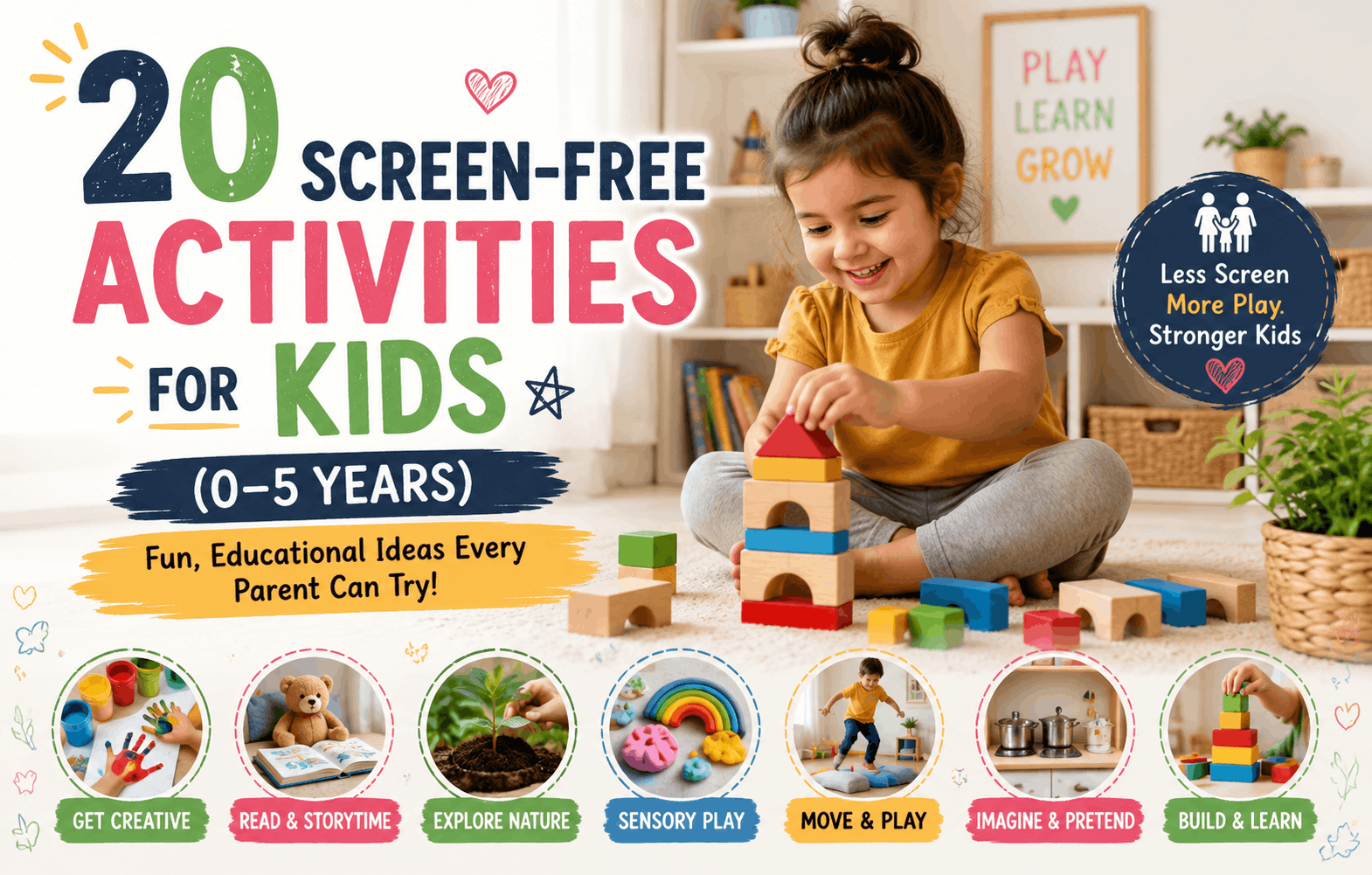

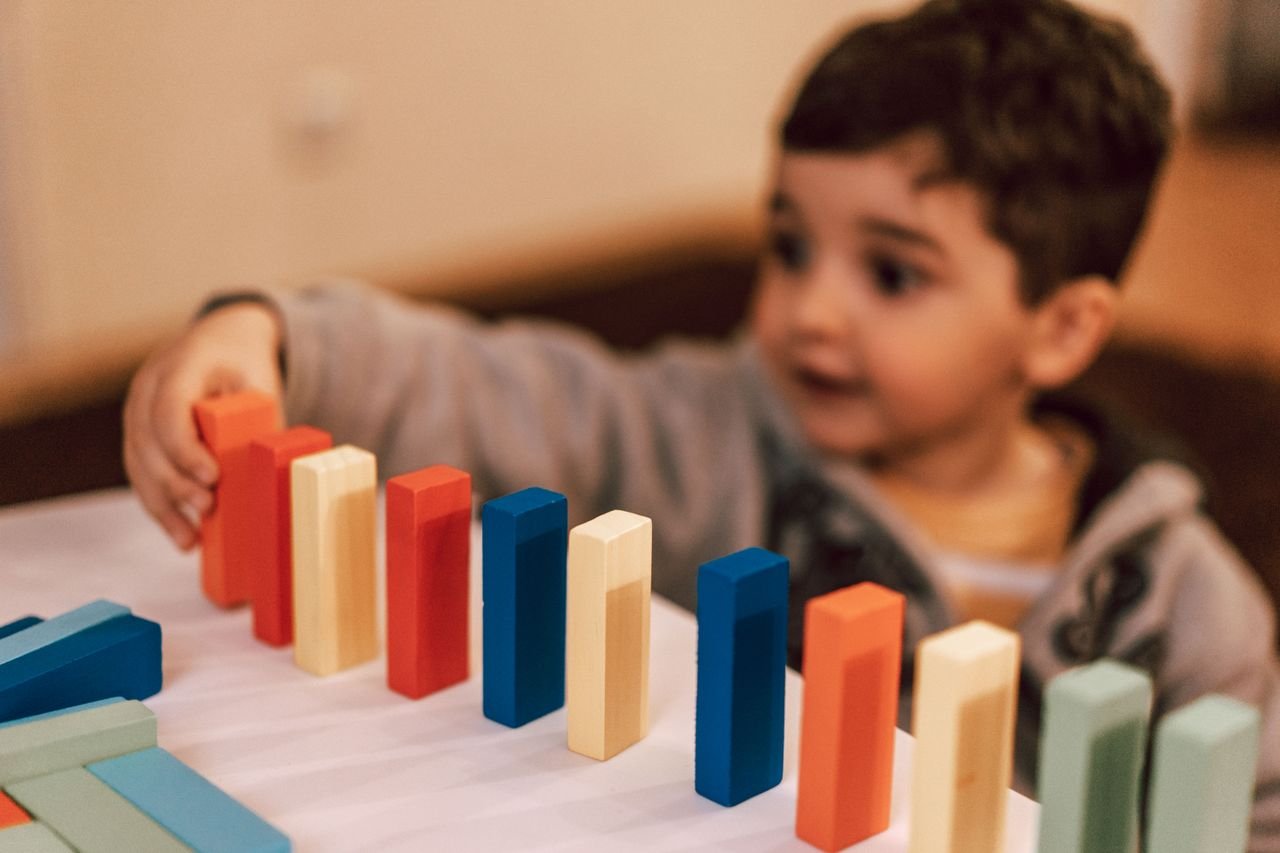
When kids are stuck at home because of rain, extreme weather, school holidays, weekends, or simply because outdoor plans have been cancelled, boredom can arrive quickly. The good news? You don’t need expensive toys, elaborate setups, or a packed schedule to keep children engaged.
These 75 indoor activities for kids include creative projects, indoor games, learning activities, movement games, sensory play, pretend play, quiet-time ideas, and family activities. Many use things you probably already have at home, making them useful when you need easy indoor activities for kids at home without much preparation.
Play is more than a way to pass time. The American Academy of Pediatrics notes that play can support children’s problem-solving, language, early math, social, movement, and confidence-building skills. Screen-free, child-led play also gives children opportunities to use creativity and imagination.
Whether you’re looking for rainy day activities for kids, screen-free activities for kids, or simple boredom busters for kids, you’ll find plenty of ideas below.
How to Choose the Right Indoor Activity for Your Child
Not every activity will work for every child, and that’s perfectly normal. The best indoor activities for kids are the ones that match their age, interests, energy level, and ability.
Consider Your Child’s Age
Toddlers may enjoy simple sensory play, sorting, music, books, and movement games. Preschoolers often enjoy pretend play, crafts, puzzles, and simple experiments. Older children may prefer challenges, building projects, cooking, strategy games, and creative activities.
Age ranges should be treated as general guidance rather than strict rules because children’s interests and abilities develop at different rates.
Consider Their Energy Level
If your child has lots of energy, choose an indoor obstacle course, balloon volleyball, animal walks, dancing, or another physical activity.
If your child needs a calmer activity, try reading, drawing, puzzles, storytelling, coloring, or a sensory activity.
Consider How Much Time You Have
You don’t always need an activity that takes an hour.
For a quick five-minute activity, try Simon Says, a color hunt, or a movement challenge.
For 15–30 minutes, try a treasure hunt, craft project, puzzle, or pretend-play game.
For a longer activity, consider baking, building a fort, creating a puppet show, or setting up a family challenge.
Consider What You Already Have at Home
Many indoor activities with household items can be created using paper, cardboard boxes, plastic cups, blankets, pillows, crayons, books, tape, socks, and safe kitchen items.
Simple materials can be enough to inspire hours of imaginative play. The AAP also highlights simple household objects such as cups, containers, pots, pans, books, blocks, and crayons as useful materials for age-appropriate play.
75 Indoor Activities for Kids
Creative and Art Activities for Kids
1. Draw a Family Portrait
Give your child paper and crayons and ask them to draw everyone in the family. Don’t worry about making it look realistic. Let your child decide what everyone should look like.
Ask questions such as, “What is everyone doing?” or “Where is our family going?”
This is one of the easiest creative activities for kids because it requires almost no preparation.
2. Create a Paper Collage
Collect old magazines, colored paper, newspaper pieces, or packaging and let your child create a collage.
They can make an animal, house, garden, rainbow, or completely imaginary picture.
3. Make Homemade Greeting Cards
Give your child paper, crayons, stickers, and safe craft materials and encourage them to make cards for grandparents, friends, teachers, or family members.
It is a simple DIY activity that also encourages thoughtfulness.
4. Design Your Own Coloring Pages
Ask your child to draw simple outlines of animals, vehicles, flowers, or characters and then color them.
Older children can create coloring pages for younger siblings.
5. Make a Paper Crown
Fold or cut paper into a crown and decorate it with drawings, stickers, or safe craft materials.
Then turn it into pretend play by letting your child become a king, queen, prince, princess, or superhero.
6. Build a Cardboard Robot
Instead of throwing away a large cardboard box, turn it into a robot.
Add paper buttons, eyes, ears, arms, and other decorations. Let your child decide what the robot can do.
7. Create a Paper Plate Animal
Use a paper plate to create a lion, fish, butterfly, rabbit, or another favorite animal.
Ask your child to choose the animal and decide which colors and features it should have.
8. Paint With Household Objects
Instead of traditional paintbrushes, try safe household objects such as cotton swabs or the edge of a clean sponge.
Let your child experiment with dots, lines, circles, and textures.
9. Create a Family Mural
Tape several sheets of paper together and create one large family drawing.
Each family member can add something to the picture.
10. Make a Paper Bag Puppet
Turn a paper bag into a puppet using paper, crayons, and other safe craft materials.
Once the puppets are finished, put on a short puppet show.
11. Design a Superhero Costume
Use old clothes, blankets, paper, and other safe materials to design a pretend superhero costume.
Let your child invent the superhero’s name and special powers.
12. Create a Sticker Story
Give your child stickers and a piece of paper. Ask them to arrange the stickers and create a story around the picture.
Older children can write the story themselves.
13. Make a Homemade Photo Frame
Use cardboard, paper, crayons, and decorations to create a simple frame for a family photograph.
This can become a keepsake project.
14. Build a Recycled-Art Masterpiece
Save clean cardboard tubes, boxes, paper scraps, and packaging and challenge your child to turn them into something new.
Ask, “Can you build something nobody has ever built before?”
15. Create Your Own Mini Art Gallery
Display your child’s drawings around a room and let them name their exhibition.
You can even make pretend tickets and invite family members to visit.
Indoor Games and Boredom Busters for Kids
16. Indoor Treasure Hunt
Hide a few safe objects around the house and create simple clues.
For younger children, use pictures instead of written clues. Older children can solve riddles to find the next location.
17. Play Hide-and-Seek
A classic game doesn’t need special equipment.
For younger children, establish safe areas where they can hide and make sure everyone understands the boundaries.
18. Play Simon Says
Say commands such as “Simon says touch your nose” or “Simon says jump.”
Children have to listen carefully and only follow instructions that begin with “Simon says.”
19. Have a Freeze Dance Party
Play music and let everyone dance.
When the music stops, everyone has to freeze. Make it fun by adding silly poses.
20. Play Hot and Cold
Hide an object somewhere safe.
Give your child clues such as “hot” when they get closer and “cold” when they move farther away.
21. Set Up Indoor Bowling
Use lightweight plastic bottles or cups as pins and a soft ball as the bowling ball.
Set the pins up in a hallway or open area where there is enough space.
22. Play Balloon Keep-Up
The goal is simple: keep a balloon from touching the floor.
Children can hit it with their hands, elbows, or another agreed-upon body part.
Avoid this activity with children who may put balloons in their mouths, as broken balloons can pose a serious choking hazard.
23. Play a Memory Game
Place several familiar objects on a tray.
Let your child look at them, cover the tray, and remove one object. Ask your child to identify what disappeared.
24. Play “What’s Missing?”
Place five to ten safe household objects on the floor.
Ask your child to close their eyes while you remove one. Then see whether they can figure out which item is missing.
25. Go on an Indoor Scavenger Hunt
Create a list of things to find:
- Something red
- Something soft
- Something round
- Something that starts with B
- Something smaller than your hand
This combines movement with observation and learning.
26. Play Charades
Act out an animal, job, action, or favorite character without speaking.
The other players have to guess what you’re pretending to be.
27. Play Animal Guessing
Think of an animal and give clues.
For example: “I have four legs. I live on a farm. I give milk.”
Younger children can use animal sounds as clues.
28. Have a Sock Matching Race
Mix clean socks into a pile and challenge children to find matching pairs.
Turn it into a timed challenge for older children.
29. Try a Cup Stacking Challenge
Give children lightweight plastic cups and see how quickly they can build and take down a tower.
For younger children, focus on building rather than speed.
30. Play Mystery Object Guessing
Place a safe object inside a bag.
Without looking, let your child feel it and guess what it is.
For younger children, use large objects without small removable pieces.
Learning Activities That Feel Like Play
Learning doesn’t always have to involve worksheets. Everyday play can provide opportunities for children to practice counting, language, observation, sorting, problem-solving, and creativity.
31. Play a DIY Counting Game
Place toys, blocks, or other safe objects in front of your child.
Ask them to count the objects and then add or remove a few.
32. Go on an Alphabet Hunt
Choose a letter and look around the house for objects beginning with that sound.
For example, “B” could become book, bottle, box, or ball.
33. Go on a Shape Hunt
Ask children to find circles, squares, rectangles, triangles, and other shapes around the house.
This turns an ordinary room into a learning activity.
34. Try Color Sorting
Collect safe objects in different colors and ask your child to sort them.
For toddlers, use large objects that are appropriate for their age and cannot be swallowed.
35. Build a Pattern With Toys
Create a simple pattern such as:
Red-blue-red-blue.
Ask your child to continue it.
Older children can create more complicated patterns.
36. Make a Homemade Puzzle
Draw a picture on paper, cut it into a few large pieces, and mix them up.
Let your child put the picture back together.
37. Create Story Sequencing Cards
Draw three or four pictures showing the beginning, middle, and end of a simple story.
Mix them up and ask your child to put them in the correct order.
38. Measure Household Objects
Give older children a ruler or measuring tape and ask them to compare the sizes of safe household objects.
Try questions such as, “Which is longer?” and “Which is shorter?”
39. Try a Simple Sink-or-Float Experiment
Fill a container with water and choose safe objects that can get wet.
Ask your child whether each object will sink or float before testing it.
Always supervise children around water.
40. Create a Mini Science Lab
Choose a few simple, age-appropriate experiments using safe household materials.
Let children predict what will happen before they try each experiment.
The goal isn’t to memorize scientific terms. Encourage them to observe, ask questions, make predictions, and explain what they see.
Indoor Physical Activities for Kids
Children need opportunities to move even when they cannot go outside. Screen-free movement games can provide a useful change of pace during a day indoors. The AAP notes that indoor recess and physical activity can support movement as well as social and problem-solving opportunities.
41. Build a Pillow Obstacle Course
Use pillows, cushions, and other safe items to create a simple course.
Children can crawl, walk around obstacles, step over cushions, and complete other age-appropriate movements.
Keep the course low to the ground and remove anything that could cause a fall.
42. Try Animal Walks
Ask children to move like different animals.
Can they walk like a bear, hop like a frog, waddle like a penguin, or crawl like a turtle?
43. Play Balloon Volleyball
Create an imaginary net using a piece of furniture or simply divide the room into two sides.
Use a balloon and try to keep it moving between the two sides.
44. Try Indoor Hopscotch
Use removable painter’s tape to create a simple hopscotch pattern on the floor.
Make sure the surface is dry and not slippery.
45. Play Follow-the-Leader
One person becomes the leader and everyone copies their movements.
Walk, march, clap, jump, stretch, or move like an animal.
46. Have a Dance Party
Choose a few favorite songs and dance together.
Let children take turns choosing the next song or inventing a dance move.
47. Try Kid-Friendly Yoga
Choose simple stretches and balance poses that are comfortable for your child’s age and abilities.
Keep it playful rather than focusing on perfect technique.
48. Make a Tape Balance Line
Place a straight line of removable painter’s tape on the floor.
Ask your child to walk along it without stepping off.
For younger children, keep the activity simple and avoid turning balance into a competition.
49. Create a Jumping Challenge
Place a line on the floor and ask children to jump forward, backward, or side to side.
Keep the movements appropriate for the child’s age and available space.
50. Make Indoor Movement Dice
Write simple movements on pieces of paper and put them into a container, or create a homemade movement cube.
Ideas include:
- Jump five times
- March for 20 seconds
- Do five star jumps
- Walk like a penguin
- Spin once
- Stretch your arms
Imaginative and Pretend-Play Activities
Pretend play allows children to create their own scenarios, characters, and stories. The AAP describes make-believe play as one way young children can practice flexible thinking, language, social skills, and emotional understanding.
51. Build a Blanket Fort
Use blankets, cushions, and sturdy furniture to create a cozy reading or pretend-play space.
Once the fort is ready, bring in books, stuffed animals, or quiet toys.
52. Play Restaurant
Turn part of the room into a pretend restaurant.
Children can create a menu, take orders, prepare pretend food, and serve family members.
53. Create a Pretend Grocery Store
Arrange safe household items on a table and give your child a reusable bag.
They can pretend to shop, count items, organize products, and play cashier.
54. Play Doctor-Patient
Use a toy medical kit or pretend objects to play doctor.
Children can take turns being the doctor and patient.
55. Create a Toy School
Let your child become the teacher.
Stuffed animals or toys can become students, and your child can teach them letters, numbers, songs, or stories.
56. Make a Puppet Theater
Use a blanket or a doorway as a pretend theater.
Children can create characters and perform a short story.
57. Pretend to Be Explorers
Turn the living room into an imaginary jungle, ocean, space station, or dinosaur world.
Give children a pretend mission to complete.
58. Make Up a Family Adventure Story
Start with one sentence:
“Once upon a time, our family found a mysterious door…”
Then take turns adding to the story.
Sensory and Hands-On Activities
Sensory activities can be engaging because children get to touch, move, sort, scoop, pour, and explore. For young children, always choose materials that are appropriate for their developmental stage and supervise closely.
59. Make a Sensory Bin
Fill a container with age-appropriate materials and add scoops, cups, or large toys.
For toddlers, avoid small loose items that could be choking hazards.
60. Try a Rice Scoop-and-Pour Activity
Older children can use cups and spoons to scoop and transfer rice between containers.
For younger children, choose a safer alternative if there is a risk of putting materials into their mouths.
61. Sort Dry Pasta
Older children can sort larger pasta shapes by size, shape, or color.
Supervise closely and avoid this activity for children who still mouth small objects.
62. Go on a Texture Hunt
Find safe objects with different textures around the house.
Ask your child to describe them as smooth, rough, soft, hard, bumpy, or fluffy.
63. Try a Water Transfer Activity
Place a small amount of water in a suitable container and let children transfer it between cups using a large spoon or safe tool.
Young children must be supervised closely around water.
64. Make Homemade Playdough
Use a child-appropriate homemade playdough recipe and let children shape balls, snakes, flowers, animals, or letters.
Make sure children understand that playdough is for playing, not eating.
65. Try Ice Exploration
Place a few ice cubes in a container and let older children observe what happens as the ice melts.
Ask questions such as, “Where did the ice go?” and “What happens if we leave it somewhere warm?”
Reading, Storytelling and Quiet-Time Activities
Not every indoor activity needs to be energetic. Quiet activities can give children a chance to slow down and reset.
66. Have a Read-Aloud Story Time
Choose a favorite book and read together.
Ask your child what they think will happen next or which character they like best.
67. Make Your Own Storybook
Fold a few sheets of paper together.
Let your child create the pictures and write or dictate the story.
68. Tell Stories With Toys
Choose a few toys and create a story involving all of them.
Ask your child to decide where the characters are going and what problem they need to solve.
69. Have a Book Character Dress-Up Session
Choose a favorite book character and create a simple costume using clothes already available at home.
Then act out a scene from the book.
70. Create a Family Story Circle
One person starts a story with one sentence.
Each family member adds another sentence until you have a complete adventure.
Family Activities Kids and Parents Can Do Together
71. Have a Family Baking Session
Choose a simple recipe and let children help with age-appropriate tasks such as mixing, measuring, decorating, or arranging ingredients.
Adults should handle hot ovens, stovetops, sharp knives, and other potentially dangerous equipment.
72. Have an Indoor Picnic
Spread a blanket on the floor, prepare simple snacks, and have a picnic indoors.
You can even pretend you’re camping or having a picnic in a park.
73. Have a Family Board Game Night
Choose a game that matches the children’s ages.
For younger children, simple matching or turn-taking games may work better than complicated strategy games.
74. Build Something Together
Use blocks, cardboard boxes, magnetic tiles, or other safe building materials.
Give the family a challenge such as, “Can we build the tallest tower?”
75. Have a Family Talent Show
Everyone gets a turn to perform something.
It could be singing, dancing, telling jokes, doing a magic trick, reading a poem, or simply showing a favorite skill.
The goal is participation—not perfection.
Best Indoor Activities for Kids by Age
The best indoor activities for toddlers, preschoolers, and school-age children will vary because children’s abilities and interests change rapidly.
| Age | Indoor Activity Ideas |
|---|---|
| 1–2 years | Sensory exploration, large-object sorting, simple books, music, movement |
| 2–3 years | Pretend play, simple crafts, matching, dancing, large-piece puzzles |
| 3–5 years | Crafts, obstacle courses, pretend play, scavenger hunts, simple experiments |
| 5–7 years | Science activities, puzzles, treasure hunts, building, crafts |
| 7–10 years | Challenges, strategy games, cooking, DIY projects, creative writing |
| 10+ years | Baking, building projects, board games, creative challenges, family activities |
For toddlers, prioritize simple, safe materials and close supervision. The AAP encourages young children to explore safe household objects, books, blocks, cups, and other simple materials through play.
Remember that these are general age suggestions. A child’s individual development, interests, and abilities matter more than a specific age label.
10 Screen-Free Indoor Activities for Kids
If you’re searching for screen-free activities for kids, start with these:
- Indoor treasure hunt
- Blanket fort
- Freeze dance
- Indoor bowling
- Puppet theater
- Scavenger hunt
- Family baking
- Board games
- Art project
- Indoor obstacle course
Screen-free play doesn’t have to mean children are constantly doing structured activities. Unstructured play gives children opportunities to use their imagination, make choices, solve problems, and create their own games.
The AAP’s more recent guidance also emphasizes making room for sleep, movement, reading, play, homework, and family time when managing digital media.
10 Indoor Activities That Require Almost No Supplies
Looking for free indoor activities for kids or no-prep activities for kids? Try:
- Simon Says
- Charades
- Freeze Dance
- Hide-and-Seek
- Animal Walks
- Storytelling
- Treasure Hunt
- Follow-the-Leader
- Indoor Scavenger Hunt
- Family Talent Show
These activities are especially useful when you’re stuck at home unexpectedly and don’t have craft supplies or new toys available.
How to Keep Kids Interested in Indoor Activities
Even the most exciting activity may eventually become boring. That’s normal. Instead of trying to entertain children continuously, create opportunities for them to make choices and take ownership of play.
Rotate Activities Instead of Offering Everything at Once
Keep some toys and materials stored away and rotate them occasionally.
An activity can feel new again when children haven’t seen it for a while.
Let Kids Choose Between Two or Three Options
Instead of saying, “What do you want to do?” give two or three choices.
For example:
“Would you like to build a fort or do a treasure hunt?”
This gives children control without making the decision overwhelming.
Keep a Boredom Box
Create a box containing paper, crayons, puzzles, activity cards, craft materials, and other safe items.
When your child says, “I’m bored,” let them choose something from the box.
Turn Chores Into Games
Matching socks, sorting laundry, organizing toys, or setting the table can become simple games.
For example, ask your child to find all the blue socks or organize toys by category.
Add a Challenge or Time Limit
Some children enjoy a challenge.
Ask:
“Can you build a tower using 10 blocks?”
“Can you find five round objects?”
“Can you make a paper animal in 10 minutes?”
Let Children Take the Lead
You don’t have to direct every minute of play.
Child-led play gives children space to decide what interests them and how they want to use materials. The AAP emphasizes the value of unstructured, child-driven play for creativity, decision-making, and confidence.
Don’t Expect Every Activity to Hold Attention for an Hour
Children’s attention varies by age, activity, mood, and individual temperament.
An activity that lasts 10 minutes can still be successful.
How to Make Indoor Play More Educational
You don’t need to turn every game into a lesson. Instead, look for the learning opportunities already present in ordinary play.
| Activity | Skills Children Can Practice |
|---|---|
| Puzzles | Problem-solving and visual reasoning |
| Sorting | Early math and classification |
| Storytelling | Language and communication |
| Building | Spatial thinking and creativity |
| Pretend play | Language, imagination, and social skills |
| Drawing | Fine-motor practice and creative expression |
| Obstacle courses | Coordination, balance, and movement |
| Cooking | Measuring, sequencing, and practical skills |
For example, while making a pretend grocery store, you can ask children to count items. During storytelling, ask what might happen next. During building, ask why they chose a particular shape.
The AAP notes that play can support language, social, early math, problem-solving, physical development, and confidence.
The key is to keep the experience playful rather than turning every activity into a formal lesson.
Indoor Activity Safety Tips for Kids
Before starting an indoor activity, quickly consider whether the materials and environment are appropriate for your child’s age and abilities.
Use Age-Appropriate Materials
A material that is safe for an older child may not be appropriate for a toddler.
Avoid giving young children small objects that could be swallowed or inhaled.
Watch for Choking Hazards
Small beads, dry beans, coins, buttons, small toy parts, uncooked pasta, and similar objects can be dangerous for young children.
When in doubt, choose larger age-appropriate materials.
Supervise When Needed
Water play, cooking, crafts involving scissors, movement games, and sensory activities may require adult supervision.
The amount of supervision should depend on the child’s age, ability, and activity.
Keep Floors Clear
Before movement games, remove sharp objects, slippery items, breakable decorations, and furniture that could cause injury.
Be Careful With Jumping and Climbing
Indoor physical activities should stay close to the ground whenever possible.
Avoid encouraging children to climb on unstable furniture.
Use Extra Care With Food Activities
Adults should handle hot ovens, stovetops, sharp knives, and other potentially dangerous kitchen equipment.
Also consider food allergies and age-appropriate foods.
Supervise Water Activities
Never leave young children unattended around water, even when using a small amount.
Adapt Activities for Your Child
Children have different physical, sensory, communication, and developmental needs.
Modify activities so your child can participate comfortably and safely.
Frequently Asked Questions About Indoor Activities for Kids
What are some fun indoor activities for kids?
Some fun indoor activities for kids include treasure hunts, blanket forts, crafts, indoor bowling, freeze dance, scavenger hunts, pretend play, puzzles, storytelling, baking, and family games. Choose activities according to your child’s age, interests, energy level, and available space.
What can kids do at home when they are bored?
Kids can draw, read, build a fort, play pretend, create a treasure hunt, make crafts, bake with an adult, play board games, build with blocks, or try an indoor movement challenge. A boredom box can also give children a collection of ready-to-use activity ideas.
What are the best screen-free activities for kids?
Some of the best screen-free activities for kids include art, reading, storytelling, building, pretend play, puzzles, scavenger hunts, indoor physical games, cooking with an adult, and family board games. Screen-free play can provide opportunities for creativity, problem-solving, language, movement, and social interaction.
What can I do with my child indoors without buying anything?
You can play Simon Says, charades, hide-and-seek, freeze dance, storytelling, scavenger hunts, pretend restaurant, indoor picnics, animal walks, or a homemade obstacle course. Many indoor activities with household items can use things you already have, such as paper, boxes, pillows, blankets, books, and cups.
What are good indoor activities for toddlers?
Good indoor activities for toddlers include reading board books, dancing, simple sorting, stacking large cups, supervised sensory exploration, pretend play, music, drawing with appropriate materials, and simple movement games. For toddlers, use age-appropriate materials and avoid small objects that could become choking hazards.
What are good indoor activities for preschoolers?
Indoor activities for preschoolers can include crafts, pretend play, simple science experiments, puzzles, treasure hunts, scavenger hunts, dance games, obstacle courses, storytelling, and sorting activities. Preschoolers generally benefit from opportunities to explore, move, create, communicate, and make choices during play.
How do you keep kids entertained on a rainy day?
Create a mix of activities rather than relying on one idea. Start with an active game, follow it with a craft or learning activity, then offer quiet reading or pretend play. Rainy day activities for kids can include indoor treasure hunts, forts, crafts, baking, board games, sensory play, and family storytelling.
What are some indoor physical activities for kids?
Indoor physical activities for kids include animal walks, dance parties, balloon volleyball, pillow obstacle courses, indoor hopscotch, follow-the-leader, jumping challenges, balance-line games, and movement dice. Always clear the activity area and adapt movement games to the child’s age and abilities.
What are some educational activities kids can do at home?
Children can practice counting, sorting, measuring, storytelling, reading, pattern recognition, observation, and problem-solving through play. Examples include color sorting, shape hunts, homemade puzzles, story sequencing, household-object measurement, and simple science experiments.
How can I reduce screen time without constant arguments?
Rather than simply removing screens, make other activities easy to access. Create screen-free periods for reading, play, movement, family time, and creative activities. Give children a choice between two or three alternatives and involve them in deciding what they want to do. The AAP recommends making room for play, movement, reading, sleep, and family time as part of a balanced approach to digital media.
Final Thoughts: Turn a Boring Day Into a Play Day
Being stuck at home doesn’t have to mean hearing “I’m bored!” every five minutes.
Children don’t need expensive toys or perfectly planned activities to have meaningful play. A cardboard box can become a spaceship. A blanket can become a fort. A few household objects can become a treasure hunt. A piece of paper can become a storybook.
The most useful indoor activities for kids at home are often the simplest ones—activities that give children room to move, imagine, create, explore, communicate, and make their own choices.
Try mixing active games with quiet activities, creative projects with learning games, and independent play with family time.
And the next time your child says, “I’m bored!”, you now have 75 ideas ready to go.
Save this list of 75 indoor activities for kids so you can come back to it on the next rainy day, school holiday, weekend, or unexpected day stuck at home.