


Becoming a mother is beautiful, but the first few weeks with a newborn can also feel overwhelming. Suddenly, your day revolves around feeding, diaper changes, naps, crying, laundry, meals, cleaning and trying to get a few minutes of sleep yourself.
If you’re a first-time mom, you may wonder, “How am I supposed to manage my baby and housework without feeling exhausted all the time?”
The answer isn’t a strict timetable. A new mom routine should make your day easier, not give you another list of things to feel guilty about.
During the newborn stage, babies often have unpredictable feeding and sleep patterns. A flexible routine that follows your baby’s cues is generally more realistic than trying to make every activity happen at exactly the same time.
Think of your routine as a sequence rather than a schedule. Your day may look something like:
Feed baby → diaper change → cuddle/interaction → baby sleeps → mom eats/rests → one essential household task → repeat
Some days you’ll manage several household chores. Other days, you may only manage to feed your baby, eat something yourself and take a shower. Both are perfectly valid.
The goal of a daily routine for a new mom isn’t to have a spotless home. It’s to create enough structure that you can manage baby care, postpartum recovery, household responsibilities and self-care without unnecessary stress.
What Should a New Mom’s Daily Routine Look Like?
There is no single perfect routine for new moms because every baby and family is different. Your baby’s age, feeding method, sleep patterns, health, your postpartum recovery and the amount of family support you have can all influence your day.
A practical newborn routine usually revolves around a few important activities:
- Feeding the baby according to their needs and cues
- Diaper changes
- Burping and comforting
- Supervised tummy time when appropriate
- Sleep and naps
- Baby interaction
- Your meals and hydration
- Personal hygiene
- Postpartum rest
- Essential household chores
- Family time
- Your own sleep and recovery
It’s also useful to understand the difference between a newborn schedule and a routine.
A schedule expects something to happen at a particular time. A routine creates a predictable order of events. With a newborn, the second approach is usually easier.
For example, instead of saying, “My baby must sleep at 10:00 AM,” you might follow:
Wake → feed → diaper → cuddle/play → sleep
The exact timing can change from day to day.
This approach is especially helpful when you’re creating a newborn routine for first-time moms, because it allows you to respond to your baby’s needs without feeling like you’ve failed whenever the day doesn’t go according to plan.
The Golden Rule: Baby First, Mom Second, House Third
One of the biggest mistakes new mothers make is putting household chores ahead of their own basic needs.
When you have a newborn, it’s easy to think, “I’ll eat after I finish the laundry,” or “I’ll rest once the kitchen is clean.”
Before you know it, you’ve spent the entire day taking care of everyone except yourself.
Try this simple priority system:
Priority 1: Baby’s Essential Needs
Your baby’s immediate needs come first:
- Feeding
- Diaper changes
- Safe sleep
- Comfort
- Appropriate hygiene
- Medical care when required
Priority 2: Mom’s Essential Needs
Your needs matter too.
Prioritize:
- Eating regular meals
- Drinking enough fluids
- Resting whenever possible
- Showering and changing clothes
- Taking prescribed medicines or supplements as directed
- Postpartum recovery
- Emotional wellbeing
Priority 3: Essential Household Tasks
Only after baby and mom are cared for should you worry about:
- Dishes
- Laundry
- Cooking
- Grocery shopping
- Basic cleaning
- Taking out the trash
Everything else can wait.
If you’re an overwhelmed new mom, remember this: a messy living room doesn’t mean you’re doing a bad job. A pile of laundry doesn’t make you a bad mother.
Your baby needs a cared-for mother far more than they need a perfectly organized home.
A Realistic New Mom Morning Routine
A morning routine for new moms doesn’t have to begin at 5 AM with meditation, exercise, meal preparation and a perfectly organized kitchen.
You just had a baby. Your morning routine needs to be realistic.
Here’s a flexible newborn morning routine you can adapt to your baby’s sleep and feeding pattern:
1. Start With Baby
When your baby wakes, feed them and change their diaper as needed.
2. Drink Water
Keep a water bottle near your bed or feeding area so you don’t forget to hydrate.
3. Eat Breakfast
Choose something easy such as:
- Oatmeal
- Eggs
- Fruit
- Yogurt
- Toast
- Poha
- Upma
- A smoothie
- Leftovers from the previous day
4. Take Care of Personal Hygiene
Even a quick shower, face wash and change of clothes can make you feel more refreshed.
5. Spend Some Time With Your Baby
Talk, cuddle and interact with your baby when they’re awake and comfortable. Follow age-appropriate guidance for activities such as supervised tummy time.
6. Complete One Small Task
Choose just one:
- Start laundry
- Load the dishwasher
- Wipe the kitchen counter
- Fold baby clothes
- Prepare lunch
Then stop.
You don’t need to complete the entire house before noon.
7. Rest When You Can
If your baby settles for a nap and you are exhausted, rest can be more valuable than cleaning.
That’s what makes a realistic morning routine for new moms different from the picture-perfect routines you often see online.
How to Manage Baby Care and Housework Together
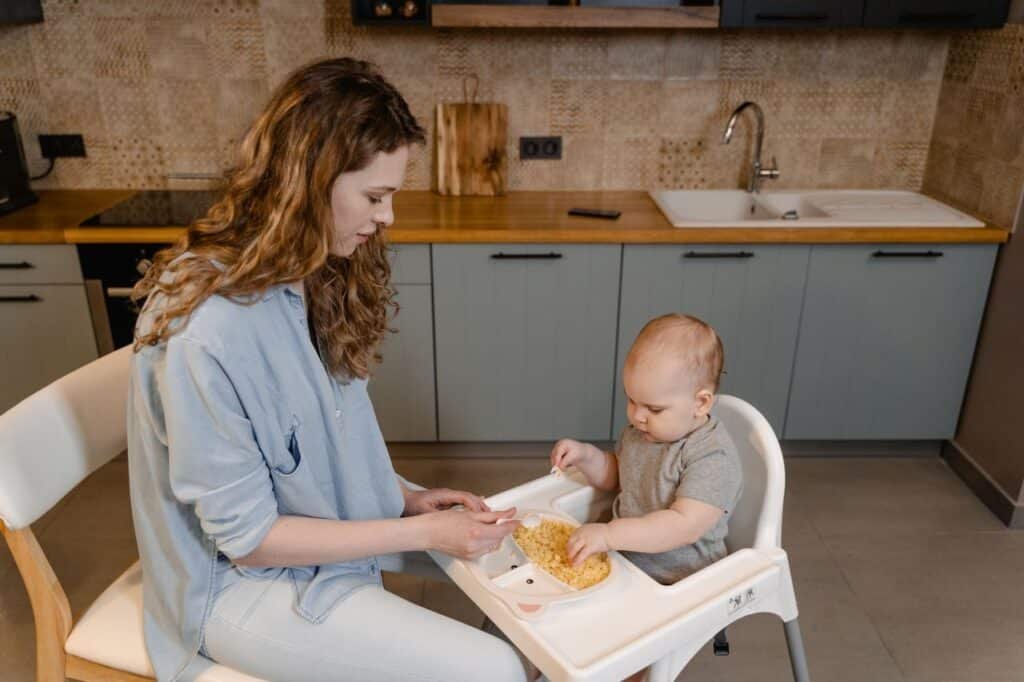
One of the most searched questions among new parents is: How do I manage my baby and housework?
The easiest answer is to stop thinking of baby care and housework as two separate full-time jobs that must both be completed perfectly.
Instead, divide your day into small blocks.
Use Baby’s Awake Time Strategically
When your baby is calm and awake, focus primarily on interaction, feeding, diapering and age-appropriate activities.
You may be able to complete a very small task nearby, but don’t feel obligated to turn every minute of awake time into productivity.
Use Some Nap Time for Yourself
A baby’s nap doesn’t automatically mean “cleaning time.”
Use it for whatever is most important at that moment:
- Sleep
- Eating
- Showering
- Breastfeeding or pumping
- Rest
- One essential chore
If you’re exhausted, choose sleep.
Follow the One-Task Rule
Instead of looking at the entire house and thinking, “I need to clean everything,” choose one task.
For example:
Today: laundry
Tomorrow: kitchen
Next day: bathroom
Small tasks are easier to manage when you’re recovering from childbirth and caring for a newborn.
Create a Minimum-Viable Home
During the early postpartum period, your house only needs to be functional.
Focus on:
- Clean dishes
- Basic laundry
- Food
- Clean bathroom essentials
- Trash
- Baby supplies
Deep cleaning can wait.
This is one of the most effective ways to balance baby and housework without creating unnecessary new mom stress.
The 15-Minute New Mom Cleaning Routine
If you want a simple cleaning routine with a newborn, try a 15-minute reset.
First 5 Minutes: General Reset
- Put items back in their places.
- Collect dirty laundry.
- Clear important surfaces.
- Pick up obvious clutter.
Next 5 Minutes: Kitchen
- Wash essential dishes.
- Wipe the kitchen counter.
- Put food away.
- Prepare something simple for your next meal.
Final 5 Minutes: Laundry
- Start a load of laundry.
- Fold a small batch.
- Put away only the essentials.
That’s it.
You don’t need to clean your entire house every day.
A house cleaning with a newborn strategy should be about maintaining basic hygiene and functionality rather than achieving a showroom-perfect home.
If possible, divide cleaning responsibilities with your partner or family members. A cleaning schedule for new moms should reduce your workload, not become another responsibility.
How to Create a Simple Newborn Feeding Routine

Feeding is one of the biggest parts of your newborn care routine.
Whether you’re breastfeeding, formula feeding, pumping or combination feeding, your baby’s needs can vary throughout the day.
Rather than forcing your baby into a rigid newborn feeding schedule, learn to recognize their hunger cues and follow the feeding guidance provided by your pediatrician or healthcare professional.
A flexible pattern may look like:
Feed → burp → diaper → cuddle → sleep
But your baby may want to feed again sooner than expected, and that’s normal.
If you’re breastfeeding, keep water and easy snacks close to your usual feeding area. If you’re pumping, create a small station with your pump, storage supplies, water and snacks.
For formula feeding, organize feeding supplies so that preparing and cleaning up is as straightforward as possible.
The goal of a baby feeding routine is to make feeding easier—not to make you constantly watch the clock.
Creating a Flexible Newborn Sleep Routine

Sleep can be one of the hardest parts of becoming a new parent.
Newborn babies don’t usually follow the predictable sleep patterns that adults expect. They may wake frequently for feeds and sleep in relatively short periods.
That’s why a newborn sleep routine should focus on creating predictable cues rather than expecting your baby to sleep at a fixed time.
During the Day
Try to maintain normal daytime activity and light.
When your baby is awake:
- Talk to them.
- Cuddle.
- Feed them.
- Follow age-appropriate activity recommendations.
- Allow them to experience normal household sounds.
During the Evening
Create a simple newborn bedtime routine, such as:
Feed → diaper → pajamas → quiet cuddle → dim lights → sleep
It doesn’t have to take an hour.
During the Night
Keep nighttime interactions calm and boring:
- Keep lights low.
- Avoid unnecessary stimulation.
- Feed as needed.
- Change the diaper when necessary.
- Return your baby to their safe sleep space.
Most importantly, don’t feel like you’ve failed if your baby doesn’t sleep through the night.
For every sleep routine for new moms, the baby’s safe sleep environment should remain a priority. Babies should be placed on their backs to sleep on a firm, flat sleep surface, with soft objects and loose bedding kept out of the sleep space.
If you have concerns about your baby’s feeding, sleep or health, discuss them with your pediatrician.
Don’t Forget Mom: A Simple Self-Care Routine for New Moms
When people talk about self care for new moms, they sometimes make it sound like you need an elaborate spa day.
In reality, postpartum self-care can be incredibly simple.
Your postpartum self care routine might include:
- Drinking water
- Eating a proper meal
- Taking a shower
- Changing into comfortable clothes
- Taking a short nap
- Sitting outside for a few minutes
- Talking to someone you trust
- Taking a short walk when medically appropriate
- Reading a few pages of a book
- Listening to music
- Taking ten quiet minutes alone
You don’t need an hour.
Sometimes ten minutes is enough to make you feel like yourself again.
If someone offers to watch your baby while you shower, take the shower.
If someone offers to bring food, accept the food.
If your partner can take over baby duty while you sleep, use that opportunity.
A new mom self care routine isn’t selfish. Looking after yourself helps you continue caring for your baby.
Easy Meal Planning for New Moms
Food is often one of the first things to become complicated after having a baby.
Cooking elaborate meals every day isn’t necessary.
Instead, create a simple postpartum meal plan based on foods that are easy to prepare, store and eat.
Easy Meal Ideas for New Moms
Try keeping options such as:
- Oatmeal
- Eggs
- Fruit
- Yogurt or curd
- Nuts and seeds
- Sandwiches
- Rice and dal
- Khichdi
- Roti and simple sabzi
- Poha
- Upma
- Paneer dishes
- Soups
- Pre-cut vegetables
- Simple homemade snacks
Make Meal Prep Easier
Try these postpartum meal prep strategies:
Cook once, eat twice: Make enough dinner for lunch the next day.
Prepare ingredients ahead: Wash and chop vegetables when you have help.
Keep snacks nearby: Especially if you’re breastfeeding or frequently feeding your baby.
Accept food: If family members want to cook, let them.
Simplify: A simple nutritious meal is better than skipping a meal because you were trying to cook something elaborate.
For personalized postpartum nutrition advice, particularly if you’re breastfeeding or recovering from a medical complication, consult your doctor or a qualified dietitian.
How to Divide Baby Duties With Your Partner
Your partner shouldn’t simply “help” with the baby. Wherever possible, baby care and household responsibilities should be shared.
Depending on your family’s circumstances, your partner can take responsibility for:
- Diaper changes
- Burping
- Baby laundry
- Bottle washing
- Grocery shopping
- Cooking
- Cleaning
- Settling the baby
- Preparing nighttime supplies
- Scheduling appointments
- Household administration
For example:
| Task | Mom | Partner |
|---|---|---|
| Feeding | ✓ | Support |
| Diaper changes | ✓ | ✓ |
| Baby laundry | — | ✓ |
| Cooking | — | ✓ |
| Grocery shopping | — | ✓ |
| Baby soothing | ✓ | ✓ |
| Nighttime support | ✓ | ✓ |
The exact division isn’t important. What matters is that both parents recognize that parenting teamwork involves more than just holding the baby.
Strong partner support after baby can make the transition into parenthood considerably easier.
How to Ask Family for Help Without Feeling Guilty
Many new moms struggle with asking for help.
You might think, “Everyone else manages, so I should manage too.”
But having support isn’t a sign that you can’t handle motherhood.
It’s a practical part of building a support system for new moms.
Instead of saying:
“I need some help.”
Try making a specific request:
- “Could you bring lunch tomorrow?”
- “Can you fold the baby laundry?”
- “Could you watch the baby while I shower?”
- “Can you pick up groceries?”
- “Could you cook dinner tonight?”
- “Can you help with dishes?”
Specific requests are easier for people to respond to.
You can also establish boundaries around visitors. You don’t have to entertain guests while recovering from childbirth.
Your home is not a hotel, and your postpartum period isn’t a social obligation.
Household Tasks New Moms Can Skip
One of the best new mom hacks is learning what doesn’t need to be done.
During the newborn stage, you can usually put these tasks lower on your priority list:
- Deep cleaning
- Organizing every cupboard
- Perfectly folding every piece of laundry
- Cleaning every room daily
- Hosting elaborate meals
- Maintaining a spotless kitchen
- Rearranging the entire house
- Entertaining visitors
Focus on:
Baby + Mom + Food + Hygiene + Essential household functioning.
That’s enough.
A newborn won’t remember whether the house was perfectly clean.
Sample Flexible New Mom Routine
Here’s a sample daily routine for new mom with newborn that you can customize.
Remember, these times are examples—not rules.
Morning
- Baby wakes and feeds
- Diaper change
- Mom drinks water
- Breakfast
- Shower/personal hygiene
- Baby interaction
- One small household task
- Rest
Late Morning
- Baby feeds as needed
- Diaper change
- Cuddling or age-appropriate activity
- Mom has a snack
- One small task if energy allows
- Rest during baby’s sleep
Afternoon
- Feeding
- Lunch
- Baby nap
- Mom rests or sleeps
- Light laundry if necessary
Evening
- Baby feeding
- Family time
- Simple dinner
- Baby’s evening routine
- Prepare essential supplies for the night
Night
- Feed baby as needed
- Diaper change when required
- Keep the environment calm and dim
- Follow safe sleep practices
- Mom returns to rest
This new mom schedule isn’t designed to make every day identical. It’s simply a framework that helps you know what deserves your attention first.
A Weekly Home Management System for New Moms
Instead of trying to clean everything every day, assign one major household category to each day.
Monday: Laundry
Focus on essential clothing and baby items.
Tuesday: Bathroom Reset
Clean the areas that need attention.
Wednesday: Kitchen
Do a basic kitchen reset.
Thursday: Baby Organization
Restock diapers, wipes and baby clothes.
Friday: Groceries and Meal Prep
Plan simple meals and snacks.
Saturday: Family Help
Use available family support for bigger tasks.
Sunday: Rest and Reset
Keep chores minimal and prepare only what you need for the coming week.
You can change this system based on your home and support network.
The purpose of a home management for moms system isn’t to create another rigid schedule. It’s to prevent every household task from feeling urgent at the same time.
New Mom Routine Hacks That Actually Save Time
These time-saving tips for new moms can make everyday life easier:
1. Keep Baby Essentials in Multiple Rooms
A small basket containing diapers, wipes, burp cloths and a change of clothes can save countless trips around the house.
2. Create a Feeding Station
Keep water, snacks, burp cloths and anything else you regularly need within reach.
3. Keep Snacks Accessible
Don’t wait until you’re starving to find something to eat.
4. Use a Dedicated Baby Laundry Basket
It makes sorting baby clothes much easier.
5. Prepare for the Night Before Bed
Keep diapers, wipes, clothes and other nighttime essentials ready.
6. Batch Household Tasks
Instead of washing one dish at a time, handle dishes together when possible.
7. Use Grocery Delivery
If grocery shopping is difficult, online grocery delivery can save time and energy.
8. Accept Help
If someone offers to cook, clean or shop, let them.
9. Keep Meals Simple
You don’t need a different elaborate meal every day.
10. Stop Chasing Perfection
This may be the most important parenting hack for new moms of all.
A routine that saves your energy is more valuable than one that makes your home look perfect.
What to Do When the Baby Won’t Follow the Routine
What happens when you finally create a routine—and your baby completely ignores it?
Welcome to newborn life.
Your baby may suddenly:
- Feed more frequently
- Sleep differently
- Wake more often
- Take shorter naps
- Want more cuddles
- Become unsettled
- Have a growth spurt
- Become ill
This doesn’t mean your newborn routine has failed.
Babies change rapidly.
Instead of focusing on exact times, create a few anchor points.
For example:
- Start the morning with daylight and normal household activity.
- Follow baby’s feeding cues.
- Keep nighttime calm and quiet.
- Use a consistent bedtime sequence.
- Maintain a safe sleep environment.
A routine should bend when your baby’s needs change.
Signs Your Routine Is Too Rigid
Your routine may be creating more stress than it solves if:
- You feel guilty whenever the schedule changes.
- You skip meals to finish chores.
- You sacrifice sleep to clean.
- You’re constantly watching the clock.
- You become anxious when your baby doesn’t follow the plan.
- You refuse help because someone might do things differently.
- You feel that the house must always be perfect.
If your routine is making you more anxious, simplify it.
The purpose of a new mom routine is to create predictability—not pressure.
When New Mom Stress Becomes Too Much
Some level of tiredness, frustration and emotional overwhelm can happen during the transition to parenthood.
But you don’t have to struggle alone.
If you experience persistent sadness, severe anxiety, hopelessness, difficulty functioning, or feel unable to cope, speak with your doctor, postpartum healthcare provider or another qualified professional.
Postpartum mental health deserves the same attention as physical recovery.
Support from your partner, family and friends can also make a meaningful difference.
Remember that asking for professional help isn’t a failure. It’s a responsible way to take care of yourself and your baby.
Frequently Asked Questions About New Mom Routines
What is a good routine for a new mom?
A good new mom routine prioritizes the baby’s feeding, diapering and sleep needs while also protecting the mother’s food, hydration, rest, hygiene and postpartum recovery. Household chores should come after these essentials. A flexible routine is generally more practical than a strict schedule during the newborn stage.
How do I manage my baby and housework?
Use the baby → mom → essential home tasks approach. Take care of your baby’s immediate needs first, then eat, hydrate and rest yourself. After that, choose one or two essential household tasks rather than trying to clean the entire home.
How can I keep my house clean with a newborn?
Create a simple cleaning routine with a newborn based on short 10–15 minute resets. Focus on dishes, laundry, food preparation, trash and basic hygiene. Delegate larger chores to your partner or family and postpone deep cleaning until you have more time and energy.
What should a new mom do all day?
A new mom’s day may include feeding the baby, diaper changes, soothing, cuddling, supervised age-appropriate activities, resting, eating, showering and recovering from childbirth. Taking care of yourself and your baby is productive work, even when no household chores get completed.
How much housework should a new mom do?
There is no universal amount of housework a new mom should complete. During the early postpartum period, prioritize baby care, your recovery, food, hydration, hygiene and rest. Household cleaning should focus on essential tasks rather than maintaining a spotless home.
Should I clean while my newborn sleeps?
Not necessarily. Newborn naps can be an opportunity for you to sleep, eat, shower, pump or complete an essential task. If you’re exhausted, rest should usually take priority over nonessential cleaning.
How do I create a routine for a newborn?
Start with a predictable sequence rather than fixed times. A simple pattern can be feed → diaper → cuddle/activity → sleep. Follow your baby’s hunger and tiredness cues and allow the routine to change as your newborn’s needs change.
When should a newborn have a routine?
You can introduce predictable sequences from the newborn stage, but don’t expect a young baby to follow a strict timetable. Feeding and sleep can vary significantly during the early months. Focus on consistent cues and safe sleep practices rather than rigid timing.
How can a new mom get enough sleep?
Share responsibilities with your partner or trusted support network whenever possible. Sleep when you have a genuine opportunity to rest, especially if someone else can safely take over baby care. Keep your baby’s sleep environment safe and don’t sacrifice safe sleep practices because you’re exhausted.
What are the best time-saving hacks for new moms?
Some of the most useful newborn hacks for moms include keeping baby supplies in multiple rooms, preparing simple meals, batching laundry, keeping snacks and water nearby, accepting family help, using grocery delivery and completing one household task at a time.
Your Baby Doesn’t Need a Perfect Mom
The most important thing to remember about creating a new mom routine to manage baby and home is that your baby doesn’t need a perfect mother.
Your baby doesn’t care whether the laundry is folded.
They don’t care whether the kitchen was cleaned that morning.
They don’t care whether dinner came from a carefully planned menu or was the simplest meal you could put together.
Your baby needs you.
And you need care, too.
Some days you’ll manage a shower, laundry, meals and several household tasks. Other days, you may spend the entire day feeding, cuddling, changing and comforting your baby.
Both days count.
A successful routine for new moms isn’t the one that gets the most chores completed. It’s the one that helps you protect what matters most:
Baby’s needs → Mom’s recovery → Family connection → Essential home tasks
Everything else can wait.
Motherhood isn’t a productivity competition. Give yourself permission to slow down, ask for help, rest when you can and let the house be imperfect for a while.
You are not behind. You’re adjusting to a completely new life—and you’re doing more than you realize.